Latest News
Exclusive Deal Between Anzu and Razor Edge Games Brings Blended In-Game Ads to Upcoming Game Eden Falling


Indie game developer Razor Edge Games has signed an exclusive partnership with Anzu.io, the world’s most advanced in-game advertising platform, to enable advertisers to place ads within its upcoming PC and console hit game Eden Falling.
Eden Falling is an MMO-Lite free-to-play game that will debut in a pre-alpha phase at Steam Summer Festival as a PC game. In the months following, Razor Edge Games will open early access, with a global release planned for the first half of 2022 along with a console version. Razor Edge Games plans to have around 20 third-party brand DLC partners, including celebrities and IPs, make special, limited-time appearances within the game to create even more excitement.
Eden Falling is being released at an opportune time, given that the gaming industry is currently experiencing unprecedented growth. There are now 3.1 billion gamers worldwide, and the videogame market is expected to hit $175.8 billion this year. Players of all ages are getting in on gaming, which is also attracting more attention and sponsors than ever before.
The game’s scene-based evergreen gameplay is exactly what makes Eden Falling ideal for advertisers. Players are continually in an ‘explore and discover mode,’ providing advertisers with an opportunity to gain impressions and make meaningful connections without disrupting gameplay. The post-apocalyptic setting resembles a futuristic version of the real world which will work in advertisers’ favor by positioning them as a brand of today and one that has a foothold in the future.
Anzu’s extensive partnerships with third-party vendors such as Moat by Oracle, Nielsen, Kantar, Comscore, and Digiseg provide in-depth measurements for campaign effectiveness, including viewability and brand lift, as well as audience verification, data enrichment, and fraud detection. In conjunction with WWP, Anzu is establishing widely accepted in-game advertising standards, which has given brands including Vodafone, Samsung, PepsiCo, McDonald’s, and American Eagle the confidence to shift media budgets to in-game ads through the platform.
Anzu, which supports advertising on mobile, PC, and consoles, is the only in-game advertising company to secure an ISO 27001 certificate, the highest level of security audit, which gives advertisers and game developers the assurance that their data is being handled in accordance with the highest security standards. Additionally, Anzu’s SDK technology delivers big for publishers, ensuring high-quality direct traffic, complete control of ad placements, and precise audience targeting based on first-party data.
“At Razor Edge Games, true to our name, we like to position ourselves on the cutting edge of the industry. That’s why we’re incredibly excited to partner with Anzu,” said Mike Weiser, “We believe this is the future of advertising and gaming and the next step in bringing product placement closer to immersion. We’re looking forward to the opportunities this partnership will bring us both.”
Alex Yerukhimovich, Anzu’s VP of Sales, added, “Razor Edge Games’ innovative approach to gameplay aligns with our values, and we are thrilled to welcome them into the Anzu ecosystem. With the number of gamers increasing daily, this is a channel that lives up to its promise. This partnership creates an unbeatable opportunity for advertisers to join the gaming space and deliver cutting-edge campaigns to highly engaged, receptive audiences.”
Powered by WPeMatico



Midnite has agreed a partnership with Middlesbrough FC that will see the UK bookmaker become the club’s principal partner and front-of-shirt sponsor for the 2026/27 campaign, which Middlesbrough describes as its landmark 150th season.
The companies announced the deal alongside a fan activation at Riverside Stadium on Thursday, July 9, branded “This Season’s On Us”. The initiative offered supporters prizes including 2026/27 season tickets, 2026/27 shirts, match tickets, or a £25 club shop voucher, with fans required to answer Middlesbrough trivia and complete a football challenge.
Middlesbrough former players Craig Hignett and David Wheater attended the event, and, according to the company, took bonus attempts on behalf of participants who missed out.
Andrew Mook, Midnite’s Head of Brand Marketing, said:
“Middlesbrough have a storied history and we’re delighted to announce this partnership during such a monumental year with the club celebrating their 150th anniversary.
“It was great to see so many Middlesbrough fans at the “This Season’s On Us” activation, we hope they enjoyed taking part and meeting club legends, with David Wheater hitting top bins on several occasions and allowing fans to win big with season tickets.
“We can’t wait to get to Riverside Stadium in August to kick-off a new season and we’re excited to say that we have plenty of new and captivating campaigns planned.”
Lee Fryett, Middlesbrough FC Chief Commercial Officer, added:
“We’re delighted to welcome Midnite as our new Principal Partner.
“We’re looking forward to working closely with Midnite to develop engaging campaigns, content and unique experiences that bring our fans even closer to the club.
“We’re confident this partnership will provide real value for our supporters while supporting our ambitions both on and off the pitch.”
The post Midnite signs as Middlesbrough FC principal partner for 2026/27 season appeared first on EE Gaming | Global iGaming & Tech Intelligence Hub.

ThrillTech has been awarded a Gaming-Related Supplier licence by the Alcohol and Gaming Commission of Ontario (AGCO), clearing the company to launch in Ontario’s regulated market.
The licence allows ThrillTech to deploy its opt-in side bet jackpots technology with regulated online casino, sports betting and lottery operators across the province.
Benjamin Bradtke, Co-Founder of ThrillTech, said: “Securing our AGCO licence is a major step in our mission to transform how jackpots are delivered at scale across regulated markets. This latest certification is testament to our robust technology and trusted compliance frameworks, allowing us to continue our global growth trajectory. We are thrilled to bring our proven, compliant jackpot technology to Ontario, empowering locally licensed operators to uplift revenue without cannibalising existing spend.”
The company said its “ThrillPots” mechanics sit as an independent, player-funded side bet and do not alter the underlying game’s return-to-player mathematics.
ThrillTech said the Ontario approval enables its existing multinational partners that also operate in the province to launch its side bet jackpots locally, while it also holds talks with potential new operator partners. The company lists its regulated footprint as including the United Kingdom, Sweden, the Netherlands, Romania, Malta, Gibraltar, Brazil and Peru.
The post ThrillTech secures AGCO supplier licence for Ontario launch appeared first on EE Gaming | Global iGaming & Tech Intelligence Hub.


ThrillTech said it has been awarded a Gaming-Related Supplier licence by the Alcohol and Gaming Commission of Ontario (AGCO), clearing the company to offer its side-bet jackpot technology to regulated online casino, sports betting, and lottery operators in Ontario.
Benjamin Bradtke, Co-Founder of ThrillTech, said: “Securing our AGCO licence is a major step in our mission to transform how jackpots are delivered at scale across regulated markets. This latest certification is testament to our robust technology and trusted compliance frameworks, allowing us to continue our global growth trajectory. We are thrilled to bring our proven, compliant jackpot technology to Ontario, empowering locally licensed operators to uplift revenue without cannibalising existing spend.”
The company said its ThrillPots product lets operators add player-funded, opt-in side-bet jackpots on top of existing games, without changing gameplay or the underlying return-to-player (RTP) calculations. ThrillTech positions the mechanic as a way to drive incremental engagement and revenue.
ThrillTech said the Ontario licence enables existing multinational partners that also operate in the province to roll out ThrillTech-powered jackpots locally, and added it is in discussions with potential new operator partners. The company listed other regulated jurisdictions it serves as the United Kingdom, Sweden, the Netherlands, Romania, Malta, Gibraltar, Brazil, and Peru.
The post ThrillTech wins AGCO supplier licence to enter Ontario market appeared first on Americas iGaming & Sports Betting News.

-

 Compliance Updates5 days ago
Arizona Department of Gaming Issues Cease-and-Desist Orders to Multiple Operators Linked to Underage Gambling and Illegal Activity
-
 Latest News6 days ago
PG Soft appoints Hugo Baungartner as General Manager LatAm
-
Latest News6 days ago
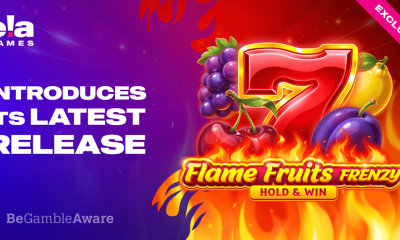
ELA Games releases Flames Fruits Frenzy Hold and Win slot
-
Compliance Updates5 days ago
KONAMI GROUP’s Konami Gaming Inc. First to Submit Manufacturer License Application in Japan’s Emerging IR Market
-
Canada6 days ago
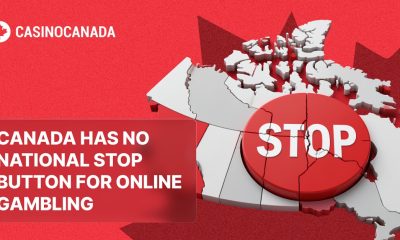
Canada’s Safer Gambling Gap: Why Market Success Doesn’t Always Equal Player Safety
-
Latest News6 days ago
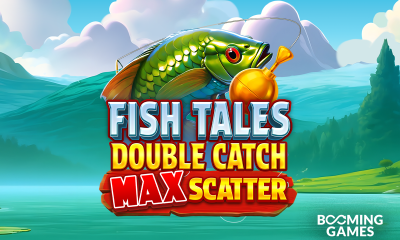
Booming Games launches Fish Tales: Double Catch Max Scatter
-
Latest News6 days ago
Tom Horn Gaming ships Royal Ruby FeatureStorm slot worldwide on 14 July 2026
-
Latest News6 days ago
BC.GAME names Guillermo Ochoa brand ambassador for Mexico push