AML
Isle of Man Adopts New Laws Ahead of Vital AML Review


Following final approval from the nation’s parliament, the Isle of Man’s new gambling laws are set to come into effect. The new legislation comes at a delicate time for the island, as it looks to rebound from a series of crime-linked scandals and make a good account of itself to incoming Moneyval inspectors.
The Gambling Legislation (Amendment) Bill passed through the final stage of the Isle of Man’s parliament this week, and now only needs a form of rubberstamping known as Royal Assent before it passes into law.
The government says the new act will modernise the island’s gambling regulation and improve its international reputation.
It also gives much greater enforcement leverage to the Gambling Supervision Commission (GSC), allowing it to enter premises without a warrant and seize evidence when there is suspicion of non-compliance.
To bolster these powers, the act will bring in new offences for anyone who obstructs or fails to cooperate with a GSC investigation.
“The gambling sector has seen a global shift in the threat landscape, and the GSC is committed to being agile and responsive in its approach,” a spokesperson told Isle of Man Today.
The stakes, officials say, are high.
GSC chief executive Mark Rutherford told a committee examining the bill last year that the island’s gambling industry was currently “under attack” by organised crime and claimed that the new legislation would enable it to “take the fight back to the enemy”.
The Isle of Man’s police force, in partnership with the gambling regulator, has conducted a number of raids and arrests over the two years, in particular targeting companies with alleged links to Asian markets where offshore gambling is illegal.
In November, police cooperated with the United States’ Federal Bureau of Investigation (FBI) to seize assets believed to belong to Cambodian organised crime outfit, the Prince Group.
In advance of the new law coming into effect, the GSC is consulting on what its new penalty regime should look like. Questions include what the maximum civil penalty that may be imposed on an operator or individual should be.
And in a further effort to avoid organised crime establishing a foothold in the island’s gambling market, the GSC is also asking for input on its new “fitness and propriety” guidance. The new rules will allow the regulator to assess whether individuals and entities meet required integrity standards.
Inspection pending
Passage of the law is also taking place mere months before a formal inspection of the Isle of Man’s anti-money laundering capabilities by international watchdog Moneyval.
A formal inspection, known as a “mutual evaluation”, began in January of this year and will continue throughout 2026.
Enshrining the island’s new Gambling Act will come just months before a key milestone, in October 2026, when investigators arrive for a two-week onsite inspection.
Assessors will judge whether the Isle of Man’s policies and practices are good enough to reliably counter money laundering and prevent the financing of terrorism.
In the wake of its recent brushes with gambling-linked crime, officials need to show that efforts like the new gambling bill have done enough to bolster its defences.
The dire consequences of failing this review are well known, thanks to object lessons from fellow point-of-supply jurisdictions Malta and Gibraltar.
Following a negative assessment, Malta was added to the Financial Action Task Force’s (FATF) in 2021 and spent a year dealing with the consequences. Gibraltar suffered the same fate in June 2022, not emerging from the list until February 2024.
Greylisted jurisdictions face difficulties with finance and investor confidence. During Malta’s 12 months on the list, companies on the island repeatedly reported problems accessing banking and other financial services.
A spot on the greylist also does serious damage to the reputation of a region’s regulatory framework.
This sees international regulators placing additional scrutiny on companies and leaves key suppliers like payments companies thinking twice before doing business with businesses in greylisted jurisdictions.
New era
The reworking of the Isle of Man’s gambling laws also comes at a time when the role of offshore hubs is in flux.
Nations globally are increasingly establishing their own licensing regimes and removing grey markets in the process.
The introduction in 2025 of a licensing regime in Brazil, for example, was a major blow to companies that prefer to operate offshore. Operators were told they need to either leave the market or comply with local regulations.
National regulations in several major nations are also taking a more critical look at the wider group activities of their licensees.
Authorities like the UK Gambling Commission are increasingly educated on the global activities of their licensees and regulators, both in Europe and worldwide are sharing more and more data when they discover operators populating the black market.
All of which raises the stakes for this new era of Isle of Man gambling regulation.
There is an increasing need to sell the island as a solid, stable and secure hub for operators and suppliers who may need to manage local compliance requirements worldwide, but can rely on the island to provide a tax-friendly, low-drama hub on which to locate their headquarters.
The post Isle of Man Adopts New Laws Ahead of Vital AML Review appeared first on Eastern European Gaming | Global iGaming & Tech Intelligence Hub.















Grupo LBBR, operator of the betting brands Luck.bet, Start Bet and 1PRA1, has appointed Paulo Gasparotto as its new director of Compliance, the company said in a statement.
The group said the hire is part of a governance push aimed at meeting the requirements of Brazil’s regulated betting environment. Alongside the appointment, Grupo LBBR said it has established a dedicated structure focused on Compliance, anti-money laundering and counter-terrorist financing (PLD/FTP), and regulatory matters.
According to the company, measures implemented include strengthened internal controls, a review of policies and procedures, and upgrades to monitoring processes designed to prevent financial crimes. The operator also said it has increased integration across operational, legal, technology and regulatory teams.
“Estamos elevando o nível das nossas empresas com o fortalecimento de controles internos, revisão de políticas e aprimoramento contínuo dos mecanismos de monitoramento e prevenção a ilícitos financeiros. A proposta é atuar de forma proativa diante das exigências regulatórias, com uma estrutura sólida e integrada que assegure eficiência operacional, gestão de riscos e confiança para todo o ecossistema do negócio”, afirma Paulo Gasparotto.
Looking ahead, Grupo LBBR said it plans to continue developing its compliance and PLD/FTP program, strengthen its internal integrity culture, enhance risk management mechanisms, and consolidate regulatory processes to support sustainable growth.
The post Grupo LBBR names Paulo Gasparotto as compliance director for Luck.bet, Start Bet and 1PRA1 appeared first on Americas iGaming & Sports Betting News.
Updates include Network Detection, AI Chart Builder and an AI Playbook, with integrations for third-party AI tools via the MCP standard.
SEON has rolled out new AI capabilities for its fraud prevention and AML compliance platform, including a Model Context Protocol (MCP) server designed to connect SEON data to external AI tools. The company said the MCP server, Network Detection, AI Chart Builder and an AI Playbook for Risk and Compliance Teams are available now to SEON customers.
The MCP server is positioned as a way for analysts to use third-party AI tools while pulling investigation context from SEON. SEON said analysts can connect tools including Claude, ChatGPT, Gemini and Microsoft Copilot to “900+ real-time risk signals spanning identity, device, behavioral, AML and IP data,” with signals accessible “in a single call” via the open MCP standard.
“The software world is moving toward a headless model, where teams don’t need to live inside a vendor’s dashboard to get full control over data and functionality,” said Tamas Kadar, CEO and Co-Founder, SEON. “Our job is to be the best command center for fraud, risk and compliance intelligence. We’re giving analysts the freedom to use whichever AI tools work best for them.”
SEON also introduced Network Detection and AI Chart Builder inside its platform. Network Detection builds on SEON’s network analysis features released last year, and “continuously scans the last two months of transactions across devices, emails, phone numbers and IP addresses” to surface suspicious clusters. AI Chart Builder generates data visualizations from natural-language questions using live SEON data, targeting reporting and dashboarding needs typically handled through BI teams or spreadsheet exports.
Customer TurboTenant said it is already using the MCP approach in production workflows. “The SEON MCP integration has fundamentally changed how our risk analysts operate,” said Eric Taylor, Manager of Trust and Safety, TurboTenant. “Before, they had to manually pull data across multiple systems to piece together what happened. Now, we pull a user’s entire platform journey and all of SEON’s risk signal context directly into Claude, and AI connects the dots on complex fraud patterns without us doing that assembly. It’s opened up OSINT capabilities that wouldn’t have been possible before.”
To support adoption, SEON said it is shipping an AI Playbook for Risk and Compliance Teams alongside the releases, including “pre-built agentic skills” such as a fraud analyst daily briefing and a decline spot-check, compatible with the MCP server. “SEON opening its data layer to any AI we want to use is exactly the kind of architectural decision that fits where the market is going,” said Mostafa Hassanin, CISO, SMG Marketplace.
The post SEON adds MCP server and new AI tools for fraud and AML teams Subheadline appeared first on Eastern European Gaming | Global iGaming & Tech Intelligence Hub.
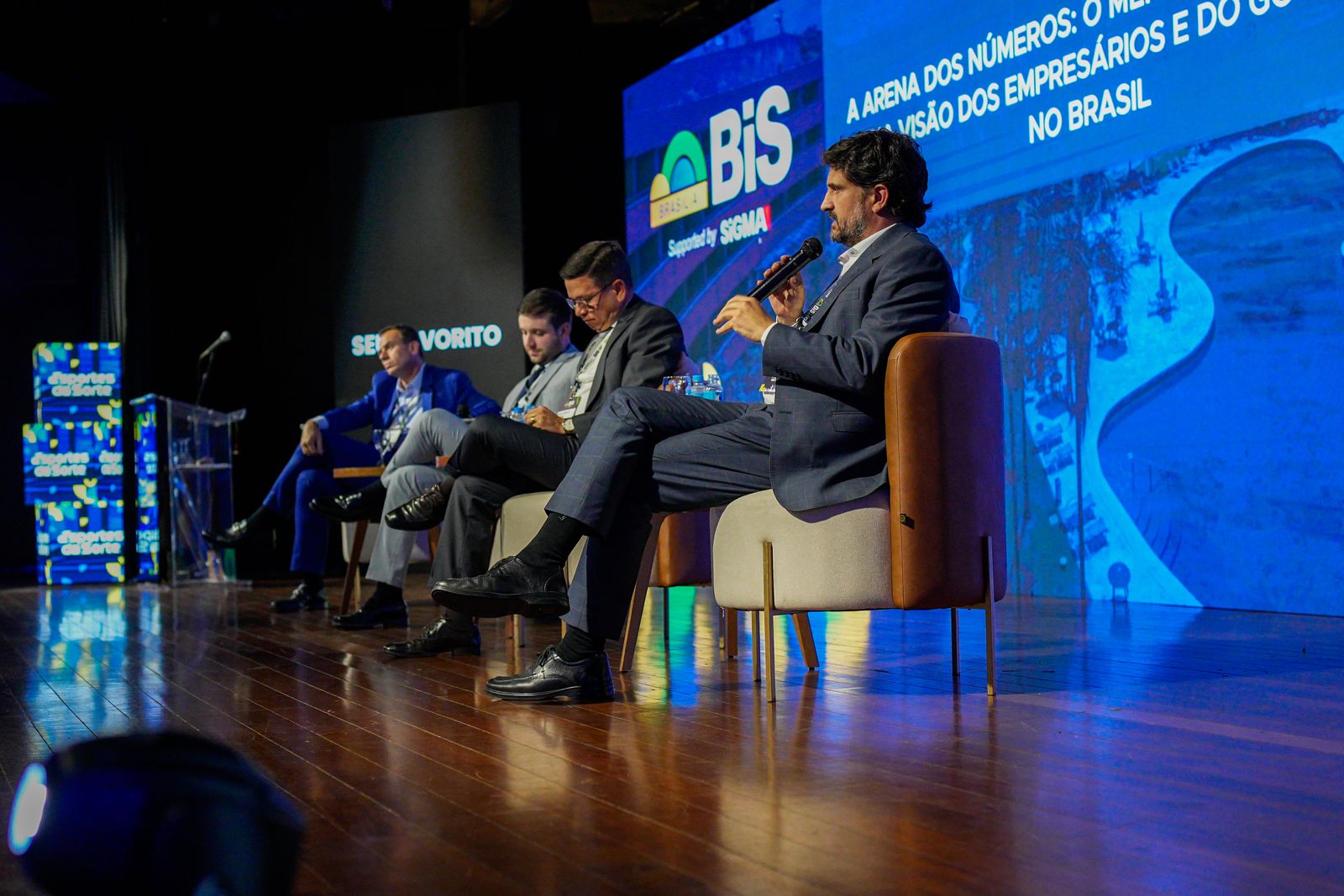
El BiS Brasília ya tiene definido el tema central para la próxima edición y será la gobernanza responsable para el futuro de los juegos y las apuestas en Brasil.
El evento se celebrará los días 2 y 3 de junio en el hotel Royal Tulip Brasília Alvorada.
BiS Brasília está confirmado para los días 2 y 3 de junio, con un enfoque en la gobernanza responsable del futuro del sector de juegos y apuestas en Brasil.
El encuentro reunirá a autoridades, líderes y expertos para debatir las principales novedades del sector.
En su segunda edición, el evento espera un crecimiento del 20% en la asistencia en comparación con el año anterior.
“Llegar a la segunda edición del BiS Brasília representa la consolidación de un espacio esencial para el diálogo entre el sector privado, las autoridades y los especialistas en un momento decisivo para el mercado brasileño.
Brasília es el centro de las grandes discusiones regulatorias del país, y reunir a los principales actores de este ecosistema en la capital federal refuerza el compromiso del evento con la construcción de un entorno cada vez más transparente, responsable y sostenible para la industria”, destacó Alessandro Valente.
Los interesados pueden adquirir sus entradas en: https://brazilianigamingsummit.com/brasilia/
Sobre BiS Brasília
En su segunda edición, BiS Brasília es un encuentro dedicado al ecosistema de iGaming y apuestas, promoviendo el diálogo entre el sector privado, el poder público y la sociedad sobre el desarrollo del mercado regulado de juegos, casinos y loterías en Brasil.
El evento reúne a líderes empresariales, autoridades y expertos para debatir temas estratégicos como regulación brasileña, tributación, integridad, innovación, juego responsable, compliance, AML / prevención de lavado de dinero, licenciamiento, integridad deportiva, relación con el Gobierno, publicidad y CONAR.
BiS SiGMA South America forma parte del portafolio de eventos de SiGMA World, una de las principales plataformas globales de negocios y organización de eventos B2B enfocados en la industria de juegos y apuestas.
The post BiS Brasília ya tiene definido tema central para el próximo evento appeared first on Americas iGaming & Sports Betting News.

-

 Bonusetu.com7 days ago
Finland Sets Casino Gambling Risk Limits at 2% of Income, 4 Days, 2 Game Types
-
Compliance Updates6 days ago
Dutch Gambling Trade Association Sues Meta Over Illegal Gambling Ads
-
Acquisitions/Merger7 days ago
Super agrees to acquire Romania’s Crafting Technologies for new Cluj tech hub
-
30-0 Kongeserien7 days ago
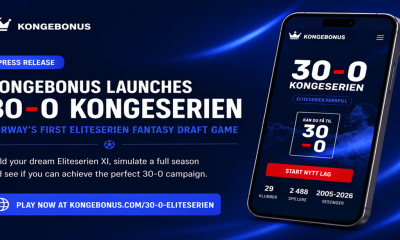
Kongebonus launches 30-0 Kongeserien Eliteserien fantasy draft game
-
BetWarrior6 days ago
Kambi Group Extends its Partnership with BetWarrior
-
Latest News7 days ago
Play’n GO Releases its Latest Slot Game “Shark Feast”
-
Amusnet6 days ago
Amusnet Strengthens its Position Among Bulgaria’s Leading Employers in ICAP CRIF Ranking
-
Alex Baliukonis Game Producer at BGaming7 days ago
BGaming releases Frenzy Clusters slot with expanding grid feature