AI
FlexPlay: building a platform made to grow with its partners

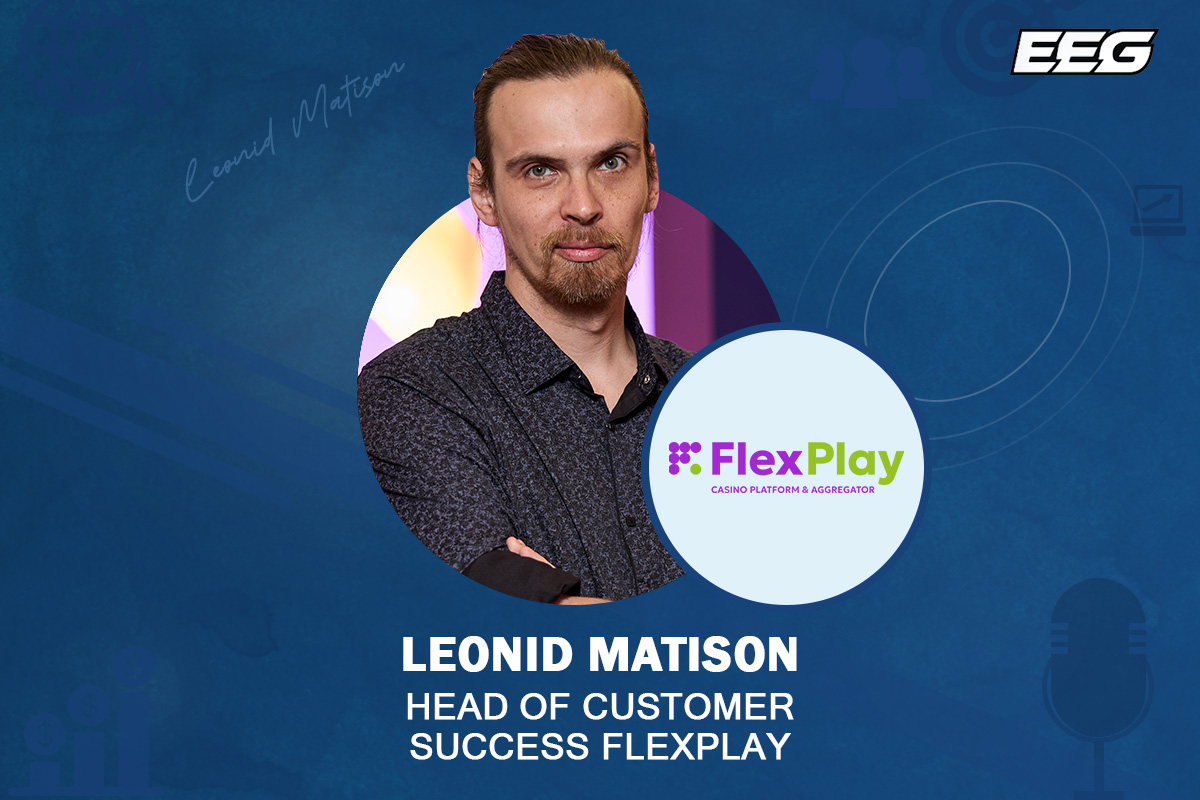
FlexPlay is entering a new phase with the launch of its own casino platform. Leonid Matison, Head of Customer Success, speaks with EEGaming about what inspired the company’s evolution, how it is helping partners adapt to change, and why a focus on flexibility, creativity, and collaboration is driving its vision for the future.
What inspired the move into the platform space, and how did that background shape your approach to creating it?
FlexPlay was born from EvenBet Gaming out of working closely with operators and studios as an aggregator, so we had a very clear view of where existing platforms were falling short. Many operators were forced to adapt their business models to rigid technology instead of the other way around.
Moving into the platform space was a natural evolution. We wanted to build a product that reflects how the market actually works today: fragmented regulation, fast-changing player behaviour, and the need to launch, test, and adapt quickly. That background shaped our approach significantly. Instead of building a “one-size-fits-all” platform, we focused on modularity, flexibility, and speed, so operators can grow without having to rebuild their infrastructure every time their strategy changes.
The platform market is full of established names. What makes FlexPlay stand out, and what kind of identity are you building for the brand?
Our differentiation isn’t about being louder or bigger — it’s about being more adaptable. FlexPlay is designed as a partner-centric platform, not a closed ecosystem.
We are building an identity around flexibility, transparency, and collaboration. Operators can customise their product, UX, content strategy, and growth roadmap instead of fitting into predefined templates. Commercially, we also remove unnecessary pressure at early stages, for example with models where partners don’t pay content fees until they actually start growing.
In a crowded market, identity comes from how you work with partners day-to-day, not just from features on a website.
You have described FlexPlay as a platform that “evolves alongside its partners.” What does that look like in practice for operators working with you?
We don’t treat launch as the finish line. We stay actively involved after go-live.
Operators receive ongoing support in analysing performance, adjusting content portfolios, testing new mechanics, and refining player engagement strategies. Our platform allows operators to add, remove, or prioritise content quickly, run experiments, and respond to real player data instead of assumptions.
We also actively listen to partner feedback and translate it into platform improvements. If a feature or workflow doesn’t serve operators in real conditions, we adjust it.
How does that flexibility help brands entering fast-changing or emerging markets where conditions can shift quickly?
Emerging markets rarely follow a stable or predictable path. This year, we are going to SiGMA Africa for the first time, and this continent is just the right example of how quickly and often market transforms. Regulation changes, payment preferences evolve, and player behaviour can shift very quickly.
FlexPlay’s flexibility allows operators to adapt without disruption: adjusting payment flows, reconfiguring bonuses, changing content focus, or localising UX. The platform isn’t locked into rigid structures, so operators can react to market signals in weeks rather than months.
This is especially important for brands entering highly volatile markets in Africa or LatAm, where the ability to pivot often determines success.
AI is a hot topic right now. How are you exploring its potential at FlexPlay, and what do you find most exciting about how it can genuinely support operators and players?
We approach AI very pragmatically. For us, it’s not about replacing people or creating black-box systems, but about enhancing decision-making.
We are exploring AI in areas like player segmentation, behavioural analysis, and content recommendations. It may help operators understand what players actually want and when. AI can also support smarter lobbies, more relevant promotions, and better detection of engagement patterns.
What excites us most is AI’s ability to reduce noise. It can highlight what truly matters and help them act faster and more confidently. But it can’t and will not fully replace strategic decision-making by humans.
Personalisation has become an essential part of modern player engagement. What does it mean to you in practice, and how is FlexPlay helping operators bring it to life?
For us, personalisation means relevance. Not just visuals or messages, but the entire player journey. FlexPlay enables operators to segment players based on behaviour, preferences, and performance, and then tailor content, bonuses, and communication accordingly. This helps players discover games that actually match their interests instead of scrolling through endless lobbies.
Good personalisation improves retention and trust. Players feel understood rather than pushed, and operators benefit from stronger long-term engagement.
But we suggest avoiding over-personalisation: if the players see only the recommended “long tail”, it may affect the operator’s revenue. Manual curation in addition to personalisation (like featuring a seasonal game during a holiday, or an operator’s personal favourite) allows for strategic promotions and branding.
Growth can be exciting but also challenging for operators. How do you and your team at FlexPlay support partners as they take that next step?
Growth often exposes weaknesses in technology or strategy. Our role is to help operators scale without losing control.
We support partners with analytics, reviews, and strategic guidance, helping them prioritise what to scale and what to optimise first. Technically, the platform is built to handle growth without forcing structural changes. Commercially, we remain flexible so that a transition is easier for operators.
Looking ahead, what are the key milestones or developments you are focused on for the year ahead?
Our focus is on deepening platform intelligence and partner value. This includes expanding AI-driven tools, improving content discoverability, and enhancing automation where it adds efficiency.
We are also investing in better insights for operators: not just reporting, but actionable recommendations that help them make smarter decisions faster.
Another priority is continuing to refine our platform based on real partner use cases, not theoretical ones.
And finally, when you think about FlexPlay’s future, what do you hope the company will represent within the wider iGaming industry?
I hope FlexPlay will be seen as a trusted growth partner — a company that helped operators build sustainable businesses rather than short-term results.
In an industry that often focuses on speed and scale, we want to represent balance: technology that adapts, content that makes sense, and partnerships built on mutual success.
If operators look back and say, “FlexPlay helped us grow the right way,” that will be the real measure of success.
The post FlexPlay: building a platform made to grow with its partners appeared first on Eastern European Gaming | Global iGaming & Tech Intelligence Hub.











Media Troopers has added a new artificial intelligence feature to its proprietary media buying platform, Media Cruiser DSP, introducing an automation layer called Automation Rules.
The company said Automation Rules is a rules-based automation engine designed to optimise campaigns using real-time data. Media Troopers said the tool can support actions including setting price ranges, highlighting and pausing underperforming metrics, creating exclusion filters, and adjusting bids without prior manual intervention.
Media Troopers positioned the release as a way to increase output while reducing operational costs, describing the workflow as “a single click” to apply automation.
Shmulik Segal, Chief Executive of Media Troopers, said, “Media Troopers is always looking to improve its systems to ensure that clients have the best technology available to help enhance their campaigns while also saving them time. This new AI feature is sure to be a game-changer among customers when it comes to increasing marketing output by taking on board and managing client data around the clock.”
The post Media Troopers adds AI automation tool to Media Cruiser DSP appeared first on Eastern European Gaming | Global iGaming & Tech Intelligence Hub.
Supplier plans to pitch a World Cup 2026 sportsbook bundle and its AI Suite at Stand 2572 on June 2–3.
BetConstruct AI will exhibit at SiGMA Asia 2026 in Manila, Philippines, on June 2–3, the company said, appearing at Stand 2572.
At the show, BetConstruct AI said it will highlight a “Best Sportsbook for the World Cup 2026” bundle built around “Special Bets, Powerfull, and Bet on League.” The company positioned the package as ready for operator activation without development work.
BetConstruct AI also said it will showcase its AI Suite, including “CRM AI, Umbrella AI, AI Game Recommendation System, and Betting Mate AI,” aimed at use cases such as churn prediction, risk consolidation, personalised casino experiences, and conversational sportsbook engagement.
As product context, the company cited its sportsbook and casino platforms, including “140,000+ pre-match events and 90,000+ live matches monthly” and “45,000+ games from 350+ providers via a single API.” It also highlighted its “Affigates Affiliate Ecosystem” with “7,000+ vetted affiliates and AI-based scoring.”
The company said new partners signing via the show can access commercial incentives, including “a 50% platform setup discount from day one,” “100% Core Suite Access free for the first 3 months (50% off for months 4–12), and third-party tools at 51% off for the first 3 months.”
The post BetConstruct AI confirms SiGMA Asia 2026 presence in Manila appeared first on Eastern European Gaming | Global iGaming & Tech Intelligence Hub.

ICONIC21 has launched iDealer Blackjack, a seven-seat RNG blackjack game that adds a “fully live, AI-powered dealer” to the traditional virtual table experience.
The iGaming content provider said the title was developed in collaboration with RAVATAR using its real-time interactive AI avatar technology, positioning the product as a response to demand for more interaction in RNG table games.
According to the companies, the dealer is real-time rather than pre-recorded or scripted, can welcome players by nickname, and can maintain conversation during play. ICONIC21 also said the dealer “remembers players and their past interactions,” while understanding players “in any language” and responding in English with localized touches.
The game’s background uses a live stream from one of ICONIC21’s studios, which the company said is designed to ground the AI dealer in a real-world environment.
Edvardas Sadovskis, Chief Product Officer at ICONIC21, said: “iDealer Blackjack is a natural progression for RNG tables. It’s important to highlight that this product is not a challenge to live casino as we know it. The AI-powered dealer is not trying to be human. It is exactly what it is: an expressive, well-built companion that makes the game more engaging.
One of the most interesting things we’ve already noticed is how players interact with it. Because they understand they are speaking to artificial intelligence, conversations go far beyond standard live casino chat. Players are asking about history, world facts, random trivia, jokes, and all kinds of unexpected topics during gameplay. This creates a completely different level of engagement around the table.
Also, the customisation roadmap is active and expanding. iDealer Blackjack is a strong foundation with a great deal still to be built on top of it.”
Ruslan Synytsky, CEO at RAVATAR, said: “The next decade of iGaming will be defined by AI-powered presence, personality, and interaction, not just better graphics or faster gameplay. ICONIC21 came to us with a strong sense of what their product needed to feel like for players.
iDealer Blackjack, built on our AI avatar platform, is the first step into that future and sets the direction for what RNG gaming can become.”
The post ICONIC21 launches iDealer Blackjack with a real-time AI dealer appeared first on Eastern European Gaming | Global iGaming & Tech Intelligence Hub.

-

 Asia6 days ago
EGT Brings High-Impact Asian-Themed Portfolio to SiGMA Asia 2026
-
Africa6 days ago
Gaming Realms expands into three African markets via SportyBet partnership
-
Africa6 days ago
Greentube partners with World Sports Betting to expand in South Africa
-
Conference6 days ago
Danish regulator to speak at Gaming in the Nordics launch event
-
BETER6 days ago
BETER expands US footprint with Illinois approval
-
affiliate marketing6 days ago
CasinoCanada partners with LolaJack Casino to expand Canadian visibility
-
Argentina6 days ago
Stake continues Latin American expansion with Argentina launch
-
Ben Wood CCO at Playson6 days ago
Playson strengthens North American footprint with Caesars Entertainment partnership