ATG
BOS Rejects ATG Call for Differential Tax: “It Constitutes Illegal State Aid”


Editor’s Take
Why this matters: The unity of the Swedish regulated market is fracturing. While the industry usually stands together against black market threats, ATG (the former state monopolist) has broken ranks by advocating for higher taxes on its competitors (casinos) while seeking a tax cut for its own core product (horse betting). BOS’s response is significant because it elevates the argument from “bad policy” to “illegal act.” By invoking EU State Aid rules, BOS is signaling that any government attempt to favor ATG will face immediate litigation in Brussels.
The Full Story
The conflict between Sweden’s commercial operators and the former horse racing monopoly ATG has escalated into a debate over European Union law.
Following a controversial op-ed by ATG CEO Hasse Lord Skarplöth in Dagens Industri (DI) on December 19, the Swedish Trade Association for Online Gambling (BOS) has issued a sharp rebuttal. BOS Secretary General Gustaf Hoffstedt argues that ATG’s proposal—to raise the general gambling tax to 26% while lowering the tax on horse betting to 18%—would likely be deemed illegal under EU state aid rules.
The ATG Proposal In his initial column, Skarplöth argued that the Swedish government should abandon a flat tax rate. He proposed increasing the tax burden on online casinos and sports betting to 26%, while simultaneously requesting a tax reduction for horse betting products to 18%. ATG argues this differentiation better reflects reality and protects the funding of the Swedish equine industry.
BOS: “A Legal Dispute with the EU” In a response published in Dagens Industri on December 22, Gustaf Hoffstedt rejected the proposal on two fronts: commercial viability and legal compliance.
While BOS has long argued that raising taxes will destroy channelisation rates (driving players to the unlicensed market), Hoffstedt’s newest argument focuses on competition law. He asserts that because ATG holds a de facto monopoly on horse betting, a tax break specifically for that vertical is a direct subsidy to a single company.
“In addition to weakening the competitiveness of the legal licensing system… a system with a differentiated gambling tax would place Sweden in a legal dispute with the EU. We should avoid that,” said Hoffstedt.
The Monopoly Argument Hoffstedt points out that while the Swedish Gambling Act technically allows other operators to apply for horse betting licenses, the reality is different. ATG retains exclusive access to pool data and direct connections to trotting and galloping tracks. Furthermore, ATG had 45 years of monopoly protection to build liquidity in its pools, creating a network effect that competitors cannot realistically challenge.
Therefore, BOS argues, a tax cut for “horse betting” is, in practice, a tax cut exclusively for ATG.
“If a benefit can in practice only be used by a single company, it is selective in the sense of state aid law,” Hoffstedt explained. “Against this background, a differentiated gambling tax for horse racing would mean that the state, through the tax system, provides an economic advantage that can in reality only accrue to a single company.”
Debunking the UK Comparison Skarplöth previously cited the United Kingdom as an example of a jurisdiction with successful differential taxation. Hoffstedt dismissed this comparison as “misleading.” In the UK, the market for horse betting is competitive, with multiple operators offering bets on equal terms. In Sweden, the structural advantages held by ATG make such competition impossible.
The Ultimatum: Open the Pools or Keep Taxes Flat BOS concluded with a challenge to ATG and the government. If ATG wants a unique tax bracket, it must surrender its unique market position.
“The uncomfortable but necessary conclusion for ATG is therefore clear. You cannot both maintain the current special status for horse racing and at the same time introduce a differentiated gambling tax,” Hoffstedt wrote.
He outlined that for a differential tax to be legal, ATG would need to open its betting pools to other companies at neutral compensation levels. If ATG wishes to keep its pools closed, “taxation must continue to be the same for all gambling products.”
The post BOS Rejects ATG Call for Differential Tax: “It Constitutes Illegal State Aid” appeared first on Gaming and Gambling Industry Newsroom.











ATG® Casino has reported a second record-breaking jackpot win in six months after a player in Stockholm, Sweden, won SEK 21m (€2m) from a jackpot powered by EveryMatrix’s EngageSuite. The win was announced on Thursday, June 18th, 2026.
According to the supplier, the jackpot was delivered via EngageSuite Jackpots, which uses in-game widgets to display jackpot values in real time. EveryMatrix said operators can configure up to four jackpots per game without changing base bets, and can use simulation tools to estimate win frequency.
EveryMatrix also cited internal data indicating that players participating in games linked to EngageSuite Jackpots generate 66% more Gross Gaming Revenue (GGR), bets and rounds per user than players on non-linked games. The jackpot product forms part of the broader EngageSuite portfolio, which also includes tournaments, challenges, loyalty mechanics, bonuses and mini games.
ATG Casino previously recorded a €1.4 million MEGA Jackpot win earlier this year through the same product. In May, EveryMatrix extended its partnership with ATG® Casino, with the operator going live with Fantasma Games content, which can be linked to one or multiple independent jackpots via EveryMatrix’s aggregation platform.
Stian Enger, Head of Casino, EveryMatrix, said: “Seeing another multi-million jackpot winner at ATG® Casino so soon after the previous milestone win shows the sustained value EngageSuite Jackpots brings to operators and players.
“Moments like these create genuine excitement for players while giving operators the flexibility to build engaging jackpot experiences across their casino content.”
Jan Sonnevi, Head of Casino, ATG, added: “Awarding another significant jackpot prize is fantastic news for both our players and our casino. The combination of EveryMatrix’s content and engagement solutions continues to deliver memorable moments, and this latest win is another example of how our partnership enables us to provide unique entertainment to our Swedish customers.”
The post ATG Casino player in Sweden wins €2m jackpot powered by EveryMatrix appeared first on EE Gaming | Global iGaming & Tech Intelligence Hub.
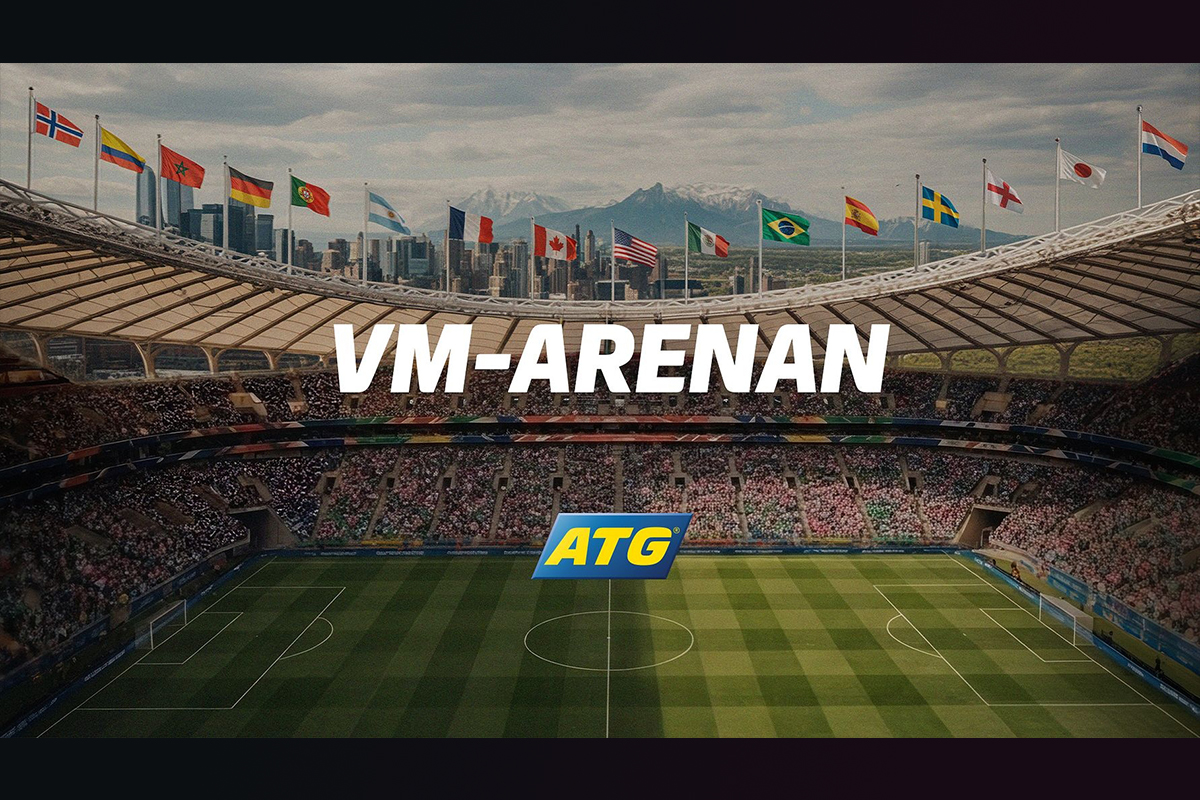
The World Cup is the world’s biggest sporting event and as the market leader in football betting in Sweden, ATG has launched a comprehensive initiative ahead of this summer’s championship with a focus on experience, content and playing value. At the center is the new World Cup Arena – a dedicated hub where everything related to the championship is gathered. At the same time, ATG is launching new commercials within the established concept Kom in i matchen.
“As the largest player in football betting, we have both a responsibility and an opportunity to really make a difference for our customers. With VM-Arena, we collect all World Cup content in one place and combine it with really sharp offers. We are committed to becoming the obvious first choice for anyone who wants to add extra excitement to the matches during this summer’s football festival,” said John F. Andersson, head of sports betting at ATG.
In the World Cup Arena, customers have access to odds, statistics, betting tips and moving content, along with enhanced offers that run throughout the tournament.
The World Cup offer includes:
• Increased refund on selected odds – means that a larger proportion of the stakes go back to the players, which increases the value of the game.
• 2UP – early payout – the bet is paid out as a win as soon as the team is leading by two goals, regardless of how the match later ends.
• Substitute – means that bets placed on a starting player are automatically transferred to the player who replaces them when a substitution is made.
• Packaged Bet Builders and special bets – pre-composed bets where several match events are combined in the same game, with extra focus on Sweden’s matches.
• Recurring odds boosts – continuous offers with extra sharp odds on selected games throughout the World Cup.
In connection with the World Cup, ATG is also launching a series of new films within the established concept of Enter the Match.
“Many people associate ATG with trotting and galloping, but we are also the largest in sports betting in Sweden – betting on football, hockey and over 50 other sports. With the new campaign, we want to strengthen our position in sports in general and football in particular by getting close to the supporters who live with their team far beyond the stadium and the match itself,” said Mikael Gustafsson, Marketing Manager Sports at ATG.
The post World Cup Fever is Rising – ATG is Consolidating its Offering in the New World Cup Arena appeared first on EE Gaming | Global iGaming & Tech Intelligence Hub.
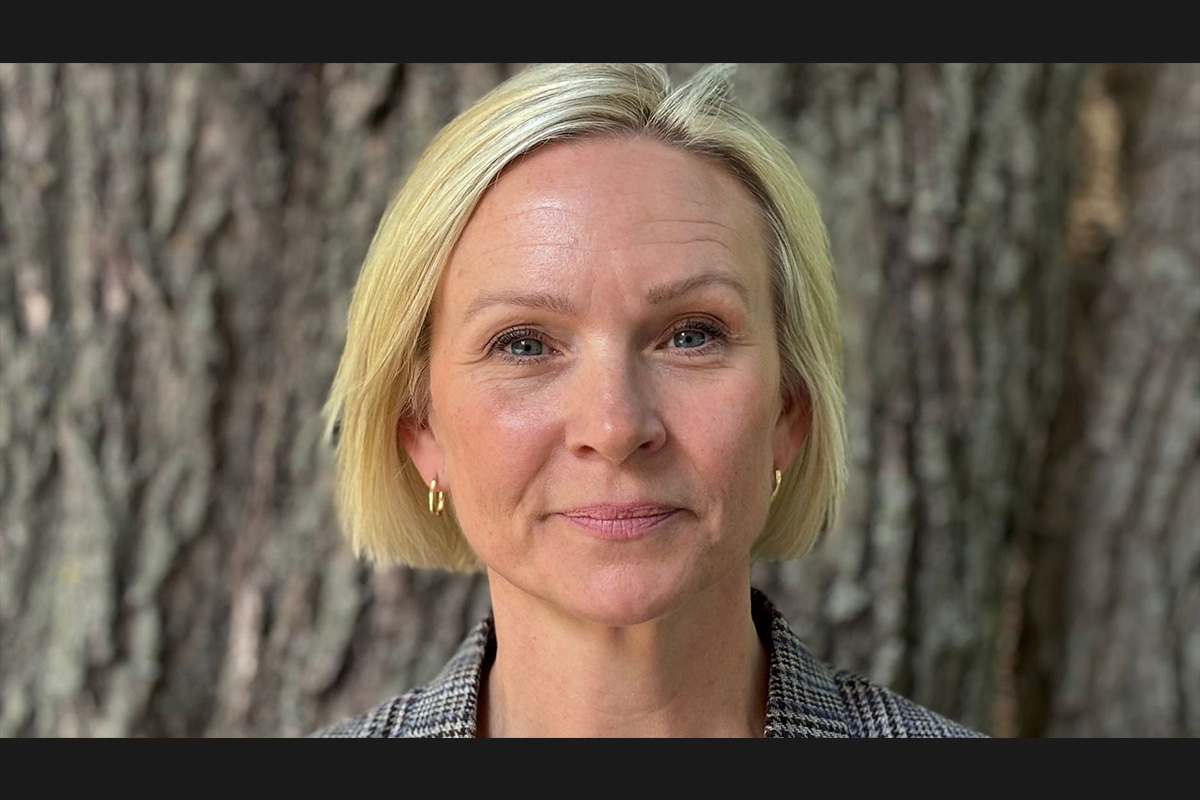
The board of directors of AB Trav och Galopp (ATG) has appointed Anna Romboli as their new CEO. Anna Romboli will take up the position in December 2026.
Anna Romboli most recently came from the role of business area manager for Svenska Spel Tur. She has previously held senior positions at, among others, game developer NetEnt and design and innovation agency Veryday.
“I am very happy and proud to be entrusted with leading ATG. It is a company with a strong history, many committed employees and a special significance for the Swedish horse industry. I look forward to continuing to develop the offering to our 1.4 million customers together with the employees and building on what makes ATG unique,” said Anna Romboli.
ATG is owned by Svensk Travsport and Svensk Galopp and is today the largest gaming company in the Swedish license market. Through its operations, ATG contributes significant funds to Swedish trotting and galloping sports every year, which also strengthens the Swedish horse industry in general.
“Anna has extensive experience in the gaming industry and has shown over many years that she can develop both businesses and people. She is a leader who combines business acumen with great commitment and customer focus. The board is very pleased that she has accepted the assignment as CEO of ATG,” said Peter Norman, Chairman of the Board of ATG.
Jörgen Forsberg will continue as acting CEO of ATG until Anna Romboli takes office in December.
The post AB Trav och Galopp Appoints Anna Romboli as New CEO appeared first on EE Gaming | Global iGaming & Tech Intelligence Hub.

-

 América Latina6 days ago
Las diferencias locales de Argentina representan tanto un desafío como una oportunidad para el sector del iGaming
-
Africa6 days ago
Booming Games signs content deal with World Sports Betting in South Africa
-
Latest News6 days ago
Connect with N1 Partners at G Gate Conf 2026
-
Gmonitor.ai6 days ago
Gmonitor llega a Latinoamérica: la plataforma de inteligencia de mercado para operadores debuta en seis mercados regulados
-
game-launch6 days ago
Million Games launches East West Wild slot with progressive multipliers
-
 Latest News6 days ago
Sportradar Report | World Cup 2026: Opportunities for the Latin American Sports Betting Market
-
eSports7 days ago
G2 partners with PUBG MOBILE Esports to scale Western Europe competition
-
AI6 days ago
Veikkaus rolls out OpenBet’s Neccton responsible gambling platform ahead of 2027 reform