Interviews
HIPTHER Community Voices: Alieu Kamara – Founder and CTO of AmaraTech


You’re the Founder and CTO of AmaraTech—what inspired you to start the company, and how has your journey shaped where you are today?
Our Story: Technology Innovation Born from Purpose:
AmaraTech IT Solutions, founded in 2020 in the Washington, DC metro area and expanding strategically into Africa, dedicated to transforming communities through technology. Our journey began with a profound experience in Liberia, a country riddled by 14 years of brutal civil war, witnessed the limitations on human potential and economic growth due to inadequate technology infrastructure. This experience sparked a deep commitment to making advanced technology accessible for all, enabling organizations to flourish amid challenges. We truly believe in technology’s amazing ability to empower and transform communities everywhere.
Intro Link: https://www.youtube.com/watch?v=wstteIwaSKk
What’s one big lesson you’ve learned as a founder that you wish you knew earlier?
Learning to say no as a founder is one of the most critical yet counterintuitive skills for startup success. The natural instinct is to say yes to every opportunity, partnership, feature request, and meetings, but this creates resource dilution, product confusion, and team fatigue that ultimately kills focus and progress. Startups with limited time, money, and energy must recognize that every “yes” is an implicit “no” to something else, and that niche dominance beats broad mediocrity. The cost of learning this lesson late includes providing so many products that confuse users, burning resources on low-impact initiatives, and missing opportunities in core focus areas. Successful founders develop “hell yes” criteria, create decision frameworks, practice graceful declines, and conduct regular priority audits to maintain laser focus. The paradox is powerful: saying no to more opportunities allows you to say a much bigger yes to what truly matters, creating clearer product vision, stronger team alignment, better resource utilization, and ultimately more fundable and successful business.
In your view, what makes great managed services today—and how do you bring that to life in the work you do?
At AmaraTech, we believe great managed services today go far beyond traditional IT support—they require proactive, AI-driven cybersecurity intelligence tool that prevents threats before they impact business operations. We deliver this through our integrated ecosystem approach, where cutting-edge threat detection, cloud infrastructure, and business applications work seamlessly together under 24/7 SOC monitoring. What sets AmaraTech apart is our commitment to being true strategic partners: we develop deep industry expertise to understand each client’s unique compliance requirements and operational challenges, then translate our technical capabilities into measurable business outcomes like revenue protection and competitive advantage.
Through transparent reporting, continuous innovation with leading cybersecurity vendors, and flexible engagement models that scale with growth, we don’t just manage technology—we architect security-first solutions that drive business success. When you partner with AmaraTech, you’re not getting a vendor; you’re gaining a cybersecurity-focused technology advisor dedicated to keeping your business protected, compliant, and positioned for innovation in an increasingly complex threat landscape. My passion for helping organizations embrace progressive technology drives successful business transformation and seamless technology integration, positioning our company as a leader in next-generation cybersecurity solutions.
Do you see any gaps in the tech industry that you think more companies should be addressing?
The cybersecurity industry urgently needs to develop AI-native security frameworks that can match the speed and sophistication of AI-powered attacks, which are scaling exponentially while traditional defenses remain linear. Current cybersecurity frameworks are built on reactive, signature-based models that cannot adapt fast enough to counter AI-generated attack variations, creating dangerous gaps in real-time threat response.
The industry must prioritize developing adaptive security architectures that integrate human expertise with AI-driven defense systems, democratize advanced security tools for organizations of all sizes, and establish rapid threat intelligence sharing networks that operate at machine speed. At AmaraTech, we’re addressing these framework gaps by building AI-enhanced security operations that evolve with threat patterns, making enterprise-grade adaptive defenses accessible through managed services, and creating collaborative intelligence systems that amplify human analyst capabilities rather than replacing them. The critical challenge is shifting from traditional periodic security updates to continuous, proactive AI-native frameworks that can defend against tomorrow’s threats today—because the window for reactive cybersecurity approaches is rapidly closing in an AI-accelerated threat landscape.
How do you keep up with the fast-changing tech landscape—especially when it comes to things like cybersecurity, compliance, or AI?
As cybersecurity threats evolve at unprecedented speed with AI-powered attacks and constantly shifting compliance requirements, AmaraTech maintains its competitive edge through a comprehensive intelligence ecosystem that combines strategic vendor partnerships, real-time threat monitoring through our Security Operations, and active participation in threat intelligence sharing communities. Our team maintains cutting-edge certifications while operating hands-on testing labs for emerging AI security technologies, ensuring we can rapidly assess, deploy, and scale new defensive measures across our client portfolio within hours of threat emergence. This systematic approach to continuous learning—from regulatory compliance partnerships to client-driven insights and internal knowledge sharing—positions us as a proactive cybersecurity advisor who anticipates and prepares for threats before they impact business operations. While many MSPs react to security incidents, our commitment to staying ahead of the threat landscape through multi-layered intelligence gathering and rapid adaptation capabilities ensures our clients receive protection against both current attacks and tomorrow’s emerging cyber challenges, making cybersecurity readiness a competitive advantage rather than a reactive necessity. It enables organizations to thrive in our increasingly connected, threat-aware digital landscape by fostering inclusive partnerships that bridge technology gaps and accelerate innovation adoption across diverse business sectors.
What’s coming up next for you and AmaraTech—any big plans, goals, or ideas you’re excited to roll out?
I’m currently leading the development of a groundbreaking AI-powered cybersecurity platform designed to revolutionize security management for businesses and organizations through advanced technology integration and intelligent automation. This comprehensive solution leverages custom AI models built on cutting-edge large language models to enhance user interaction and automate complex security workflows, delivering protection through a dual-module architecture. The platform combines systematic Vulnerability Management—featuring automated assessment, structured remediation workflows, and continuous monitoring capabilities—with advanced Threat Intelligence that generates operation-specific insights tailored to each organization’s unique risk profile, industry sector, and business context. By delivering actionable threat intelligence for informed risk assessment and strategic remediation planning, this innovation empowers organizations to systematically identify, prioritize, and address security risks while maintaining regulatory compliance, ultimately improving overall security posture and delivering personalized cybersecurity experiences that create measurable business value across diverse client platforms.
The post HIPTHER Community Voices: Alieu Kamara – Founder and CTO of AmaraTech appeared first on European Gaming Industry News.












Check out our latest Q&A w/ Robert Miller, President, Kiron North America.
Everyone is talking about the opportunity presented to the North American market by the World Cup. Just how big an opportunity do you believe it is? And what is the size of this opportunity for virtual sports?
For live sports betting, the World Cup is one of the biggest opportunities available. It drives significant betting volume, attracts new customers and creates moments of engagement that few sporting events can match. For virtual sports, the opportunity is different. The World Cup can help introduce new players to a broader betting ecosystem, but virtual sports are not dependent on major tournaments to succeed. Their real strength is providing consistent engagement throughout the year. While the tournament creates a short term surge in activity, the long term opportunity lies in offering customers engaging experiences every day, not just during major events.
Events like the World Cup present a huge demand for content from operators. How can virtual sports help operators in North America during these times?
Live matches will always be the centrepiece of the World Cup experience and rightly so. However, operators also need ways to keep customers engaged between matches and throughout the wider tournament journey. Virtual sports complement live betting by providing continuous entertainment and additional touchpoints when there is no live action available. The greatest value comes when virtuals are integrated into a broader engagement strategy that keeps players connected to the platform before, during and after major sporting events.
The North American market has been maturing significantly in the last few years, does a tournament as big as the World Cup showcase the strength of the market? Or highlight the flaws in its set-up?
It does both. The strength of the market is clear in the scale of customer participation and the growing appetite for sports betting experiences. Major tournaments demonstrate just how much demand exists. At the same time, they highlight one of the industry’s biggest challenges: retention. Many operators are highly successful at attracting customers during major events, but maintaining engagement afterwards remains a key focus. Long term success will come from building experiences that keep players engaged throughout the year, not just during peak sporting moments.
North American sports fans have a very different relationship with football compared to European or Latin American audiences. How does that affect the way virtual football products need to be positioned or presented in this market?
Product positioning needs to reflect the realities of the local audience. Football continues to grow in North America, but it does not yet have the same cultural position it enjoys in many other regions. For that reason, virtual football products should focus on accessibility, entertainment and ease of engagement. Players respond to experiences that are intuitive, fast paced and easy to understand. The emphasis should be on delivering continuous action and a compelling user experience rather than relying solely on familiarity with the sport itself.
The World Cup has a jam-packed schedule and the North American sports calendar is one of the most packed in the world. With so much live content available, how do you make the case for virtual sports to operators who believe they already have enough sports action to offer?
The conversation is not about choosing between live sports and virtual sports. The most effective operators recognise that the two can work together. Live sports naturally create periods of inactivity between events, while different player segments engage with content in different ways. Virtual sports fill those gaps and create additional opportunities for interaction. When positioned correctly, they enhance the overall entertainment offering rather than compete with live sports.
When the World Cup has finished, what is the lasting impact on virtual sports in North America and how do providers ensure they do not lose any momentum they have gained?
The lasting impact comes from what operators do with the attention generated during the tournament. Major sporting events create opportunities to introduce new customers to products and experiences they may not have explored previously. Maintaining momentum requires strong operational integration, seamless customer journeys and products that continue to deliver value long after the tournament ends. Providers that focus on year round engagement rather than short term spikes will be best positioned to benefit.
The post How Virtual Sports Can Help Shape The North American Market During and After the World Cup appeared first on Americas iGaming & Sports Betting News.
2026 FIFA World Cup
Roundtable – More than just a Match: How Can Online Casinos Benefit from Increased FIFA World Cup Traffic

Participants
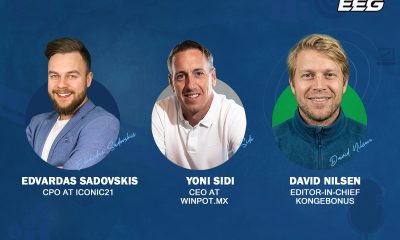
David Nilsen, Editor-in-Chief, Kongebonus
Yoni Sidi, CEO at Winpot.mx
Edvardas Sadovskis, CPO at ICONIC21
Summary
The 2026 FIFA World Cup begins this June, and it is set to create one of the biggest acquisition opportunities the iGaming industry has witnessed. Naturally, all of the attention this summer will turn to sportsbooks, but with many operators also offering online casinos, how can they ensure that their casinos benefit from this football-driven traffic increase?
The opportunity is real, but so is the risk of missing it. Many casual bettors will be signing up for a summer of betting action, and this represents a new, untapped audience for online casinos. However, converting sports bettors into online casino players, and vice versa, is a notoriously difficult challenge, and it is one many operators will be hoping to overcome this summer.
For this roundtable, we’ve brought together a panel of experts from different sectors of the industry to explore how online casinos can take advantage of this opportunity, what kind of casino content interests sports bettors, and more.
With millions of new sports bettors expected to sign up, what can operators do to make the most of this window?
David Nilsen, Editor-in-Chief, Kongebonus
The goal is simple. Get people active and keep them active for the whole tournament, not just one match. The audience is genuinely there. Deutsche Bank reckons US handle alone lands somewhere between 2.5 and 4.1 billion dollars, more than double Qatar 2022. But a clean, fast sign-up is everything. These are casual punters.
They will abandon a long registration mid-game, so any friction at deposit, KYC or withdrawal costs you the customer on the spot. Once they are in, that is where you open up the cross-sell into a casino and live casino.
At Kongebonus we see this with our Norwegian audience every tournament. The mistake most operators make is treating the sign-up as the win. It is not. It is just the door. The actual work is giving someone a reason to come back for the next match day, and the one after that.
Yoni Sidi, CEO at Winpot.mx
The sign-up moment is everything. Onboarding flows need to surface casino products immediately, and welcome offers should reward exploration across both verticals from day one.
New registrants during a tournament are impulse-driven, and the window between matches is prime casino time. Operators need automated triggers that capitalise on those gaps. This means post-match lobby pushes, half-time promos, and next-day re-engagement.
KYC and payment friction will kill conversion faster than any competitor, so operators who have invested in fast verification and instant withdrawals will win the acquisition battle.
And don’t treat it as a pure volume play. Segmenting new users early allows for smarter casino cross-sell from the very start.
Edvardas Sadovskis, CPO at ICONIC21
The market will be saturated with promotions, that’s a given. Providers should go beyond the standard offer and think carefully about how they build their promotions to fit their operator partners needs: the mechanics, the timing, the creative execution, and crucially, how well it reflects the season.
At ICONIC21, personalization is at the core of what we offer, and the FIFA World Cup is exactly where that capability becomes a real competitive differentiator. We can move quickly to adapt games and content to a specific theme and audience profile. Football Cup Roulette, Football Cup Blackjack 360, Football Cup Gravity Blackjack are all examples of that in practice. Operators don’t need to rely on generic, off-the-shelf content during one of the biggest acquisition windows of the year. The technology and the partnerships exist to do something genuinely distinctive. The question is how operators choose to use them.
What have previous tournaments taught us about how sports bettors interact with casino products, and how can the industry prepare?
David Nilsen, Editor-in-Chief, Kongebonus
We have learned that cross-selling into casino is genuinely hard, and most operators reach for the easy route. Halftime free spins. You will see them everywhere this summer. There is nothing wrong with that. A free-spin offer while someone is already logged in is a sensible nudge. But be realistic about who these people are.
Most FIFA World Cup traffic is occasional punters who log in, stick a tenner on Norway or a correct score, and move on hoping for the best. Research shows this type often does not know the sector’s vocabulary and will not sit through a long process mid-match. So the lesson is straightforward. Do your retention work while they are actually active and engaged. That window is short. Once the match ends, the attention is gone, and no amount of clever follow-up brings it back.
Yoni Sidi, CEO at Winpot.mx
Euro 2020 and Qatar 2022 both showed the same pattern – casino engagement spikes on match days. The gap days are where operators lose people.
Live casino consistently outperforms slots during tournaments because it mirrors the event feeling of watching a match.
The clearest lesson is that operators who built cross-sell journeys before the tournament started outperformed those who reacted in real time.
Loyalty and gamification mechanics that ran across both verticals – a FIFA World Cup leaderboard rewarding sports and casino play alike – showed meaningful uplift.
It’s important to understand that the preparation window matters more than in-tournament creativity.
Edvardas Sadovskis, CPO at ICONIC21
What past tournaments consistently show is that the boundaries between verticals are more permeable than we sometimes assume. A player who arrives through sportsbook during a major tournament is not necessarily a sportsbook-only player forever. Context and theme play an enormous role in where attention goes.
Cross-sell remains one of the most valuable and underutilized levers in the industry. During this season, actually all verticals matter, and operators who maintain a healthy, well-curated mix of live casino, slots, and RNG content alongside their sportsbook offering, if available, are the ones best positioned to capture that wider engagement.
The theme itself does a lot of the work. Football enthusiasm creates a mood and that mood travels across verticals. Players who might not ordinarily gravitate toward a slot or a live table will engage with one that feels connected to the moment they’re already excited about. The industry’s job is to make that journey feel natural.
How do casino-first operators stay visible and relevant when sportsbook brands dominate the tournament?
David Nilsen, Editor-in-Chief, Kongebonus
Honestly, this worry is a little overblown. Casino-first players stay casino-first players. If they fancy a FIFA World Cup bet, they already know exactly where to find it, so you do not need to fight hard to cross-sell them. And here is what people forget. If a big operator runs a huge sportsbook campaign and that same player already uses their casino, the player is being reminded of the brand, not lost to it. Nobody suddenly forgets what an operator does just because the marketing went football-flavoured for a month. So, casino-first brands should not panic and try to out-shout the sportsbooks. Stay true to the product. Lean into what makes you different.
Trust that your audience knows you. The summer noise fades by July. Your core proposition should not move an inch while everyone else is shouting about Mbappé.
Yoni Sidi, CEO at Winpot.mx
Casino-first operators shouldn’t try to out-shout sportsbooks on football, because they’ll lose that battle on media spend.
The smarter play is owning the moments between matches and positioning casino as the entertainment layer around the tournament, not a competitor to it. Influencer and affiliate channels that are casino-native can carry the brand without getting drowned out in sports media noise.
But the real weapon is CRM. Direct-to-player communication doesn’t compete with broadcast budgets, and a well-timed push notification at 10pm after the final whistle will outperform a TV spot every time.
Edvardas Sadovskis, CPO at ICONIC21
Relevance comes from keeping content fresh, timely, and specific and that’s where well-structured promotions earn their place. They represent content engines and player acquisition tools. The entire technical setup of the promotion shapes how a provider’s portfolio feels to a player during a tournament window.
We’re running the ICONIC Showdown football cup tournament across 11 of our games, with a particular focus on our limited-time personalized titles: Football Cup Roulette, Football Cup Blackjack 360, Football Cup Gravity Blackjack and The Kickoff. Alongside the promotion, we’ve launched Soccer World Championship, a football-themed slot designed to encourage natural cross-play between verticals.
Casino-first operators don’t need to compete with sportsbook on sportsbook’s terms. They need to offer an experience that’s thematically connected to the season while playing to the strengths of their own offerings.
The 2026 FIFA World Cup spans three countries and multiple time zones. How does the fragmented schedule affect preparation, and can content counter it?
David Nilsen, Editor-in-Chief, Kongebonus
The schedule is the single biggest challenge for us in the Nordics, and also the biggest opportunity. With matches landing late at night or at odd hours, the Norwegian fan is often watching alone. Partner asleep, no one to react with. That gap is exactly what we built the Kongebonus World Cup hub around, what we are calling the home of the second screen. It centres on a live, moderated chat where fans follow the action together, share predictions and react in real time, alongside a free Pick’em game and a leaderboard. From a content angle, the answer to a fragmented schedule is not more odds. It is connection. Give people somewhere to actually be during those midnight kick-offs and the awkward time zones stop being a reason to switch off. They become a reason to show up.
Yoni Sidi, CEO at Winpot.mx
With matches running across the USA, Canada, and Mexico, there’s no clean primetime window. Kick-offs will be spread from early afternoon through late evening, depending on the market.
Honestly, this is an opportunity for casino. There will always be a gap in any time zone where no match is live, and smart promotion scheduling around local match times can fill those windows.
For operators serving Latin American markets – particularly relevant given Mexico’s co-hosting – the operational challenge is CRM.
Campaigns need to be time-zone aware. A blanket broadcast approach will underperform, which means timing localisation is as important as language localisation.
Edvardas Sadovskis, CPO at ICONIC21
The fragmented schedule is actually less of a constraint than it might appear because not everything needs to be tied directly to a specific match time or result. The atmosphere and the theme carry their own power, and content that captures that energy will perform regardless of which time zone a player is in.
Our approach with the ICONIC Showdown reflects that thinking. We’re running the promotion from the 9th to the 19th of July, aligning with the quarter-finals, semi-finals, and the final. Those are the moments that carry the most weight emotionally and commercially. That gives players a meaningful window to engage at their own pace, rather than chasing a narrow match-by-match timeline.
There’s also a practical advantage to this approach: a lot of providers are running activations across the entire tournament period, including the build-up. By focusing on the decisive phase, we’re competing on quality of moment rather than volume of coverage and giving the promotion room to breathe.
What casino content will perform best, and are operators treating casino and sportsbook players as one connected audience?
David Nilsen, Editor-in-Chief, Kongebonus
If your cross-sell strategy is a tired football-themed slot, it will not work. It is lazy and players see straight through it. And please, do not just default to Starburst either. The way to actually turn a football crowd into casino play is to put your best content in front of them. The most genuinely fun, highest-quality slots you have, football-themed or not. People do not engage with a mediocre game because it has a ball on the reels. They engage with a great game. So yes, treat them as one connected audience, but respect them as one.
The connected-audience thinking only pays off if the product on the other side is something a person would actually choose to play. Quality is the cross-sell. The theme is just decoration, and decoration has never retained anybody.
Yoni Sidi, CEO at Winpot.mx
Football-themed slots are the obvious answer, but the honest truth is most underdeliver.
The studios doing it well are building mechanic-first games that happen to carry a football skin, not the other way around.
Live casino, particularly game shows, is the format most likely to resonate with sports bettors, because they provide real-time, social, high-energy action that feels closest to watching a match.
The harder truth is that the industry remains largely siloed, with separate CRM journeys, separate bonus budgets, and separate teams. The player doesn’t see two products.
The ones who will win this summer are those with a unified player view who serve casino as a natural extension of the sports experience.
Edvardas Sadovskis, CPO at ICONIC21
Themed content will lead. Players respond to content that reflects the moment they’re living in, and football is one of the few cultural events that cuts across demographics broadly enough to work across all verticals simultaneously.
Our power lies in the breadth of what we offer: live casino, slots, and RNG games, representing three verticals that each bring something distinct to a player’s experience, and that together create a genuinely comprehensive product environment for operators. During the World Cup, we are using exactly that mix.
On the question of treating casino and sportsbook players as a connected audience, the reality is that the audiences will remain largely distinct in their primary behaviours. But they can absolutely be united by theme, by atmosphere, and by an experience that makes movement between verticals feel intuitive.
How can operators balance short-term acquisition with long-term retention after the tournament ends?
David Nilsen, Editor-in-Chief, Kongebonus
Be sober about this. Long-term retention is always the hard part at a mega-event. Huge numbers of occasional players come in, have two or three bets on their country, and they are gone. That is just the nature of it.
Spamming them afterwards genuinely does not work. The real strategy is to use the active window to show a product worth returning to, then plant a hook into the future. Get them to place a season-long outright on the next Premier League or Champions League, or a bet on the opening weekend with a small reward attached. Optimove found 65 percent of US bettors plan to keep wagering even after their team is knocked out, so the appetite to stay is there. You will not turn most occasional punters into casino regulars. That is a fantasy. But you can become the operator they instinctively return to next time.
Yoni Sidi, CEO at Winpot.mx
The biggest mistake is building welcome offers that are purely sports-focused – you acquire a sports bettor, and that’s all you ever have.
Structured onboarding that introduces casino in week one, not week five, is critical. First-session casino exposure, even light-touch, significantly improves 90-day retention across both verticals.
Retention mechanics also need to outlast the tournament itself. A World Cup loyalty campaign that ends after the final leaves players with nothing to stay for.
The programme needs a natural handover, such as seasonal sports, ongoing casino promotions and VIP pathways.
LTV modelling should reflect the reality that a player who touches both verticals in their first 30 days is worth multiples of a single-vertical player. That should be driving investment decisions, not treated as a nice-to-have.
Edvardas Sadovskis, CPO at ICONIC21
It’s worth broadening the frame. It’s equally about an operator’s existing, loyal casino audience, who arrive at a World Cup window expecting something seasonal and new players, maybe coming from competitors or sportsbook-only platforms to join a promotion.
Short-term promotional content that performs well during the tournament doesn’t have to disappear. A limited-edition live table can remain in the lobby after the promotion ends reverting to its standard theme and continuing to serve as a player favorite.
That thinking is what separates acquisition-focused operators from retention-focused ones. The FIFA World Cup creates the spike. Smart content strategy and a well-structured lobby are what convert that spike into sustained engagement across all the verticals.
The post Roundtable – More than just a Match: How Can Online Casinos Benefit from Increased FIFA World Cup Traffic appeared first on EE Gaming | Global iGaming & Tech Intelligence Hub.
As Europe’s largest iGaming markets mature, suppliers are increasingly turning their attention to smaller, often overlooked jurisdictions across Central and Eastern Europe. Markets such as Slovenia, Bulgaria and Romania may lack the scale of the UK or Italy, but they offer something equally valuable – stable regulatory frameworks, strong land-based heritage and growing online adoption.
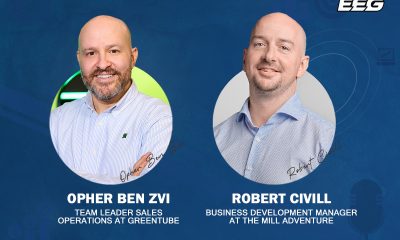
In this roundtable discussion, Opher Ben Zvi, Team Leader Sales Operations at Greentube and Robert Civill, Business Development Manager at The Mill Adventure, explore how emerging European markets are evolving, how they compare to more mature jurisdictions, and why a ‘multi-market’ approach is becoming increasingly important for sustainable growth.
What distinguishes an emerging iGaming market in Europe today, and how do these markets differ from more mature jurisdictions in terms of player behaviour, regulation and commercial opportunity?
Opher Ben Zvi – Emerging European iGaming markets are typically defined less by scale and more by structure and trajectory. Markets across Central and Eastern Europe, such as Romania, Bulgaria and Slovenia, often benefit from stable or steadily evolving regulatory frameworks, combined with strong land-based casino heritage. This creates a player base that is already familiar with classic slot formats and trusted brands, which is not always the case in newly regulated regions elsewhere. Compared to more mature jurisdictions like the UK or Italy, player behaviour tends to lean more heavily towards recognisable content, with a slower shift toward highly gamified or experimental mechanics. Commercially, while individual market size may be smaller, barriers to entry are often clearer and competition less saturated. This allows suppliers to build meaningful positions over time, particularly when supported by local partnerships and a well-adapted content strategy.
Robert Civill – The term “emerging market” can be slightly misleading in a European iGaming context. Many of the jurisdictions often grouped into this category are already mature in terms of regulatory system, player behaviour and competitive dynamics, even if they differ economically from Western Europe.
Romania, as an example, is already a well-established, regulated and competitive online market. At the same time, you have markets like Georgia, where we support a licensed operator today and where player behaviour is arguably more advanced than in parts of Western Europe, with strong engagement in loyalty mechanics, leaderboards and promotional formats that, in some cases, are restricted in larger “mature markets”.
The more useful lens is to look at where opportunity is forming, rather than whether a market fits an “emerging” label. Poland has been a topic of debate for years due to the ongoing monopoly of online casino and whether the market will eventually move towards an open licensing structure. In other cases, opportunity exists in much larger markets that are currently constrained, Germany being the obvious example. It’s hardly an “emerging” market, but despite its enormous long-term potential, factors such as turnover tax and strict regulatory limitations continue to impact channelisation and commercial viability for would-be market entrants.
So, the distinction is less about maturity, and more about timing, structure and whether the underlying economics make sense.
Individually, smaller markets may offer limited scale, but collectively they can represent significant value. How important is a multi-market approach across Central and Eastern Europe to building sustainable growth?
Opher Ben Zvi – A multi-market approach is essential when operating across Central and Eastern Europe. While no single market may rival the scale of Europe’s largest jurisdictions, collectively they represent a significant and sustainable growth opportunity. For Greentube, expansion across these smaller is not about short-term gains, but about building a strong regional footprint over time. These markets often share similar characteristics, from player preferences to regulatory structures, allowing suppliers to leverage learnings and efficiencies across multiple jurisdictions. At the same time, diversifying across several regulated markets reduces reliance on any single territory and creates a more balanced, resilient growth model. By establishing a network of operator partnerships, suppliers can unlock a greater value that far exceeds the sum of its individual parts.
Robert Civill – For most operators, launching across multiple jurisdictions simultaneously is neither practical nor necessary. Individual markets can deliver meaningful value on their own, provided the organisation around the brand is lean, market knowledge is applied effectively, and compliance requirements are managed without inflating cost and headcount.
What tends to work better is a phased approach. Operators identify specific markets where there is a credible balance between regulation, competition and commercial potential, and expand selectively from there. In that context, Central and Eastern Europe remains attractive, particularly for operators looking to diversify beyond highly saturated or increasingly expensive core markets.
That is especially relevant for operators in mature jurisdictions such as the UK, where international expansion is moving up the agenda as businesses look for new growth opportunities and greater operational flexibility. That doesn’t automatically translate into a multi-market strategy across Central and Eastern Europe, but it does reinforce the importance of being able to enter and operate in new jurisdictions efficiently when the right opportunity presents itself.
From our perspective, the challenge is enabling that expansion without forcing operators to rebuild their infrastructure every time they plan to enter a new market. A significant part of our role is helping operators navigate differing compliance, reporting and integration requirements while still allowing them to retain control over key parts of their product stack.
To succeed in smaller markets, how do you balance localisation with deploying proven, recognisable content?
Opher Ben Zvi – Success often comes down to striking the right balance between familiarity and localisation. In many Central and Eastern European jurisdictions, players have a long-standing connection to land-based casinos, which means recognisable titles and classic formats continue to perform strongly in the online space. For Greentube, this means leading with proven content, including well-established brands that players already trust, while complementing this with newer titles that introduce additional features and mechanics. Localisation then plays a supporting but important role, whether through language, currency, or tailoring content mixes to reflect regional preferences. Rather than reinventing the portfolio for each market, it is about making informed adjustments based on local insights.
What are the key considerations operators should make when preparing to enter new regulated markets in Europe?
Robert Civill – The main consideration is compliance, or at least it should be. Market entry is only sustainable if technical compliance and reporting are handled properly from day one. Localisation, brand development and product will naturally attract the most attention, and that’s where performance is measured, but none of it matters if the underlying technology is not reliable or fully aligned with regulatory requirements.
Each market introduces its own reporting obligations, tax logic and integration requirements, which need to function consistently in a live, 24/7 environment. That creates a practical dilemma for operators. Some choose to adapt their existing proprietary stack for each market, maintaining full control but taking on the associated complexity and ongoing overhead. Integrating with a platform that is already compliant and locally certified is a strong alternative that allows for a faster route to market and more cost-effective technical compliance maintenance.
We have developed a hybrid approach that allows operators to integrate core proprietary products, such as their sportsbook and front-end, with a market-ready platform responsible for compliance, reporting and local integrations.
For larger operators in particular, avoiding the need to adapt an existing PAM for every new market can remove an enormous amount of complexity. Market-entry projects often involve extensive planning across multiple departments, additional technical and compliance resources, specialist hires and ongoing operational overhead tied specifically to maintaining local regulatory requirements.
It allows operators to enter new regulated markets significantly faster and with far less operational strain, while maintaining continuity across the products and user experience that define the brand. At the same time, it frees up internal resources to focus on areas that actually drive growth, such as marketing, acquisition and retention.
How are smaller or emerging jurisdictions in Europe influencing your overall expansion strategy?
Opher Ben Zvi – Smaller and emerging markets must play an increasingly strategic role in shaping long-term expansion plans. There is growing value in building presence across a wider range of regulated markets with strong fundamentals, and for us, markets like Slovenia forms part of a broader, measured approach to growth across Central and Eastern Europe. These jurisdictions provide opportunities to establish early partnerships, build brand recognition and gain valuable insights into regional player behaviour. Importantly, experience gained in one market can often be applied to others with similar characteristics, creating a more efficient and scalable expansion model.
Robert Civill – Our business development strategy is centred around identifying and engaging operators that have a genuine interest in expansion and are actively exploring entry into new regulated markets.
In order to support that effectively, we put significant investment into technical compliance expertise and market research. The objective is to provide operators with a practical and clearly structured pathway from initial market evaluation and license application, through to certification, launch and ongoing regulated operation.
Our experience supporting a licensed operation in Georgia, together with previously holding a Romanian Class 2 license, has naturally increased our interest in the Balkans and Eastern Europe. Many of these markets continue to offer commercially attractive conditions around taxation, product offerings and player engagement practices, making them increasingly relevant in expansion discussions with operators looking beyond the largest Western European jurisdictions.
At the same time, we continue supporting operators across mature regulated markets, including Sweden, Germany, Denmark, the Netherlands and Portugal, giving expansion-focused operators access to proven market-ready infrastructure across a broad range of European jurisdictions.
Alongside this, securing and activating our Estonian license has naturally increased our focus on the wider Baltics, including Lithuania and Latvia, while Finland represents one of the clearest examples of a genuinely new regulated market opportunity where first-mover advantage may prove significant. We have already supported one of the first license applications there and have several more in progress, reflecting the level of operator interest in entering early and establishing a position from day one.
The post Rethinking growth in European markets appeared first on Eastern European Gaming | Global iGaming & Tech Intelligence Hub.

-

 Genius Sports7 days ago
LIGA MX and Polymarket Announce Sponsorship Agreement for the US Territory with Official Data and Integrity Collaboration from Genius Sports
-
Asia7 days ago
Esports Foundation opens 2026 co-streaming Creator Program with $2m rewards pool
-
3 Oaks Gaming7 days ago
Weekend Reels | Week 24: Slot Drops & Trends
-
2026 World Cup7 days ago
Superbet launches ‘As Odds do Penta’ hub tracking Brazil 2026 title odds
-
Latest News3 days ago
Connect with N1 Partners at G Gate Conf 2026
-
América Latina3 days ago
Las diferencias locales de Argentina representan tanto un desafío como una oportunidad para el sector del iGaming
-
Compliance Updates3 days ago
Why licensing will always be about jurisdiction, not harmonisation
-
game-launch3 days ago
Million Games launches East West Wild slot with progressive multipliers