Compliance Updates
New Initiative from DI Council Aims to Enable Betting on Professional Sports

The Division I Council introduced a proposal that, if adopted in October, would change sports betting rules to permit student-athletes and staff members to bet on professional sports and refocus the Association’s enforcement efforts on college sports betting and behaviors that directly impact game integrity. If adopted, the change will be implemented only if Divisions II and III also vote to allow betting on pro sports.
The council’s introduction of the proposal, which comes after a directive from the Division I Board of Directors in April that the council adopt changes to sports betting rules, is not an endorsement of sports betting behaviors, especially for college athletes. The NCAA’s prohibition against betting on college sports would remain in place, as would the prohibitions against sharing information about college events with bettors. The NCAA also would continue to maintain its prohibition for NCAA championships against advertising and sponsorships associated with betting.
“NCAA rules prohibiting sports betting at all levels were written and adopted at a time when sports gambling was largely illegal nationwide,” said Josh Whitman, athletics director at Illinois and chair of the council. “As betting on sports has become more widely accepted across the country, Division I members have determined that further discussion of these sports betting rules is warranted, particularly as it relates to the potential distinctions between betting on professional versus collegiate sports. Throughout our discussions, the council has remained focused on student-athlete wellness and educating student-athletes about the risks and potentially harmful impacts of betting.”
Current NCAA rules do not allow student-athletes or institutional staff to engage in sports betting at any level (professional, college or amateur) for any sports that have NCAA championships, and NCAA members have continually maintained that any betting by a student-athlete on his or her own team or own sport in college should continue to result in a permanent loss of any remaining collegiate eligibility. However, in 2023, Division I changed the reinstatement guidelines for student-athletes who participate in sports betting on professional sports to focus on harm reduction for problematic betting behaviors.
“Deregulating professional sports betting may provide schools an additional opportunity to implement harm-reduction strategies, which can be more effective and have long-term benefits not seen with abstinence-only approaches. Harm-reduction strategies include education, stigma reduction and acknowledging actual behaviors,” said Dr. Deena Casiero, NCAA chief medical officer. “By meeting student-athletes where they are, schools may be more effective at preventing, identifying and supporting student-athletes with problematic gambling behaviors. Regardless of the change, schools are encouraged to use the many sports betting resources already available.”
The recently released Harm Reduction Considerations for Gambling & Sports Betting in Collegiate Sports references available sports betting resources, including the NCAA Mental Health Best Practices. Additionally, more than 100,000 student-athletes, coaches and administrators have been reached through the NCAA’s education efforts with EPIC Global Solutions, and the NCAA has launched an e-learning module to educate student-athletes on problem gambling harms and the integrity risks associated with sports betting.
Several sports betting-related violations by staff members at NCAA schools have been resolved through the infractions process in recent years, and the enforcement staff is working on issuing Notices of Allegations in several ongoing cases that involve allegations of betting on professional and college sports by student-athletes and/or athletics department staff members at a handful of NCAA schools.
The proposed rule change would not be retroactive. If it is adopted, it would apply only to sports betting activities that occur after the effective date of the proposal.
“The enforcement staff’s sports betting-related caseload has significantly increased in recent years, and our staff — including our new sports betting integrity unit — has been effective in detecting and pursuing violations,” said Jon Duncan, NCAA vice president of enforcement.
The Association prioritizes competition integrity, which is vital to college sports. The NCAA uses a layered strategy to respond responsibly to the rise in sports betting across the United States by monitoring over 22,000 contests per year, advocating for limits on prop bets that pose heightened risks, reducing the potential for student-athlete abuse by aggrieved bettors, and creating greater transparency to assist with the timely investigation and resolution of integrity-related issues.
This layered approach includes the most recent agreement extension with Genius Sports to establish unprecedented betting restrictions on high-risk proposition bets. Sportsbooks licensing NCAA championship data must cooperate fully with NCAA investigations, including providing access to account data, financial history and geolocation records. This will allow the NCAA to work with the sportsbooks to gather detailed account information when harassers are identified to prevent repeat offenders from continuing to place bets across platforms, increasing safeguards to protect student-athlete mental health and well-being.
The post New Initiative from DI Council Aims to Enable Betting on Professional Sports appeared first on Gaming and Gambling Industry in the Americas.












Approval positions the supplier to distribute certified titles to licensed operators under Switzerland’s Federal Gambling Act.
PopOK Gaming has secured game certification for Switzerland’s regulated iGaming market, clearing the supplier to offer its online casino portfolio to licensed Swiss operators.
The company said the approval was granted under the Swiss Federal Gambling Act (Geldspielgesetz), which sets requirements around game fairness, security, and player protection. PopOK Gaming said it passed the necessary evaluations to meet local technical and regulatory standards.
According to PopOK Gaming, Swiss operators will be able to integrate an initial line-up including “high-volatility slots, unique artistic games, and instant games,” alongside mechanics such as animations and gamification features.
PopOK Gaming said the Swiss certification supports its broader European expansion strategy and that it is open to partnership discussions with licensed operators in the market.
The post PopOK Gaming secures Swiss certification to supply online casino games appeared first on EE Gaming | Global iGaming & Tech Intelligence Hub.
CFTC
Novig Secures CFTC Designation, Bringing the First Prediction Market Built for Sports Fans Nationwide
Novig announced that it has received designation from the U.S. Commodity Futures Trading Commission (CFTC) as a Designated Contract Market (DCM), positioning the company to operate as a federally regulated prediction market and expand nationwide under a single regulatory framework.
With CFTC designation, Novig will be able to operate across all 50 states and implement robust safeguards more commonly associated with financial markets, including enhanced market surveillance, protections against manipulation and insider activity, and comprehensive compliance standards designed to protect participants. The platform also maintains a 21+ age requirement and is built with a focus on responsible participation at scale.
The approval represents one of the fastest designations of its kind in CFTC history and reflects growing momentum behind exchange-based models that prioritize fairness, transparency, and integrity.
Built to challenge outdated and exploitative systems, Novig is singularly focused on creating the best platform to trade sports. By removing unfair odds and punitive limits on winning traders, Novig creates a more transparent and efficient marketplace where pricing is driven by real-time supply and demand. Through its exchange-based model, customers trade directly with one another in a liquid, market-driven environment designed to reward edge.
“Novig is the best place to trade sports. From day one, our vision has been to operate within a single national framework that raises the standard for the entire category. Novig is the first sports prediction market built by sports traders for sports traders, and the momentum we’ve seen to date reinforces that there is real demand for a more efficient, and ultimately more profitable way for sports fans to participate in sports markets. Federal oversight allows us to scale within a framework built on trust, transparency, and fairness. By aligning incentives with users and removing the structural disadvantages of legacy betting platforms, we’re building a fundamentally different model where participants aren’t playing against the house, but operating within a fair and transparent market,” said Jacob Fortinsky, co-founder and CEO of Novig.
The company has already demonstrated significant traction, surpassing $5 billion in cumulative volume as more users adopt a platform that emphasizes efficiency and transparency. By combining a sports-native experience with the mechanics of modern financial exchanges, Novig is positioning itself as the most liquid and efficient sports prediction market in the country. Operating under CFTC oversight will dramatically increase its addressable market while introducing a more consistent and scalable approach to regulation.
The post Novig Secures CFTC Designation, Bringing the First Prediction Market Built for Sports Fans Nationwide appeared first on Americas iGaming & Sports Betting News.
Alberta’s iGaming market launch is right around the corner, going live on July 13 with 43 operators already approved, including DraftKings, FanDuel, BetMGM, and PointsBet.
Media Troopers is also set to enter the market alongside eight of our premium clients, with the mission to help operators capitalize on one of North America’s most anticipated markets through a suite of marketing tools designed to promote brand growth in the new region.
The Build Up to Canada’s Next Regulated Market
Alberta’s regulated iGaming market took shape with the introduction of Bill 48, the iGaming Alberta Act, in March 2025.
Championed by Service Alberta and Red Tape Reduction Minister Dale Nally, the legislation aimed to bring online gambling into a regulated framework, addressing concerns that around 70% of the province’s online gaming revenue was flowing through unregulated operators.
The bill passed in May 2025, establishing the Alberta iGaming Corporation to oversee the market, with the Alberta Gaming, Liquor and Cannabis Commission retaining regulatory responsibilities.
In my opinion, Alberta represents one of Canada’s most attractive growth opportunities for operators. The province is home to more than 4.8 million people, including 1.6 million adults aged 25-44, its largest demographic group.
With research published last year by Pew Research showing that sports betting participation is highest among younger adults, Alberta’s population profile aligns closely with key betting audiences, creating strong potential for customer acquisition and long-term market growth for operators.
Ontario’s Regulated Market as the Blueprint
Alberta isn’t the only province to have a regulated market. Ontario’s market, which went live in 2022, has ultimately become the benchmark for Alberta’s upcoming launch.
In its fourth year of operation, the province’s iGaming regulator, iGaming Ontario (iGO), recorded $4.2 billion in gaming revenue and a further $103 billion in wagers. The province is home to 44 licensed operators and 78 gaming platforms. A recent Ipsos study cited by iGO found that the market effectively encourages residents to gamble responsibly, with 91.1% of respondents preferring regulated platforms.
Speaking at the Toronto SBC Summit in May, Nally actually referenced using Ontario as a reference for Alberta, commending the safeguards it had in place to protect consumers from unregulated gambling.
That being said, Ontario’s success demonstrates the growth potential of a well-regulated market and provides a proven blueprint for Alberta’s expansion, with operators sure to capitalize on that new demand.
How Alberta Differs from Ontario
Operators entering Alberta need to know it won’t be the same as Ontario. Despite Nally expressing that Ontario was essentially a model for their own regulated market, it will come with some tweaks, or in Dally’s words, it will have its own “Alberta perspective.”
Most notable is Alberta’s revenue-sharing model that allows operators to retain 80% of generated revenue. On top of that, a further 3% contribution will be directed toward public priorities, with 2% allocated to First Nations and 1% supporting responsible gambling initiatives, including self-exclusion programs.
This framework looks to reflect Alberta’s commitment to balancing social responsibility with commercial opportunity. By ensuring that First Nations can benefit from market growth while maintaining consumer protections, the province aims to create a strong regulatory environment.
That same environment, I think, aligns closely with Media Troopers’ values, helping operators expand into new markets while supporting responsible, long-term industry growth.
How Operators Can Scale Alberta to Reach New Levels of Growth
Operators are sure to succeed and find growth from day one in Alberta’s upcoming market by leveraging Media Troopers’ proven customer-acquisition expertise. With a strong track record across multiple global markets, including close to home in Ontario, we are sure to help operators build brand awareness and retain players while navigating the new environment with confidence.
Like always, Localization is key in new markets. At Media Troopers, we can supply the tools needed to generate performance-driven campaigns that help operators really connect with their new audience and adapt to Alberta’s distinct regulatory environment.
That said, Alberta is not just another Ontario; it is a market with its own audience, culture, and expectations. I believe that operators who embrace those differences will be best positioned to achieve sustainable, long-term growth in North America’s newest market.
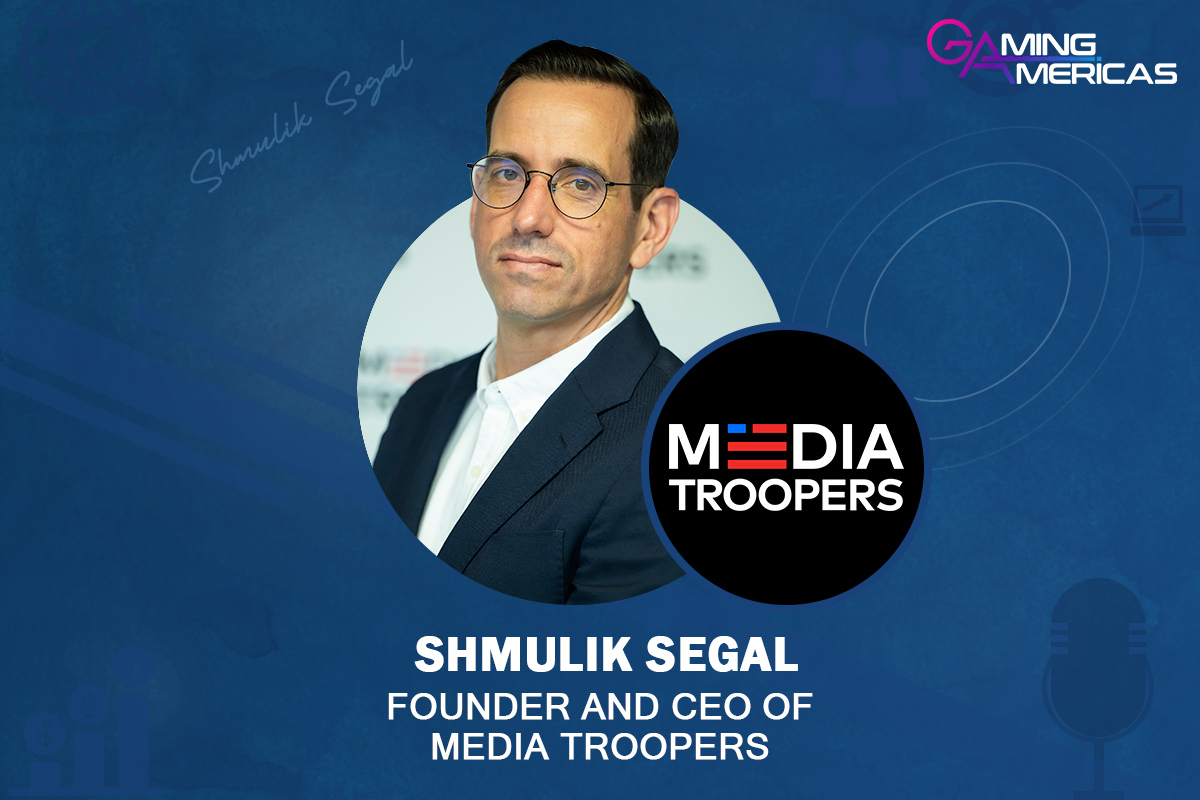
Written by Shmulik Segal, CEO and Co-Founder of Media Troopers.
The post Why Alberta Represents the Next Major Growth Opportunity for Gaming Operators appeared first on Americas iGaming & Sports Betting News.

-

 2026 World Cup7 days ago
Superbet launches ‘As Odds do Penta’ hub tracking Brazil 2026 title odds
-
Latest News3 days ago
Connect with N1 Partners at G Gate Conf 2026
-
América Latina3 days ago
Las diferencias locales de Argentina representan tanto un desafío como una oportunidad para el sector del iGaming
-
game-launch3 days ago
Million Games launches East West Wild slot with progressive multipliers
-
Africa3 days ago
Booming Games signs content deal with World Sports Betting in South Africa
-
AI3 days ago
Veikkaus rolls out OpenBet’s Neccton responsible gambling platform ahead of 2027 reform
-
Compliance Updates3 days ago
Why licensing will always be about jurisdiction, not harmonisation
-
FIFA 2026 World Cup3 days ago
Connect with N1 Partners at G Gate Conf 2026