Latest News
GAMSTOP marks fifth anniversary with parliamentary reception as record numbers chose to self-exclude

- Lords event hosted by peer who first advocated multi-operator self-exclusion
- GAMSTOP has registered more than 380,000 users since its inception in April 2018
- May 2023 was a record month for registrations, eclipsing March 2023
Parliamentarians, regulators, gambling charities operators, and those with lived experience, gathered at Westminster to mark the fifth anniversary of GAMSTOP, the UK’s independent online gambling self-exclusion scheme.
The event on Wednesday June 14th was hosted by Lord Browne of Belmont, who first advocated a national gambling self-exclusion scheme, and former gamblers spoke about the importance of GAMSTOP in helping them overcome their problems.
GAMSTOP was launched in April 2108 and two years later it became a licensing condition for all UK operators to integrate with the scheme, in addition to operating their own self-exclusion schemes. More than 380,000 people have registered with GAMSTOP since its inception, choosing to exclude themselves from all UK operators for a period of either six months, a year or five years.
Last month was GAMSTOP’s busiest ever with a record 8,594 new consumers registering for the free service, 90 more registrations than the previous record in March 2023.
Users interviewed recently by independent research agency, Sonnet, said that GAMSTOP provided an important safety net and self-exclusion was helping their recovery. The House of Lords reception brought together former gamblers, who shared their experiences in a video played to guests.
Stacey Goodwin, from Chesterfield, who is recovering from an eight-year addiction, said:
“GAMSTOP was vital for me in my recovery. I’ve had a lot of comments during my recovery such as ‘you’re so strong’ but I don’t feel that way. The truth is that when I don’t feel in a good place, GAMSTOP is the tool that is strong for me.”
Matt Blanks, who started gambling at 11 and lost around £700,000, said:
“GAMSTOP really is a lifeline not only for me, but for a lot of people struggling with gambling harm. It gives you the chance to stop and reflect and take away the temptation of gambling”.
Jack Scott, who has overcome his gambling addiction to become a successful endurance runner, said:
“GAMSTOP smashed through the roadblock, I was sick of the person I had become. With a tool like GAMSTOP, if it can promote you being the best person of yourself why would you not tick that box?”
Fiona Palmer, CEO of GAMSTOP, told guests:
“We are constantly looking at ways we can improve the experience for our consumers, ensuring that GAMSTOP offers secure and effective exclusion from online gambling for those who have registered. We are also looking at improving consumer journeys both in terms of enabling them to seamlessly exclude from all gambling, not just online, and ensuring that they are signposted effectively to further support and treatment should they want it”.
Speaking at the event, Professor Henrietta Bowden-Jones OBE, National Clinical Advisor on Gambling Harms for the NHS, said the UK was leading the way on self-exclusion and called for further work to be done with land based self-exclusion. She said:
“We are fighting tech with tech. Patients are frustrated by self-exclusion measures because they cannot beat them. Some patients are returning to bookmakers because that’s the only thing left to do. They are using cashback from Tesco to get around bank blocks. There’s an enormous need to block people from going into bookmakers by having a universal scheme for the country”.










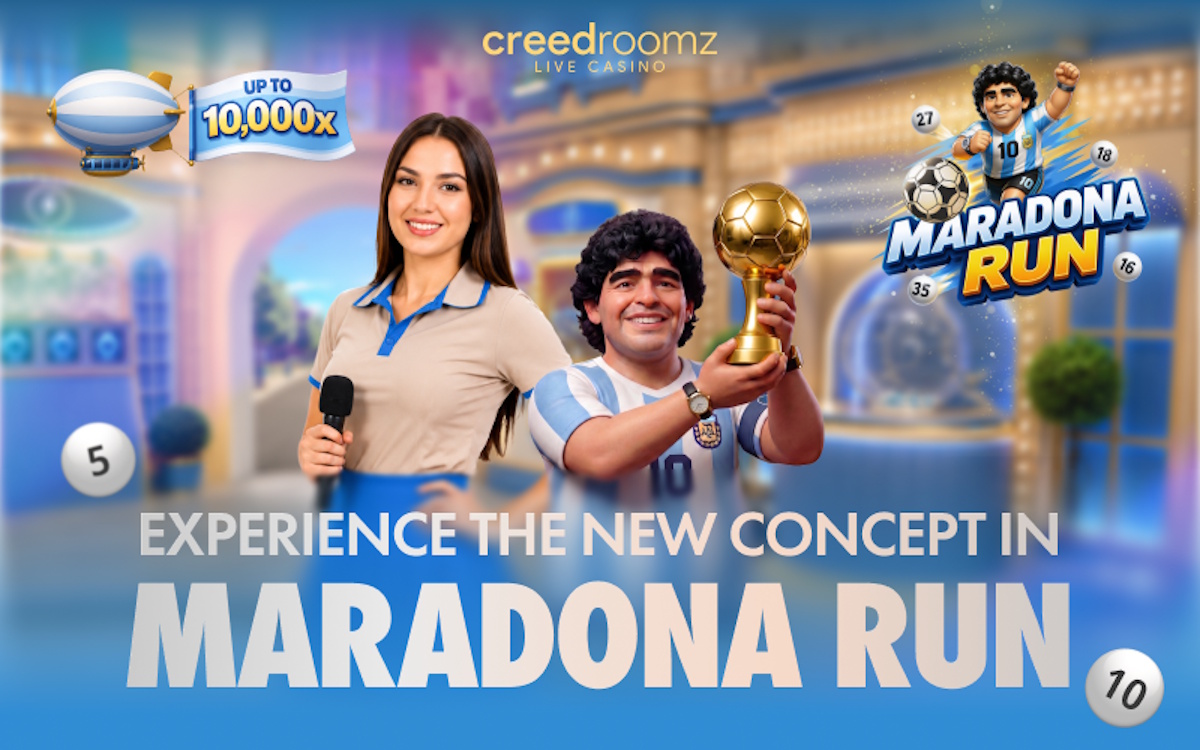
The new football-themed title keeps CreedRoomz’ existing mechanics and adds a Maradona-branded visual overhaul and 10,000x max payout claim.
CreedRoomz has launched a new live game show, “Maradona Run,” which the supplier says is backed by official rights and is now available to partner operators on the CreedRoomz Live Casino platform.
The company positions the release around the upcoming World Cup games, with a football-themed reskin of its existing interactive game show concept. CreedRoomz said the game’s “logic and core mechanics remain exactly the same,” while the visual identity has been rebuilt around a 3D animated caricature of Diego Maradona in a number 10 jersey.
Maradona Run combines a lottery-style ball draw, where players can manage up to eight interactive cards, with an “endless runner” bonus round. In the bonus sequence, the Maradona character runs through an obstacle course collecting glowing soccer balls that the supplier says translate into gameplay advantages including multipliers, speed boosts and prize doublers. CreedRoomz stated the game has a maximum payout potential of up to 10,000x the bet.
“Securing the official rights for Maradona Run allows us to hand our partners a massive competitive advantage just in time for the World Cup games,” said Armen Mnatsakanyan, Head of Sales Department at CreedRoomz. “By merging the legendary global appeal of Maradona with our high-retention endless-runner mechanic, we have created a premium crossover product that effortlessly converts football fans into loyal live casino players. The proven logic and math models are exactly what operators trust, but the brand power and vibrant new look make this a must-have commercial powerhouse.”
The title features a live presenter alongside the animated character and includes three bonus ticket tiers—Sprint, Trailblaze, and Marathon—intended to provide multiple bonus-entry paths per round, according to the supplier.
The post CreedRoomz launches Maradona Run live game show with licensed rights appeared first on EE Gaming | Global iGaming & Tech Intelligence Hub.
Armen Mnatsakanyan Head of Sales Department at CreedRoomz
“Maradona Run” Launched by CreedRoomz as New Live Game Show with Official Rights

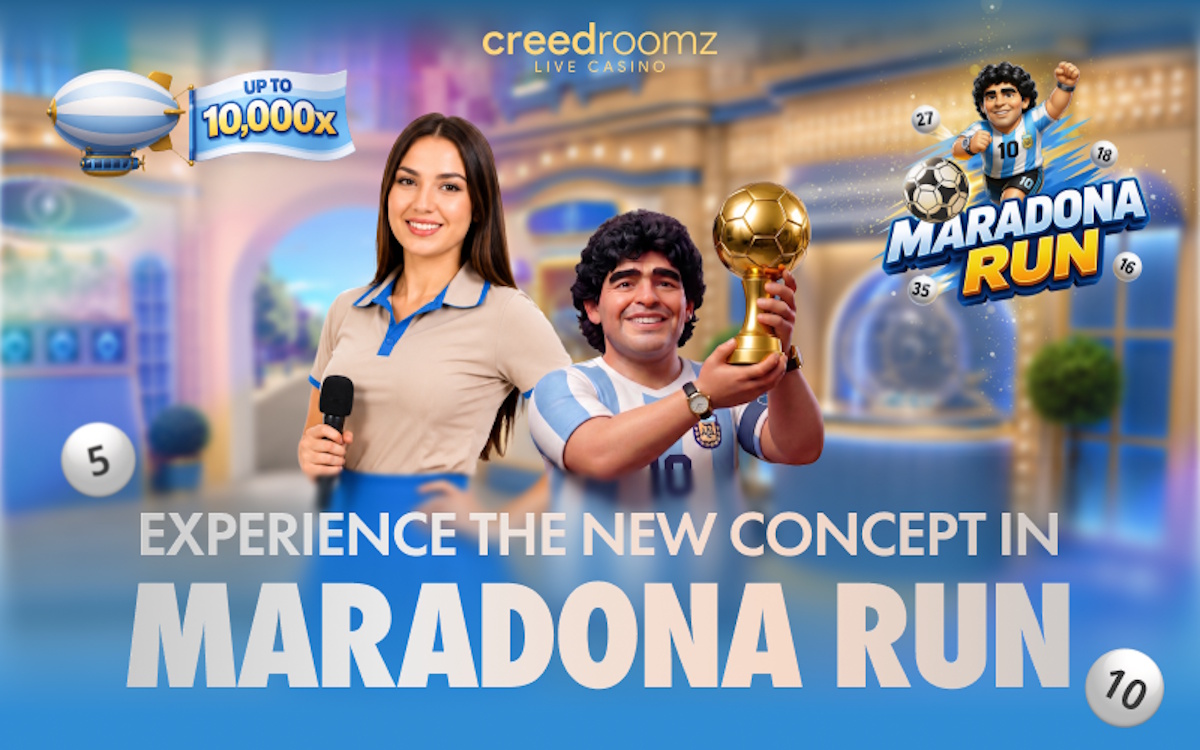
Leading live casino provider CreedRoomz has officially announced the launch of its highly anticipated new live game show, “Maradona Run,” backed by official rights.
Built to capture the celebratory spirit of the upcoming World Cup games, this groundbreaking release introduces an authorized, football-themed transformation of the company’s signature interactive game show concept. By securing the official rights to feature one of the greatest legends in football history, CreedRoomz is inviting global operators and players to engage with an entirely premium, legally authorized gaming experience.
While the game’s flawless logic and core mechanics remain exactly the same, the visual identity has been completely overhauled to welcome the World Cup games. The character has been transformed into a vibrant, 3D animated caricature of the legendary Maradona, proudly wearing his iconic number 10 jersey.
Maradona Run seamlessly bridges a fast-paced lottery ball draw with a cinematic, arcade-style endless runner bonus round. During the main game, players manage up to eight interactive cards as football-styled lottery numbers bounce in a high-tech studio chamber. When the bonus round triggers, players leave the studio behind and hit a digital, festive boulevard alongside Maradona himself.
Instead of traditional coins, the animated legend sprints down the obstacle-filled street course collecting glowing soccer balls. These collectibles correspond to crucial gameplay advantages, including total payout multipliers, energy speed-boosts, and prize doublers, culminating in a massive maximum payout potential of up to 10,000x the bet.
“Securing the official rights for Maradona Run allows us to hand our partners a massive competitive advantage just in time for the World Cup games,” said Armen Mnatsakanyan, Head of Sales Department at CreedRoomz. “By merging the legendary global appeal of Maradona with our high-retention endless-runner mechanic, we have created a premium crossover product that effortlessly converts football fans into loyal live casino players. The proven logic and math models are exactly what operators trust, but the brand power and vibrant new look make this a must-have commercial powerhouse.”
The live game show features a highly interactive setup where a live presenter stands side-by-side with the animated Maradona caricature, engaging with players in real-time. With three distinct bonus ticket tiers Sprint, Trailblaze, and Marathon players have multiple pathways to chase massive wins on every single round.
Maradona Run Live is now available to all partner operators integrating the CreedRoomz Live Casino platform.
The post “Maradona Run” Launched by CreedRoomz as New Live Game Show with Official Rights appeared first on Americas iGaming & Sports Betting News.
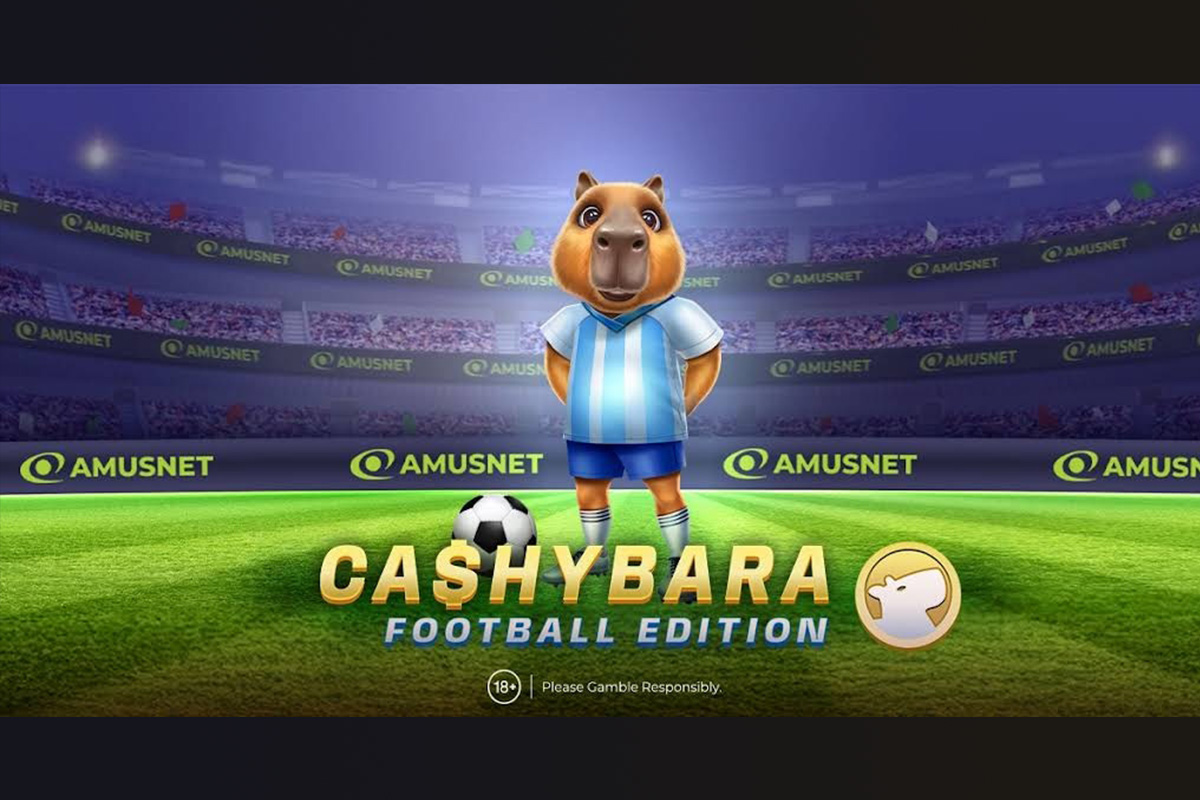
As football fever takes over the world and fans unite around the beautiful game, Amusnet is bringing the excitement from the stadium straight to the casino floor with the launch of Ca$hybara Football Edition – the latest addition to the beloved Ca$hybara series.
This energetic crash game puts players at the center of the action, where every touch of the ball could lead to bigger rewards. Taking the spotlight once again is the unstoppable Ca$hybara, this time stepping onto the football pitch with confidence, skill and plenty of flair.
In Ca$hybara Football Edition, the charismatic sports star keeps the ball airborne through an impressive display of juggling mastery. With every successful touch, the multiplier climbs higher, creating a thrilling balance between risk and reward. The challenge is simple: decide how long to stay in the game before cashing out. The longer Ca$hybara remains in control, the greater the potential winnings – but one missed touch can change everything.
Designed to keep players engaged from kick-off to the final whistle, the game introduces constant decision-making throughout every round. Players can choose to secure part of their winnings with the 50% Cashout option or continue riding the momentum in pursuit of even bigger multipliers. Timing, confidence and a little courage will determine who comes out on top.
Adding another layer of excitement are the popular Jackpot Cards, Amusnet’s signature jackpot feature, offering players additional chances for rewarding surprises and making every session even more dynamic.
With its football-inspired theme, fast-paced gameplay, and familiar Ca$hybara charm, Ca$hybara Football Edition arrives at the perfect moment, capturing the energy and passion of the season when football dominates conversations across the globe.
Whether players are seasoned crash game enthusiasts or discovering the genre for the first time, Ca$hybara Football Edition delivers an entertaining experience where every second counts and every decision matters.
Gamble
Play the game and multiply the winnings through the Gambling feature.
Multipliers
The game starts with a multiplier set at 1x and rises gradually and can go up to a max coefficient of 1,000,000. Multiplier can potentially crash at 1x, ending the game round.
50% Cash Out
Players can cash out 50% of their bet during the game round and continue playing with the remaining 50%.
Jackpot Cards
The Jackpot Cards bonus game is triggered at random during the gameplay to allow players to win impressive jackpots.
The post Amusnet Celebrates Football Season with the Launch of Ca$hybara Football Edition appeared first on EE Gaming | Global iGaming & Tech Intelligence Hub.

-

 América Latina5 days ago
Las diferencias locales de Argentina representan tanto un desafío como una oportunidad para el sector del iGaming
-
Latest News5 days ago
Connect with N1 Partners at G Gate Conf 2026
-
game-launch5 days ago
Million Games launches East West Wild slot with progressive multipliers
-
Africa5 days ago
Booming Games signs content deal with World Sports Betting in South Africa
-
Gmonitor.ai5 days ago
Gmonitor llega a Latinoamérica: la plataforma de inteligencia de mercado para operadores debuta en seis mercados regulados
-
 Latest News5 days ago
Sportradar Report | World Cup 2026: Opportunities for the Latin American Sports Betting Market
-
eSports6 days ago
G2 partners with PUBG MOBILE Esports to scale Western Europe competition
-
AI5 days ago
Veikkaus rolls out OpenBet’s Neccton responsible gambling platform ahead of 2027 reform