Latest News
Unity launches Unity 2021 LTS for creators

Unity 2021 LTS delivers powerful improvements to workflows, rendering capabilities, and platform support to help you realize your creative ambitions. New enhancements prioritize quality, productivity, and performance for any platform, genre, or artistic style.
Today, we’re excited to announce that Unity 2021 LTS is available to download and use. This release represents more than a year of focused development across the entire Unity Editor and underlying foundational features. In 2021, we continued our commitment to putting quality first in order to make your experience working in Unity more stable, productive, and efficient than ever before.
The LTS release combines the features we rolled up in our Unity 2021.1 and Unity 2021.2 Tech Stream releases with an additional six months of quality polish. This means you can choose the Long Term Support version with confidence that you’ll experience highly dependable workflows and incredibly stable games that hum on any platform you target.
LTS releases are published annually, with two full years of support and biweekly updates to ensure you have the absolute latest fixes when you need them.
We focused Unity 2021 LTS development on four key areas.
First, we focused on offering more accessible workflows for all creators, regardless of their role in the project. This enables you to build immersive experiences more quickly by taking advantage of the improvements we’ve made on how you work in-Editor.
Integrated visual scripting is available in Unity 2021 LTS. Easily the most exciting feature in the release, this approach can benefit anyone, from non-coders who want more autonomy to seasoned programmers quickly prototyping new functionality. Most Unity scripting processes can be replicated through a visual drag-and-drop interface that allows you to create and prototype without having to write a line of code.
We’ve also improved how quickly assets are imported into the Editor and made it easier to manage PSD imports for 2D game components. Get through your worldbuilding phase faster with updates to Terrain Tools, and discover improvements to VFX Graph, Shader Graph, and Cinemachine.
Next, we wanted to give you the ability to iterate faster and produce higher-quality experiences for your players. We’ve upgraded workflows across the board, provided better Editor usability, and enhanced our testing tools.
Minimize time from design to hands-on creation by leveraging Feature Sets, which gather all the packages you need to start a project in a one-click bundle. Find what you’re looking for faster with improved search capability, and experience an added zippiness in common operations you use regularly.
Make sure your code is clean, performant, and high-quality with a new Mono upgrade, improved C# 8 support, and incremental builds that compile your project as you create it. A comprehensive Memory Profiler allows you to profile with multiple Players simultaneously.
Follow up that quality coding experience with tools that facilitate an equally high-quality output. In Unity 2021 LTS, you’ll find a mobile Device Simulator to check for compatibility on multiple devices. Use the production-ready Code Coverage package with the Test Runner to export code coverage data and reports from your automated tests. Additionally, the Code Coverage package offers a Coverage Recording feature that allows you to capture coverage data on demand for manual testing or when there are no automated tests in the project.
Our third area of development was to couple all the work on the Editor with an equal focus on improving graphics capabilities for your projects. Craft stunning visuals with a collection of powerful rendering solutions, all supported by a comprehensive ecosystem of graphical tools.
Our Universal Render Pipeline (URP) is optimized for maximum platform reach so your players can enjoy fantastic graphic fidelity regardless of their device. In Unity 2021 LTS, you’ll find upgrades to URP for Point Light shadows, Lens Flares, and decals.
If you’re looking to get the maximum performance for a specific platform, the improvements we’ve made to the High Definition Render Pipeline (HDRP) include realistic cloud definition with Volumetric Clouds and Static Shadow Casting.
Craft stunning visuals with powerful rendering solutions supported by an ecosystem of tools. Push the limits of high fidelity with HDRP performance upgrades and features like NVIDIA DLSS for desktop and AMD FSR native support in URP.
Be where your players are with support for innovative new platforms and technologies. Expand your development capabilities with ChromeOS and macOS-based Apple silicon support, and achieve even more impressive results on the latest generation of PlayStation 5 and Xbox Series X|S consoles. Develop for augmented and virtual reality worlds with OpenXR and Oculus enhancements, or create for mobile by optimizing with Samsung Adaptive Performance 3.0 and tap into seamless publishing with Android asset bundling.
Powered by WPeMatico

Boomerang Partners
Overtime begins: Boomerang Partners launches the final stage of the Golden Boomerang Awards 2026

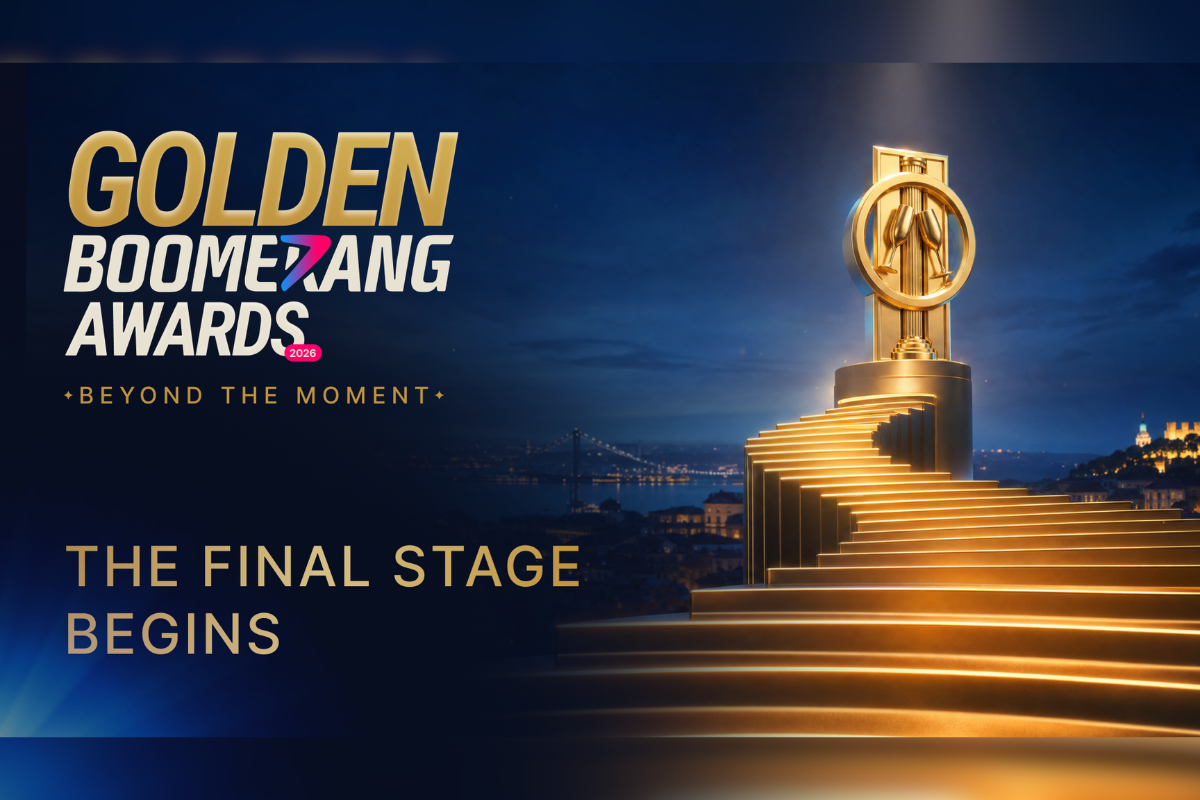
The Golden Boomerang Awards 2026 by Boomerang Partners is moving into its decisive phase. The third and final stage of the tournament – titled “Overtime” – will run from 20 July to 31 August. It marks the last opportunity for participants to reshape the leaderboard and compete for the season’s main prize – an exclusive private dinner with a football legend in September 2026.
Overtime mechanics: points allocation
To intensify competition during the final stretch, Boomerang Partners is introducing an updated scoring system. From now on, affiliate teams will earn 3 points for every FTD generated on any partner brand from the Agency’s clients’ portfolio. In the previous stage, participants received 3 points for each sports FTD and 1 point for each online casino FTD. Now, the value of all FTDs is identical.
Overtime mechanics: performance boosts
Within the Overtime stage of the Golden Boomerang Awards 2026, a set of performance boosts remains active. These mechanics give participating teams the opportunity not only to catch up but also to overtake the leaders.
- Welcome Boost – x2 points for the first 14 days after entering the stage
- Lucky Five – +5 points for achieving 10 Casino FTDs per week
- Last Minutes Winner – x3 points during the final 7 days of Overtime
Martin Černý, CEO at Boomerang Partners said: “Overtime brings the Golden Boomerang Awards 2026 to its most competitive stage. At this point in the tournament, every result can influence the leaderboard, and teams still have the opportunity to improve their positions. We expect the final weeks to bring strong competition and determine the final standings.”
A final stretch where every day counts
With fewer than 40 days left in the GBA 2026, the competition enters its most volatile phase. The leaderboard remains open, and even small performance shifts can significantly alter final standings. Participants are now entering a stage where strategy, timing, and consistent activity define the outcome – and where the final push may determine the season’s ultimate winner.
Overtime has begun. TIME TO WIN THE TITLE.
About Boomerang
Boomerang Partners is a rapidly growing global marketing agency offering a wide range of services. In 2024, it launched the inaugural Golden Boomerang Awards – a global tournament for affiliate teams. More than 400 affiliate teams participated in the second season of the tournament in 2025. Martin Černý – Boomerang Partners’ CEO since June 2025.
The Agency’s clients’ portfolio contains brands offering affiliate and entertainment services across multiple markets in compliance with local regulations. These products provide incentive programs and 24/7 multilingual support.
The post Overtime begins: Boomerang Partners launches the final stage of the Golden Boomerang Awards 2026 appeared first on EE Gaming | Global iGaming & Tech Intelligence Hub.

The trophy has been lifted. Now comes the most interesting part for operators: counting the revenue, assessing what worked, learning from what didn’t, and deciding what to change before the next betting event.
On Thursday, August 20, at 4:00 p.m. CEST, GR8_TECH will host “The Locker Room: World Cup Numbers”, a closed-door benchmarking session created to help operators make sense of their tournament results and see how their performance stacked up against the room and the wider market.
Led by Dinos Doxiadis, Head of Sportsbook Business at GR8_TECH, the session will combine anonymized benchmarks with in-depth post-World Cup platform data on margin, player behavior, retention, and peak-load performance. It isn’t a tournament recap, but a working session built around deeper analysis than GR8_TECH releases publicly.
A First Look at the World Cup Numbers
Initial aggregated data from the GR8_TECH platform shows an average tournament margin of over 12%, alongside a significant increase in staking during the knockout stages.
Average stakes during the play-offs were 53% higher than during the group stage, while the average stake on the final was 89% above the tournament average.
Player interest was highly concentrated. Matches featuring Spain, Argentina, England, or France generated 42% of the total World Cup turnover. Argentina was the tournament’s most-bet-on team, accounting for 12.5% of all bets, although Spain finished only 0.09 percentage points behind Argentina by turnover.
The final also created one of the tournament’s most demanding operational moments. Within one minute of the final whistle, GR8_TECH’s platform settled more than half a million bets, demonstrating the level of processing performance required when a global audience reaches the same outcome simultaneously.
Inside The Locker Room, participants will examine what happened across:
- Live betting and bet builders
- Margin and staking dynamics
- Peak-load and settlement moments
- Acquisition compared with player reactivation
- Retention beyond the final whistle
- Unexpected geographic performance
- Operational, product, and campaign failures
- Priorities for the next major event
“The World Cup generates a huge amount of data, but the value comes from understanding what sits behind it,” said Dinos Doxiadis, Head of Sportsbook Business at GR8_TECH. “This session is about identifying the patterns operators might miss in their own reporting, challenging assumptions, and turning one month of World Cup activity into better decisions for future events.”
See How Your World Cup Stacked Up
Leave the session with anonymized benchmarks, exclusive GR8_TECH platform insights, and a clear view of where your World Cup performance led—or lagged—the market.
Turn the lessons into your next strategy. Join The Locker Room: World Cup Numbers on Thursday, August 20, at 4:00 p.m. CEST.
Register here to secure your place.
GR8_TECH. Platform for Champions
GR8_TECH is an award-winning provider, delivering high-performance sportsbook and iGaming solutions that empower operators to lead and win in competitive markets. GR8_TECH’s comprehensive portfolio includes the GREAT_TURNKEY and GREAT_CRYPTO TURNKEY solutions, GREAT_SPORTSBOOK, and GREAT_CASINO AGGREGATION.
With a geo-specific approach to solutions, a focus on practical innovations, and an operator-first mindset, GR8_TECH helps its clients achieve measurable results in their target markets quickly and efficiently. Trusted by top operators worldwide, GR8_TECH has over 100 successful cases and earned multiple recognitions, including the title of Platform Provider of the Year by SBC Awards 2025.
The post The World Cup Is Over. GR8_TECH Opens “The Locker Room” to Count What It Was Worth appeared first on EE Gaming | Global iGaming & Tech Intelligence Hub.
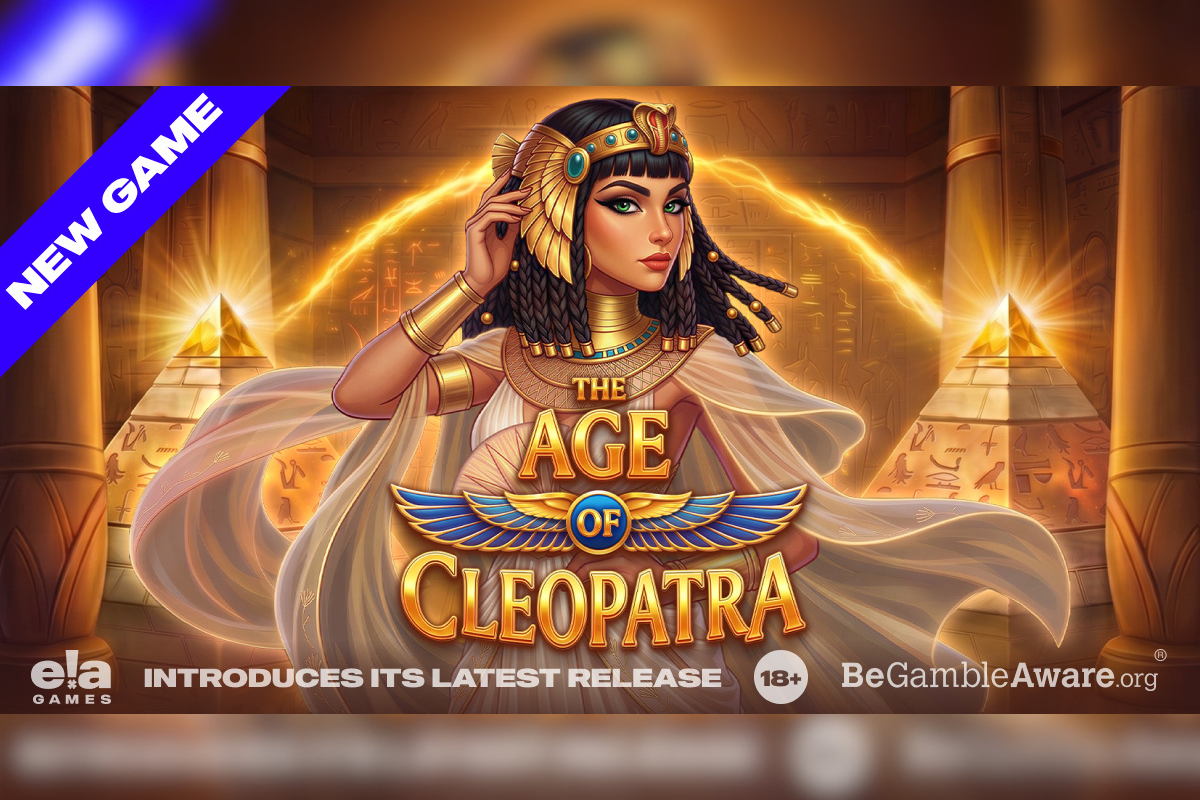
ELA Games has released a new slot, Age of Cleopatra, adding another ancient-Egypt theme title to its portfolio. The studio positions the game as a medium-volatility release and says it is available to demo now.
Age of Cleopatra runs on a 5×3 reel set-up with 25 paylines. ELA Games lists RTP at 93.75% / 95.73%, with Buy Bonus RTP at 93.8% / 95.9%. The maximum win is x5000, according to the company.
In the base game, a Collect Symbol gathers coin prizes visible on the screen, while “colored coins” charge pyramids that can unlock additional value, ELA Games said. The slot’s Hold & Win Bonus Game awards three respins by default (or four in an “Extra Respin” version), with modifiers tied to collected coins.
Features named by the studio include Multipliers, Extra Respins, and an Expand Grid mechanic that increases the layout from 3×5 to 5×5. ELA Games also states that multiple features can trigger at the same time.
“You can’t do justice to a legendary theme with just background art. Building a world around Cleopatra meant it had to feel truly authentic, a standard we apply to all our releases. At ELA Games, we consistently look beyond the visuals to craft an original universe, keeping storytelling through the mechanics at the center of our titles.” Marharyta Yerina, Managing Director at ELA Games.
The post ELA Games launches Age of Cleopatra slot with Hold & Win bonus appeared first on EE Gaming | Global iGaming & Tech Intelligence Hub.

-

 ESPN Networks7 days ago
THE 57th ANNUAL WORLD SERIES OF POKER® CONCLUDES AN EXTRAORDINARY SUMMER OF GLOBAL ENGAGEMENT AND ELITE COMPETITION
-
Canada7 days ago
PENN Entertainment Launches theScore Bet Sportsbook & Casino and theScore Casino and Hollywood Casino Standalone Apps in Alberta
-
Latest News7 days ago
Weekend Reels | Week 29: Slot Drops & Trends
-
Compliance Updates7 days ago
Finland notifies EU of gambling tech rules for data vault and OCSS signing
-
Latest News7 days ago
Jumio Enters into Partnership with BOYLE Sports
-
Alberta4 days ago
Greentube goes live in Alberta as province opens regulated iGaming
-
Latest News7 days ago
DELULU Gaming Hosted an Exclusive Soft Launch Dinner for 250+ iGaming Leaders in London
-
Latest News7 days ago
1win Expands Its Prediction Markets with Crypto Forecasts