Central Europe
German games market grows by 17 per cent in 2021

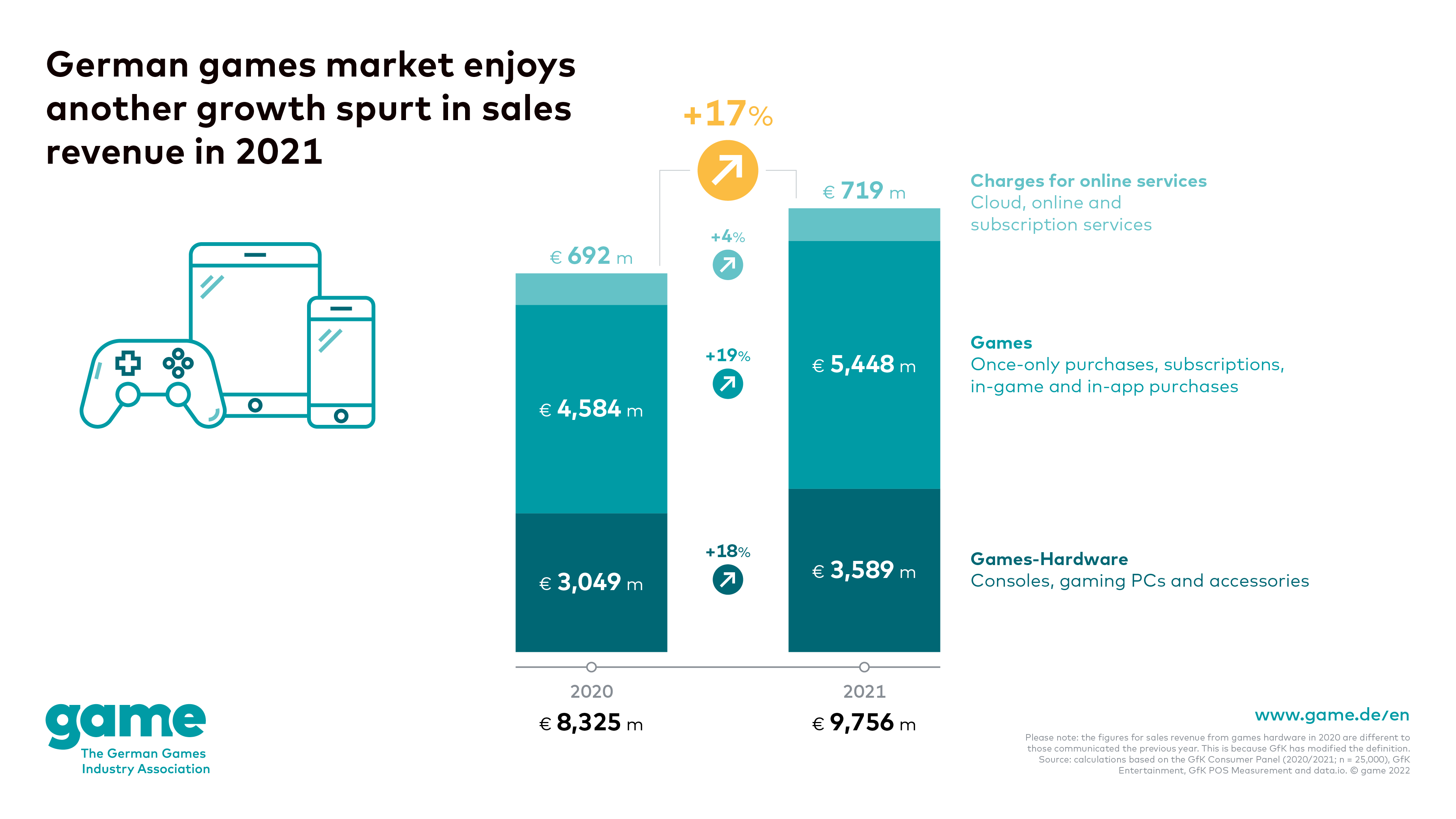
The German games market has followed up its historic growth spurt in 2020 with yet another year of significant growth: in 2021, approx-imately 9.8 billion euros in revenues were generated from games, charges for online services and games hardware. This is an increase of 17 per cent com-pared to the previous year. Already in 2020, the German games market was able to grow by 32 per cent, which was due in part to the growth in new video game players that resulted from the Covid-19 pandemic. These are the numbers released today by game – the German Games Industry Association, based on data collected by the market research companies GfK and data.ai. The demand for games hardware, particularly for games consoles (+23 per cent) and acces-sories for gaming PCs (+22 per cent), as well as in-game and in-app purchases (+30 per cent), was the biggest driver of growth.
According to Felix Falk, Managing Director of game: ‘Following the historic growth spurt in 2020, the German games market continued its strong perfor-mance with significant growth in 2021. This also demonstrates that the people who first took up playing during the lockdowns are still enjoying it. We are partic-ularly delighted by the strong growth in games hardware. No matter whether they are using games consoles or gaming PCs, Germany’s video game players once again invested considerable sums in their equipment to ensure that they would be able to continue enjoying their games in the best possible quality in future. In fact, demand in some cases exceeded supply, meaning that it would have been possible to increase sales revenue by even more.’
Games, games hardware and charges for online services: all three market segments posted growth once again
Sales revenue from purchases of computer and video games grew by 19 per cent to about 5.4 billion euros. So-called in-game and in-app purchases were once again the biggest driver of growth here, with sales revenue increasing by 30 per cent overall to about 4.2 billion euros. This is happening in response to a sustained trend towards free-to-play games, as well as a general increase in the length of time that individual titles are being supported with the frequent addition of new free and charged content. Sales revenue from the once-only purchase of games, on the other hand, fell significantly, by 9 per cent to about 1.1 billion eu-ros. Sales revenue through monthly subscription charges for individual games – a model that is common among online role-playing games – also fell, by 11 per cent to 145 million euros.
Sales revenue from games hardware grew by 18 per cent overall to about 3.6 billion euros. Games consoles are in particular demand: although retailers were often sold out of some models, sales revenue still managed to increase by 23 per cent to 808 million euros. Approximately 1 billion euros were generated from sales of gaming PCs – both desktops and laptops. This is an increase of 10 per cent compared to the previous year. More and more video game players are also investing in accessories to make their experience even better. Demand for graphic cards, keyboards, mice, monitors and VR headsets for gaming is espe-cially strong. Sales revenue from purchases of gaming PC accessories grew by 22 per cent to about 1.5 billion euros. Sales revenue from games console ac-cessories increased by 11 per cent to 306 million euros.
Following a huge 50 per cent leap in growth in 2020, sales revenue generated by online gaming services rose by an additional 4 per cent to 720 million euros in 2021. Gaming subscription services such as the Xbox Game Pass, EA Play and Ubisoft+ made a key contribution to this growth, with their sales revenue increas-ing by 22 per cent to 220 million euros. Cloud gaming services, on the other hand, experienced a decline of 13 per cent to 63 million euros. One of the rea-sons for this is the fact that some cloud gaming functions have been integrated into other services free of charge, meaning that no independent sales revenues are generated for these functions. Sales revenue from online gaming services also fell, by 2 million euros to 437 million euros. These are frequently offered for various games consoles and include – depending on the specific offer – free monthly games, games discounts, the ability to play online, or even cloud stor-age for saved games.
Powered by WPeMatico

SYNOT Games continues its European expansion by officially entering the Slovenian market through a strategic partnership with the renowned Casino Portorož and its platform Casino.SI. This marks the provider’s first collaboration in Slovenia and a significant milestone in strengthening its presence across regulated European jurisdictions.
As part of the launch, SYNOT Games has successfully certified an extensive portfolio of 190 games for the Slovenian market – effectively making its full suite of content available to local players. The offering includes a comprehensive range of products, from top-performing slots to popular alternatives such as crash games and roulette, enabling Casino Portorož to deliver a diverse and engaging gaming experience.
The go-live will be supported by the introduction of a SYNOT Progressive Bonus with a €10,000 jackpot pool, designed to keep player engagement from day one. Looking ahead, the partners aim to further expand the integration by fully leveraging SYNOT’s proprietary ecosystem of promotional and engagement tools. The long-term plan is to introduce the full portfolio, including PEAK, Feature Free Rounds and Free Round Bonuses, enabling Casino.SI to maximise player engagement, boost retention, and deliver highly personalised, dynamic bonus experiences.
Martina Krajčí, Chief Commercial Officer at SYNOT Games, said: “We are very pleased to enter the Slovenian market through our partnership with Casino Portorož, a respected and established operator with a strong local presence. Bringing nearly our entire portfolio to Slovenian players demonstrates our commitment to delivering premium content tailored to regulated environments.”
Ksenija Bezek, Head of Online Operations at Casino Portorož, said: “We are delighted to partner with SYNOT Games and introduce their rich and diverse portfolio to our players. Their proven performance across regulated markets, combined with engaging features such as the SPB jackpot, aligns perfectly with our strategy to continuously enhance our offering and deliver innovative entertainment experiences to our customers.”
The post SYNOT Games Enters Slovenian Market with Casino Portorož Partnership appeared first on Eastern European Gaming | Global iGaming & Tech Intelligence Hub.
Deal adds Habanero’s slots and table games to Favbet.ro as the supplier targets further growth in CEE regulated markets.
Habanero has gone live with Favbet Romania, rolling out its slots and table games portfolio on the operator’s locally focused platform in Romania’s regulated online market.
Under the agreement, Favbet Romania players gain access to Habanero’s full catalogue. The companies positioned the launch as part of Habanero’s wider push to add regulated operator partners across Central and Eastern Europe.
Toni Karapetrov, Head of Corporate Communications at Habanero, said: “Favbet Romania is a well-respected brand in Europe and exactly the kind of partner we look to work with as we deepen our presence in the market. Romania players have a strong appetite for our content and we are confident our games will resonate well with their audience.
“Romania is an important market for us, and going live with this operator is another strong step in our continued European expansion across high-growth regulated markets.”
Cristian Sapovici, Head of Casino, Favbet Romania, said: “The collaboration between Favbet Romania and Habanero has been strong from the very beginning, and this co-branded collaboration agreement marks an important step in strengthening our strategic partnership.
“Our shared objective is to deliver a more integrated gaming experience for players in Romania, supported by consistent visibility, dedicated campaigns, and a stronger presence of Habanero content within the Favbet.ro ecosystem.”
Habanero said it is now live in 22 European regulated markets, and counts operators including Entain, Sisal and Betway among its partners.
The post Habanero goes live on Favbet Romania appeared first on Eastern European Gaming | Global iGaming & Tech Intelligence Hub.
Brightstar Global Solutions Corporation
Brightstar Lottery Signs 3-Year Contract Extension with TIPOS, Slovakia’s National Lottery

Brightstar Lottery PLC announced that its subsidiary, Brightstar Global Solutions Corporation, has signed a three-year contract extension with TIPOS, the government-owned lottery in Slovakia, to continue providing best-in-class lottery technology and lottery-related services.
TIPOS has been a valued Brightstar customer for more than 30 years. Under its most recent contract with TIPOS, signed in 2019 and which this agreement extends to 2032, Brightstar implemented in Slovakia a new lottery central system, next-generation retailer terminals, and related support services. Brightstar will further support TIPOS’ business expansion by delivering up to 2500 new mobile lottery terminals, handheld devices that provide lotteries expanded reach and enhanced convenience.
“Brightstar continues to deliver important services and innovative solutions to help us grow lottery in Slovakia. The success of our partnership funds a variety of good causes in Slovakia, including education and sports, and we are pleased to extend our agreement,” said Štefan Vyletel, Chairman of the Management Board and CEO of TIPOS.
“We are honored that TIPOS has entrusted us to serve Slovakia’s lottery for three decades. The handheld terminals we are deploying will enable TIPOS to convert offline instant ticket sales activities to online sales at the individual ticket level, while expanding the number of points of sale locations that players can purchase draw-based lottery games. We remain firmly committed to providing TIPOS and its players with exciting and innovative lottery solutions to help drive funding for good causes in Slovakia,” said Marco Tasso, Brightstar Chief Operating Officer International and Italy Operations.
The post Brightstar Lottery Signs 3-Year Contract Extension with TIPOS, Slovakia’s National Lottery appeared first on Eastern European Gaming | Global iGaming & Tech Intelligence Hub.

-

 Asia6 days ago
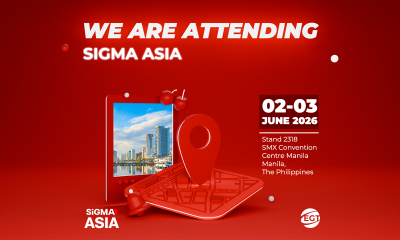
EGT Brings High-Impact Asian-Themed Portfolio to SiGMA Asia 2026
-
Africa6 days ago
Gaming Realms expands into three African markets via SportyBet partnership
-
Africa6 days ago
Greentube partners with World Sports Betting to expand in South Africa
-
Conference6 days ago
Danish regulator to speak at Gaming in the Nordics launch event
-
BETER6 days ago
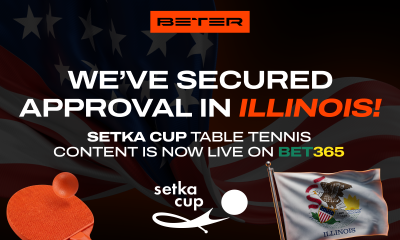
BETER expands US footprint with Illinois approval
-
Argentina6 days ago
Stake continues Latin American expansion with Argentina launch
-
affiliate marketing6 days ago
CasinoCanada partners with LolaJack Casino to expand Canadian visibility
-
Ben Wood CCO at Playson6 days ago
Playson strengthens North American footprint with Caesars Entertainment partnership