Compliance Updates
Sweden’s Spelinspektionen Submits Match-fixing Regulations for EC Approval


Swedish gambling regulator Spelinspektionen has submitted new rules on match fixing to the country’s National Board of Trade, for the board to notify the European Commission of the changes, and has conducted an impact assessment of the rules.
The new rules would limit betting to the top four divisions of football. Also, betting on Swedish Cup would be limited to matches featuring teams from the top four tiers. Markets for matches involving foreign clubs would only be permitted when each participating team is from the top four tiers of each country’s footballing pyramid. Operators would only be able to take bets on international matches from under-21 level upwards.
Last month, when it announced the plans to ban betting on lower-league matches, Spelinspektionen also proposed banning betting on training matches or friendlies entirely, but opted to continue to allow international friendlies.
In addition, betting must not be offered in the event of a rule violation such as a yellow card or penalty in football, while betting must not be offered on individual performance of anyone under 18 years of age.
Also, licensees will be required to produce annual reports on potential match-fixing activity.
The new rules on match fixing can only take effect after the EU Commission has given its opinion, which takes just over three months. Spelinspektionen said the rules could come into effect no earlier than the end of 2020.
“Match fixing is considered as one of the biggest threats to sports today and as a result of this as well against betting and the companies that provide betting. There are, as far as can be judged, great risks in offering bets on games at low divisions in football,” Spelinspektionen said.
“Monitoring from both sports federations and the media is lower and the athletes do not make money and are thus more vulnerable. There is also a risk of athletes or whole associations coming in contact with match fixing at lower levels and then taking the problem up through the pyramid with any sporting success,” it added.
Spelinspektionen also said it was aware of the risk that the restrictions could apply in encouraging more players to play on unlicensed sites.
“The unlicensed gaming market is never further away than a click on your computer or phone,” it said.
Powered by WPeMatico



The Polish Parliament is considering a landmark draft law to curb harmful digital content, specifically targeting the phenomenon known as “patostreaming.”
Patostreaming is recognised as a new term to categorise criminal offences related to the broadcasting of online violence, abuse and sexually degrading content.
The proposed legislation would criminalize the broadcasting of violence, abuse, and sexually degrading material. Additionally, the bill seeks to outlaw the promotion of online gambling by social media influencers. By amending the Penal Code, supporters aim to bridge the legal gap between digital behaviour and offline criminal acts, ensuring online offenders face the same accountability as those in the physical world.
The bill carries the backing of ministers of Poland’s new Civic Coalition (KO) government, formed in late 2025 by the union of the Citizens Platform (PO), Modern (Nowoczesna) and the Polish Initiative (iPL).
Supporters call for clearer enforcement powers to treat the online broadcasting of serious criminal acts as a punishable offence, aligning digital conduct with crimes already sanctioned offline.
If adopted, the legislation would introduce prison sentences ranging from three months to five years for individuals who publicly share real or staged content depicting serious criminal acts via online platforms.
The same penalty range would also apply to influencers found to be illegally promoting online gambling activity that remains heavily restricted under Poland’s state-controlled gambling regime.
KO ministers have framed the initiative as part of a broader effort to strengthen online protections for Polish youth, citing rising exposure to violent digital content and illegal gambling promotions across social media platforms.
The post Poland to Classify Gambling Streaming as Serious Crime appeared first on Eastern European Gaming | Global iGaming & Tech Intelligence Hub.
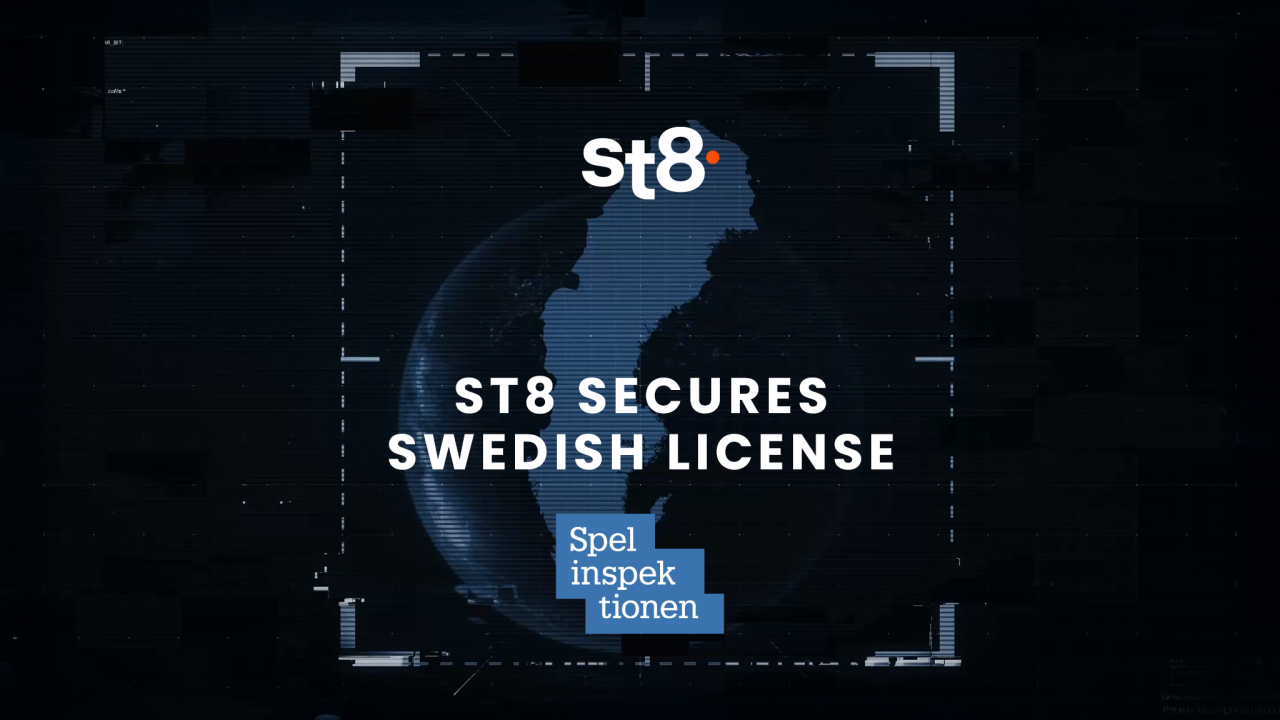
Casino games aggregator St8 is poised to expand into another significant regulated market following the receipt of a B2B supplier license from Sweden’s Gambling Authority, Spelinspektionen.
This indicates that St8 can now offer its aggregator technology to operators licensed in Sweden for the first time.
These operators obtain access to an advanced platform renowned for achieving seamless integrations within days through a single API.
Vladimir Negine, founder and CEO at St8, said: “Being awarded a B2B licence by Spelinspektionen underlines the strength of St8’s technology and compliance-first approach. Sweden is one of Europe’s most respected regulated iGaming markets, and we are excited to now be able to support licensed operators there with our next-generation aggregation platform.
“Our focus remains firmly on expanding in regulated jurisdictions, and adding Sweden further strengthens St8’s position as a trusted supplier to operators in leading global markets.”
Spelinspektionen is recognized for upholding some of the strictest player protection standards in iGaming,
St8 has quickly grown into several prominent regulated markets in recent months. In October, it received a supplier license in Ontario, and in July it obtained a B2B license in the United Kingdom.
The post St8 Secures Sweden B2B Licence, Adding Another Regulated Market appeared first on Eastern European Gaming | Global iGaming & Tech Intelligence Hub.
The Australian Communications and Media Authority (ACMA) has concluded six more investigations into licensed wagering providers for breaches of self-exclusion rules.
The ACMA investigations found Tabcorp, LightningBet, Betfocus, TempleBet, Picklebet and BetChamps all failed to comply with rules that protect people who registered with BetStop – the National Self-Exclusion Register.
The facts of each investigation are different but the breaches across the investigations included allowing registered individuals to open wagering accounts and to access wagering services, or marketing to registered individuals.
ACMA member Carolyn Lidgerwood said these breaches undermine the protections from gambling harm that self-exclusion offers.
“The national self-exclusion register is designed to help people who are trying to avoid gambling services and stop gambling, but self-exclusion only works if wagering providers follow the rules,” Ms Lidgerwood said.
“These rules have been in place for more than two years and wagering providers should be taking their responsibilities seriously.
“When people decide to self-exclude from online and telephone gambling, they trust the system to protect them from gambling harm. These investigations have found that these companies broke that trust and let people down.
“All licensed wagering providers need to be aware that the ACMA is investigating compliance and enforcing the rules. Gambling companies must have effective systems in place to ensure self-excluded people cannot gamble with them.”
The investigations identified that the providers did not ensure that their underlying systems and processes were operating as intended and failed to adequately identify and protect people who had self-excluded.
In response to these findings, the ACMA has used a range of different enforcement tools available under the Interactive Gambling Act 2001, having regard to the different facts arising under each investigation.
The ACMA has issued remedial directions to each of Betfocus, LightningBet and TempleBet. Under these remedial directions each of the providers will be required by law to commission an independent audit of their systems and implement any resulting recommendations.
This type of enforcement action is corrective and directed at future compliance with the rules. Failure to comply with a remedial direction is an offence and can result in civil penalties.
Tabcorp Holdings paid a penalty of $112,680 and agreed to enter into a court-enforceable undertaking requiring the company to commission a third-party review of its customer verification processes and train staff on their obligations around the Register. If not complied with, such an undertaking can be enforced in the Federal Court, with the Court being able to make such orders as it considers appropriate.
BetChamps was given a formal warning and the ACMA is currently finalising enforcement action for Picklebet.
All contraventions were found to have occurred in 2024. If these companies fail to comply with self-exclusion rules in the future, the ACMA may take stronger enforcement action, potentially including commencement of Federal Court proceedings to seek civil penalties.
The post ACMA: Six Wagering Providers Breach Gambling Self-Exclusion Rules appeared first on Eastern European Gaming | Global iGaming & Tech Intelligence Hub.

-

 Compliance Updates7 days ago
Finland Govt Looks at Whether Scratchcards can be Gifted Again
-
Claire Osborne Managing Director of Interactive at Inspired Entertainment5 days ago
Two new slots from Inspired — Coin Inferno Step ‘N’ Stack™ and Mummy It Up™
-
Latest News5 days ago
ACR POKER GIVES PLAYERS A SHOT TO QUALIFY ONLINE FOR $700,000 GTD ENJOY POKER SERIES MAIN EVENT THIS FEBRUARY IN URUGUAY
-
Canada6 days ago
High Roller Technologies Signs Letter of Intent with Kindbridge Behavioral Health to Support Responsible Gambling in Ontario
-
Amusnet4 days ago
Week 5/2026 slot games releases
-
Compliance Updates7 days ago
VNLOK Report: Over 95% of Gambling Ads on Meta Platforms are from Illegal Providers
-
David Nilsen Editor-in-Chief at Kongebonus7 days ago
Kongebonus Awards 2025 Winners Announced
-
Compliance Updates4 days ago
National Council on Problem Gambling Adopts 1-800-MY-RESET as New National Problem Gambling Helpline Number