Latest News
4ThePlayer and Yggdrasil reel in a winner in 4 Fantastic Fish GigaBlox™

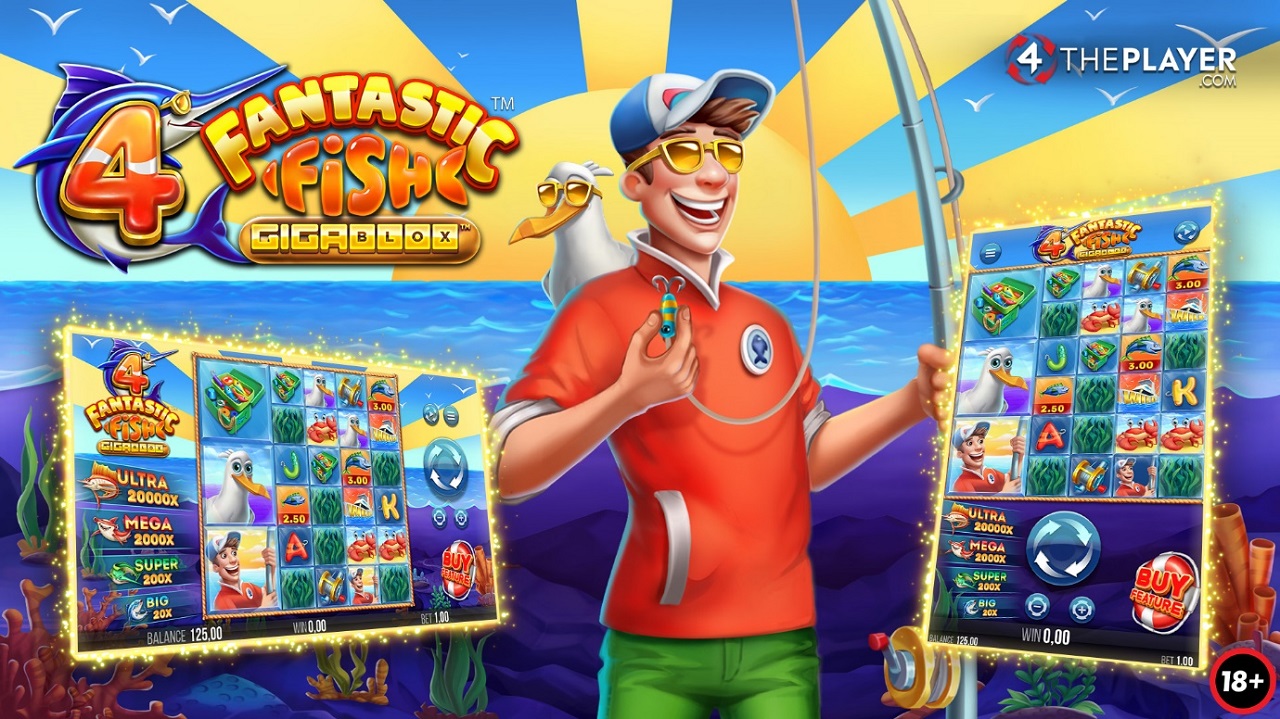
4ThePlayer is fishing up bigger symbols than ever before in 4 Fantastic Fish GigaBlox™, released today via Yggdrasil.
This fin-tastic 46,656 ways to win slot is the latest iteration in 4ThePlayer’s popular series. It offers players the opportunity to win up to 12,000x the bet through a plethora of features including Money Ways, fishing respins, four giant squid modifiers and the GigaBlox™ Game Engagement Mechanic (GEM).
Fish symbols have an attached cash value, which is awarded if they form a winning payline. All cash prizes are valued between 0.1x and 50x the player’s bet, with the Money Ways mechanic seeing symbols appearing on the rightmost reels boast even bigger prizes.
GigaBlox™ sized Big Game Fish will also appear on the reels and can pay out if part of a fish symbol win. Big fish are 2×2 in size and pay up to 100x, Super fish are 3×3 in size and pay 450x, Mega fish are 4×4 in size with a value of 3,000x and Ultra fish are 5×5 in size and award 10,000x.
The Fishing Respins Bonus is triggered when three or more respin scatters land. Players collect standard and GigaBlox™ fish symbols in a classic Hold and Win mechanic, while landing additional scatter symbols will unlock new reels and reset the spin counter.
Four special giant squid features can trigger on any given spin. These can see Seaweed symbols reveal all winning symbols, GigaBlox™ symbols up to 5×5 in size land and icons swapped or shuffled to automatically form a win.
The title is powered by GATI, with Yggdrasil’s state-of-the-art technology enabling partners to employ the preconfigured, regulation-ready, standardised development toolkit to consistently produce cutting-edge content followed by rapid distribution.
Mark McGinley, Chief Gaming Officer at Yggdrasil, said: “4 Fantastic Fish GigaBlox™ takes the classic fishing genre of games, and elevates it into an exciting, bold take with captivating features and mechanics such as Fishing Respins and giant squid modifiers.
“Adding in the power of our GEM GigaBlox™ to bring a new twist to the reelset ensures that every spin offers unique outcomes, with players looking for a max win of 12,000x.”
Henry McLean, Co-founder, Commercial and Marketing Director at 4ThePlayer, said: “Players continue to enjoy our 4 Fantastic Fish series and now we’re adding the popular GigaBlox™ mechanic, promising some truly gargantuan wins! This iteration of our phenomenal franchise has the potential to be the biggest yet!”













Baltics
HIPTHER Baltics: Vilnius 2026 Agenda Sets the Stage for the Region’s Next Era of iGaming Regulation & Fintech Integration


The agenda for HIPTHER Baltics: Vilnius 2026 has officially been revealed, marking a defining moment for the Baltic region’s iGaming, fintech, and regulatory landscape.
Taking place on 21 April 2026 at the Hilton Garden Inn Vilnius City Centre, the conference launches HIPTHER’s new Baltics-focused series, a bold evolution designed to bring deeper, jurisdiction-specific insight and high-level dialogue to one of Europe’s fastest-transforming digital markets.
At its core, the Vilnius edition is built around a powerful theme:
“iGaming Regulation & Fintech Integration” — a convergence shaping the future of compliance, payments, and digital innovation across the region.
A Defining Moment: Lithuania’s Regulatory Reset
Lithuania is entering a new phase — one where rapid fintech growth meets tightening regulatory expectations.
The agenda reflects this shift directly, capturing a market transitioning from accessibility to accountability, structure, and long-term sustainability. From post-MiCA realities and stricter AML frameworks to evolving iGaming controls, Vilnius becomes the place where these changes are not just discussed — but decoded.
The Agenda: One Day, Two Stages, Zero Filler
The newly released agenda delivers a high-density, decision-maker-focused experience, designed for professionals who need clarity.
Across two parallel tracks — Compliance & Operations Lab and TechXperience Stage — the program cuts straight to the pressure points shaping the industry:
On the Compliance & Operations side:
- Gambling Regulation in the Baltics: Enforcement, Gaps, and Political Pressure
- Post-MiCA Survival: Maintaining Your License Under the 2026 Strictures
- The Bank Pivot: SME Lending, EMI Stability & Financial Resilience
- AML 2.0 & MiCA in Practice: Building Compliance That Actually Works
- The iGaming Ad Ban: Survival Strategies in a “No Marketing” Era
On the TechXperience Stage:
- Next-gen Payments: A2A, Open Banking & Cross-border Infrastructure
- AI in Product & Workforce Transformation
- Blockchain Beyond the Hype: Infrastructure, Tokenization & Settlement
- Esports, Gaming & Digital Communities: Building Next-Gen Ecosystems
- AI in Product, Risk & Compliance: From Buzzwords to Deployment + Agentic AI & Data-Driven Organizations
Going beyond theoretical insight, this Agenda is a working blueprint for navigating what’s already unfolding.
Curated Networking & Meaningful Connections
The refreshing morning break and delicious complimentary lunch, will be followed by an evening social gathering at Jazz Cellar 11 –– offering rum, jazz, conversations, and the kind of networking that somehow becomes more productive after the formal agenda ends.
Spotlight on Speakers: The People Driving the Change
The Vilnius stage brings together a carefully selected lineup of regulators, compliance and fintech leaders, legal experts, and technology innovators — the very people operating at the frontlines of transformation.
These are just some of the speakers to take the stage:
- Rainer Osanik – Head of Fiscal Information and Intelligence Department in the Estonian Ministry of Finance
- Ineta Mačinskienė – CEO of Walletto
- Edgaras Abromavičius – President of the Lithuanian Esports Federation and Head of Esports and Gaming at the Lithuanian Football Federation
- Marija Nudga – Senior Lawyer at Tonybet and Legal Expert in iGaming & Fintech Compliance
- Kristina Vabinskaitė – Financial Markets Policy Department of the Ministry of Finance of Lithuania
- Saulius Racevicius – CEO of Pace App and Board Member of the Fintech Hub LT
From professionals securing MiCA licenses and building risk frameworks, to experts advising on international licensing, AML systems, and cross-border fintech operations, the speaker lineup reflects real, hands-on expertise.
These are the leaders and experts shaping how regulation and innovation coexist in real time.
Zoltan Tündik, Co-Founder and Head of Business at HIPTHER, stated about the Vilnius 2026 Agenda:
“Our dedicated Baltics series this year kickstarts in Vilnius and marks a strategic pivot in how we approach regional excellence. Having spent nearly two decades in the media and news sphere, we’ve learned that general insights are no longer enough; the market now demands jurisdiction-specific precision. Lithuania stands at a fascinating crossroads where fintech maturity meets a rigorous regulatory reset. Our 2026 agenda is designed to decode this convergence, helping leaders navigate the post-MiCA landscape and tighten iGaming frameworks. As we celebrate 10 years of HIPTHER impact, Vilnius represents our commitment to staying ahead of the curve, providing the high-level, boutique environment necessary for the industry’s most critical conversations.”
Boutique by Design — Powerful by Nature
HIPTHER Baltics: Vilnius 2026 is intentionally built as a boutique, high-value experience:
- A senior-level audience of decision-makers
- Focused, high-quality networking opportunities
- A premium central Vilnius setting designed for meaningful interaction
The format ensures that conversations don’t get lost in scale — they gain depth, relevance, and momentum.
Join the Conversation in Vilnius
The agenda is now live — and with it, the opportunity to be part of a room where regulation, technology, and strategy converge.
 Explore the full agenda & secure your spot: https://hipther.com/events/vilnius/
Because in a year defined by regulatory change, the real advantage belongs to those in the room.
The post HIPTHER Baltics: Vilnius 2026 Agenda Sets the Stage for the Region’s Next Era of iGaming Regulation & Fintech Integration appeared first on Eastern European Gaming | Global iGaming & Tech Intelligence Hub.
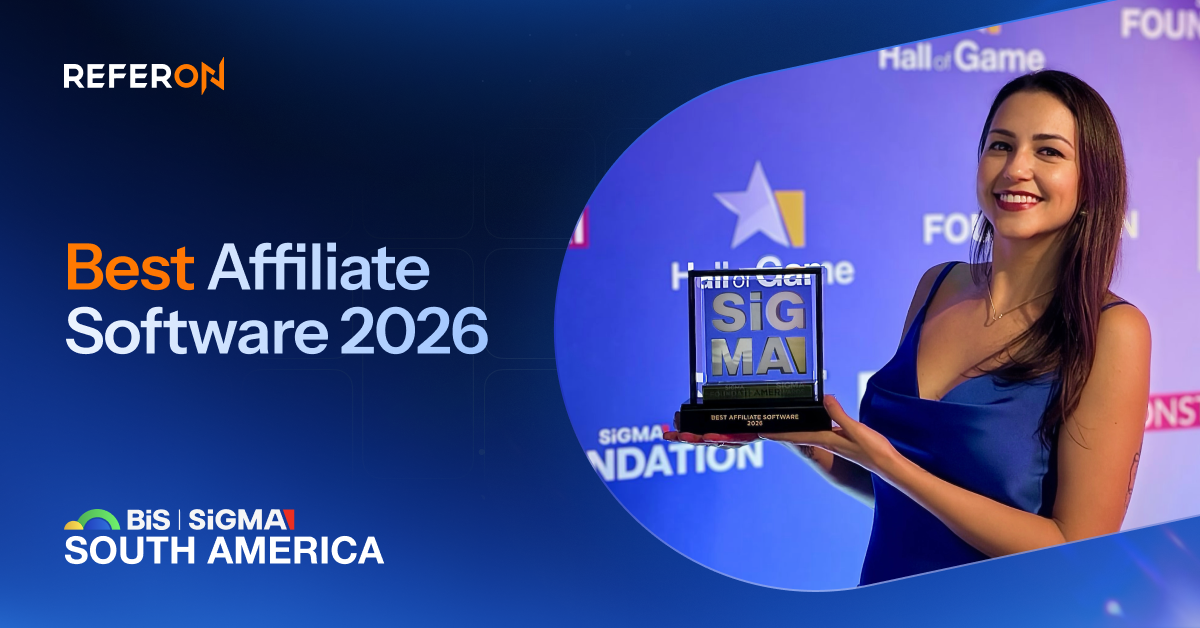
ReferOn, a top-tier affiliate management platform, has been awarded “Best Affiliate Software 2026” at the prestigious SiGMA South America Awards.
This accolade signifies significant market momentum and product creativity central to ReferOn. Designed as a data-centric platform, it minimizes operational friction and enhances efficiency. This acknowledgment strengthens our path to becoming the top affiliate ecosystem in the industry, as we persist in developing high-performance infrastructure that grows with our partners.
Enhancing Productivity on a Large Scale
ReferOn’s expansion demonstrates that the sector is prepared for a more intelligent method of affiliate management. Successfully managing millions of data points from numerous partners demands a highly agile, data-oriented framework. We consistently enhance our platform to eliminate operational clutter, transforming intricate daily activities into smooth, automated processes that promote genuine efficiency on a large scale.
Alex Bukin, General Manager at ReferOn, commented on the win: “This award is a massive milestone for us, and it belongs entirely to our team. Their genuine passion for building an exceptional platform is what drives our rapid growth every single day. We don’t just want to be another tool in the stack; we want to change how affiliate marketing works for the better; making it simpler, more transparent, and much more powerful. We have ambitious plans on the horizon to further expand our capabilities.”
This acknowledgment at SiGMA South America 2026 further confirms our path as we enter our next growth phase. Our plan for 2026 and the future focuses on growth and innovation. We are proactively broadening our international reach, establishing strategic partnerships, and implementing platform enhancements that cater to the intricate requirements of contemporary affiliate networks.
The post ReferOn Secures “Best Affiliate Software 2026” Title at SiGMA South America Awards appeared first on Eastern European Gaming | Global iGaming & Tech Intelligence Hub.


Paysafe (NYSE: PSFE), a global payments platform, today announced the launch of Pay with Crypto, a new crypto payment method for iGaming operators and daily fantasy sports brands in the U.S. market. Powered by MoonPay, the leader in global crypto payments and stablecoin infrastructure, Pay with Crypto allows iGaming brands’ customers to use their preferred stablecoin or cryptocurrency to effortlessly fund their player accounts, where permitted.
With a reported ~70.4m American adults owning cryptocurrency and with Paysafe’s own research indicating that 83% of U.S. players have appetite for crypto payments, the company has responded to meet this demand with Pay with Crypto. Whether a player wants to fund their iGaming account using USD Coin (USDC), another stablecoin, or any major cryptocurrency, Paysafe’s new payment option for operators’ cashiers enables their crypto deposit to be rapidly converted to U.S. dollars to allow play.
After selecting Pay with Crypto and their preferred stablecoin or cryptocurrency, players simply connect their crypto or custodial wallet to fund the deposit, with the MoonPay Commerce Checkouts technology also supporting transactions via QR code using users’ phones. Once transactions have been verified, Pay with Crypto instantly converts crypto deposits into U.S. dollars to fund the player account.
The flexibility embedded in the Pay with Crypto solution also extends to operators, which can choose to settle payments almost instantly in stablecoins in their business’s crypto wallet, or settle in U.S. dollars or any major fiat currency through MoonPay’s Virtual Accounts powered by Iron.
Operators can upgrade their cashiers with Pay with Crypto through a single, streamlined integration of the Paysafe Gateway, which has been developed specifically for iGaming and leverages the company’s 30 years’ global experience. With the Gateway already boasting frictionless card payments, the Skrill digital wallet, the PaysafeCash eCash solution, a Pay by Bank product, and 30+ local payment methods, the addition of Pay with Crypto sees Paysafe continue to diversify its offering to meet evolving transactional preferences.
Zak Cutler, President of Global Gaming at Paysafe, said: “Galvanized by the growing popularity of stablecoins, cryptocurrency is evolving in the U.S. from an investment asset into a unit of value for payments, and we’re seeing this shift gather pace in the country’s iGaming market. Against this backdrop, we’re delighted to unveil Pay with Crypto, a forward-thinking solution that strongly positions U.S. operators for their customers’ changing transactional preferences – the future of how they pay when they play.”
Ivan Soto-Wright, Founder and CEO of MoonPay, commented: “Crypto rails are making payments faster and more efficient, and our job is to close the gap between this technology and real-world utility. People shouldn’t have to convert their digital assets just to make a purchase – they want to use what they already have. Paysafe brings that experience to more people through trusted, regulated platforms.”

-

 Booming Games6 days ago
Booming Games releases Ultra Buffalo Hold and Win
-
Baroness Fiona Twycross6 days ago
BGC AGM 2026 Discussed About Surging Illegal Gambling Black Market
-
Big Time Gaming6 days ago
BTG brings iconic board game action to the reels with MONOPOLY MEGAPOTS™
-
Latest News5 days ago
ELA Games Contributes to Discussions on Scalable iGaming Ecosystems and Studio Innovation at HIPTHER Prague Summit
-
Brazil6 days ago
Brazil advances integrity agenda amid strong market growth
-
Brasil6 days ago
Brasil impulsa su agenda de integridad en un contexto de fuerte crecimiento del mercado
-
BGaming6 days ago
Ascend With the Gods in BGaming’s Gates of Power
-
Brazil5 days ago
Brazil advances integrity agenda amid strong market growth