Compliance Updates
KSA: Monitoring report autumn 2025: turnaround in market development, concerns about illegal share


Reading Time: 2 minutes
The growth of the legal online gambling market appears to be stagnating, but the illegal market continues to grow. This turnaround in the legal market is partly due to the positive effects of measures introduced a year ago to protect players. This is according to the Dutch Gaming Authority (Ksa) in its autumn 2025 monitoring report. Although the number of players is still increasing, the gross gaming result (GSR) of the legal market is lagging behind.
The gross gaming result (GSR, stakes minus prizes paid out) for the first half of 2025 is €600 million. Six months earlier, it was 16% higher, at €697 million. This is partly due to the introduction of new rules to better protect players, which also include a deposit limit.
Number of players and accounts
The number of accounts played on a monthly basis has increased: in the second half of 2024, this averaged 1.18 million accounts. In the first half of 2025, this number rose to 1.29 million. On average, 7.1% of the accounts are new. More new accounts are likely being created because, with the implementation of the new rules at the end of 2024, players will be able to deposit less per account monthly without sharing their income data with the provider.
A player can have multiple accounts, so the number of accounts doesn’t equal the number of people gambling. It’s estimated that in the first six months of 2025, there were 839,000 active players with legal providers. This means that 5.7% of the adult population gambled legally online during those months. That’s slightly more than the previous six months, when that percentage was 5.4%.
Loss
The average player’s monthly losses have decreased substantially since the implementation of the protective measures. While the average loss per player was €146 per month at the end of 2024, it has dropped to €119 per month by the beginning of 2025. This takes into account the fact that players play with multiple providers and may not be active every month.
Young adults (ages 18 to 24) played with 23 percent of the accounts used in the first half of 2025. This is relatively high, as they represent only 9.3% of the adult population. They do lose less money per account on average than adult players, namely €37 per month compared to €78 for adults. Compared to the total player population, young adults also engage in relatively more sports betting.
Illegal market
The channeling in terms of players (the percentage of people gambling with legal providers) is stable: approximately 94% gamble exclusively legally. The channeling in terms of BSR (the amount of total gambled money going to illegal providers) has shown a slight downward trend that continued in the first half of 2025: from 51% at the end of 2024 to 49% at the beginning of 2025. This downward trend may be explained by players shifting to illegal offerings due to the new player protection regulations, where these perceived restrictive rules do not apply. The Ksa considers this a worrying development, as players in the illegal market are much less well protected.
Source: kansspelautoriteit.nl
The post KSA: Monitoring report autumn 2025: turnaround in market development, concerns about illegal share appeared first on European Gaming Industry News.













Compliance Updates
ECA: EU Member States Miss Out on €22.9 Billion in Tax Revenue Due to Illegal Online Gambling

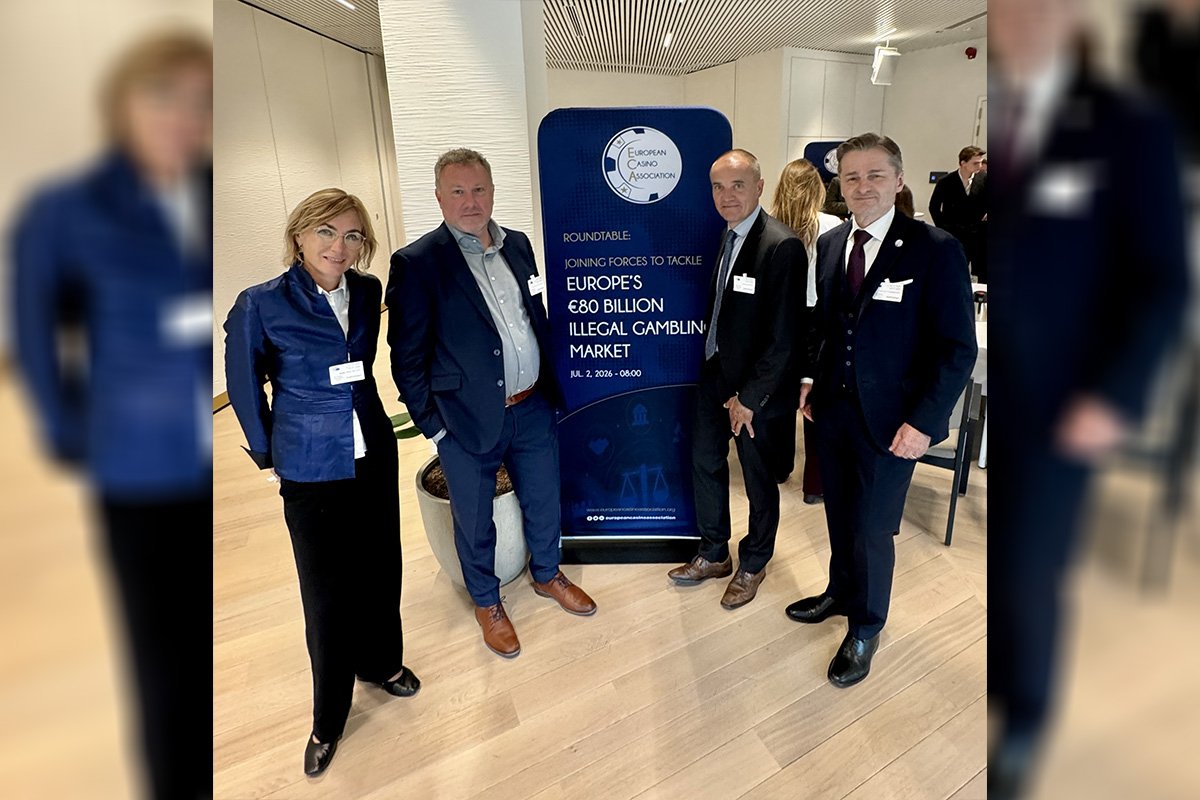
The European Casino Association (ECA) hosted a high-level roundtable in the European Parliament on tackling illegal online gambling. The event title still referred to the 2024 figure of €80 billion, the figure available when the roundtable was organised, but that number was overtaken at the event itself: the 2025 figures, released for the first time during the roundtable, showed that the illegal online gambling market aimed at EU consumers had reached €91.6 billion, an increase of around 14%. The title was therefore already outdated the moment the new numbers were presented. Drawn from the study commissioned by the ECA to Gambling Compliance International (GCI) and set out by ECA Chair Erwin van Lambaart, this rise deprived EU Member States of an estimated €22.9 billion in tax revenue.
A high-level roundtable in the European Parliament
The European Casino Association (ECA) organised a high-level roundtable discussion on illegal gambling in the European Parliament. Hosted by MEP Lukas Mandl, the gathering brought together EU lawmakers, the European Commission, the Anti-Money Laundering Authority (AMLA), Eurojust, the Joint Parliamentary Scrutiny Group (JPSG) on Europol, national gambling regulators and industry experts.
During the discussion, ECA Chair Erwin van Lambaart presented the 2025 figures from the impact study on illegal online gambling that the ECA commissions annually from Gambling Compliance International (GCI). Participants exchanged views under the Chatham House Rule on the growing scale of illegal online gambling, how it is currently tackled, and what more can be done at European level. They acknowledged the growing scale of the problem and called for stronger enforcement and closer cooperation to support a safe, well-regulated gambling environment.
The discussion is timely, coming shortly after the European Commission’s proposal to reform the mandate of Europol, a key institution in the fight against cross-border crime, including illegal gambling.
What the 2025 GCI figures show
The latest impact study, commissioned by the ECA to Gambling Compliance International (GCI), shows that the illegal online gambling market aimed at EU consumers reached €91.6 billion in 2025, an increase of around 14% on the previous year. This clear upward trend deprived EU Member States of an estimated €22.9 billion in tax revenue in 2025.
The figures also show that illegal operators now account for the majority of online gambling revenue in the EU-27, that more than 6200 illegal operators are actively targeting European consumers, and that the overwhelming majority of online gambling content Europeans are exposed to promotes illegal, unlicensed operators.
What is meant by “illegal gambling”
In the 27 Member States of the European Union, there is no grey market and no third category. A gambling operator is either legal, meaning it is licensed in the country where it serves its customers, or it is unlicensed and therefore illegal. When the ECA speaks of illegal gambling, it means operators serving European consumers without the licence that national law requires.
What sets legal and illegal operators apart
Legal, licensed operators abide by national and EU law, apply anti-money-laundering measures and cooperate closely with national and EU authorities. They protect vulnerable consumers, with particular care for young adults, through strict responsible-gambling programmes; they make significant tax contributions; and they support local development, tourism and jobs.
Illegal, unlicensed operators, by contrast, operate outside any licence and any regulatory or ethical standard. They fail to apply anti-money-laundering measures and can facilitate money laundering and the financing of crime. They ignore age and identity checks and actively target young and vulnerable players, using aggressive marketing, personalised bonuses and free plays to drive compulsive play. They pay no tax in the countries they target, and they mislead consumers, for example by using the logos of legitimate operators in advertising to commit fraud.
ECA Chair Erwin van Lambaart said: “The 2025 data from the GCI report leaves no room for doubt: illegal online gambling is a fast-growing, cross-border problem that puts players, especially young adults, at high risk, deprives societies of much-needed tax revenues, and undermines trust in the regulated market. Licensed casinos and their online businesses operate under strict rules and invest heavily in responsible gambling and anti-money-laundering measures. Yet illegal operators, often based outside the EU, can reach European consumers at the click of a button, without safeguards, without oversight and without contributing to our communities.”
“This is why we need strong political will and strengthened public-private cooperation that is aligned with this reality. By connecting national enforcement efforts, financial intelligence units and sector expertise, European institutions and agencies such as the European Commission, Europol and AMLA can help us turn data into action. If we fail to act now, the illegal online market will continue to grow at the expense of players, public finances and legitimate businesses.”
MEP Lukas Mandl said: “Illegal online gambling is not a niche issue, it is a serious cross-border threat that touches on consumer protection, organised crime and the integrity of our internal market. Europol is a crucial partner for Member States, but we must ensure that its mandate and resources allow it to fully support the fight against these illegitimate activities.”
“The evidence presented by the European Casino Association today show where cooperation is needed to do more. I will bring these insights into our parliamentary work and encourage colleagues cross-party to jointly go against the negative effects of illegal gambling from mental health issues to existential disasters of individuals and entire families, so that we can better protect citizens and make a clear difference between criminal activities and those operators who play by the rules.”
The post ECA: EU Member States Miss Out on €22.9 Billion in Tax Revenue Due to Illegal Online Gambling appeared first on EE Gaming | Global iGaming & Tech Intelligence Hub.

Yaspa CTO Toby Sucharov comments in relation to yesterday’s UKGC announcement on Financial Risk Assessments. “The Commission’s decision to introduce Financial Risk Assessments in stages is a significant moment for the UK gambling sector. The original ambition was always to protect vulnerable consumers without disrupting the majority of players, and today’s announcement shows that the industry is now moving from debate into implementation.
“The crucial question is whether the data being used is good enough to support that ambition. Credit reference agency data has clear advantages because it can be frictionless, but it is also limited. It can show missed payments, defaults or debt management plans, but those are often signs that financial harm has already happened. It is more of a rear-view mirror than a windscreen.
“To protect consumers sustainably, operators could benefit from more direct insights into a customer’s real financial position. That is where open banking has an important role to play, particularly for the small proportion of customers who cannot be assessed cleanly through credit reference data alone. Real-time bank transaction data can provide a clearer view of income, disposable income and gambling activity.
“The key challenge that led to using credit reference agencies was the friction around gaining customer consent. Traditional affordability checks have struggled because they ask customers to complete a separate task, often through an email or on-site message that is disconnected from what the customer is trying to do. Consumers do not complete operator tasks – they complete their own tasks.
“Our view is that the check has to be tied to the customer journey, particularly the deposit journey. If a customer is already choosing to add funds, a clear and proportionate prompt can make the process feel intuitive rather than intrusive. We have seen real-time deposit-integrated checks converting at 70%, versus a typical rate of 12% for traditional affordability checks. That’s a material distinction, and enables the industry to deliver meaningful financial risk assessments while preserving the frictionless experience the Commission, operators and customers all want.”
The post Inside View: Yaspa CTO on the UKGC Financial Risk Assessment appeared first on EE Gaming | Global iGaming & Tech Intelligence Hub.


The Australian Communications and Media Authority (ACMA) has issued a formal warning to mixed martial arts fighter Jamie Mullarkey for breaches of Australia’s online gambling laws.
An ACMA investigation found that in 2025 Mr Mullarkey promoted an illegal offshore gambling service in sponsored posts on his Instagram account. Mr Mullarkey’s Instagram profile also referred to his sponsorship arrangements with the service, including a link to the gambling site and posts with promotional hashtags referring to the service.
Australian online gambling rules prohibit the promotion of illegal gambling services. This includes posts or live streams featuring illegal services, sharing links to those services or running promotional giveaways connected to illegal gambling services.
ACMA member Carolyn Lidgerwood said the enforcement action puts social media influencers and their agents on notice.
“Athletes and social media personalities with large online followings can have significant influence over their audiences and can encourage the use of illegal gambling services,” Ms Lidgerwood said.
“This is the first enforcement action we have taken against an influencer for breaching online gambling rules, and it should serve as a warning to others.
“In this case the ACMA issued a formal warning considering the specific circumstances of the matter. This included that Mr Mullarkey ended the sponsorship arrangement promptly, cooperated with the investigation and quickly removed the material. Mr Mullarkey also accepted responsibility for his conduct and expressed genuine remorse.
“However, all influencers need to be aware that promoting illegal online gambling sites is against the law and can result in significant penalties.”
Individuals who promote or publicise illegal online gambling services can face civil penalties of up to $59,400. Those who facilitate access to illegal gambling services, including by providing hyperlinks or directing users to those services, may face penalties of up to $2,475,000.
“The ACMA will use its full suite of regulatory tools, including these substantial civil penalties, where influencers promote or facilitate access to illegal gambling services,” Ms Lidgerwood said.
The post ACMA Warns MMA Fighter Jamie Mullarkey for Breaches of Online Gambling Laws appeared first on Americas iGaming & Sports Betting News.

-

 AGCO7 days ago
AGCO Fines Great Canadian Entertainment $120,000 for Using Unauthorised Gaming System Software at Four Casinos
-
Affiliate Industry5 days ago
Hub Affiliations Triumphs at the iGB Affiliate Awards 2026: Winner of Programme/Network Campaign of the Year
-
Latest News5 days ago
N1 Partners at iGB L!VE 2026: Bringing Together Affiliates, Art and Innovation
-
Asia6 days ago
The UAE Lottery joins SAGIP outreach with Philippine Consulate and Infinite Communities
-
Canada6 days ago
St8 extends Octoplay partnership into Ontario and the UK
-
Canada6 days ago
St8 expands Octoplay aggregation deal to Ontario and the UK
-
0007 days ago
Booming Games launches Booming Buffalo Hold and Win Extreme 25,000
-
Latest News6 days ago
LEON announces LEON.bet Masters, a new CS2 tournament in Portugal