Latest News
Online Gambling Global Market Report 2022: Implementation of Blockchain, IoT and VR Technology Presents Lucrative Opportunities


The “Online Gambling Global Market Report 2022, By Game Type, Device, Component” report has been added to ResearchAndMarket’s offering.
The global online gambling market is expected grow from $73.42 billion in 2021 to $81.08billion in 2022 at a compound annual growth rate (CAGR) of 10.4%. The market is expected to reach $115.13 billion in 2026 at a CAGR of 9.2%.
The online gambling market comprises of revenue generated by remote gaming activities by means of the internet using desktop and mobile devices. The market includes gambling establishments developing online sports betting, casino, bingo, lotteries, and poker games, among others.
The main game types of online gambling are betting, casino, lottery, poker, online bingo and others. A lottery is a type of gambling in which numbers are drawn at random for a prize. The games are played in various devices such as desktop, mobile and others. The different components include software, services.
Asia Pacific was the largest region in the online gambling market in 2021. Eastern Europe is expected to be the fastest-growing region in the forecast period. The regions covered in the online gambling market are Asia-Pacific, Western Europe, Eastern Europe, North America, South America, Middle East and Africa.
Increasing adoption of smartphones with improved internet accessibility is driving the online gambling market. Globally, the average use of mobile devices compared to desktop computers or laptops is significantly greater. In most countries, the mobile users account for about 80% of all users in the online gambling industry. According to the study published by the Gambling Commission, in 2020, the most common method of accessing online gambling remained mobile phones, particularly among younger people.
The online gambling laws vary wildly from one region to other. Most countries have their own local laws that deal with the relevant legal and regulatory issues. Countries such as the USA, have much more complex gambling regulatory process. Moreover, in countries like India, gambling is under strict control. With each individual country enacting different gambling laws, it’s tough to be familiar with them all.
Nevertheless, all gambling sites should be compliant with any laws that they are subject to, to ensure gambling sites are operated lawfully, ethically, and are safe. The established and reputable licensing authorities impose a strict code of conduct on the licensees, who have to adhere to the necessary regulations if they are to maintain their licenses. The strict and varying laws across the countries are likely to challenge the market growth.
Technologies such as Blockchain, IoT and VR are changing everything in every field including online gambling. Virtual Reality and VR Headsets have gained a lot of popularity in recent years and are revolutionary addition to the world of online gambling. With VR, one can actually enter into a virtual casino and play all the games without having to travel. However, fraud and cheating were majorly concerning the users in online gambling. A lot of online casinos and online gambling sites have been accused of not being transparent and hiding their internal workings and the methods for their dealings. These concerns can be addressed using blockchain technology. With blockchain technology, everyone will be able to see exactly what is going on behind the scenes.
Powered by WPeMatico


The Azerbaijani Parliament (Milli Majlis) has officially cleared the first reading of a bill to heavily increase criminal penalties for organising and operating illegal gambling.
The proposed amendments to the Criminal Code were discussed during an extraordinary parliamentary session.
Under the bill, organising gambling in virtual formats-including via the internet, mobile communications, social media platforms, electronic communication tools or other internet- and mobile-based applications-would carry tougher penalties. The same applies to offenses involving minors, crimes committed by a group acting in prior collusion or activities generating substantial illegal income.
Such offenses would be punishable by a fine of up to twice the amount of the income obtained through the crime, restriction of liberty for a term of two to four years, or imprisonment for the same period.
The proposed amendments also introduce stricter penalties for offenses committed by organised criminal groups or criminal organisations, as well as those generating large-scale illegal profits. These would be punishable by restriction of liberty or imprisonment for a term of three to five years.
The bill would also change the way fines are calculated. Instead of the current fixed range of AZN 10,000 to AZN 15,000, courts would be able to impose fines of up to twice the amount of the criminal proceeds.
In addition, the legislation proposes harsher punishment for repeat offenses involving the organisation or operation of gambling activities or gambling venues, particularly where minors are involved or where the offenses generate substantial, large-scale or especially large-scale illegal income.
Under the current legislation, repeat offenses are punishable by restriction of liberty for four to five years or imprisonment for four to eight years. The proposed amendments would make imprisonment for five to eight years the sole penalty for such offenses.
The post Azerbaijan to Impose Tougher Penalties for Illegal Online Gambling appeared first on EE Gaming | Global iGaming & Tech Intelligence Hub.
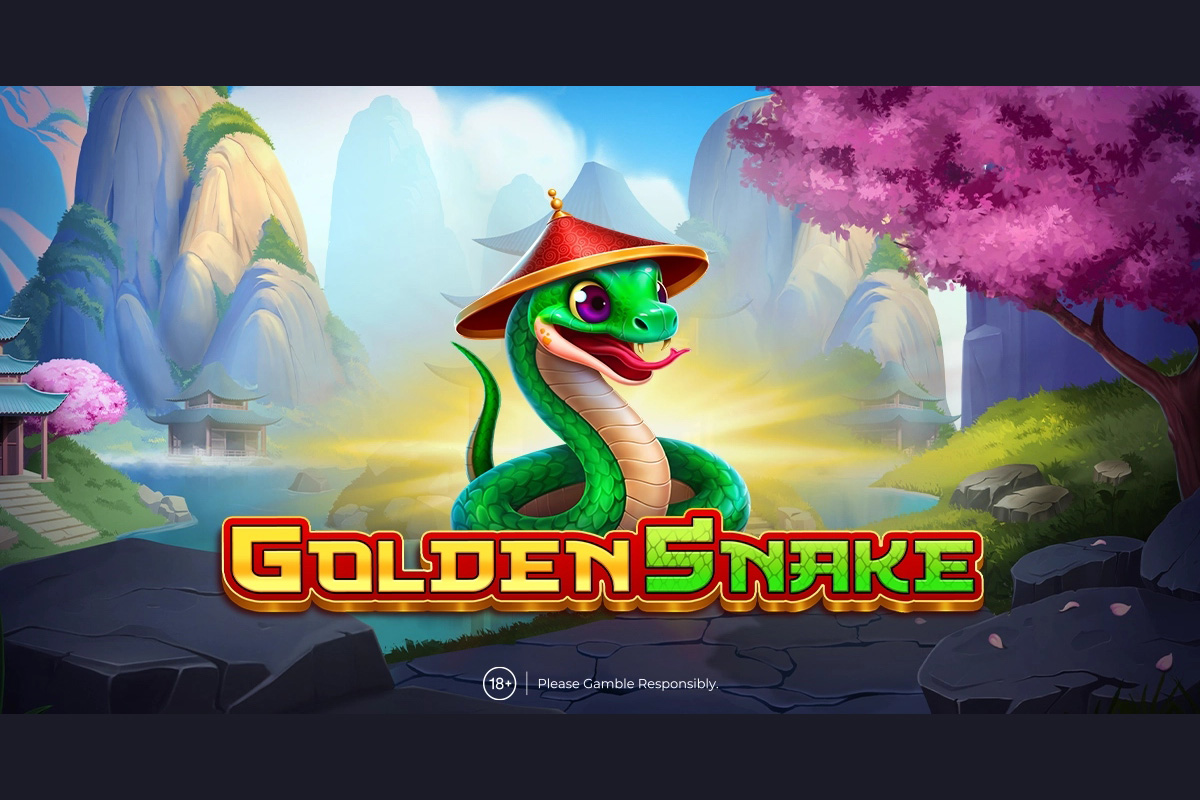
Amusnet has released Golden Snake, a captivating new video slot that blends the timeless appeal of Asian symbolism with innovative mechanics and high-impact gameplay. Designed for players who enjoy immersive themes and thrilling volatility, the title delivers a fresh interpretation of one of the industry’s most enduring and successful game styles.
Set in a world inspired by prosperity, luck and ancient Asian traditions, Golden Snake immerses players in a vibrant atmosphere filled with glowing money bags, firecrackers, blue envelopes, golden coins and the majestic Golden Snake. Rich visuals, authentic sound design and a fully animated snake companion create a lively experience that reacts to every spin, adding personality and emotion to the gameplay.
Moving beyond the traditional slot layout, Golden Snake introduces a distinctive 3x4x3 reel configuration that offers a fresh gameplay dynamic while remaining intuitive and engaging. The excitement builds with the Respin Feature, which can trigger randomly on any spin by selecting a paying symbol – or even the Wild – to set a chain of consecutive respins in motion. During the feature, the second reel could be locked with stacked Wild symbols while the first and third reels spin exclusively for the chosen symbol. Еvery new Wild symbol or matching symbol could be extending the action and increasing the anticipation.
The game’s momentum is further amplified by a powerful multiplier system. During the base game, multipliers of 3x, 5x and 10x can instantly enhance winning combinations. When the Respin Feature is activated and the middle reel fills with stacked Wild symbols, it expands to unlock multiplier values of up to 20x, creating exhilarating moments with a maximum win potential of 5000x the bet.
Beyond its engaging mechanics, Golden Snake has been designed to encourage longer play sessions through responsive character animations, dynamic win celebrations and continuous respin opportunities. Combined with its culturally inspired theme, the title is well positioned to appeal to audiences across Asia, LATAM and other regulated markets where Asian-themed content continues to perform strongly.
With Golden Snake, Amusnet reinforces its commitment to creating premium gaming experiences that combine recognisable themes, innovative mechanics and outstanding production quality. The new release provides operators with a compelling addition to their portfolio, helping them diversify their offering with content designed to drive player engagement and long-term performance.
Respin Feature
Watch the excitement build as stacked Wild symbols lock the second reel and matching symbols trigger consecutive respins, creating thrilling opportunities for bigger payouts.
Multiplier Feature
Base game multipliers of 3x, 5x and 10x evolve into enhanced Respin multipliers of up to 20x when the middle reel expands with stacked Wild symbol.
Gamble
Play the game and multiply the winnings through the Gambling feature.
Jackpot Cards
The Jackpot Cards bonus game is triggered at random during the gameplay to allow players to win impressive jackpots.
The post Amusnet Releases its Latest Video Slot “Golden Snake” appeared first on EE Gaming | Global iGaming & Tech Intelligence Hub.
Brightstar Lottery PLC
Brightstar Lottery Signs Five-Year Extension with Sony Pictures for Exclusive Omnichannel Lottery Licensing Rights to Ghostbusters


Brightstar Lottery PLC announced that it has signed an exclusive five-year extension agreement with Sony Pictures to continue developing and distributing Ghostbusters-themed omnichannel lottery games globally.
“Ghostbusters is an iconic global franchise with lasting popularity, and Brightstar has been instrumental in helping us connect with both lifelong fans and new audiences. We look forward to continuing to collaborate on dynamic, high-quality lottery experiences that resonate with players worldwide,” said Stacey Kerr, Sony Pictures Entertainment Senior Vice President, Global Licensing.
“Brightstar has been a proud licensee of Sony Pictures’ Ghostbusters since 2015, and we’re excited to continue bringing this fan-favorite franchise to life for players in new and engaging ways. To date, this collaboration has launched more than 25 games with over 20 lotteries globally. The variety of games includes traditional instant tickets with high-definition symbols, Brightstar’s patented Infinity Instants lottery tickets, Fast Play games, and an exclusive eInstant game. With this contract extension, we’re focused on expanding the Ghostbusters franchise through new, immersive omnichannel experiences that push the boundaries of fan engagement,” said Matthew Whalen, Brightstar Senior Vice President, Global Instant Ticket Services.
The post Brightstar Lottery Signs Five-Year Extension with Sony Pictures for Exclusive Omnichannel Lottery Licensing Rights to Ghostbusters appeared first on EE Gaming | Global iGaming & Tech Intelligence Hub.

-

 Casino Content7 days ago
PopOK Gaming secures Argentina certification to supply iGaming content
-
Argentinian market7 days ago
PopOK Gaming Strengthens Latin American Expansion with Argentina Certification
-
Canada7 days ago
Tonybet pays first $15,000 CAD prize in World Cup Card Collection Canada promo
-
Canada7 days ago
Tonybet’s World Cup Card Collection campaign lands first $15k Bronze winner
-
Alberta4 days ago
Octoplay secures conditional Alberta iGaming supplier approval from AGLC
-
Canada4 days ago
What Canadian Slot Players Are Really Comparing in 2026: Payout Speed, Interac and RTP Transparency
-
Africa3 days ago
SpringbokCasino ties July free spins to ‘Minions in the Wild’ campaign
-
content-supply4 days ago
Million Games launches Skull King’s Treasure with partner studio Arcane Pixel