Latest News
INTRALOT announces First Quarter 2022 Financial Results


INTRALOT SA (RIC: INLr.AT, Bloomberg: INLOT GA), an international gaming solutions and operations leader, announces its financial results for the three-month period ended March 31st, 2022, prepared in accordance with IFRS.
OVERVIEW
Group Revenue at €97.7m in 1Q22 (+0.1% y-o-y).
EBITDA in 1Q22 at €26.1m (+4.9% y-o-y).
NIATMI (Net Income After Tax and Minority Interest) from continuing operations at €-5.7m, vs.
€-6.9m a year ago.
Greek entities OPEX better by 12.5% y-o-y.
Operating Cash Flow at €17.3m in 1Q22.
Group Net CAPEX in 1Q22 was €4.3m.
Group Cash at the end of 1Q22 at €98.0m.
Net Debt at €500.6m at the end of 1Q22.
Net Debt/ LTM EBITDA at 4.5x in 1Q22.
On April 26, 2022, INTRALOT announced that it will convene a shareholders’ meeting to approve a Share Capital Increase of the Company via a rights issue, up to an amount not exceeding the 150% of the paid-up share capital. The proceeds will be used to purchase the shares in Intralot Inc. currently not controlled by the parent Group. To this end a binding Sale Purchase Agreement has been signed with the minority shareholders controlling 33.2m shares of Intralot Inc. for a price of €3.65 per share, conditional upon successful completion of the Share Capital Increase. INTRALOT announced that it has signed a binding MOU with Standard General Master Fund II L.P., according to which Standard General will purchase all unallocated shares in the Share Capital Increase, up to a number not exceeding one third of the total voting shares of Intralot SA for up to €0.58 per share.
On May 23, 2022, an extraordinary Shareholders’ Meeting provided authorization to the Board of Directors of Intralot SA to determine the terms of the Share Capital Increase and undertake all necessary actions.
Note:
Due to rounding, numbers presented throughout this and other documents may not add up precisely to the totals.
Group Headline Figures
| (in € million) | 1Q22 | 1Q21 | % | LTM | ||
| Change | ||||||
| Revenue (Turnover) | 97.7 | 97.6 | 0.1% | 414.1 | ||
| GGR | 79.8 | 78.9 | 1.2% | 336.2 | ||
| OPEX1 | (21.8) | (22.1) | -1.2% | (101.4) | ||
| EBITDA2 | 26.1 | 24.9 | 4.9% | 111.7 | ||
| EBITDA Margin | 26.7% | 25.5% | + 1.2pps | 27.0% | ||
| (% on Revenue) | ||||||
| EBITDA Margin | 32.7% | 31.6% | + 1.1pps | 33.2% | ||
| (% on GGR) | ||||||
| Capital Structure Optimization | (0.3) | (5.0) | -93.9% | (12.4) | ||
| expenses | ||||||
| D&A | (17.1) | (15.9) | 7.3% | (72.2) | ||
| EBT | (2.3) | (2.8) | 17.5% | 37.6 | ||
| EBT Margin (%) | -2.4% | -2.9% | + 0.5pps | 9.1% | ||
| NIATMI from continuing operations | (5.7) | (6.9) | 17.9% | 27.8 | ||
| Total Assets | 580.5 | 612.1 | – | – | ||
| Gross Debt | 598.6 | 734.3 | – | – | ||
| Net Debt | 500.6 | 643.7 | – | – | ||
| Operating Cash Flow from total | 17.3 | 24.5 | -29.6% | 100.4 | ||
| operations | ||||||
| Net CAPEX | (4.3) | (2.9) | 47.3% | (24.3) | ||
INTRALOT Chairman & CEO Sokratis P. Kokkalis noted:
“First quarter results show a consolidation of gains and recovery from the COVID impact and reflect an improved financial profile, with normalized revenues and a reduction in operational expenses and debt servicing costs consistent with the Company’s business plan. On the background of this strongly improved P/L and Balance Sheet, the Company has designed and is about to launch a Share Capital Increase by means of Rights Issue and has secured the commitment of Standard General Master Fund
- P. as cornerstone investor for the unsubscribed rights in a move that will significantly strengthen our prospects to grasp the tremendous opportunities in the US and the global markets.”
- OPEX line presented excludes the capital structure optimization expenses.
- The Group defines “EBITDA” as “Operating Profit/(Loss) before tax” adjusted for the figures “Profit/(loss) from equity method consolidations”, “Profit/(loss) to net monetary position”, “Exchange Differences”, “Interest and related income”, “Interest and similar expenses”, “Income/(expenses) from participations and investments”, “Write-off and impairment loss of assets”, “Gain/(loss) from assets disposal”, “Reorganization costs” and “Assets’ depreciation and amortization”.
OVERVIEW OF RESULTS
REVENUE
Reported consolidated revenue posted a steady performance compared to 1Q21, leading to total revenue for the three-month period ended March 31st, 2022, of €97.7m (+0.1%).
- Lottery Games was the largest contributor to our top line, comprising 61.9% of our revenue, followed by Sports Betting which contributed 18.8% to Group turnover for the three-month period. Technology contracts accounted for 7.7% and VLTs monitoring represented 11.2% of Group turnover, while Racing constituted the 0.5% of total revenue.
- Reported consolidated revenue for the three-month period is higher only by €0.1m year over year. The main factors behind the steady top line performance per Business Activity are:
- €+1.8m (+6.1%) from our Licensed
Operations (B2C) activity line with the variance driven by:
- Higher revenue in Argentina (€+2.5m or +32.0% y-o-y), driven by local market growth. In local currency, current year results posted a +50.4% y-o-y increase, and
- Lower revenue in Malta (€-0.6m or -2.9% y-o-y), driven by market performance.
- €+0.7m (+1.3%) from our Technology and Support Services (B2B/ B2G) activity line, with the variance driven by:
- Higher revenue in Australia (€+1.1m or +30.6% y-o-y), due to lockdown restrictions in 1Q21,
- Higher revenue in Croatia (€+0.9m), following the go-live of the lottery solution developed for Hrvatska Lutrija (national lottery of Croatia),
- Higher revenue from other jurisdictions (€+0.5m) mainly due to services related sales, and
- Lower revenue in US operations (€-1.9m or -5.1% y-o-y), was primarily affected by the nonrecurrence of the jackpot that boosted 1Q21 sales by c. €4.0m. Revenue from services ended lower by -3.4% y-o-y, while revenue from merchandise sales generated a deficit of -55.4% y-o-y due to their less frequent nature. From a currency perspective, there was a positive impact of 6.9% (Euro depreciation versus a year ago — in average terms).
- €-2.4m (-18.3%) from our
Management (B2B/ B2G) contracts activity line with the variance driven by:
- Slightly higher revenue in Morocco (€+0.1m),
- Marginally higher revenue from our US Sports Betting contracts in Montana and Washington, D.C. (€+0.1m), and
- Lower revenue from our Turkish operations (€-2.6m), solely affected by the appreciation of EUR (+75.8% versus a year ago – in average terms). In local currency, current year results posted a +20.4% y-o-y increase. In 1Q22, the local Sports Betting market expanded close to 1.3 times y-o-y, with the online segment representing close to 89% of the market at the end of 1Q22.
- Constant currency basis: In 1Q22, revenue — net of the negative FX impact of €3.8m —reached €101.4m (+4.0% y-o-y).
GROSS GAMING REVENUE & Payout
- Gross Gaming Revenue (GGR) from continuing operations concluded at €79.8m in 1Q22, posting an increase of 1.2% (or €+0.9m) year over year, attributable to:
- the decrease in the non-payout related GGR (-1.7% y-o-y or €-1.2m vs. 1Q21), driven mainly by the lower top line contribution of our US operations (jackpot affected), followed by
- the increase in the payout related GGR (+20.2% y-o-y or €+2.1m vs. 1Q21), driven mainly by the lower average payout ratio both in Malta and Argentina (+4.3% y-o-y on wagers from licensed operations3). 1Q22 Average Payout Ratio4 decreased by 5.4pps vs. 1Q21 (58.9% vs. 64.4%), significantly affected by the higher weighted contribution from our operations in Malta.
- Constant currency basis: In 1Q22, GGR — net of the negative FX impact of €3.1m — reached €82.9m (+5.1% y-o-y).
- Licensed Operations Revenue also include a small portion of non-Payout related revenue, i.e., value-added services, which totaled €1.3m and €0.8m for 1Q22 and 1Q21respectively.
- Payout ratio calculation excludes the IFRS 15 impact for payments to customers.
OPERATING EXPENSES5 & EBITDA6
- Total Operating Expenses ended lower by €0.3m (or -1.2%) in 1Q22 (€21.8m vs. €22.1m). After excluding the higher D&A expenses (€0.7m) in USA, Morocco and Croatia, Operating Expenses ended lower by €0.9m supported by cost containments in HQ perimeter.
- Other Operating Income from continuing operations ended at €5.7m presenting an increase of 3.2% y-o-y (or €+0.2m). The bulk of income is driven by the equipment leases in the USA.
- EBITDA from continuing operations amounted to €26.1m in 1Q22, posting an increase of 4.9% (or €+1.2m) compared to 1Q21. Despite the absence of jackpot that boosted significantly 1Q21 performance (US operations), the Group has managed to improve its EBITDA via the combined effect of the lower payout from our licensed operations and the lower Operating Expenses.
- On a yearly basis, EBITDA margin on sales improved to 26.7%, compared to 25.5% in 1Q21 (+1.2pps).
- LTM EBITDA stands at €7m.
- Constant currency basis: In 1Q22, EBITDA, net of the negative FX impact of €1.4m, reached €27.5m (+10.5% y-o-y).
EBT / NIATMI
EBT in 1Q22 totaled €-2.3m, compared to €-2.8m in 1Q21, with the variance driven by:
- the lower reorganization expenses following the succesful conclusion of our capital structure optimization process (€+4.7m vs 1Q21),
- the lower interest expenses, direct effect of debt restructuring (€+1.9m vs 1Q21)
- the positive impact from EBITDA (€+1.2m vs 1Q21)
The major headwinds affecting the improved perfornance can be attributed to:
- the negative impact from FX results (€-4.2m vs 1Q21), as a result of the valuation of cash balances in foreign currency other than the functional currency of each entity, the valuation of commercial and borrowing liabilities of various subsidiaries abroad in EUR, as well as the negative effect from the reclassification of FX reserves to Income Statement applying IFRS 10,
- the recognition of expenses vs income from participations and investments (€-1.5m vs 1Q21),
- the higher D&A (€-1.2m vs 1Q21), mainly due to Turkey (Bilyoner) and Morocco
- the accounting loss identified due to IAS 29 in our Argentinian operations (€-1.1m vs 1Q21).
Constant currency basis: In 1Q22 EBΤ, adjusted for the FX impact, reached €-0.4m, from €-6.5m in 1Q21.
- NIATMI from continuing operations in 1Q22 concluded at €-5.7m compared to €-6.9m in 1Q21. NIATMI from total operations in 1Q22 amounted to €-5.7m (improved by €2.6m vs. a year ago), including the performance of the discontinued operations in Peru and Brazil.
- Constant currency basis: NIATMI (total operations) in 1Q22, on a constant currency basis, reached €-5.3m from €-12.1m in 1Q21.
- Operating Expenses analysis excludes expenditures related to capital structure optimization.
- EBITDA analysis excludes Depreciation & Amortization, and expenditures related to capital structure optimization.
CASH-FLOW
- Operating Cash-flow in 1Q22 amounted to €17.3m, lower by €7.3m, compared to 1Q21. Excluding the operating cash-flow contribution of our discontinued operations in Brazil, the cash-flow from operating activities is lower by €7.0m vs. a year ago and is attributed to Income Tax payments vs returns 1Q21.
- Adjusted Free Cash Flow7 in 1Q22 decreased by €2.9m to €1.7m, compared to €4.6m a year ago. The main negative contributors to this variance were the income tax paid vs return in 1Q21 (€-7.4m y-o-y) and the higher maintenance capex (€-1.8m). On positive ground, dividends paid during the period were lower (€+3.1m y-o-y), net finance charges following the capital restructuring generated savings (€+2.0m y-o-y) and EBITDA performance has been improved (€+1.2m y-o-y).
- Net CAPEX in 1Q22 was €4.3m, higher by €1.4m compared to 1Q21. CAPEX in 1Q22 has been allocated towards R&D and project pipeline delivery (€0.3m), US (€3.0m) and the rest of operations (€1.0m). Maintenance CAPEX accounted for €2.2m, or 52.0% of the overall capital expenditure in 1Q22, from €0.8m or 28.2% in 1Q21.
- Net Debt, as of March 31st, 2022, stood at €500.6m, increased by €3.4m compared to December 31st, 2021 (€497.2m). The Net Debt increase was impacted primarily by the normal course of business following an adverse working capital movement, the exchange rate differences
(€+4.7m) for our USD denominated debt, and investments in growth capex (€+1.4m) for our US operations. The increase was partially offset by the lower interest accrued over 1Q22 vs December 2021.
- Calculated as EBITDA – Maintenance CAPEX – Cash Taxes – Net Cash Finance Charges (excluding refinancing charges) – Net Dividends Paid; all finance metrics exclude the impact of discontinued operations.
OUTLOOK
Although the risks associated with the pandemic of COVID-19 have been downgraded, the geopolitical tension arising from the war in Ukraine coupled with the energy crisis, the supply chain disruptions and the rising inflation are factors that are expected to determine the economic outlook over the coming months.
Our Group does not have direct exposure in terms of operations or dependency on suppliers in Ukraine and Russia. However, the risk of indirect effects on the Group’s business activities from the reduction in the household disposable income and the possible increase in operating expenses due to inflationary pressures cannot be overlooked.
The Management of the Company monitors the geopolitical and economic developments on a constant basis and is ready to take all the necessary measures for protecting its operations.
RECENT/ SIGNIFICANT COMPANY DEVELOPMENTS
- On April 26, 2022, INTRALOT announced that it will convene a shareholders’ meeting to approve a Share Capital Increase of the Company via a rights issue, up to an amount not exceeding the 150% of the paid-up share capital. The proceeds will be used to purchase the shares in Intralot Inc. currently not controlled by the parent Group. To this end a binding Sale Purchase Agreement has been signed with the minority shareholders controlling 33,227,256 ordinary shares of Intralot Inc. for a price of €3.65 per share, conditional upon successful completion of the Share Capital Increase. INTRALOT announced that it has signed a binding MOU with Standard General Master Fund II L.P., according to which Standard General will purchase all unallocated shares in the Share Capital Increase, up to a number not exceeding one third of the total voting shares of Intralot SA for up to €0.58 per share.
- On May 23, 2022, an extraordinary Shareholders’ Meeting provided authorization to the Board of Directors of Intralot SA to determine the terms of the Share Capital Increase and undertake all necessary actions.
APPENDIX
Performance per Business Segment8
YTD Performance
Performance per Geography
Revenue Breakdown
| (in € million) | 1Q22 | 1Q21 | % | ||
| Change | |||||
| Europe | 35.8 | 34.4 | 4.0% | ||
| Americas | 52.3 | 50.5 | 3.4% | ||
| Other | 15.3 | 16.8 | -8.9% | ||
| Eliminations | (5.7) | (4.2) | – | ||
| Total Consolidated Sales | 97.7 | 97.6 | 0.1% |
Gross Profit Breakdown
| (in € million) | 1Q22 | 1Q21 | % | ||
| Change | |||||
| Europe | 3.5 | (1.7) | – | ||
| Americas | 11.4 | 13.8 | -17.5% | ||
| Other | 13.0 | 14.2 | -8.4% | ||
| Eliminations | (2.7) | (0.7) | – | ||
| Total Consolidated Gross Profit | 25.2 | 25.6 | -1.6% |
- Part of the US revenue that concerns SB management, has been included under the category “Game Management”. The rest of the US revenue is included under the “Technology” business segment.
| Gross Margin Breakdown | ||||||
| % | ||||||
| 1Q22 | 1Q21 | |||||
| Change | ||||||
| Europe | 9.8% | -5.1% | + 14.8pps | |||
| Americas | 21.8% | 27.4% | – 5.5pps | |||
| Other | 84.8% | 84.4% | + 0.4pps | |||
| Total Consolidated Gross Margin | 25.8% | 26.2% | – 0.4pps | |||
INTRALOT Parent Company results
- Revenue for the period increased by 28.1%, to €6.0m, with the improvement driven by the higher rendering of services towards the Group’s subsidiaries in the current period.
- EBITDA shaped at €-1.3m from €-4.5m in 1Q21, with the positive variance stemming from the top-line improvement that generated higher profitability due to better margins and lower costs.
- Earnings after Taxes (EAT) at €-6.7m from €-0.1m in 1Q21, impacted mainly by the gain recorded in 1Q21 following the sale of Intralot de Peru.
| (in € million) | 1Q22 | 1Q21 | % | ||
| Change | |||||
| Revenue | 6.0 | 4.6 | 28.1% | ||
| Gross Profit | (0.5) | (3.1) | -82.9% | ||
| Other Operating Income9 | 0.1 | 0.0 | – | ||
| OPEX9 | (4.5) | (5.1) | -11.8% | ||
| EBITDA9 | (1.3) | (4.5) | 71.5% | ||
| EAT | (6.7) | (0.1) | – | ||
| CAPEX (paid) | (0.3) | (0.5) | -35.4% |
- Other Operating Income, Operating Expenses and EBITDA lines presented exclude the expenditures and recharges related to capital structure optimization.
CONFERENCE CALL INVITATION – 1Q22 FINANCIAL RESULTS
Sokratis Kokkalis – Chairman & CEO, Chrysostomos Sfatos – Deputy Group CEO, Nikolaos Nikolakopoulos – Deputy Group CEO, Fotis Konstantellos – Deputy Group CEO, Andreas Chrysos – Group CFO, Nikolaos Pavlakis – Group Tax & Accounting Director, Antonis Skiadas – Group Finance, Controlling & Budgeting Director and Michail Tsagalakis – Capital Markets Director, will address INTRALOT’s analysts and institutional investors to present the Company’s 1Q22 results, as well as to discuss the latest developments at the Company.
Powered by WPeMatico


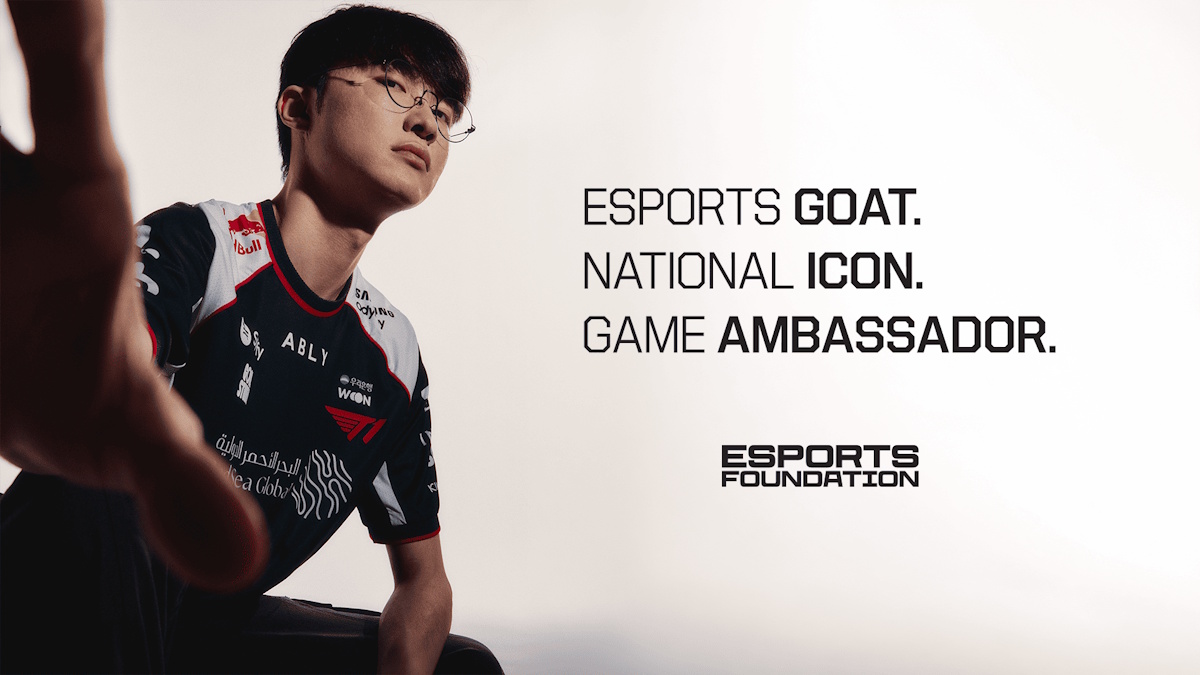
Lee “Faker” Sang-hyeok joins Cristiano Ronaldo and Magnus Carlsen in the Esports Foundation’s Ambassador Program.
The Esports Foundation (EF) has appointed Lee “Faker” Sang-hyeok as a Game Ambassador for the Esports World Cup (EWC) and Esports Nations Cup (ENC) through 2028, the organization said on July 15, 2026 in a statement issued from Riyadh and Paris.
EF said Faker joins Cristiano Ronaldo, listed as the Foundation’s Global Ambassador, and Magnus Carlsen as part of the Esports Foundation Ambassador Program. The Foundation said Faker will represent “the perspective of esports players” across its international events, athlete initiatives, media engagements and leadership forums.
“You can’t talk about esports without mentioning Faker. He is the defining athlete of competitive gaming: a champion whose excellence, discipline and longevity have inspired an entire generation,” said Ralf Reichert, Chief Executive Officer of the Esports Foundation. “As our Game Ambassador, Faker represents something fundamental to the Ambassador Program: esports creates its own global sporting icons. Across EWC, ENC and NGSC, he will help ensure that the players who built this sport have a voice in shaping where it goes next.”
Faker said: “Competition has shaped my life, and I am proud to join the Esports Foundation as Game Ambassador. I want to continue competing for the biggest titles with T1 while representing the players and fans who have helped esports grow worldwide. Through the Esports World Cup, Esports Nations Cup and the Foundation’s wider platforms, I hope to inspire the next generation to pursue excellence, remain resilient and believe in how far competitive gaming can take them. There is still much more to achieve.”
EF highlighted Faker’s competitive record, describing him as a six-time League of Legends World Champion, EWC 2024 winner, two-time MSI champion and ten-time domestic champion with T1. The Foundation also said Faker became the first esports athlete to receive the Blue Dragon Medal in 2026, describing it as the Republic of Korea’s highest sporting honor awarded by President Lee Jae-myung.
The post Esports Foundation names Faker Game Ambassador for EWC and ENC through 2028 appeared first on EE Gaming | Global iGaming & Tech Intelligence Hub.

Midnite has agreed a partnership with Middlesbrough FC that will see the UK bookmaker become the club’s principal partner and front-of-shirt sponsor for the 2026/27 campaign, which Middlesbrough describes as its landmark 150th season.
The companies announced the deal alongside a fan activation at Riverside Stadium on Thursday, July 9, branded “This Season’s On Us”. The initiative offered supporters prizes including 2026/27 season tickets, 2026/27 shirts, match tickets, or a £25 club shop voucher, with fans required to answer Middlesbrough trivia and complete a football challenge.
Middlesbrough former players Craig Hignett and David Wheater attended the event, and, according to the company, took bonus attempts on behalf of participants who missed out.
Andrew Mook, Midnite’s Head of Brand Marketing, said:
“Middlesbrough have a storied history and we’re delighted to announce this partnership during such a monumental year with the club celebrating their 150th anniversary.
“It was great to see so many Middlesbrough fans at the “This Season’s On Us” activation, we hope they enjoyed taking part and meeting club legends, with David Wheater hitting top bins on several occasions and allowing fans to win big with season tickets.
“We can’t wait to get to Riverside Stadium in August to kick-off a new season and we’re excited to say that we have plenty of new and captivating campaigns planned.”
Lee Fryett, Middlesbrough FC Chief Commercial Officer, added:
“We’re delighted to welcome Midnite as our new Principal Partner.
“We’re looking forward to working closely with Midnite to develop engaging campaigns, content and unique experiences that bring our fans even closer to the club.
“We’re confident this partnership will provide real value for our supporters while supporting our ambitions both on and off the pitch.”
The post Midnite signs as Middlesbrough FC principal partner for 2026/27 season appeared first on EE Gaming | Global iGaming & Tech Intelligence Hub.
ThrillTech has been awarded a Gaming-Related Supplier licence by the Alcohol and Gaming Commission of Ontario (AGCO), clearing the company to launch in Ontario’s regulated market.
The licence allows ThrillTech to deploy its opt-in side bet jackpots technology with regulated online casino, sports betting and lottery operators across the province.
Benjamin Bradtke, Co-Founder of ThrillTech, said: “Securing our AGCO licence is a major step in our mission to transform how jackpots are delivered at scale across regulated markets. This latest certification is testament to our robust technology and trusted compliance frameworks, allowing us to continue our global growth trajectory. We are thrilled to bring our proven, compliant jackpot technology to Ontario, empowering locally licensed operators to uplift revenue without cannibalising existing spend.”
The company said its “ThrillPots” mechanics sit as an independent, player-funded side bet and do not alter the underlying game’s return-to-player mathematics.
ThrillTech said the Ontario approval enables its existing multinational partners that also operate in the province to launch its side bet jackpots locally, while it also holds talks with potential new operator partners. The company lists its regulated footprint as including the United Kingdom, Sweden, the Netherlands, Romania, Malta, Gibraltar, Brazil and Peru.
The post ThrillTech secures AGCO supplier licence for Ontario launch appeared first on EE Gaming | Global iGaming & Tech Intelligence Hub.

-

 Compliance Updates5 days ago
Arizona Department of Gaming Issues Cease-and-Desist Orders to Multiple Operators Linked to Underage Gambling and Illegal Activity
-
 Latest News7 days ago
ELA Games releases Flames Fruits Frenzy Hold and Win slot
-
Compliance Updates6 days ago
KONAMI GROUP’s Konami Gaming Inc. First to Submit Manufacturer License Application in Japan’s Emerging IR Market
-
Latest News7 days ago
PG Soft appoints Hugo Baungartner as General Manager LatAm
-
Canada7 days ago
Canada’s Safer Gambling Gap: Why Market Success Doesn’t Always Equal Player Safety
-
Latest News7 days ago
Tom Horn Gaming ships Royal Ruby FeatureStorm slot worldwide on 14 July 2026
-
Latest News7 days ago
Booming Games launches Fish Tales: Double Catch Max Scatter
-
Latest News7 days ago
BC.GAME names Guillermo Ochoa brand ambassador for Mexico push