Compliance Updates
65 suspicious betting alerts reported by IBIA in Q3 2021

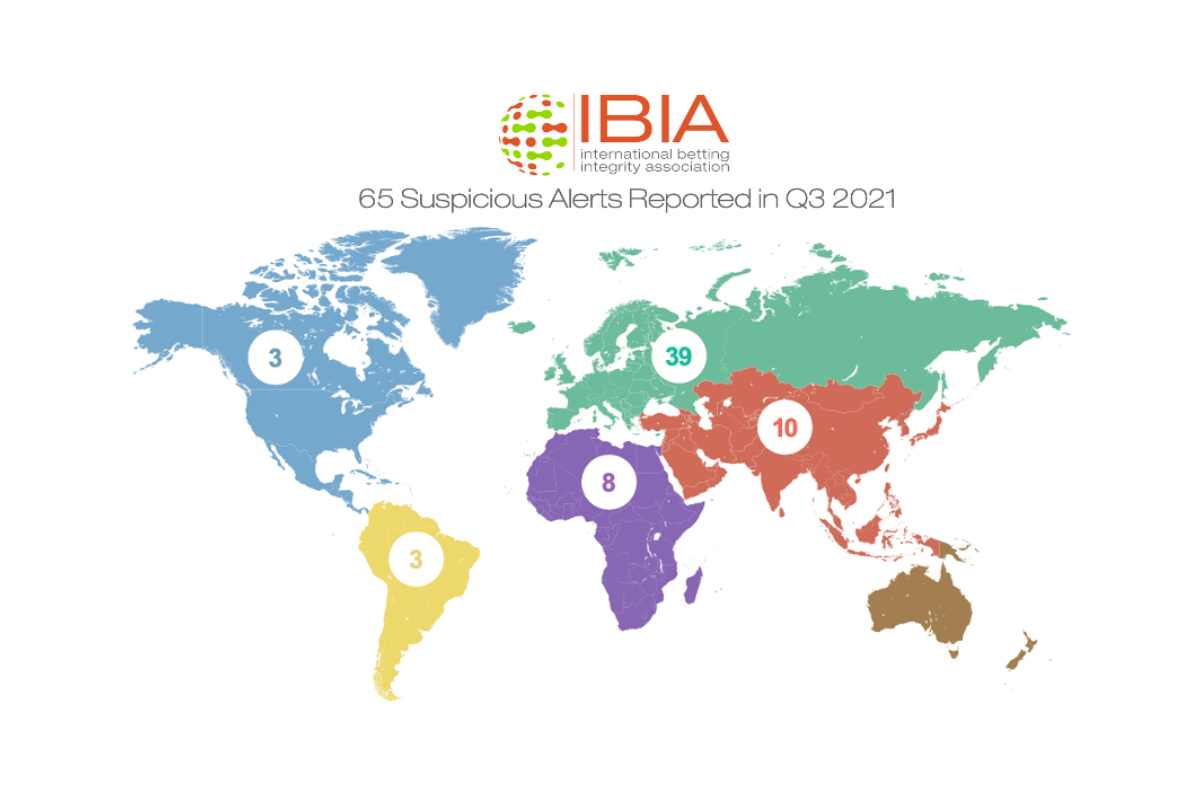
The International Betting Integrity Association (IBIA) reported 65 cases of suspicious betting to the relevant authorities during the third quarter (Q3) of 2021. The Q3 2021 total represents a 14% decrease compared to Q3 2020, which saw 76 alerts. The Q3 2021 alerts covered tennis (23 cases), football (18), table tennis (17), esports (2) and one each in handball, cricket, squash, basketball and futsal. From a geographical perspective, Europe accounted for nearly 60% of all alerts reported during Q3, followed by Asia with 15% and Africa 12%.
Khalid Ali, CEO of IBIA, said: “The 65 cases in Q3 brings the nine-month total to 167 alerts, a 17% decrease on the same point in 2020 with 202 alerts. Tennis provided the highest number of alerts during the first three quarters with 47, followed by football with 46, table tennis 33 and esports with 25 cases. These four sports made up 90% of alerts reported in the first nine-months.
“The benefits of being part of an international integrity monitoring body continue to be recognised; the association welcomes the decision of the Ontario authorities to require all licensed betting operators to be part of an integrity monitoring body, a position which is already in force in the recently opened market in the Netherlands. IBIA members are well-placed in those markets.”
Other key data for Q3 2021:
- 28 – different countries where alerts were reported
- 23 – alerts reported in Ukraine, Kazakhstan and Russia (more than one third of the Q3 total)
- 9 – the number of different sports on which alerts were reported
- 6 – alerts on sporting events in the Americas
The International Betting Integrity Association is the leading global voice on integrity for the licensed betting industry. It is run by operators for operators, protecting its members from corruption through collective action. Its monitoring and alert platform is a highly effective anti-corruption tool that detects and reports suspicious activity on its members’ betting markets. The association has longstanding information sharing partnerships with leading sports and gambling regulators to utilise its data and prosecute corruption. It represents the sector at high-level policy discussion forums such as the IOC, UN, Council of Europe and European Commission.
Powered by WPeMatico

Compliance Updates
MGA Publishes Results of Thematic Review on Self-exclusion Practices in Online Gaming Sector

The Malta Gaming Authority (MGA) has published the results of a Thematic Review on how online B2C licensees implement self‑exclusion and other responsible gambling safeguards. The Review sought to identify any systemic weaknesses and clarify regulatory expectations relating to player protection, highlighting areas performing well as well as opportunities for licensees to strengthen their practices.
The Review was carried out in 2025 following reports that some players were able to access multiple brands despite being self‑excluded due to problem gambling. It examined the real‑world performance of player protection tools across 20 licensees and 58 active URLs. A mystery shopping exercise assessed the effectiveness of self‑exclusion processes, cross‑brand account controls, and the presentation of responsible gambling protections at key points of play.
The findings presented in this document reaffirm the Authority’s ongoing commitment to safeguarding players and upholding the integrity of the online gaming sector. Overall, the Thematic Review indicates a positive level of compliance, with the majority of licensees assessed demonstrating practices that are broadly in line with regulatory expectations. At the same time, the Review highlights opportunities for further strengthening player protection measures across the sector.
The assessment outlines the specific areas where enhancements would be beneficial. These include delays in activating self‑exclusion, instances where exclusions were lifted without applying a mandatory cooling‑off period, challenges in detecting duplicate or closely matching player identity details across brands, the absence of limit‑setting prompts during registration, and incomplete information displayed within Reality Check pop‑ups. Together, these findings provide guidance where systems and processes can be enhanced to ensure player protection measures operate as intended.
The Authority has communicated the findings to the relevant licensees, each of whom has been asked to address the points raised and submit rectification plans. Follow‑up supervisory engagement will continue where necessary, including monitoring the implementation of corrective actions. This work forms part of the Authority’s broader risk‑based oversight approach, aimed at promoting higher and more consistent standards of player protection across the sector.
Through this Guidance Document, the Authority encourages all licensees to use the insights from this Review to reinforce their internal frameworks, enhance their responsible gambling controls, and continue contributing to a safer and more sustainable gaming environment.
The post MGA Publishes Results of Thematic Review on Self-exclusion Practices in Online Gaming Sector appeared first on Eastern European Gaming | Global iGaming & Tech Intelligence Hub.
Adventure One QSS
Dutch Gambling Authority Imposes Penalty on Adventure One QSS for Illegal Gambling
The Netherlands Gambling Authority (KSA) has imposed a penalty on Adventure One QSS Inc. for illegal gambling. Adventure One offers games of chance on the Dutch market under the Polymarket brand name, without a license. The KSA has called on Polymarket to cease its activities immediately. If it fails to do so, the company will be fined €420,000 per week, with a maximum of €840,000.
Polymarket has been frequently in the news in recent months, particularly regarding betting on the Dutch elections. Although Polymarket itself states that prediction markets do not fall under the category of gambling, the Netherlands Gambling Authority (KSA) has taken a different stance. After contacting the company about its illegal activities on the Dutch market, there has been no visible change, and the offering remains available. The Netherlands Gambling Authority therefore imposed this order, subject to a penalty. A turnover-related fine may also be imposed at a later date.
Ella Seijsener, director of licensing and supervision at the Netherlands Gambling Authority (KSA), said: “Prediction markets are on the rise, including in the Netherlands. These types of companies offer bets that are not permitted in our market under any circumstances, not even by license holders. Besides the social risks of these kinds of predictions (for example, the potential influence on elections), we conclude that this constitutes illegal gambling. Anyone without a KSA license has no business in our market. This also applies to these new gambling platforms.”
The post Dutch Gambling Authority Imposes Penalty on Adventure One QSS for Illegal Gambling appeared first on Eastern European Gaming | Global iGaming & Tech Intelligence Hub.
Brais Pena Chief Strategy Officer at Easygo
Stake Goes Live in Denmark Following Five-Year Licence Approval
Stake, the largest online casino and sportsbook globally, today proclaims its official entry into Denmark after obtaining a five-year online casino and sports betting license. The shift reinforces Stake’s enduring dedication to enhancing its global growth strategy.
Denmark is often seen as a regulatory success within the European online gambling scene, and Stake has now introduced its flagship, internationally recognized product to the Danish market. Players will unlock access to Stake’s top-tier casino and sportsbook, showcasing exceptional games, cutting-edge technology, and an exceptional user experience, all provided with a strong local emphasis.
Starting 1 March 2026, Stake Denmark will set up its new headquarters at Parken Stadium, the national football stadium of Denmark and the home ground for FC Copenhagen.
Peter Eugen Clausen, Managing Director at Stake Denmark, said: “Denmark has one of the most well-regulated and competitive gaming markets in Europe, and that’s exactly what makes it so exciting. With Stake’s arrival, Danish players can expect a fresh, world-class experience backed by global scale and strong local focus. We’re raising the bar in terms of product, transparency, and entertainment, and I believe increased competition from brands like Stake will only drive the market forward in a positive way.”
Brais Pena, Chief Strategy Officer at Easygo, the technology company behind Stake, said: “Denmark marks our entry into the Nordics and represents a clear win in one of Europe’s most mature and high-value markets. With each new market, our momentum continues to build as we deliver on our global expansion strategy.”
Since its inception in 2017, Stake has positioned itself as the top betting and gaming brand globally by continually presenting advanced technology and novel gaming experiences for players around the globe. Upon entering Denmark, Stake maintains its dedication to player safety and responsible gaming, guaranteeing that gambling stays enjoyable, secure, and entertaining by providing extensive tools and resources that assist customers in comprehending and monitoring their gambling behavior.
The post Stake Goes Live in Denmark Following Five-Year Licence Approval appeared first on Eastern European Gaming | Global iGaming & Tech Intelligence Hub.

-

 Amusnet6 days ago
Week 7/2026 slot games releases
-
Aphrodite’s Kiss6 days ago
Love on the Reels: Slotland Introduces “Aphrodite’s Kiss”
-
Brino Games6 days ago
QTech Games integrates more creative content from Brino Games
-
Bet Rite7 days ago
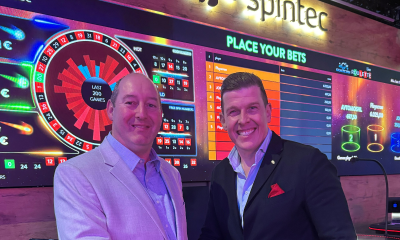
Spintec Expands into Canada with Bet Rite
-
Alex Malchenko6 days ago
Evoplay Strengthens Canadian Presence with BetMGM Partnership
-
3 Oaks Gaming6 days ago
3 Oaks Gaming Enters Spanish Market
-
blask7 days ago
When LATAM gambles: Blask reveals seasonality patterns across six countries
-
Latest News6 days ago
Red Papaya Presents: Lucky Rainbow Rush Adventure