Canada
Winning With Online Sports Betting, I-Gaming, and E-Sports: CEOs of GAN, FansUnite, DraftKings, and fuboTV Embracing Interactive Millennial Mega-Trends


Wall Street Reporter, the trusted name in financial news since 1843, has published reports on the latest comments and insights from leaders at: GAN Limited (NASDAQ: GAN), FansUnite (OTC: FUNFF) (CSE: FANS), DraftKings Inc. (NASDAQ: DKNG) and fuboTV (NYSE: FUBO).
Multiple trends are converging, creating massive opportunities for the new paradigm of wagering. As millions of millennial consumers embrace online sports betting, esports, and I-Gaming – governments are increasingly eager to legalize, and drive desperately needed tax revenues. Online sports betting is emerging as the dominant growth theme of the decade, with billions of dollars in revenues generated worldwide from video games, streaming to online casinos and sports betting. Wall Street Reporter highlights the latest comments from industry thought leaders:
FansUnite (OTC: FUNFF) (CSE: FANS) “Positioned for Exponential Revenue Growth in iGaming, E-Sports, Online Sports Betting”
In a recent presentation at Wall Street Reporter’s NEXT SUPER STOCK livestream, FansUnite (OTC: FUNFF) (CSE: FANS) CEO Scott Burton explained how the company’s latest distribution deal with an online casino games aggregator, sets the stage for exponential revenue growth opportunities. In the next 12 months, FUNFF plans to expand its current line from three games to twelve – while adding multiple aggregators for each game – reaching millions of new online casino customers worldwide. With each game generating as much as $500,000 in revenue per month for FUNFF – per online casino – and the potential to be in hundreds of online casinos – these numbers can quickly add up.
December 16 – FUNFF gains first-mover advantage into the U.S. esports betting market, as it’s long-term partner GameCo joins US Bookmaking and Sky Ute Casino to establish the first dedicated esports sportsbook in the United States. FUNFF wholly-owned subsidiary Askott Entertainment will supply its iGaming platform, Chameleon, as part of a fully integrated esports betting solution. Through GameCo’s partnership with Sky Ute Casino and US Bookmaking, FansUnite will be the first iGaming solutions provider to receive significant exposure in the U.S. esports betting market.
December 7 – FUNFF receives Malta Gaming Service License and Critical Gaming Supply, and will now be able to offer a full spectrum of online gambling services in Europe, covering Casino, Fixed Odds Betting, Pool Betting and Controlled Skilled Games. With MGA approval received, FansUnite will be joining other highly respected gambling companies such as PokerStars, Betfair and Unibet in operating their business within MGA regulations.
DraftKings Inc. (NASDAQ: DKNG), CEO Jason Robins: “Huge Pent-up Demand for Sports Betting”
“…As sports have started to return, we saw revenue improve sequentially each month in the quarter, with June revenue increasing 20% year-over-year on a pro forma basis. This strong overall results and improvement are due to our product innovation, our entry into new jurisdiction, and pent-up demand for sports betting as Live Sports like Golf, European Soccer, NASCAR and UFC started to return. In the first two weeks of MLBs return, we saw three times the handle compared to the first two weeks of the 2019 MLB season. In the first week of the NHL’s return, our handle is more than twice the handle of first week of 2019 NHL playoff…”
“…We significantly expanded our eSports offering and have seen exponential growth in this category. We added popular Madden simulated games and began to include streaming sports within our app, which has become a very popular feature. In fact, since the return of the NHL, the NBA, and Major League Baseball, users have continued to engage with eSports, which gives us confidence in that product’s future….We believe eSports is going to be a huge category – it’s when not if…we believe ultimately eSports betting will be if not the biggest, certainly one of the biggest categories of sports betting over the long-term.”
GAN Limited (NASDAQ: GAN) CEO Dermot Smurfit: “On Path To $100 Million Revenue with Online Sports Betting and Casinos”
“..While both the consumer attention and client demand remains focused on sports betting, the real core of the U.S. internet gambling profit opportunity lies inherently within the online casino, which is only unlocked by the mass market appeal of sports betting being a technical and operational capability, we will shortly possess…”
“When you combine online casino gaming with internet poker, and of course, internet sports betting, New Jersey generated in excess of $132 million of gross operating revenue in that single state in the single month of October. This amount would have seemed implausible just two years ago. New Jersey is now on a path where internet gambling revenues could be on a monthly run rate to exceed pre-COVID retail gaming revenues by the end of 2022. I’ll state this again, because it is incredibly important for everyone to understand the magnitude of the structural shift in the retail casino industry. New Jersey’s internet gambling market is on a growth path to exceed pre-COVID monthly retail casino gaming revenues within 18 months, possibly less. This all points to bright line a truth that COVID combined with the advent of internet sports betting and the associated strong cross-sell of sports gamblers into online casino gaming has manifestly altered expected future growth opportunities in this industry for decades to come…Our continuing mission is to bring retail casinos online with our technology platform focused principally on delivering all forms of internet gambling content, including casino gaming and sports betting.”
fuboTV (NYSE: FUBO) CEO David Gandler: ”At Intersection of Sports Streaming and Wagering”
“…From an execution standpoint, Q3 was by far the strongest quarter in the company’s history. Our results have exceeded previously raised guidance with solid growth across every KPI we track. Revenues were up 47% to $61 million. That’s well ahead of the guidance range we provided of $52 million to $55 million. …Paid subscribers at quarter end totaled 455,000, and that’s 58% above the 288,000 last year. Net additions came in at 167,000. That’s up almost 100% year-over-year…FUBO sits firmly at the intersection of 3 megatrends: The first is the secular decline of traditional television viewership; the second is the shift of TV ad dollars to connected devices; and the third is online sports wagering, a market we absolutely intend to enter. Our growth opportunities are numerous, and there are great many reasons for us to be optimistic given the optionality in the business…”
“We’re super excited about wagering. I would say that we’ve already started executing on our strategy. And at the appropriate time, we’ll provide more details. But the way we think about wagering is we look at it from a 3-bucket perspective: we have an acquisitions advantage, we have an engagement advantage and we have a monetization advantage. For acquisitions, you should think of it that we’re starting with 500,000 paying subscribers. And what you’ve heard from our ability to sell attachments this quarter, we think that we’re going to be able to also sell in a lot of wagering opportunities. Number two was on the engagement front. We have over 50,000 sporting events on the platform, and we’re getting people to watch over 120 hours per month. So there are going to be ample opportunities for us to really sort of drive that forward…” fuboTV (NYSE: FUBO) Q3 2020 Earnings Highlights: https://bit.ly/2HcPk0I
Powered by WPeMatico


CasinoCanada.com, an online casino information portal operated by SEOBROTHERS, has partnered with the IntellectBet online casino. The collaboration focuses on content development, traffic acquisition, and informational coverage of the IntellectBet platform for users in Canada.
Eugene Ravdin, Head of PR at SEOBROTHERS, said: “The partnership with IntellectBet implies the creation of content describing the platform’s offering, its game portfolio, provider network, and payment systems. The collaboration includes traffic acquisition focused on directing users from Canada to the platform.”
The platform provides access to a library of 16,000 games aggregated from more than 85 studios. The portfolio includes slots, live dealer games, and RNG table games, as well as additional categories such as crash and penny games from the likes of Booming Games, InOut, Playson, and BGaming.
The platform supports more than 15 payment methods, including Interac, Bitcoin, and MiFinity. IntellectBet Casino operates in Canada under the Curacao licence and reports around 94,000 active players monthly.
IntellectBet is operated by Casiworx, which also unites other casino brands such as RockstarWin, StakeBro, FreakyBillion, PokerbetCasino, VipCasino, SlotyStake, Slotobit, StakeMania, SlotoRush, Norsewin.
The post CasinoCanada Partners with IntellectBet appeared first on Americas iGaming & Sports Betting News.
Adam Pentecost Chief Revenue Officer at Gaming Corps
Gaming Corps Taps Betty to Boost Content Options for Ontario Players

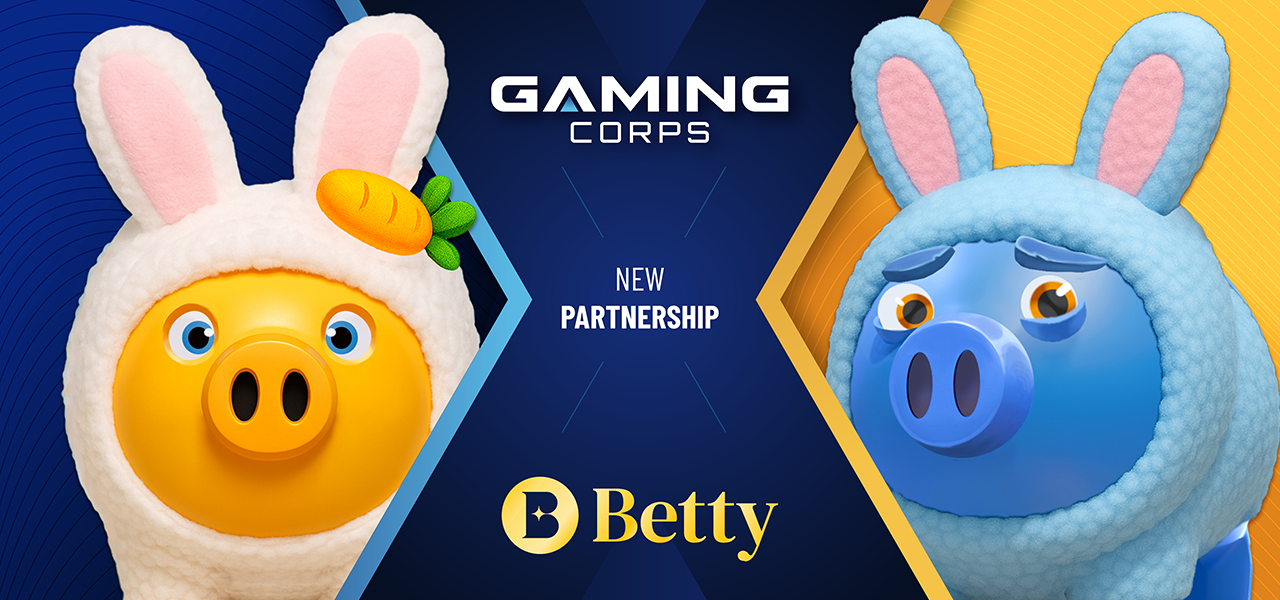
Gaming Corps, a publicly traded game development firm located in Sweden, has entered into a new distribution deal with Betty, one of the rapidly expanding iGaming operators in Ontario. The agreement enhances Betty’s platform with Gaming Corps’ growing collection of content, increasing options for players in a market where the brand currently provides over 2,800 slot titles.
Thanks to the collaboration, Betty customers will soon enjoy the latest slot releases from Gaming Corps, featuring 3 Easter Pigs, the latest chapter in the well-known 3 Pigs series, which adds a new seasonal element to one of the studio’s most iconic franchises. Players will also gain access to the latest release, Vendetta Fury, from DEGEN Studios, Gaming Corps’ newest RGS partner.
This launch leverages the solid success of the broader 3 Pigs franchise, featuring games like 3 Pigs of Olympus and 3 Pigs of the Caribbean that are already part of Gaming Corps’ collection. These are included with the studio’s wider range of Slots, Plinko, Mine, Crash, and Table games.
Adam Pentecost, Chief Revenue Officer at Gaming Corps, said: “Ontario has become one of the most exciting regulated markets in North America, and Betty has built an impressive reputation by offering players both quality and variety. We’re delighted to partner with such a progressive operator and look forward to showcasing how our latest content can bring something genuinely different to their already rich portfolio.”
Paraskeva Smirnova, Senior Casino Operations Manager at Betty, added: “Betty has built its identity on being a homegrown Ontario brand with a clear focus on what local players want. Working with Gaming Corps allows us to continue that mission, adding content that stands out and gives our players something new to discover alongside the thousands of titles we already host.”
The post Gaming Corps Taps Betty to Boost Content Options for Ontario Players appeared first on Eastern European Gaming | Global iGaming & Tech Intelligence Hub.
Adam Pentecost Chief Revenue Officer at Gaming Corps
Gaming Corps partners with Betty to expand content choice in Ontario
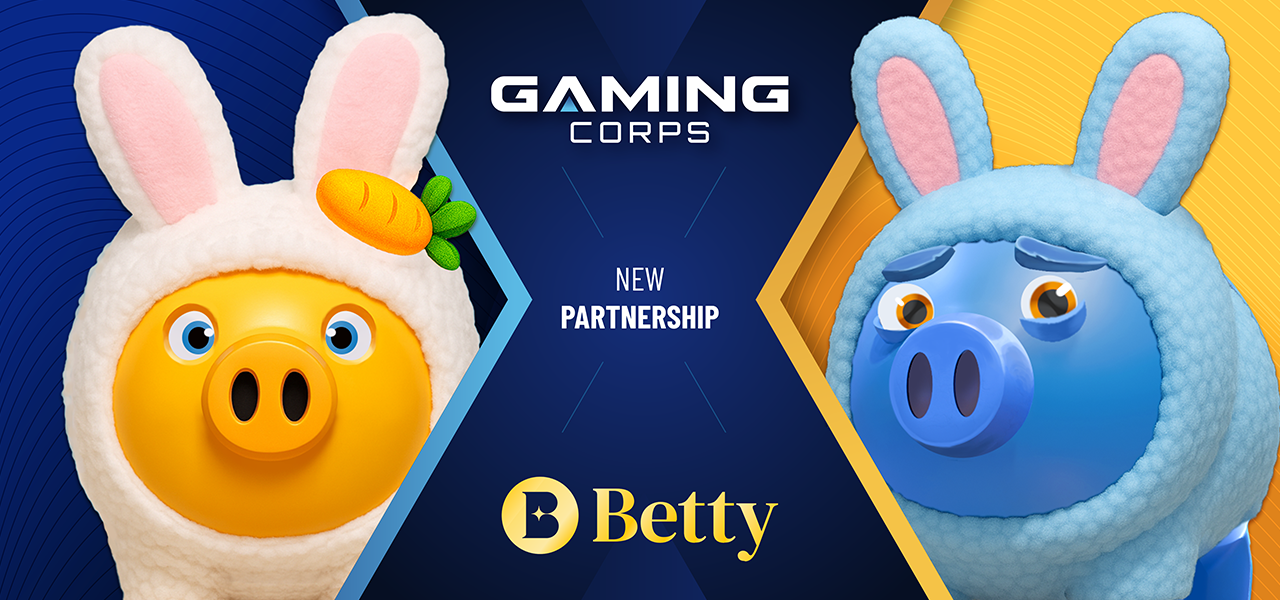
Gaming Corps has signed a new distribution agreement with Betty, one of Ontario’s fastest-growing iGaming operators. The deal adds Gaming Corps’ expanding suite of content to Betty’s platform, strengthening the choice for players in a market where the brand already offers more than 2,800 slot titles.
Through the partnership, Betty customers will soon have access to the latest Gaming Corps slot releases, including 3 Easter Pigs, the newest instalment in the popular 3 Pigs series, which introduces a fresh seasonal twist on one of the studio’s most recognisable franchises. Players will also have access to Gaming Corps’ newest RGS partner, DEGEN Studios’, latest release, Vendetta Fury.
This launch builds on the strong performance of the wider 3 Pigs franchise, with titles such as 3 Pigs of Olympus and 3 Pigs of the Caribbean already established within Gaming Corps’ portfolio. These sit alongside the studio’s broader offering of Slots, Plinko, Mine, Crash and Table games.
Adam Pentecost, Chief Revenue Officer at Gaming Corps, said: “Ontario has become one of the most exciting regulated markets in North America, and Betty has built an impressive reputation by offering players both quality and variety. We’re delighted to partner with such a progressive operator and look forward to showcasing how our latest content can bring something genuinely different to their already rich portfolio.”
Paraskeva Smirnova, Senior Casino Operations Manager at Betty, added: “Betty has built its identity on being a homegrown Ontario brand with a clear focus on what local players want. Working with Gaming Corps allows us to continue that mission, adding content that stands out and gives our players something new to discover alongside the thousands of titles we already host.”
The post Gaming Corps partners with Betty to expand content choice in Ontario appeared first on Americas iGaming & Sports Betting News.

-

 bingo6 days ago
 -
apuestas7 days ago
Brasil 2026: Bets presionan el presupuesto de los hogares y redefinen la competencia por el consumo
-
Compliance Updates6 days ago
EGBA Urges EC to Tackle Rising Online Fraud in Gambling Sector
-
Betnacional7 days ago
Brazil: Betting pressures household budgets and reshapes the competition for consumer spending
-
Endorphina7 days ago
NAZAR WISHES AWAIT YOUR COMMAND
-
Greentube6 days ago
Greentube hauls in big wins with Rumble Riches™ Haulin’ Gold™
-
DEGEN Studios6 days ago
DEGEN Studios ignites a brutal blood feud with Vendetta Fury
-
Baroness Fiona Twycross4 days ago
BGC AGM 2026 Discussed About Surging Illegal Gambling Black Market