Interviews
OKTO: As cashless becomes king, land-based gaming requires an industry-specific solution

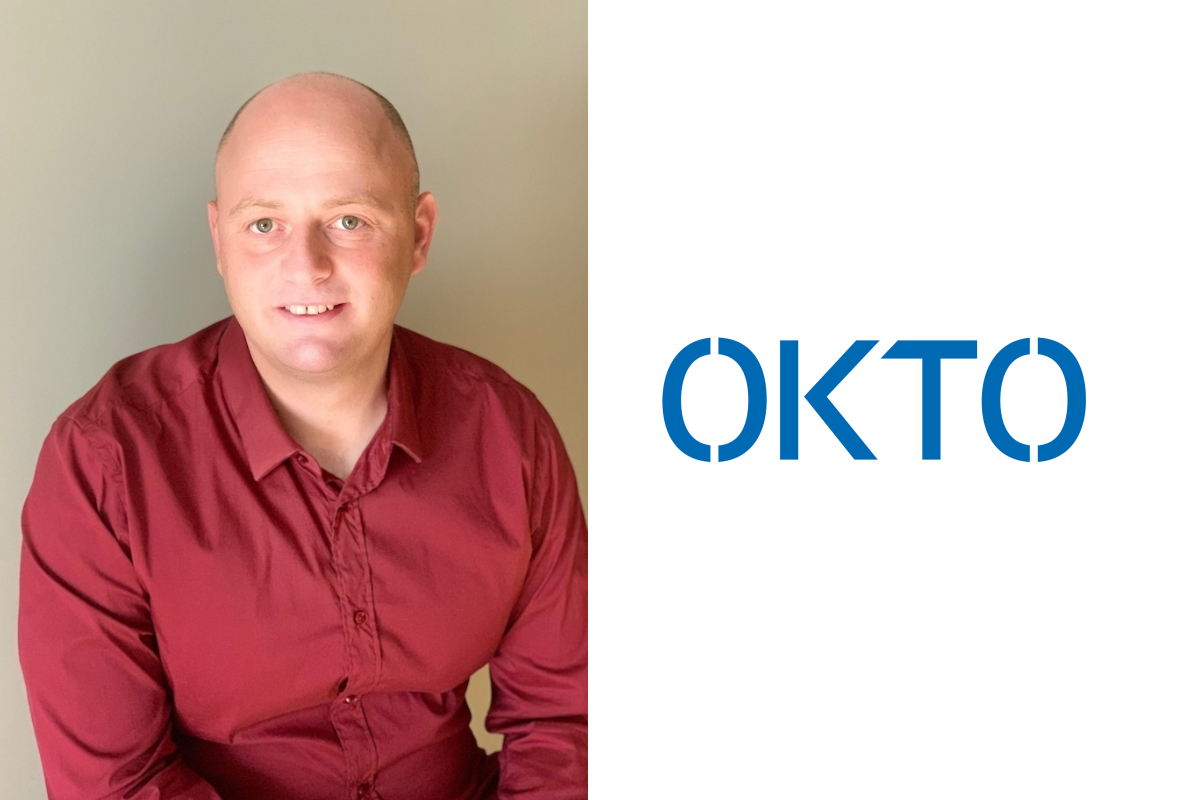
As a provider of digital payments for the entire high street, fintech firm OKTO stands out as having a unique cashless solution that caters to the nuanced needs of the UK’s highly regulated land-based gaming sector. As demand for such solutions accelerates due to the global pandemic, Dimitar Shopov, OKTO Wallet Commercial Owner, explains how crucial it is that operators pick a partner that understands the specifics of their industry, whilst also evolving its technology to keep up to date with global fintech trends.
On a global basis, how busy has OKTO been since the start of the pandemic? Has there been a notable increase in interest and urgency for the installation of cashless systems?
It is a question we are increasingly asking ourselves as a society: “Do we still need cash?” The decline in the use of cash and the concurrent rise in digital and card payments has been charted for years, but the pandemic definitely marks the real beginning of the end of cash in many mature markets like the UK who is a fast adopter, ushering the interest and urgency toward cashless systems.
A combination of contributing factors play a role here; tech advances, measures from authorities, and actions from big retailers across the world that have already adopted the use of digital payments as a safer method to maintain social distance and contain the spread of the COVID-19. Cashless systems have increasingly become the new norm, simply due to the fact that society demands it.
Now, all our partners are asking us how we can help them transition to cashless operations and the driver is always the same; the ability to respond to their users’ demands, leverage user services and experience and reduce cost and risk of cash. And that is what we deliver with our OKTO.WALLET solution.
Is the UK a market you are monitoring in respect to its uptake of cashless payments?
The use of cash has been falling around the world and the pandemic along with the fear of infection from bank notes are accelerating the trend away from cash towards digital payments. The UK ranks higher than all other countries in the EU when it comes to cashless payments for a few years now.
Naturally, not everybody is ready for a digital switchover, but it’s apparent that more and more people turn to digital payment options. Cash’s share of in-store transactions in the UK plummeted from 45 percent in January to 23 percent in July, per a report from Square that analyzed data from hundreds of small- and medium-sized businesses (SMBs) across the UK while the digital will likely retain greater popularity. Therefore, as a fast adopter, the UK was a natural fit for us to invest in this market, creating a powerful solution, designed to address the needs of the Pub & AGC sector with the main mission to be the enhanced user experience.
And here comes the question: Will we ever have a digital alternative that offers the same mix of convenience and freedom as cash? For me the answer is yes. Contactless forms of payment have created a new level of convenience for people around the world, and this has provided a real boost for certain industries, from gaming and betting to hospitality sectors. OKTO.WALLET solution is not only the safe and fast transactional tool that both users and merchants demand but it also offers users the freedom to move and use their funds as they wish instantly.
How do you think Covid-19 has accelerated this increasing disdain for products and services that require cash payment? Does another round of government restrictions in the UK spell further worry for cash-only businesses?
A few years ago, while I was walking through London, I noted some signs dotted around a pub that announced the complete move from cash to customers: “Apologies, but it is the digital age.” Don’t forget that there are benefits in digital payments that make life easier not only for the pubs but for all retail businesses. Think about it, at the end of the night whatever the retail business is, the people there need to count up endless piles of coins, managers need to transfer bags of cash to be lodged at the bank, also there are the additional charges to processing cash transactions versus digital ones and so on. All these can be eliminated with the digital cashless payments.
The trend was there and Covid-19 came and sped up that trend. All the cashless benefits along with the fact that banknotes and coins have been identified as a medium for transmitting the pandemic is clearing the way for another stellar rise in digital payments.
I cannot see the crystal ball and make the prediction for further pandemic-related worries for cash-only businesses, but when you hear announcements from World Health Organization back in March, recommending people to turn to cashless transactions to fight the spread of Covid-19, and rapidly a number of governments and retailers across the world took action, you can realize the evident concern. This shift should not be underestimated, as cashless transactions become the norm and rapidly impact niche industries like hospitality and gaming.
A cash-free future is getting closer, and the new lockdown is further accelerating that shift, but this change won’t be a 100 percent switch over night, there will be a prolonged period cash and digital payment options living side by side. After all, consumer payment choice is one of the most essential ways to maximise a merchants revenue potential, and operators should ensure that they will offer their customers the same level of choice in payment options as other sectors of the leisure industry, offering cashless facilities and we are here to assist operations in this transition.
Despite being a fintech provider to many markets across the world, OKTO clearly sees gaming as a particularly important one. How does this focus on gaming, whilst also offering all the benefits of neo-banks such as Monzo and Revolut, put OKTO in a better position to serve the market than competing cashless solutions in this space?
There are plenty of cashless solutions available and it can be confusing at times, what and why different digital solutions are better suited to certain sectors, and this is especially true in gaming.
But, it’s crucial for any operation to back the right horse. It’s imperative to choose a reliable solutions partner and few providers are focusing on the nuanced needs of gaming operators, especially for land-based, which make us unique in what we do. At OKTO, we want to assist our partners to make informed decisions for both their businesses and customers. Now with the industry to face more challenges than ever gaming operators need a payment service to ease the burden rather than add to it. Industry-specific, mobile-first and open-loop are the keys here.
A payment provider with a mobile payment platform, tailored for the gaming industry that aims to reduce payment friction, enhance the user experience, allowing real-time e-money fund transfer in a simple, secure and fast way is the answer to their quest. When this comes with a universality, then this is a sure bet, as consumers can use, move and collect their funds anywhere, not just for gaming.
Having a dedicated team on gaming, are you confident OKTO is well-equipped to cater to the needs of such a heavily regulated industry, where the expectations for compliance, data protection, and social responsibility are higher than any normal consumer market?
It’s vital to choose the right partner as I previously said; one that utilises field-proven technologies and has the extensive know-how of key integrations across all physical touchpoints of a gaming venue ranging from gaming machines to Self-Service Betting Terminals and Cash Redemption Terminals as well as a strong understanding and proven ability to integrate the wallet with digital touchpoints. We have exactly this 360 approach through our OKTO.WALLET solution, that the operators need to get ahead.
Heavily regulated industries are not unknown to us. We have an extensive understanding of the current climate; and we have developed solutions that ease compliance issues. Utilising the highest level of data encryption, we ensure all users data are fully encrypted while also all fund transfers are audited using market-proven algorithms to detect fraudulent activity including not only Money Laundering but also game manipulation and cash peripheral attacks.
Social responsibility is also at the top of our minds. With tools available through the OKTO app, we cover the social responsibility quota, incorporating a strict age verification process, time-out periods, betting limits, and profit and loss calculator tools that further enhance consumer protection as well as a dedicated section embedded in the app with national problem gambling helplines.
Powered by WPeMatico

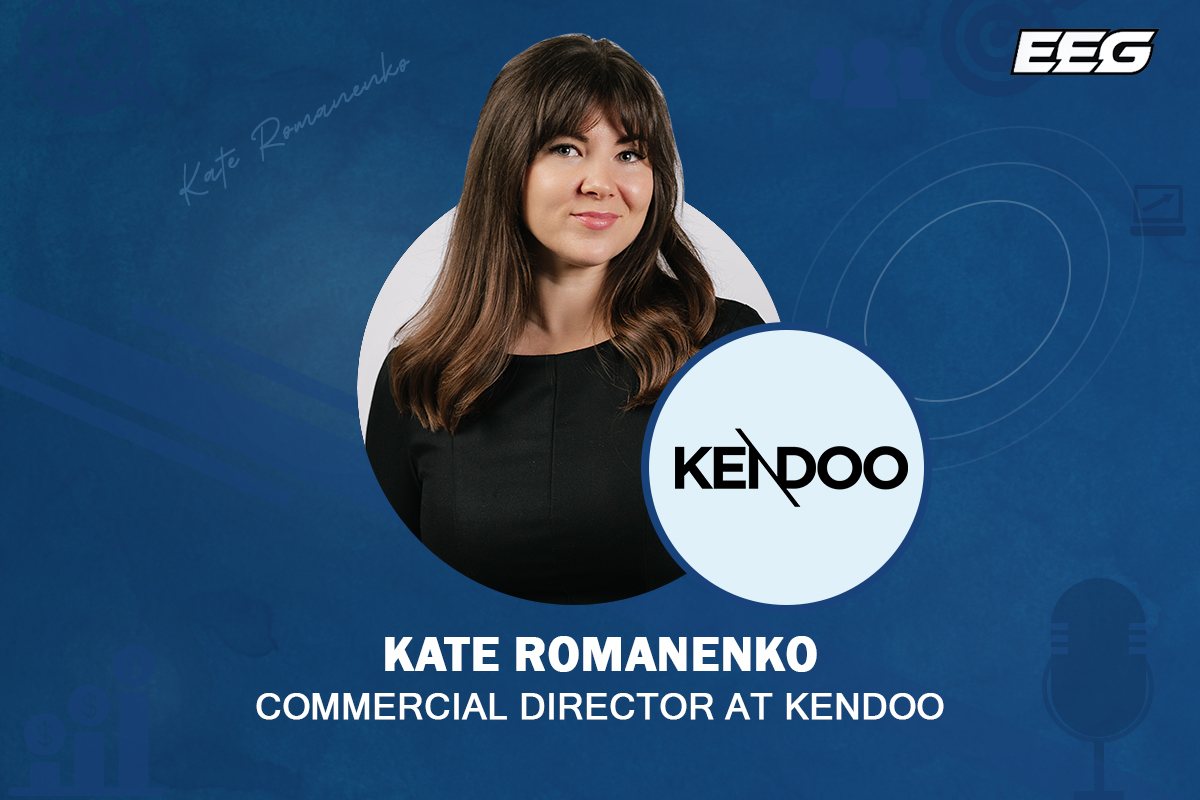
What innovation consists of within the slots industry is often debated. While there are often calls for more groundbreaking features to be introduced, the reality is that the progression of trusted and popular concepts is what drives the industry forward with new releases.
We caught up with the Kendoo’s Commercial Director, Kate Romanenko, to understand more on how long-term retention is often underpinned by controlled evolution of proven concepts, as shown in the company’s success over the past year.
In an industry driven by novelty, why do you think long-term consistency is becoming just as valuable as innovation?
In the competitive iGaming market, everyone is obsessed with “what’s next,” long-term consistency has become a signal of trust. Operators are increasingly cautious: they want games that perform predictably over time, not just those who grow only on launch. Controlled evolution, like we showed with 3 Pots and 4 Pots games, such as 3 Fortune Trees, 3 Gates of Pyramid, 4 Egypt Scarabs etc., proves that you can refresh mechanics and visuals without breaking what already works. Innovation still matters, but when it’s backed by performance data and retention, it becomes scalable, sustainable value rather than short-lived hype.
How does Kendoo ensure technical and gameplay stability across its growing portfolio, especially as it scales into new markets?
At Kendoo, we build on a select set of well-tested core mechanics, evolving them thoughtfully rather than introducing unproven systems. Each game reflects our research, experience, and deep understanding of player needs. This approach lets us expand into new markets without compromising reliability, delivering operators consistent performance and players a smooth, familiar experience they can trust.
What role does reliability play in building strong partnerships with aggregators and platforms?
Reliability is the foundation of trust with aggregators and platforms. When integrations are stable, launches are predictable, and games perform consistently, partners can scale with confidence. For Kendoo, reliability reduces operational friction on their side, fewer incidents, faster rollouts, and clearer performance expectations. Over time, this turns a supplier relationship into a long-term partnership, where growth is planned together rather than driven by constant risk around new releases.
Do you think players are beginning to value dependable, well-balanced games over constant experimentation?
Players enjoy novelty, but they return to games that feel fair, familiar, and well-balanced. Constant experimentation can create friction, while dependable mechanics build confidence and habit. That’s why evolved formats with proven performance tend to retain better: players know what to expect, and that reliability turns curiosity into long-term engagement. For example, taking mechanics like Pots, which originated in land-based casinos, and successfully adapting them for online play.
Can you point to a Kendoo title that’s become a steady performer over time and what that tells you about what players really value?
A clear example is 3 Fortune Trees. Since launch, it has consistently driven strong retention and engagement across markets, with an average of 500 bets per player, which is excellent. The game demonstrates that players value Pots mechanics and reliable, well-balanced gameplay over flashy, one-off features. Its engaging mechanics, popular theme, and premium art and animation all come together to create a game that players love to play.
The post Kendoo interview: Can stability be the new innovation? appeared first on Eastern European Gaming | Global iGaming & Tech Intelligence Hub.
2026 iGaming Trends Report
2026 iGaming Trends Marathon by SOFTSWISS – A Sneak Peek with Ivan Bilash, Director of Partner Operations

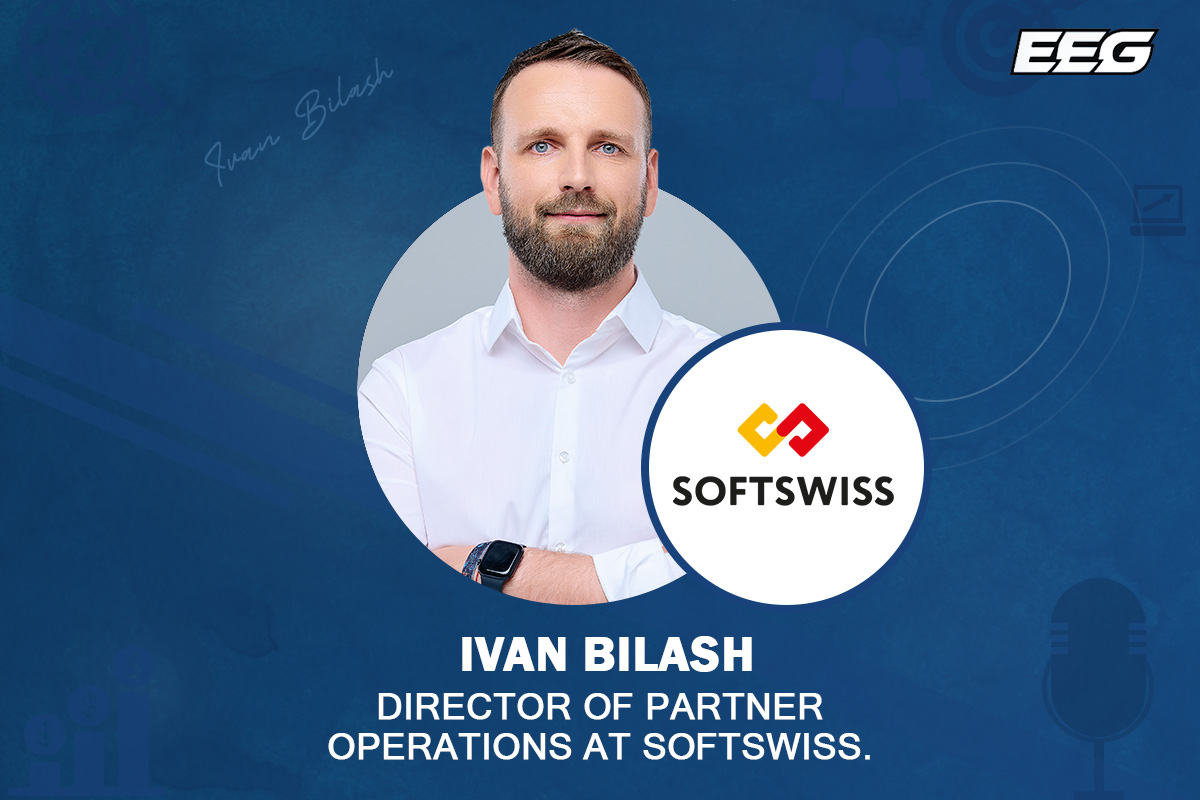
EEG sat down with Ivan Bilash, Director of Partner Operations at SOFTSWISS, after the SiGMA Central Europe Summit, where the company launched its 2026 iGaming Trends report. With over eleven years of experience in project and product management, Ivan brings a practical yet visionary understanding of operational excellence and partnership building. In this conversation, we explore key iGaming trends for 2026, the importance of data-driven insights, and how SOFTSWISS uses technology and collaboration to help operators improve player acquisition and build stronger relationships with affiliates.
Interview by Maria Emma Arnidou for EEG, HIPTHER.
The SOFTSWISS iGaming Trends report has become a highly anticipated annual playbook for industry professionals. What inspired this initiative, and how has it evolved into a vital resource over the years?
When we released the very first edition four years ago, the idea was to bring together everything the industry was experiencing but hadn’t structured yet. There was a lot of noise in the market – regulatory changes, new technologies, shifts in player behaviour, and so on. But there was no single place that connected all these dots.
Over time, the report has evolved into a tool that helps the market understand where things are actually heading. And that’s why it is so anticipated by both iGaming professionals and newcomers. It’s not just ‘trends for the sake of trends’ – it’s grounded in real data and clear patterns we observe, supported by our experience in analysing them.
For us at SOFTSWISS, it’s also a way to share what we see from the inside. We work with hundreds of operators, so we naturally spot early signals before they become global trends. The report is a way to turn all of that into something useful for the entire industry.
This year’s 2026 edition gathers insights from over 350 experts and applies AI analysis to more than 120,000 media headlines. From your perspective, what are the most striking or transformative findings emerging this year?
To be honest, there are many, which is why the report is over 100 pages long. But let me highlight the key points.
The first thing that jumps out is how quickly the industry is maturing. As we note in the report, the industry has outgrown its ‘Wild West’ phase. We see this in regulation, taxation, responsible gambling, and advertising. Many markets are tightening rules, but they are also becoming more predictable. That’s a good sign of a sector moving towards sustainable growth.
Another big takeaway is the scale of M&A activity. It’s no longer just large companies buying smaller ones. It’s about building ecosystems and obtaining technologies that help acquirers prepare for a world where efficiency is as important as market share.
And last but not least, of course, there is AI – not as a buzzword, but as infrastructure. Companies have moved past experiments, and now expect AI to deliver real value. This primarily concerns fraud detection and player protection. But I think it’s fair to say that AI has permeated all areas of business, from coding to marketing, and this shift is happening fast. In the report, we call this the industrialisation of AI.
When you combine all these trends, you realise that iGaming is becoming more mature and more structured, but also far more competitive. And with that comes a new reality: the industry is now much more demanding operationally.
The report presentation launched alongside the iGaming Trends Marathon at SiGMA Central Europe. What role do live discussions and community dialogue play in shaping industry progress?
I strongly believe that conversations matter more than slides. Trends only become useful when people challenge them and connect them to their own experience.
During the marathon, we saw something important: different parts of the industry – operators, suppliers, tech companies, media – are finally speaking the same language. Everyone understands that the next stage is about taking responsibility and making smarter decisions.
Events like SiGMA create that space. When you place 200+ people in one room and let them debate AI, regulation, M&A, and marketing, you get insights you would hardly get from reading a report alone. These discussions help operators understand why acquisition is becoming more complex and why working closely with affiliates, rather than treating them as a separate layer, is increasingly important.
For me, as someone responsible for partner operations, this is invaluable. These events show what operators are truly concerned about and what they expect.
Speaking of acquisition, how do you see the role of affiliates changing within the iGaming ecosystem?
This is an important topic that frequently arises in conversations with operators. Traditional acquisition channels are becoming increasingly expensive, more restricted, and in some cases simply unavailable. Naturally, this pushes the industry to rely much more on affiliates.
But affiliates today are no longer just traffic suppliers. Many have grown into strong, independent ecosystem players with their own strategies, data, and long-term goals. They understand user behaviour extremely well and often have deeper insight into acquisition funnels than anyone else in the market.
We also see another interesting shift: some large affiliate groups are moving into direct operations. This changes the dynamics. On one hand, there is less traffic available on the open market. On the other, new operators emerge with very strong marketing expertise from day one. That naturally increases competition for the end player.
Budgets are no longer the only decisive factor. Operators’ success now also depends on the quality of partnerships, transparency in working with affiliates, and having a product and strategy capable of converting and retaining high-quality traffic. From our perspective, this is a long-term trend that will shape the industry’s growth in the coming years.
The 2026 iGaming Trends report builds on years of data, but also integrates new analytical layers powered by AI and expert research. What makes this edition stand out, and how can professionals best use its insights?
This edition stands out because it explains why certain trends are emerging. AI helped us process more than 120,000 media headlines, and confirmed what operators tell us privately: the market is recalibrating. Responsible gambling rules are strengthening, cybersecurity is becoming a board-level topic, and compliance is now part of product design.
If you’re an operator or a supplier, the best way to use this report is as a planning tool. We’ve done all the heavy lifting and distilled each business area down to the most important insights. We have also introduced ‘Adaptation Paths’ at the end of each chapter. It’s a kind of checklist that operators can refer to when building their strategy.
Of course, the report won’t make decisions for everyone, but it gives a very clear map of the road ahead.
Finally, as Director of Partner Operations, what do you see as the most valuable trait in industry partnerships going into 2026?
I’d say consistency. Everyone talks about innovation, but in practice, what partners value most beyond stable operations is predictable communication and support they can rely on.
This year’s report shows that growth will depend on how well companies adapt to the new reality of increased speed and stricter regulations. In 2026, the best partners will be those who can combine flexibility with discipline: reacting quickly when needed while also thinking long-term.
For SOFTSWISS, this approach is in our DNA. We work side-by-side with operators through technical support, risk management, and daily operational guidance. When the market becomes tougher – which it inevitably will – this kind of partnership becomes a competitive advantage.
As SOFTSWISS continues to pioneer data-driven growth across the global iGaming ecosystem, the 2026 iGaming Trends report reaffirms the company’s commitment to knowledge sharing, collaboration, and innovation.
The 2026 iGaming Trends report is available – download it now!
The post 2026 iGaming Trends Marathon by SOFTSWISS – A Sneak Peek with Ivan Bilash, Director of Partner Operations appeared first on Eastern European Gaming | Global iGaming & Tech Intelligence Hub.
David Black Chief Growth Officer beBettor
iGaming in 2026: Emerging Markets, Changing Player Demands, and Winning Strategies
From shifting regulatory pressures and emerging markets to changing player expectations and the looming presence of AI, the iGaming industry will be a very different place at the end of 2026 than at the start.
For this roundtable, we have invited a group of industry professionals to discuss what markets are going to be the big talking points of the year, how player expectations will continue to evolve, and what strategies will best position you for success over the coming 12 months.
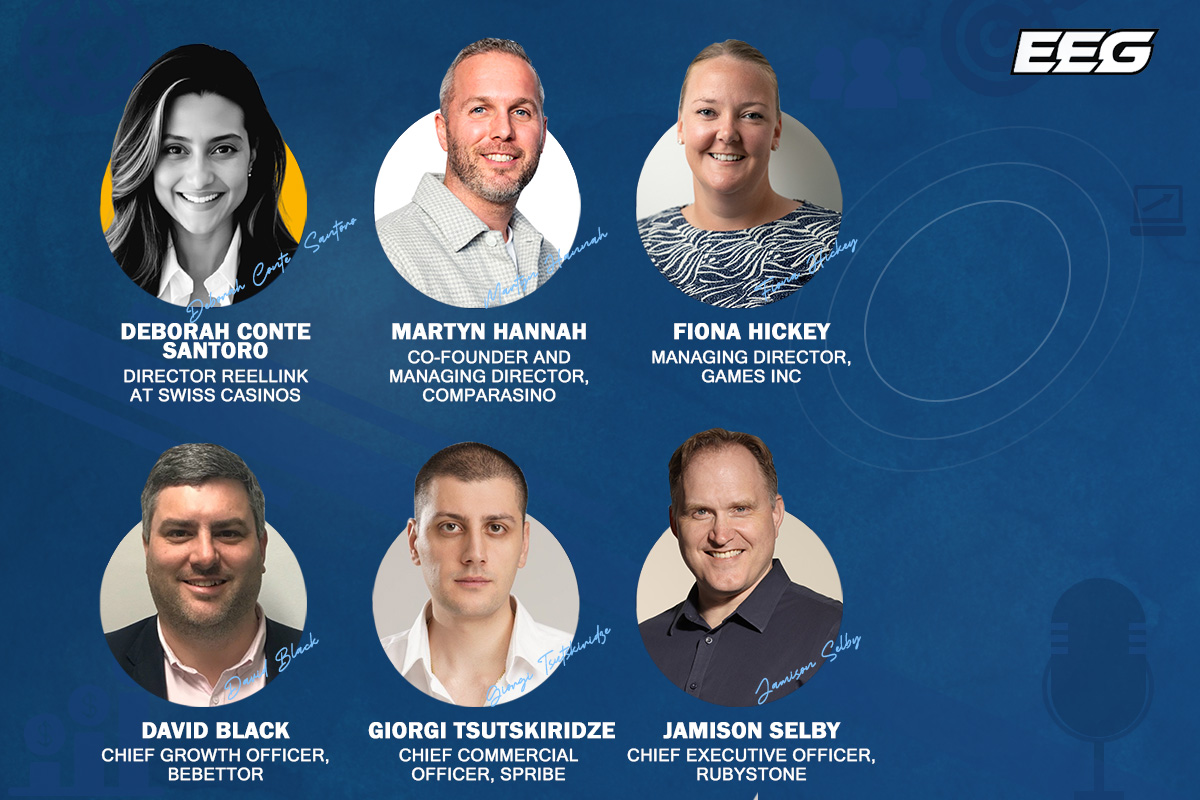
The following have all contributed to this discussion:
- Deborah Conte Santoro: Managing Director, ReelLink at Swiss Casinos
- Martyn Hannah: Co-founder and Managing Director, Comparasino
- Fiona Hickey: Managing Director, Games Inc
- David Black: Chief Growth Officer, beBettor
- Giorgi Tsutskiridze: Chief Commercial Officer, SPRIBE
- Jamison Selby: Chief Executive Officer, Rubystone
Which regions or markets do you expect to offer the most meaningful growth opportunities in 2026, and what makes them attractive?
Fiona Hickey: The markets everyone will talk about in 2026, Finland, Alberta, New Zealand, and the UAE, are attractive, but let’s be honest: once regulation lands, revenues drop. Taxes rise, RG tightens, marketing gets capped, and the commercial upside isn’t nearly as big as the headlines suggest. Great for stability, not great for margins.
The real growth, the uncomfortable kind nobody puts in a press release, will still come from unregulated and grey markets. Latin America, outside tightly regulated pockets, large parts of Africa, and India’s semi-regulated landscape will deliver higher yields and faster scaling simply because they’re less restricted, and operators aren’t drowning in 40% duties and endless compliance cycles.
So the honest picture is this: regulated markets offer credibility and long-term sustainability for large organisations, but unregulated markets offer commercial returns, and for many, this is hard to ignore.
David Black: Growth in that sense is limited to the total addressable market and associated market-share strategies. So the question deserves an answer around growth that moves the needle. The game changer always comes from innovation. It would be great to see the opening of new regulated markets as a means of driving growth. Still, both this and corporate consolidation, whilst always sound, appear to be relegated to second and third place, respectively.
First place, this year is how and when operators will introduce new edge-type technologies which enhance an entertaining and profitable player experience. It feels like we are in another phase of product innovation, which is very exciting. This will inevitably cycle to M&A in the coming years, but for now, it is all about innovation.
Jamison Selby: The most interesting growth in 2026 won’t come from the regions people usually name at conferences. The U.S., LATAM, and parts of APAC will all continue to expand, but the real upside is in how those markets are evolving, not simply their geography.
In the United States, the traditional regulatory map of betting has become an increasingly narrow lens. The real story is happening in parallel markets (sweepstakes, skill gaming, and prediction platforms) operating under entirely different regulatory structures. These categories scale faster than licensed products because they aren’t boxed in by state-by-state fragmentation. They offer national reach, healthier margins, and a player demographic much closer to mainstream digital entertainment. That’s where the opportunity is shifting.
LATAM remains attractive, but not in a monolithic way. Brazil will draw the headlines as formal regulation takes shape, yet Mexico and Colombia often present cleaner, more immediately scalable conditions. What unifies the region isn’t regulatory uniformity; it’s a young, mobile-native audience that treats interactive entertainment as a daily habit rather than an occasional activity. That dynamic alone makes LATAM a sustained growth engine. APAC, similarly, is not a single story. India’s scale, particularly within skill-based formats, creates an environment where even modest regulatory clarity can unlock enormous upside.
But the markets likely to shape the industry’s direction in 2026 aren’t defined by geography at all. They’re defined by the regulatory lanes that allow new product categories to emerge. Prediction markets, skill-based ecosystems, and hybrid entertainment formats are absorbing demand that once belonged exclusively to gambling. They’re doing so with lower acquisition costs, fewer structural constraints, and far more room for product innovation. That combination doesn’t just produce growth. It produces the kind of explosive scaling that reshapes industries.
The common thread across all these markets is simple. The operators with flexible product architectures, those capable of moving between regulatory frameworks rather than being confined by them, will capture the most meaningful share of that growth.
What changes in 2026 do you expect in player behaviour, product formats, and entertainment consumption that operators must prepare for?
Deborah Conte Santoro: Operators must prepare for several things:
Players see gaming as broader entertainment. Expect blended formats that mix casino, sports, live shows, social gaming, streaming and influencer-driven experiences.
Seamless, omni-channel continuity. Players expect the same favourites and progression across mobile and the casino floor, with no perceptible boundary. Technologies like ReelLink will be essential to deliver identical content and unified loyalty across channels.
Younger players demand modern UX. Instant load times, mobile-first design, social features, community tools and rewarding progression systems will be table stakes. They’ll favour experiences that feel fresh, discoverable and shareable.
New formats rise. Multiplayer, skill elements, live game shows, AR/VR lounges and metaverse-style interactions will gain traction for engagement and retention. Higher expectations on payments and onboarding. Instant KYC, fast payouts, local rails and compliant crypto options will dramatically impact conversion and LTV. Operators must treat content, data, and payments as a single, cohesive product experience, online and on the floor.
Martyn Hannah: Instead of looking at what’s going to change, I think it’s just as important, if not more so, to consider what’s going to stay the same. No matter what laws, regulations and tax requirements come into force, consumers are still going to want to play online slot and casino games. The question is where. Will players drift to the black market in search of bigger bonuses and higher RTPs, or will they favour licensed brands they trust?
Some players will knowingly turn to black-market sites, while others will stick with licensed brands they consider safe and reputable. But there’s a large cohort of players in the middle that don’t know the difference between the two, with many unknowingly playing at offshore sites. These are your swing voters, and with the right education and messaging, I believe many will swing towards licensed online casinos.
This, combined with effective enforcement action against unlicensed operators and the comparison sites promoting them, will stunt black market growth, improve channelisation to licensed brands and better protect players.
Jamison Selby: Players don’t want gambling. They want entertainment with stakes. This distinction will define 2026. The convergence everyone talks about isn’t casino-meets-sports. It’s gambling-meets-everything-else.
Traditional gambling’s biggest competitor isn’t another operator. It’s every other form of digital entertainment. When players can bet on their Fortnite matches, predict which TikTok trend will explode next, or wager on reality TV outcomes in real-time, is spinning a slot still fun?
We see a rising cohort of players who spend less time in single-session environments and more time in continuous, ambient ecosystems where their progression, status, and social capital persist over time and across products. Operators still building for the traditional “gambling consumer” are targeting a segment that’s rapidly ageing out. Operators that treat their platforms as entertainment networks rather than isolated casinos will win the battle.
The next generation doesn’t see boundaries between gaming, trading, betting, and socialising. It’s all just having skin in the game.
What strategic capabilities, across compliance, marketing, payments, or responsible gaming, will separate the winners from the rest in 2026?
Fiona Hickey: If I actually knew the secret formula for winning 2026, I’d already be on a yacht off my private island with a very smug LinkedIn bio, pretending my days were long and tough, so no, I don’t have the magic answer, but here are a few things I think are key;
All business operators and suppliers alike need a compliance team that understands the rules and the intent. People who can read between the lines keep you competitive and avoid the trap of over-compliance.
Instant payouts aren’t a nice-to-have; they are essential. Offshore sites pay in minutes; regulated operators need to stop pretending players won’t notice the difference.
Regulated ecosystems are crowded, slower, more restricted and, yes, getting duller. Players chasing excitement will drift elsewhere. Operators who ignore that are simply handing them over. If you are arrogant enough to think your brand is important to players and they won’t go elsewhere, you are in trouble.
Giorgi Tsutskiridze: The companies that succeed will be those that combine strong regulatory discipline with the ability to move quickly. Compliance can’t be an afterthought; it needs to be built into every part of the business, supported by real-time tools and responsible gaming systems that actually help players. Marketing will shift toward community and storytelling, not just performance-driven numbers. And payments have to be smooth and localised, no friction, no confusion. Ultimately, the winners will be the brands that can scale globally but still feel local, personal, and trustworthy to every player they reach.
Jamison Selby: The winners of 2026 and beyond won’t be the best gambling operators. They’ll be the best platform and ecosystem builders who happen to offer gambling.
Three capabilities will matter above all else:
Community building over customer acquisition: Traditional CAC and LTV metrics are being hammered by increasing competition and lower revenues. Winners will build ecosystems where players recruit players, where the product is the marketing. Pure product-community fit wins.
Regulatory-inspired innovation: Those who master building within existing regulatory boxes have a path. Those who use the regulations as a map to seek new verticals have a path. Those who are slow to adapt face a painful decline.
Multi-vertical brand elasticity: The ability to stretch a single brand across different regulatory structures and product categories. Traditional betting where it’s licensed, sweepstakes where it’s legal, same with prediction markets, skill gaming, and social casino. Same brand equity, different regulatory wrappers. Winners won’t be solely defined by their licensing but by their ability to meet players wherever regulations allow, in whatever form works.
The post iGaming in 2026: Emerging Markets, Changing Player Demands, and Winning Strategies appeared first on Eastern European Gaming | Global iGaming & Tech Intelligence Hub.

-

 Compliance Updates6 days ago
Romanian B2B Licence Granted to iGP, Boosting Its Regulated Operations in Europe
-
Compliance Updates6 days ago
Global Gaming Solutions welcomes the Isle of Man Government’s commitment to the iGaming sector
-
Alex Baliukonis Game Producer at BGaming4 days ago
Crack the Vault in BGaming’s Mystery Heist
-
Latest News3 days ago
SKIP THE QUEUE WITH THE MIDNITE SHUTTLE: MIDNITE TEAMS UP WITH SNOOKER LEGEND TO OFFER FANS A FREE SHUTTLE SERVICE FROM ALLY PALLY STATION
-
Africa6 days ago
CT Interactive Bolsters Global Presence with South African Certification
-
BETER6 days ago
BETER enters sixth US state with North Carolina approval
-
Continent 8 Technologies3 days ago
Continent 8 and CEO Michael Tobin claim number one spot in GamblingIQ’s global ‘Security 10’ rankings
-
Africa5 days ago
Amusnet Appoints Cameron Green as Country Manager for South Africa