Press Releases
Digital Fraudsters Increase Attacks Against Multiple Industries During Pandemic; Use COVID-19 Scams to Target Younger Generations


TransUnion quarterly global fraud analysis also examines the types of fraud targeting businesses and where it originates
TransUnion released its quarterly analysis of global online fraud trends finding that the telecommunications, retail and financial services industries have been increasingly impacted. From a consumer perspective, Millennials have been most targeted by fraudsters using COVID-19 scams.
Given the changing economic environment with COVID-19, this quarter TransUnion analyzed fraud trends through April 28 to ensure the impacts following the March 11 World Health Organization (WHO) pandemic declaration were included in the analysis
Overall, TransUnion found the percent of suspected fraudulent digital transactions rose 5% from March 11 to April 28 when compared to Jan. 1 to March 10, 2020. TransUnion identified more than 100 million risky transactions from March 11 to April 28.
“Given the billions of people globally that have been forced to stay at home, industries have been disrupted in a way not seen on this massive of a scale for generations,” said Shai Cohen, senior vice president of Global Fraud & Identity Solutions at TransUnion.
“Now that many transactions have shifted online, fraudsters have tried to take advantage and companies must adapt. Businesses that come out on top will be those leveraging fraud prevention tools that provide great detection rates and friction-right experiences for consumers.”
Examining Fraud Types and Their Impact on Industries
TransUnion analyzed the below industries for a change in the percent of suspected fraud against them, comparing Jan. 1 to March 10 and March 11 to April 28.
Suspected Fraud Post Pandemic Declaration
| Industry | Suspected fraud increase | Top type of fraud | Top country for suspected fraud origination |
| Telecommunications | 76% | Credit card | Timor-Leste |
| E-Commerce | 12% | Promotion abuse | Indonesia |
| Financial Services | 11% | Identity theft | Syria |
| Gambling | -1% | Promotion abuse | Sri Lanka |
| Public Sector | -1% | Account takeover | Nigeria |
| Insurance | -3% | Ghost broking | Pakistan |
| Logistics | -7% | Shipping | Philippines |
| Communities | -11% | Phishing | Ivory Coast |
| Travel & Leisure | -38% | Credit card | Haiti |
| Healthcare | -40% | Identity theft | Finland |
| Gaming | -43% | Gold farming | Myanmar |
“Our data shows that as social distancing changes shopping patterns, fraudsters have taken notice and targeted the more digital forward industries while following the money,” said Melissa Gaddis, senior director of customer success for TransUnion Global Fraud & Identity Solutions. “For instance, although we found online gaming increased 64% as people stay home, it isn’t immediately lucrative to target those companies since financial information isn’t generally shared there. However telecommunications, e-commerce and financial services all have large digital adoption, financial information and payments at the center of their online experience, and fared relatively well compared to other industries during the pandemic.”
Globally across industries, TransUnion found the countries with the highest percent of risky transactions were: 1) Yemen, 2) Syria and 3) Kazakhstan. In the U.S. overall, TransUnion found the cities with the highest percent of risky transactions were: 1) Springfield, Mass., Akron, Ohio and Louisville, Ky.
Consumers Targeted By COVID-19 Schemes
To better understand the impacts of COVID-19 on consumers, TransUnion surveyed 9,215 adults in the U.S., Canada, Colombia, Hong Kong, India, South Africa and the U.K. during the week of April 13. Nearly three out of 10 respondents (29%) said they had been targeted by digital fraud related to COVID-19, with Millennials (those persons between the ages 26-40) being the most targeted at 34%.
Furthermore, TransUnion found that consumers who said their household income is being negatively impacted by the COVID-19 pandemic are more likely to experience digital fraud with 32% reporting being targeted by online COVID-19 scams compared to 22% of people not financially impacted.
“A common assumption is that fraudsters target older generations who are perceived to be less digitally capable,” said Gaddis.”Our data showed the opposite with younger generations, Millennials and Gen Z (those born in or after 1995), being the most targeted. Adding insult to injury, our survey found Millennials are being financially challenged the most during the pandemic.”
Methodology
For its transactional data, TransUnion analyzed the billions of online transactions its flagship fraud and identity solution, TransUnion IDVision® with iovation®, assessed for fraud indicators for more than 40,000 websites and apps. It compared the percent of suspected fraudulent transactions it saw from Jan. 1 to March 10, 2020 to those from March 11 to April 28, 2020.
For a hub of relevant educational resources aimed to help fight fraud during this time, go to the TransUnion Global Fraud & Identity Solutions COVID-19 resource center.
About TransUnion:
TransUnion is a global information and insights company that makes trust possible in the modern economy. We do this by providing a comprehensive picture of each person so they can be reliably and safely represented in the marketplace. As a result, businesses and consumers can transact with confidence and achieve great things. We call this Information for Good.®
TransUnion Global Fraud & Identity Solutions unite both consumer and device identities to detect threats across markets while ensuring friction-right user experiences. The solutions, all part of the IDVision with iovation suite, fuse traditional data science with machine learning to provide businesses unique insights about consumer transactions, safeguarding tens of millions of transactions each day.
A leading presence in more than 30 countries across five continents, TransUnion provides solutions that help create economic opportunity, great experiences and personal empowerment for hundreds of millions of people.
Powered by WPeMatico


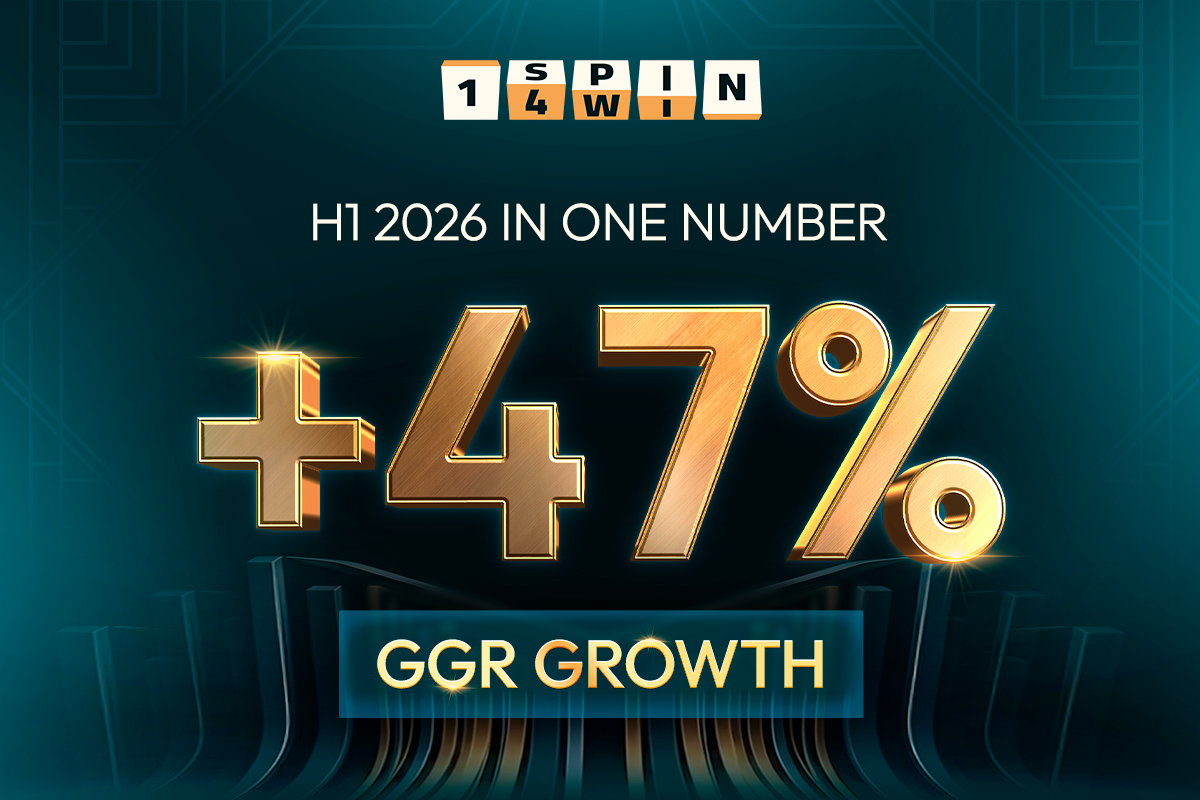
1spin4win, an established classic online slot provider, closes the first half of the year by revealing key performance results and the most significant milestones.
The first six months of 2026 have marked a period of strong growth for the studio. Compared to H1 2025, 1spin4win recorded a 47% increase in GGR, while bet count rose by 46.66%.
The provider also saw a significant increase in player activity. In H1 2026, player count surged by 59.06%, and new player count jumped by 50.15% compared to the first half of last year. These numbers reflect 1spin4win’s ability to keep global audiences engaged through new mechanics, regular game releases, and simple gameplay.
Partner growth has also been an important part of this success. Today, 1spin4win works with over 1,000 recognized iGaming brands, including STAKE.MX, 1win, LevelUP, BitStarz, gg.bet, WinSpirit, mBit, Pin-Up, 1xBet, PlayAmo, to name a few. This broad network reinforces the company’s reputation as a trusted provider across international markets.
The latest results also highlighted the success of 1spin4win’s expansion strategy across Latin America and Africa. Both markets remain important directions for the studio, where its mobile-first, easy-to-follow slots resonate perfectly well with local preferences. In H1 2026, compared to H2 2025, the provider’s GGR increased by 45.45% in Africa and 27.68% in LatAm.
This momentum has also been recognized by the wider professional industry. During iGB L!VE, 1spin4win was named Slot Studio of the Year at the inaugural iGaming News Awards, highlighting the studio’s strong slot offering and continued growth.
Olga Hlukhovskaya, Business Development Director at 1spin4win, shared, “We are proud of the results achieved. For us, these numbers are not only about our own success — they show that our games continue to bring value to operators by keeping their audiences active and engaged across different markets. Moving forward, we will continue strengthening this value through regional development, tailored partner support, and high-performing content that stays true to what players enjoy about classic slots.”
About 1spin4win
1spin4win is a fast-growing game provider founded in May 2021 by ambitious developers with over 20 years of experience in the gambling industry. Since its inception, the company has expanded its portfolio to include over 200 classic online slots, all characterized by quality mathematics, transparent mechanics, and well-balanced gameplay — key factors that drive strong player retention. The studio aims to release an average of four new games each month in 2026 and offers effective promotional tools for casino operators to help them enhance player loyalty.
The post 1spin4win achieves strong H1 2026 growth with GGR up 47% year over year appeared first on EE Gaming | Global iGaming & Tech Intelligence Hub.

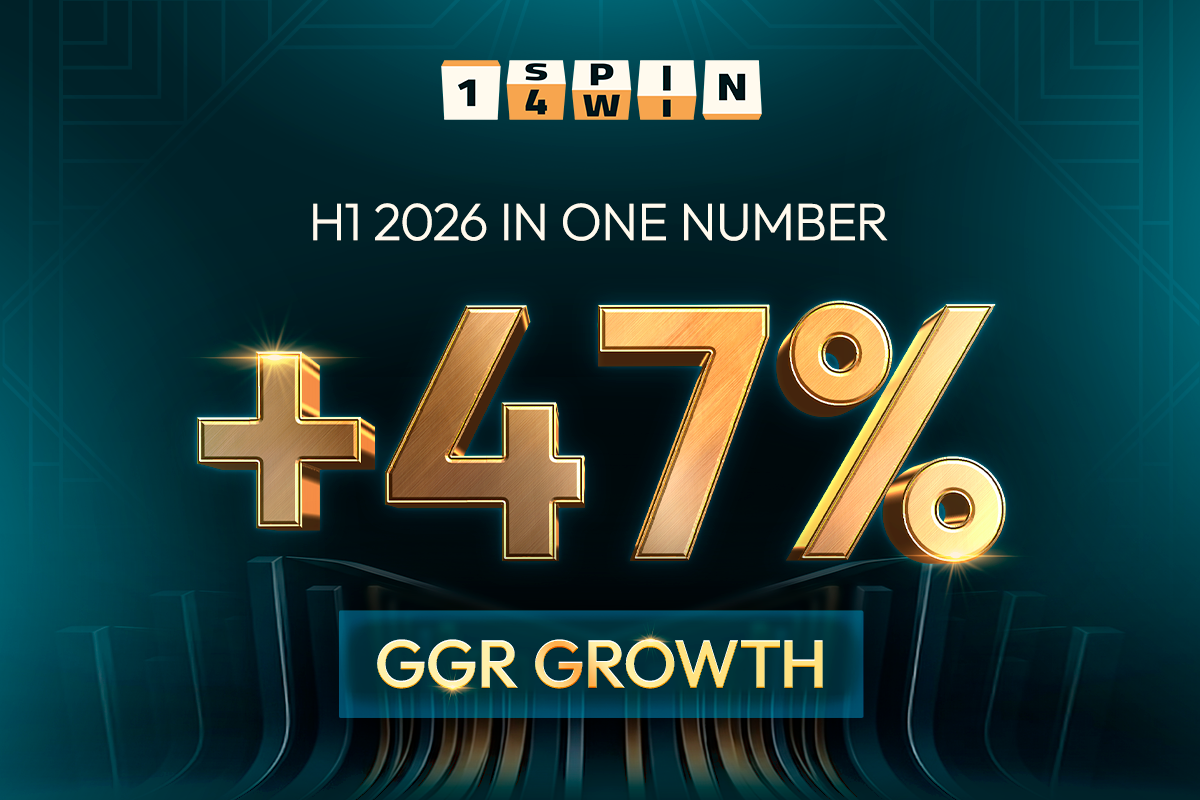
1spin4win, an established classic online slot provider, closes the first half of the year by revealing key performance results and the most significant milestones.
The first six months of 2026 have marked a period of strong growth for the studio. Compared to H1 2025, 1spin4win recorded a 47% increase in GGR, while bet count rose by 46.66%.
The provider also saw a significant increase in player activity. In H1 2026, player count surged by 59.06%, and new player count jumped by 50.15% compared to the first half of last year. These numbers reflect 1spin4win’s ability to keep global audiences engaged through new mechanics, regular game releases, and simple gameplay.
Partner growth has also been an important part of this success. Today, 1spin4win works with over 1,000 recognized iGaming brands, including STAKE.MX, 1win, LevelUP, BitStarz, gg.bet, WinSpirit, mBit, Pin-Up, 1xBet, PlayAmo, to name a few. This broad network reinforces the company’s reputation as a trusted provider across international markets.
The latest results also highlighted the success of 1spin4win’s expansion strategy across Latin America and Africa. Both markets remain important directions for the studio, where its mobile-first, easy-to-follow slots resonate perfectly well with local preferences. In H1 2026, compared to H2 2025, the provider’s GGR increased by 45.45% in Africa and 27.68% in LatAm.
This momentum has also been recognized by the wider professional industry. During iGB L!VE, 1spin4win was named Slot Studio of the Year at the inaugural iGaming News Awards, highlighting the studio’s strong slot offering and continued growth.
Olga Hlukhovskaya, Business Development Director at 1spin4win, shared, “We are proud of the results achieved. For us, these numbers are not only about our own success — they show that our games continue to bring value to operators by keeping their audiences active and engaged across different markets. Moving forward, we will continue strengthening this value through regional development, tailored partner support, and high-performing content that stays true to what players enjoy about classic slots.”
About 1spin4win
1spin4win is a fast-growing game provider founded in May 2021 by ambitious developers with over 20 years of experience in the gambling industry. Since its inception, the company has expanded its portfolio to include over 200 classic online slots, all characterized by quality mathematics, transparent mechanics, and well-balanced gameplay — key factors that drive strong player retention. The studio aims to release an average of four new games each month in 2026 and offers effective promotional tools for casino operators to help them enhance player loyalty.
The post 1spin4win achieves strong H1 2026 growth with GGR up 47% year over year appeared first on Americas iGaming & Sports Betting News.
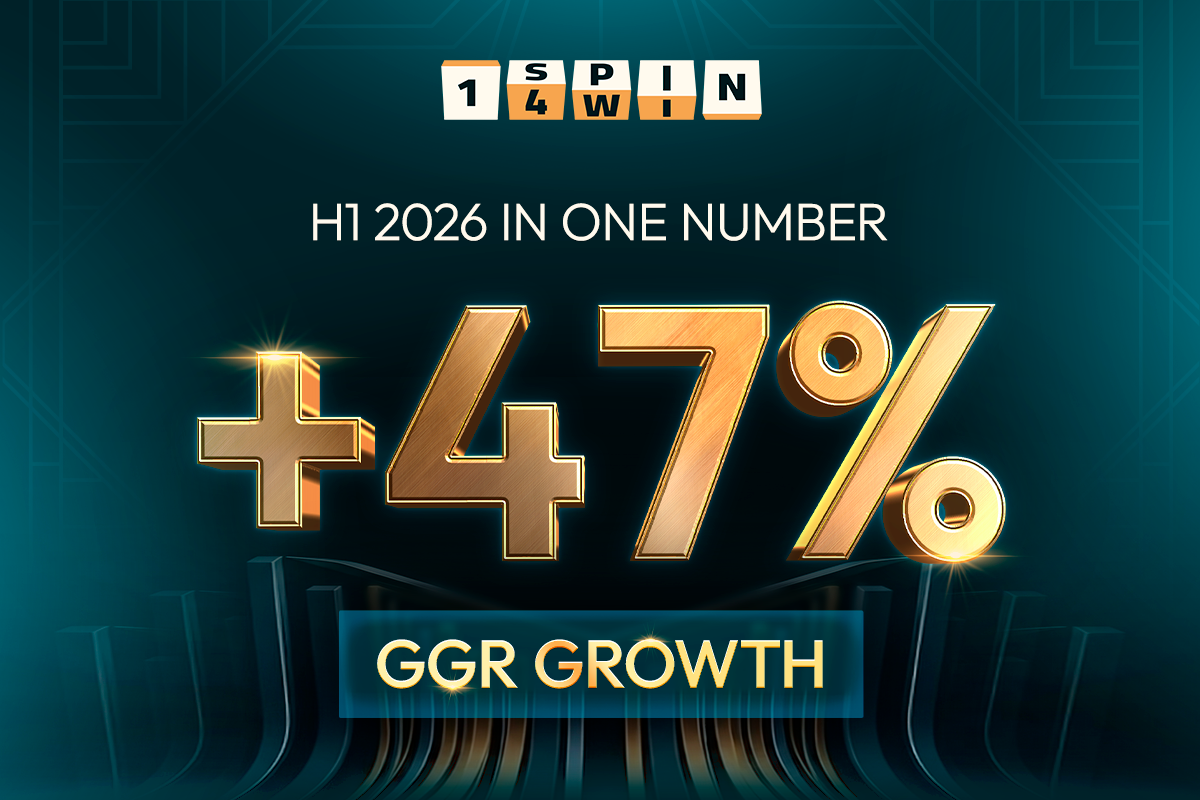
1spin4win, an established classic online slot provider, closes the first half of the year by revealing key performance results and the most significant milestones.
The first six months of 2026 have marked a period of strong growth for the studio. Compared to H1 2025, 1spin4win recorded a 47% increase in GGR, while bet count rose by 46.66%.
The provider also saw a significant increase in player activity. In H1 2026, player count surged by 59.06%, and new player count jumped by 50.15% compared to the first half of last year. These numbers reflect 1spin4win’s ability to keep global audiences engaged through new mechanics, regular game releases, and simple gameplay.
Partner growth has also been an important part of this success. Today, 1spin4win works with over 1,000 recognized iGaming brands, including STAKE.MX, 1win, LevelUP, BitStarz, gg.bet, WinSpirit, mBit, Pin-Up, 1xBet, PlayAmo, to name a few. This broad network reinforces the company’s reputation as a trusted provider across international markets.
The latest results also highlighted the success of 1spin4win’s expansion strategy across Latin America and Africa. Both markets remain important directions for the studio, where its mobile-first, easy-to-follow slots resonate perfectly well with local preferences. In H1 2026, compared to H2 2025, the provider’s GGR increased by 45.45% in Africa and 27.68% in LatAm.
This momentum has also been recognized by the wider professional industry. During iGB L!VE, 1spin4win was named Slot Studio of the Year at the inaugural iGaming News Awards, highlighting the studio’s strong slot offering and continued growth.
Olga Hlukhovskaya, Business Development Director at 1spin4win, shared, “We are proud of the results achieved. For us, these numbers are not only about our own success — they show that our games continue to bring value to operators by keeping their audiences active and engaged across different markets. Moving forward, we will continue strengthening this value through regional development, tailored partner support, and high-performing content that stays true to what players enjoy about classic slots.”
About 1spin4win
1spin4win is a fast-growing game provider founded in May 2021 by ambitious developers with over 20 years of experience in the gambling industry. Since its inception, the company has expanded its portfolio to include over 200 classic online slots, all characterized by quality mathematics, transparent mechanics, and well-balanced gameplay — key factors that drive strong player retention. The studio aims to release an average of four new games each month in 2026 and offers effective promotional tools for casino operators to help them enhance player loyalty.

-

 Latest News6 days ago
BetMakers Technology Group Selected to Distribute ATG Horse Racing Content Across Australia and New Zealand
-
Compliance Updates6 days ago
ACMA Warns MMA Fighter Jamie Mullarkey for Breaches of Online Gambling Laws
-
 Compliance Updates4 days ago
Arizona Department of Gaming Issues Cease-and-Desist Orders to Multiple Operators Linked to Underage Gambling and Illegal Activity
-
Latest News6 days ago
DEGEN Studios unleashes the Plague City chase
-
Latest News5 days ago
PG Soft appoints Hugo Baungartner as General Manager LatAm
-
Canada6 days ago
Gaming Corps expands Entain partnership with major Canadian rollout
-
Latest News5 days ago
ELA Games releases Flames Fruits Frenzy Hold and Win slot
-
Canada6 days ago
Gaming Corps expands Entain deal with Ontario live and Alberta launch planned