Curacao
Life After Curacao: A New Licensing Roadmap for iGaming Startups 2026

In high-risk industries, law is often perceived as a set of constraints. However, at SBSB Lawyers, we operate on the opposite principle: a legal framework is the foundation for safe and rapid growth.
“We have never limited ourselves to the letter of the law,” notes Ivan Nevzorov, Acting CEO of SBSB Lawyers. “Our goal is to create a complete business ecosystem where the client receives a turnkey solution. We believe that our client’s success is the only true metric of our reputation. Therefore, we act not just as lawyers, but as business architects.”
The End of Curacao’s Monopoly: Why the Market is Seeking Alternatives?
The transformation of Curacao and the implementation of the LOK law have become the primary challenge of the current year. The transition from the old Master License system to direct government oversight has created a “bottleneck” in the industry. Increased complexity, mandatory local presence, and rising operational costs have forced many operators to seek more agile havens.
For us at SBSB, this is not a crisis, but an opportunity for strategic diversification. We analyze risks long before they become critical and offer solutions based on the specific goals of the founders.
The New Leaders: A Deep Dive into Anjouan, Nevis and Liberia
Today, we highlight three directions that allow projects to maintain momentum while staying fully compliant:
- Anjouan gaming license: the Sprint to the Market. “If a client’s strategy is the fastest possible time-to-market, Anjouan becomes the ideal bridge,” explains Ivan. Currently, Anjouan (Comoros) has filled the void left by the old Curacao model. It is a “one-size-fits-all” license covering all types of gambling—from slots to sports betting. The main advantage is the speed of processing; you can have your infrastructure ready to process payments within just a few weeks.
- Nevis gaming license: the Crypto Frontier. For tech leaders building blockchain-based businesses, Nevis offers the best environment. It is a jurisdiction that values privacy and provides the legal freedom for crypto operations without slowing down product development. It allows for decentralized models and DeFi-based gaming, which are often difficult to license in traditional European hubs.
- Liberia gaming license: the Gateway to International Banking. We call Liberia the “hidden gem.” While other jurisdictions struggle with bank skepticism, Liberia provides excellent access to international payment gateways (PSPs). It is an ideal middle ground for operators who need a stable base for fiat operations with a minimal tax burden.
“Choosing a jurisdiction is like choosing a foundation for a house,” says Ivan Nevzorov. “You can build something temporary on sand, or you can lay a foundation for the ages. At SBSB, we don’t offer ‘trendy’ licenses; we analyze the client’s business model three steps ahead. If Anjouan is enough for you today, we will ensure that tomorrow this structure will allow you to scale globally without friction.”
The Startup Incubator: From Idea to Global Brand
While many see startups as a risk, SBSB sees them as the future of the industry. We design our founder support strategy so that legal issues do not interfere with creativity and development.
“In the iGaming industry, a startup is not just a ‘small client.’ It is a concentrate of energy and innovation,” Ivan emphasizes. “Our task at SBSB is not to ‘clip the wings’ with legal formalities, but to create a safe corridor for the project where it can accelerate to supersonic speeds without breaking the rules.”
To support this growth, we focus on three core pillars:
- Lowering Entry Barriers: we carefully select jurisdictions that allow for an MVP (Minimum Viable Product) launch without the need for multi-million dollar initial deposits.
- Tech-Savvy Consulting: we speak the same language as developers. Our team helps integrate legal requirements directly into the project’s architecture, ensuring that compliance is “built-in” rather than “bolted-on.”
- Scalability by Design: our goal is to build a structure that is ready for the next level. Whether it’s securing venture capital or entering regulated European markets in the future, we ensure the foundation is solid enough to avoid costly restructuring.
5 Key Trends Reshaping iGaming in 2026
To stay ahead, businesses must look at the broader picture. Ivan Nevzorov identifies five shifts that will define the next year:
- Total Compliance: even “exotic” jurisdictions are aligning with global AML/KYC standards. Transparency is the new currency.
- Crypto-Native Regulation: regulators are finally creating dedicated frameworks for crypto-casinos, moving them from the “gray” zone to the mainstream.
- PSP Dominance: often, the choice of license is dictated by the requirements of the payment provider, not the regulator. We align these two worlds.
- Local Presence Evolution: the demand for local substance is growing, requiring firms to have real operations and local teams.
- Regulatory Sandboxes: the rise of official “testing grounds” where startups can innovate under the watchful but supportive eye of the authorities.
Your Success is Our Only Goal
Ultimately, the iGaming business is not about licenses or taxes – it is about the product, the players, and trust. At SBSB Lawyers, we take on all the operational and legal noise so you can focus on what truly matters: creating the best gaming experience. We don’t just solve “pain points” regarding payments or registration; we create the conditions in which your project becomes sustainable, legal, and attractive to investors across five continents. Let’s build the future of iGaming together.
The post Life After Curacao: A New Licensing Roadmap for iGaming Startups 2026 appeared first on Eastern European Gaming | Global iGaming & Tech Intelligence Hub.








Curacao-based Novatech has found itself on the receiving end of a one-two punch of regulatory action from Sweden and the Netherlands, but in the face of a massive fine evidence, suggests the operator may be ducking for cover.
On March 10, the Netherlands Gambling Authority (KSA) issued its largest ever fine to Novatech Solutions, reporting that it had been offering illegal gambling to Dutch citizens through a range of websites.
Via the URLs amonbet101.com, supraplay.com, amonbet.com, bilucky.com, gxspins.com, kaasino.com, hiddenjack.com and luckymax7.com, the KSA said that Novatech had allowed Dutch players to deposit and gamble without a local licence.
The regulator also alleged that Novatech’s operations did not have any obvious methods of age verification and allowed anonymous payments using cryptocurrency.
Despite the penalty coming in at a record €25m, regulators say they were pushing for an even more extreme punishment, but were limited by law to fines of no more than 10% of a company’s estimated revenue.
“Novatech earned hundreds of millions from its illegal offering, primarily from Dutch players. A fine of 24 million sounds impressive, but without the 10% maximum, the fine would have exceeded 100 million euros; an amount that would be more appropriate for this offense,” said KSA chairman, Michel Groothuizen.
The ripple effects from this enforcement action may yet impact other parts of the gambling ecosystem.
The KSA said that Novatech websites had been advertised in the Netherlands by a number of influencers, who “can also be sanctioned”.
Information available on the Dutch regulator’s website indicates that Novatech has appealed against the enforcement decision.
And another one
A day later in Sweden, Novatech Solutions once again found itself on the receiving end of European enforcement, as the Swedish Gambling Authority (SGA) banned the company from targeting its home market.
The regulator highlighted websites qbet.com, mangacasino.com, slotexpress.com, 55bet.com and 30bet.com as having offered gambling to the Swedish market without a licence.
Companies targeted for illegal gambling enforcement in Sweden have to clear a fairly high bar.
While it waits for long pending amendments to the country’s gambling to be implemented, the SGA can only take action against companies that are clearly attempting to solicit customers from Sweden, rather than those who simply passively accept players.
As evidence of targeting on the part of Novatech, the SGA said that the operator’s websites pre-selected Sweden’s telephone country code on sign-up forms when they detected a Swedish IP address.
Some of the sanctioned websites were also being advertised via Swedish-language content on video streaming platforms, the regulator added.
The lack of financial penalty in Sweden carries less immediate threat than the Dutch enforcement case, but still adds pressure to the operator.
There are also immediate effects in Sweden, where game suppliers are licensed and cannot sell content to companies that illegally offer gambling in the country.
It was not noted on the SGA’s website or its enforcement notice whether Novatech Solutions has appealed.
Moving target
Dutch authorities may have trouble collecting their record fine, according to data from the Curacao Commercial Register.
An excerpt of the register indicates that Novatech Solutions discontinued its registration on March 11, the same day Sweden issued its ban and one day after receiving a fine from the KSA.
However in the Curacao Gaming Authority’s list of licensed entities, which was last updated on March 10, Novatech is still marked as holding a temporary licence.
According to the register, it applied for a licence on June 24, 2025 and an assessment of its application is still in progress.
June 24 was the date at which licences issued under Curacao’s former gambling act (NOOGH) ceased to be valid, after which operators need to have applied for a licence under the new law (LOK).
Curacao’s new regulatory regime has been billed as an attempt to add credibility to a jurisdiction that has historically attracted the ire of international regulators. Officials have in the past claimed that the island nation acts as a staging post for infringing gambling operations around the world.
At time of publication, Novatech websites include 55bet and Qbet still appear to be active, although indicate that they are regulated in Curacao under the now-expired NOOGH.
Working together?
The consecutive nature of enforcement by the KSA and SGA raises natural questions about potential collaboration between the two authorities.
In recent years European regulators have spoken frequently about an uptick in information sharing, especially when it comes to restricting the offshore sector.
The KSA and SGA also signed a memorandum of understanding in October 2020, which included among its pledges a promise to cooperate in “combatting illegal operators of remote gambling”.
However the SGA told EEGaming that it did not partner with the KSA in any way in its investigation of Novatech.
“There is no cooperation in these cases, nor are there any procedures for coordinating supervision of individual unlicensed companies across different countries,” a spokesperson said.
“Gambling authorities within the EU often act against the same operators, as the companies frequently operate in multiple markets.”
The post Novatech Unregisters In Curacao Amid European Heat appeared first on Eastern European Gaming | Global iGaming & Tech Intelligence Hub.


Reading Time: < 1 minute
The Gaming Control Board (GCB) is a foundation established on 19 April 1999 with the specific purpose of becoming the supervisor of the entire gaming industry operating in and from Curaçao. With the entry into force of the National Ordinance on Games of Chance (LOK) on 24 December 2024, the GCB has been designated as the Curaçao Gaming Authority (CGA) and will continue operations under this name.
The CGA is led by a Board of Directors under the supervision of a Supervisory Board. Until recently, the CGA fell under the political-administrative responsibility of the Minister of Finance; since 19 august 2025 this responsibility has been transferred by the government to the Minister of Justice, as announced by the government on 13 october 2025.
In the context of its activities and its commitment to transparency, the CGA confirms that the Supervisory Board resigned in mid-September. The process to appoint new members by the government has already begun. This development has no impact on the performance of the CGA’s supervisory duties, including the continued implementation of the National Ordinance on Games of Chance (LOK). All licensing and supervisory activities continue uninterrupted.
The Curaçao Gaming Authority remains committed to ensuring the integrity and reliability of the gaming sector in Curaçao.
The post Curacao Gaming Authority statement appeared first on European Gaming Industry News.

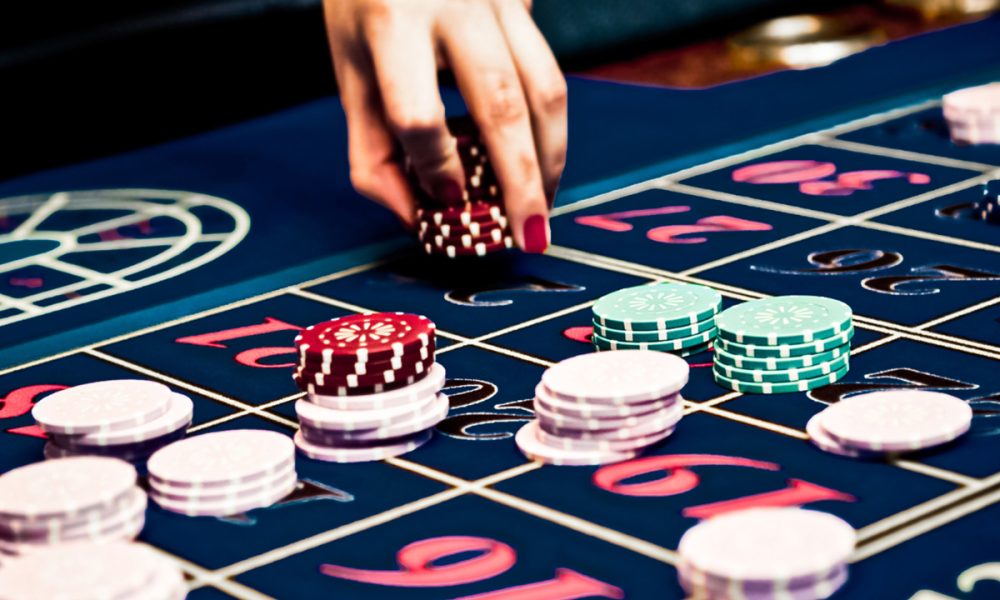
The European online gambling market is rapidly growing. The next few years show growth from $52.30 billion in 2024 to $88.16 billion in 2029, thus recording an 11.01% yearly increase. Although Curaçao currently holds a significant share of the market, this is likely to change rapidly, especially now that the official abolishment of the Curaçao master license regime has entered into effect. These issues are becoming increasingly evident amid recent court decisions, which have increasingly favored European players.
Many operators choose to work under a Curaçao license due to its easy accessibility and simplicity during the initial stages. However, the easy access to the license is now no longer relevant, as operators are required to go through a more scrutinizing licensing process with the Curaçao Gambling Control Board to obtain a license. Previously, operators could simply engage with an existing master license holder, but with the abolition of this status, this previous advantage no longer applies.
Consider a typical player from a European country who plays at an online casino licensed by Curaçao instead of a local license as required by local law. When the player experiences a loss, they may decide to recover their money and file a lawsuit against the gaming platform in a court that adheres to European Union legislative acts. After obtaining a favorable judgment in their home country, the player can then bring this judgment to Curaçao for enforcement. According to the latest case law in Curaçao, the courts there have taken a very permissive approach towards such claims and have enforced them. The alternative for Curaçao-based companies and operators who refuse to pay such claims is the risk of being declared bankrupt. This process has provided a platform for fraudulent players and opportunistic lawyers to exploit the legal system to recover their so-called “lost” funds. Consequently, many operators are abandoning Curaçao licenses in favor of other jurisdictions like Kahnawake, Anjouan, or Tobique.
The current lack of specific protective measures found in other jurisdictions is a critical aspect of the issue. For example, Malta has promulgated Bill No. 55, which safeguards the licenses within its jurisdiction from the interference of foreign court rulings. This legislation is one of the most important in the field, ensuring online casino operators are not subjected to discrimination. To illustrate, if an operator is sued by players from Europe who have placed bets or wagers with the operator under a Maltese license, the local courts in Malta will not deliberate cases in which the legality of the use of the Maltese license is questioned if the license was used in accordance with Maltese requirements. Instead, the courts will block or dismiss any foreign judgment introduced in Malta, thereby protecting the operators. In contrast, Curaçao courts have taken a completely different course, actually paving the way for players to exploit the system and bring claims against Curaçao operators for the reinstatement of legitimately “lost” funds.
Alternative Licenses: Kahnawake, Anjouan, and Tobique
Amid this danger and lack of protection, operators are increasingly considering alternative licensing options in other jurisdictions such as Kahnawake, Anjouan, and Tobique. These jurisdictions offer several advantages that make them attractive to operators.
Kahnawake: The Kahnawake is one of the oldest and most reliable of the jurisdictions providing a license for online gambling, and can be found in Canada. It is famed for its rigid regulatory regime coupled with strong legal resistance against opportunistic litigation. Kahnawake licensed operators can rest assured that the legal environment will be stable and predictable, thus, the legal issues that can be very costly are minimized.
Anjouan: Part of the Union of the Comoros, Anjouan also offers favorable conditions for online gambling operators. This jurisdiction does not require operators to have a physical presence, allowing them to avoid direct oversight by local courts. Anjouan provides flexible business conditions and reliable legal protection, making it an attractive alternative for operators looking to minimize legal risks.
Tobique: Also located in Canada, Tobique offers online gambling operators unique opportunities. This jurisdiction is characterized by flexible management and provides operators with a stable and predictable legal environment. With no requirements for physical presence and strong protection against lawsuits, Tobique is an appealing option for operators seeking a secure and stable licensing base.
These jurisdictions share several common advantages that make them preferable for operators:
Protection against opportunistic lawsuits: These jurisdictions often have better protections against frivolous or opportunistic lawsuits, reducing the risk of costly legal battles.
Flexible jurisdiction management: Many alternative licenses do not require operators to have a physical presence in the licensing jurisdiction. This allows operators to avoid direct oversight by local courts, which can lead to unfavorable rulings.
Stability and predictability: By choosing a jurisdiction with a more stable and predictable legal environment, operators can safeguard their business from the type of legal exploitation observed in Curaçao.
The i-gaming sector is a bright and always growing one, with many new regulators, permissions, prohibitions, jurisdictions, and licenses coming up all the time. By working under just one well-known license, operators narrow down their options, which is an unwise strategic decision. Surely, the Curaçao license is one of the easiest to get and most recognizable today, but this strong brand name has very high risks. Nevertheless, new licenses give new chances for the operators, with the major advantages being stability and safety.

-

 Centurion Winner Grand Chance™7 days ago
New from Inspired: Luck It Up™ and Centurion Winner Grand Chance™ available online & on mobile
-
Conferences6 days ago
NOVOMATIC Gaming Colombia to Showcase its Latest Innovations at GAT Cartagena 2026
-
Asia6 days ago
Spotlight Sports Group Expands its Smart View Global Footprint to Hong Kong
-
Conferences6 days ago
R. Franco Digital to showcase premium portfolio at GAT Expo Cartagena 2026
-
AGCO6 days ago
TitanPlay Highlights Responsible Gambling Approach in Platform Design
-
eSports6 days ago
Esports community establishes Latin-American Esports Institute (ILAE)
-
Asia3 days ago
Skyesports and GodLike signs MoU with Maharashtra Cyber to promote esports and cyber hygiene in Maharashtra
-
Latest News6 days ago
Sweepedia Analysis Reveals Over 100 Active Lawsuits Against Sweepstakes Casino Operators Across the US