Latest News
N1 Insights April’s iGaming Trends You Shouldn’t Miss


April reflects changes that began taking shape in iGaming back in the first quarter, but are only now becoming systemic. The market is gradually shifting away from short-term optimization toward more complex strategies, where performance sustainability, GEO diversification, and a reassessment of affiliate model efficiency play a key role.
In this issue of N1 Insights, N1 Partners experts analyze how traffic structures are evolving and which scaling approaches continue to deliver results amid increasing competition.
Part 1
1. Traffic and performance
1.1 Traffic sources most likely to show the highest volatility in April
The highest volatility is expected from Facebook, TikTok, and PPC channels, as they are directly affected by changes in moderation, algorithms, and competitive activity. Additional fluctuations are anticipated in Google UAC, where auction costs traditionally increase in April due to intensified brand activity following the end of the first quarter.
1.2 Will brands shift their priorities between traffic volume and quality in April?
In April, many brands will begin shifting their focus toward traffic quality, based on first-quarter performance insights. Priority will be given to deeper metrics – from FTD to deposits and LTV – rather than simply chasing registration volume and initial conversions.
At the same time, in certain high-growth GEOs, there will still be a willingness to invest in volume in order to capture market share more quickly, even at the expense of short-term efficiency.
1.3 What will be more challenging in April: finding new scalable setups or maintaining current volumes?
Most likely, maintaining current volumes will become more challenging, especially in highly competitive GEOs. After an active first quarter, many proven setups are already overheated, while traffic costs continue to rise.
Finding new setups remains possible; however, scaling them will take more time due to increased competition and higher requirements for traffic quality.
1.4 Changes in testing strategies for new GEOs and traffic sources in April
Affiliates are likely to shift toward shorter testing cycles and reduce test budget volumes in order to adapt more quickly to changing market conditions.
“At the same time, interest in traffic source diversification will increase: beyond the classic Facebook and Google channels, we expect a growing number of tests in alternative social platforms,” comments Vlad Chernov, Deputy Head of Affiliates at N1 Partners.
1.5 Key metrics for scaling up or cutting caps
Key metrics will continue to include CR, ROAS, ARPU, retention, and player LTV, but their role in decision-making will become even more significant. Teams will increasingly shift from evaluating “input” metrics to analyzing audience quality and long-term value.
In particular, scaling decisions will be based on early LTV signals and user behavior patterns, rather than solely on FTD volume. This will allow teams to identify underperforming setups earlier and reallocate budgets toward more sustainable traffic sources.
2. GEO priorities
2.1 GEOs that may see the highest traffic growth in April
In April, several Tier-1 countries are expected to show the strongest growth, primarily Canada, Germany, and Australia, where demand for online gambling remains stable and major brands continue to increase their marketing budgets. Growth may also be observed in Latin America (Brazil, Peru, Chile).
At the same time, some affiliates will continue scaling in Eastern Europe and CIS countries, where competition is lower than in Tier-1 markets and it is easier to test new setups.
2.2 Will the approach to Tier-1 markets change compared to Q1 2026?
The approach to GEO selection will become more selective and pragmatic. Many teams will maintain their focus on Tier-1 markets, but with stricter ROI control amid rising traffic costs and decreasing predictability of results.
At the same time, a partial budget reallocation is expected in favor of GEOs with more favorable scaling conditions – lower competition and more affordable auction dynamics. As a result, strategies will increasingly balance between the stability of Tier-1 markets and growth opportunities in less saturated regions.
2.3 Regions where the cost of player acquisition is expected to change the most
The most noticeable increase in CPA is expected in Tier-1 markets – primarily Canada, Germany, and Australia. In these GEOs, player acquisition costs are likely to continue rising amid intense competition and increasing pressure from large media buying teams.
“An additional factor will be the concentration of budgets after the first quarter: major players are scaling more aggressively, which overheats the auction and reduces the effectiveness of standard traffic acquisition approaches,” notes Vlad Chernov, Deputy Head of Affiliates at N1 Partners.
As a result, the entry threshold for new campaigns is rising, and achieving target metrics will require more precise optimization and stronger setups.
2.4 Key GEOs for growth at the beginning of Q2
Key GEOs may include several Tier-1 markets such as Canada, Germany, and Australia, as well as a number of Tier-2 and Tier-3 countries, including Brazil, India, Turkey, Kazakhstan, and Chile.
These countries remain a priority for many brands due to strong purchasing power, higher player LTV, and stable demand for licensed products. Despite high competition and traffic costs, Tier-1 markets continue to attract large affiliate teams, as with proper optimization they offer the most sustainable long-term profitability.
3. Affiliate Marketing Dynamics
3.1 How will the balance between new partners and established affiliate teams change in April?
The market will continue to consolidate around large and experienced teams that have the resources for scaling, optimization, and rapid budget reallocation. Their advantage will strengthen due to accumulated expertise, access to data, and more stable traffic acquisition processes.
At the same time, new teams will continue to emerge; however, the barrier to entry will keep rising. Without access to unique traffic sources, technological advantages, or niche expertise, it will become increasingly difficult for them to compete with established players and reach comparable volumes.
3.2 Changes in affiliates’ approach to selecting partner brands
Affiliates are increasingly shifting their focus toward non-financial factors when choosing partners – primarily brand reputation, payment reliability, and transparency of statistics. These criteria are becoming critical amid rising risks and the instability of certain offers.
As a result, the trend toward long-term partnerships is strengthening: more teams are favoring sustainable collaboration models over short-term offers with potentially high but unpredictable payouts.
“This approach reduces operational risks and enables building a more stable long-term unit economics,” says Vlad Chernov, Deputy Head of Affiliates at N1 Partners.
3.3 Types of partners that will see the most active growth in April
Media buying teams working with paid traffic will continue to grow most actively, along with content affiliates and SEO-driven projects focused on long-term organic traffic acquisition. These models remain key due to their scalability and more predictable long-term economics.
At the same time, growth in alternative sources is accelerating – particularly influencer and Telegram traffic, which attract affiliates with help of flexibility, a lower barrier to entry, and the ability to test hypotheses more quickly.
3.4 What changes in partner behavior are likely to be most noticeable in April?
Partners will increasingly diversify their traffic sources and GEOs to reduce dependence on any single channel. More cautious scaling and deeper analysis of unit economics can also be expected, especially in light of first-quarter results.
Part 2
1. PR trends
1.1 Top PR trends in April 2026
In the second quarter, PR activity noticeably picks up: after revisiting strategies at the beginning of the year, brands start engaging more actively with media and building more structured communication. Against the backdrop of increasing competition, having a strong offer alone is no longer enough – what matters is how the brand presents itself and what it communicates.
“At the same time, formats are also evolving: traditional press releases are gradually taking a back seat, giving way to case studies, interviews, and more ‘authentic’ content,” says Maria Bobrovskaya, Team Lead PR, Event, Production at N1 Partners.
The market is saturated, so those who deliver real value and communicate with their audience not in abstract terms, but through experience and concrete results, are the ones who win.
2. Brand marketing strategy
2.1 Which aspects of marketing strategy should brands focus on in April amid increasing competition?
The key focus should be on differentiation through brand positioning, not just through offer terms. In a market saturated with similar propositions, partners begin to make decisions based not only on numbers, but also on trust and stability.
This is reflected in affiliate behavior: strong partners are more likely to work with brands that have a clear reputation and predictable processes.
2.2 What changes in marketing strategy should brands consider in April to maintain a competitive advantage?
Companies are gradually shifting their focus from short-term acquisition to long-term partner retention, strengthening efforts in content, PR, loyalty programs, and community development. This approach not only reduces dependence on a constant influx of new affiliates but also improves the quality of engagement with existing partners.
This shift is largely driven by market saturation: acquisition costs continue to rise, while competition for active affiliates intensifies.
“In such conditions, retaining and developing the existing partner base becomes strategically more effective than aggressively acquiring new partners, especially given the increasing demands for transparency, support, and level of service,” notes Maria Bobrovskaya, Team Lead PR, Event, Production at N1 Partners.
2.3 How can marketers find the right balance between short-term results and long-term brand development?
The balance is achieved through a combined strategy: performance drives immediate results, while brand communications ensure long-term stability. If a brand focuses only on short-term gains, it becomes vulnerable in a highly competitive environment.
2.4 The most effective approaches to marketing budget allocation in Q2
In the second quarter, many companies begin reallocating budgets toward a more diversified strategy. In addition to performance channels, there is increased investment in PR activities, content marketing, and event participation.
This shift is driven by the fact that relying solely on paid traffic is becoming less stable, prompting brands to seek ways to strengthen their organic presence and build trust.
- Marketing challenges
3.1 What new challenges may marketing teams face at the beginning of Q2?
The key challenge remains the growing competition for partner attention, making it increasingly difficult for brands to differentiate themselves amid similar terms and offers. In an oversaturated market, standard acquisition tools are no longer delivering consistent results.
As a result, marketing teams are forced to shift their focus from purely commercial terms to building reputation, improving communication quality, and shaping overall brand perception. This includes more systematic work with content, greater transparency in interactions, and the development of long-term relationships with partners.
3.2 Which marketing strategies may become less effective in April?
Approaches based solely on financial terms are gradually losing effectiveness. When many programs offer similar payouts, partners begin to pay attention to other factors – such as brand reputation, quality of support, and operational stability.
3.3 Will it become more difficult to attract strong partners amid the large number of affiliate programs on the market?
This is largely due to the fact that strong affiliates have already formed a stable pool of partners and have become significantly more selective when choosing new brands. Decisions are increasingly made not only based on terms, but also considering reputation, stability, and quality of interaction.
In practice, this results in a longer onboarding cycle: new programs require more time to pass the evaluation stage and build trust. As a result, partnership launches slow down, and affiliate expectations become more demanding.
3.4 What signals in April may indicate that brands should reconsider their marketing strategy?
A decline in partner engagement, weak response to new products, and lack of brand visibility in the media are key signals.
“This is due to the fact that in a highly competitive environment, even a slight drop in activity quickly impacts a brand’s position,” says Maria Bobrovskaya, Team Lead PR, Event, Production at N1 Partners.
April confirms a key shift in the iGaming market: increasing competition and rising traffic costs are driving higher demands for quality, sustainability, and a more strategic approach to marketing. Quick tactics and short-term solutions are gradually giving way to more systematic efforts – with a focus on LTV, partner retention, and traffic source diversification.
Join the first tournament of the N1 Traffic Cups 2026 series – the N1 SEO Traffic Cup by N1 Partners!
Period: March 1 – April 30, 2026
Results: by May 10
Entry: from 20 FTD per brand
Why N1 Partners:
- 14+ casino and sportsbook brands with Reg2Dep up to 70%
- 10+ Tier-1 GEOs
- CPA up to €700 and RevShare up to 45% + NNCO for top partners + hybrid models
Be number one with N1!














Five custom gaming PC rigs, each set up by a Vitality Counter-Strike player, are available via the Stake Community Forum.
Stake has partnered with esports organisation Team Vitality on an exclusive fan giveaway tied to the Counter-Strike 2 ecosystem, offering five bespoke gaming PC rigs customised by players from Vitality’s Counter-Strike roster.
According to the companies, each setup is built to competitive standards and reflects a player’s individual preferences and playstyle. The rigs include an AMD Ryzen 7 7800X3D processor, an ASUS RTX 5070 Ti graphics card, 32GB DDR5 RAM, and ASUS B850M motherboards with integrated Wi‑Fi, alongside a 750W 80+ Gold power supply.
Team Vitality is Stake’s official esports partner, and the giveaway is positioned as part of a broader campaign around the Stake Ranked series, described by Stake as the latest instalment in its calendar of Counter-Strike 2 LAN events.
Fans can enter by creating a Stake Community Forum account and replying to the official competition post with their Stake username.
Mezii, Team Vitality said: “I’m really excited to see this PC. It’s a super clean custom build, with great attention to detail and a strong overall aesthetic. Huge thanks to Stake for delivering something that looks sharp and really captures the vibe we’re bringing to the server.”
The post Stake and Team Vitality launch Counter-Strike fan giveaway appeared first on Eastern European Gaming | Global iGaming & Tech Intelligence Hub.
La expansión global de los mercados de predicción está comenzando a redefinir la forma en que los usuarios interactúan con la información, la probabilidad y el engagement digital.
Ubicadas en la intersección entre finanzas, tecnología y datos de comportamiento, estas plataformas están ganando tracción como una forma estructurada de transformar la inteligencia colectiva en pronósticos medibles sobre eventos futuros.
En Brasil, este segmento emergente aún se encuentra en una etapa inicial, pero la combinación de una audiencia digital altamente comprometida, la reciente evolución regulatoria en sectores adyacentes como fintech y cripto, y la búsqueda constante de nuevos modelos de engagement dentro del iGaming, crea un entorno fértil para el crecimiento.
Es en este contexto que VoxFi se posiciona como uno de los primeros actores estructurados dentro del ecosistema local.
La semana pasada, durante BiS SiGMA South America 2026 en São Paulo, la empresa presentó oficialmente su solución white label, diseñada para permitir que terceros integren mercados de predicción directamente en sus propios sitios web y aplicaciones.
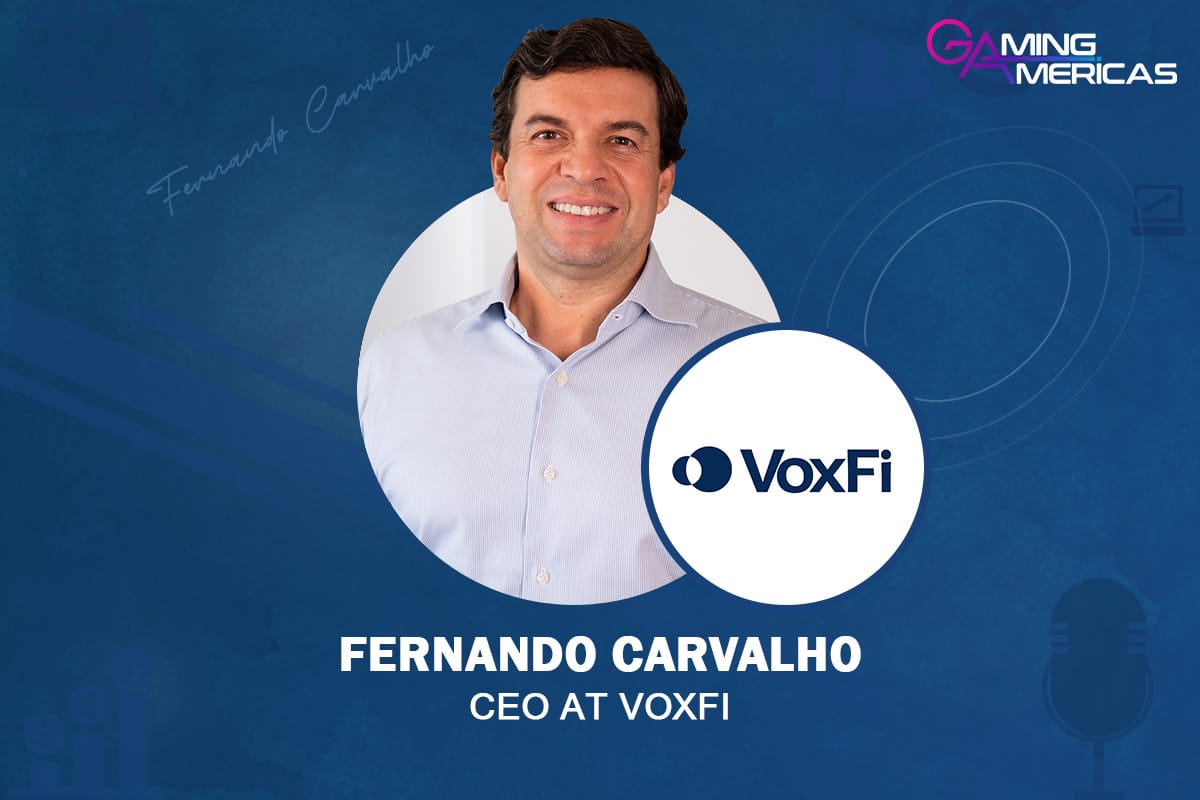
VoxFi también participó en el panel “Forecasting or Gambling? The Fine Line Between Prediction Markets and Bets”, donde el CEO y cofundador Fernando Carvalho analizó los límites entre los modelos de predicción emergentes y las estructuras tradicionales de apuestas.
Además, la compañía fue seleccionada como una de las seis finalistas del Startup Pitch Competition del evento, reforzando su posicionamiento como un actor innovador en el sector.
La empresa, una plataforma brasileña enfocada en contratos de predicción basados en eventos, ha desarrollado una solución white label que permite a otras compañías integrar mercados de predicción directamente en sus propios entornos digitales.
A través de conectividad vía API, empresas de distintos sectores, desde medios y entretenimiento hasta telecomunicaciones, pueden ofrecer experiencias de predicción personalizadas bajo su propia marca, aprovechando la infraestructura, el marco de compliance y los mecanismos de liquidez de VoxFi.
A diferencia de los modelos tradicionales de apuestas, VoxFi opera bajo una lógica peer to peer, donde los usuarios negocian contratos binarios, sí o no, basados en resultados futuros.
El precio de estos contratos refleja probabilidades percibidas, creando un entorno dinámico que se asemeja más a los mercados financieros que a las estructuras de juego convencionales.
Todos los mercados pasan por un proceso interno de curaduría y validación, con criterios de resolución claramente definidos, estándares de compliance y sistemas de monitoreo.
La plataforma también incorpora prácticas del mercado financiero como KYC obligatorio, monitoreo de transacciones y segregación de cuentas por evento, reforzando su posicionamiento como un ecosistema estructurado y responsable.
Fundada por Fernando Carvalho, conocido por su rol en el desarrollo del mercado de criptoactivos en Brasil a través de QR Capital, y Luis Felipe Carvalho, emprendedor fintech detrás de NG.CASH, VoxFi combina experiencia en innovación financiera con un producto diseñado para escalar y alinearse con la regulación.
En esta entrevista exclusiva, el CEO Fernando Carvalho explica las razones detrás de su entrada en un segmento aún poco comprendido, el posicionamiento estratégico de VoxFi y lo que viene para los mercados de predicción en Brasil.
El mercado de predicción aún no es ampliamente comprendido en Brasil. ¿Qué los llevó a apostar por este sector?
Fernando Carvalho – Elegimos construir VoxFi porque los mercados de predicción son una de las formas más eficientes de transformar información dispersa en probabilidades sobre el futuro.
Agregan conocimiento colectivo de manera estructurada y transparente.
Observamos avances regulatorios importantes en Estados Unidos entre 2024 y 2025, lo que indicó que este modelo comenzaría a escalar globalmente.
Vimos un escenario similar al inicio del mercado cripto, un sector nuevo que requiere educación, gobernanza sólida y desarrollo gradual para alcanzar escala.
¿Dónde está la línea entre mercados de predicción y apuestas?
La diferencia es estructural. En los mercados de predicción, los usuarios negocian entre sí a través de un libro de órdenes y los precios reflejan probabilidades percibidas.
En las apuestas tradicionales, existe una casa que define las cuotas y asume el riesgo. Aquí no hay casa, hay mercado.
VoxFi entra con un enfoque B2B. ¿Qué oportunidad identificaron?
El iGaming está atravesando una transformación en Brasil y los operadores buscan nuevas formas de engagement.
Nuestra solución permite integrar mercados de predicción como una capa adicional de contenido vía API, mientras los socios mantienen su identidad de marca.
¿Compiten con operadores de apuestas?
No. Complementamos el ecosistema. Evitamos deliberadamente temas deportivos para no competir directamente y ampliar el abanico de contenidos.
¿Brasil está atrasado en este segmento?
No. Está en una etapa inicial, pero con características ideales, una audiencia digital altamente comprometida y una creciente familiaridad con instrumentos financieros más sofisticados.
¿Cómo funciona el modelo de ingresos?
Es similar al de plataformas de trading, cobramos comisiones sobre transacciones o sobre la liquidación de contratos.
En el modelo B2B también generamos ingresos a través de fees de implementación y acuerdos de revenue share. Es un modelo altamente escalable.
¿Quiénes son los principales interesados hoy?
Hay tres grupos principales, operadores de iGaming, empresas de medios y entretenimiento, y plataformas digitales con grandes audiencias.
¿Cómo se construye liquidez en un mercado nuevo?
Inicialmente mediante un market maker interno para garantizar condiciones eficientes de negociación. Al mismo tiempo, estamos desarrollando infraestructura para integrar market makers externos a medida que el ecosistema crece.
¿Por qué evitar temas como deportes y elecciones?
Es una decisión estratégica para alinearnos con la regulación actual y evitar conflictos con organismos como CVM, SPA y TSE.
¿Brasil está cerca de regular los mercados de predicción?
La discusión recién está comenzando a tomar fuerza. El principal riesgo es una clasificación incorrecta como apuestas tradicionales o como derivados financieros.
¿Qué define el éxito en los próximos seis meses?
El crecimiento de la base de usuarios, el volumen negociado y la activación de integraciones white label con socios estratégicos.
A futuro, ¿será un complemento del iGaming o una categoría propia?
En el corto plazo lo vemos como un complemento natural del iGaming, agregando nuevas capas de contenido y engagement.
A largo plazo, creemos que puede convertirse en una categoría digital propia, una nueva capa de internet enfocada en la predicción de eventos futuros.
The post Fernando Carvalho define una nueva era para los mercados de predicción en Brasil con VoxFi appeared first on Americas iGaming & Sports Betting News.
Brazil
Fernando Carvalho outlines new era for prediction markets in Brazil with VoxFi white label technology

The global expansion of prediction markets is beginning to reshape how users interact with information, probability, and digital engagement.
Positioned at the intersection of finance, technology, and behavioral data, these platforms are gaining traction as a structured way to transform collective intelligence into measurable forecasts about future events.
In Brazil, this emerging segment is still in its early stages, but the combination of a highly engaged digital audience, recent regulatory evolution in adjacent sectors such as fintech and crypto, and the constant search for new engagement models within iGaming creates a fertile environment for growth.
It is within this context that VoxFi is positioning itself as one of the first structured players in the local ecosystem.
Last week, during BiS SiGMA South America 2026 in São Paulo, the company officially presented its white-label solution, designed to allow third-party businesses to integrate prediction markets directly into their own websites and applications.
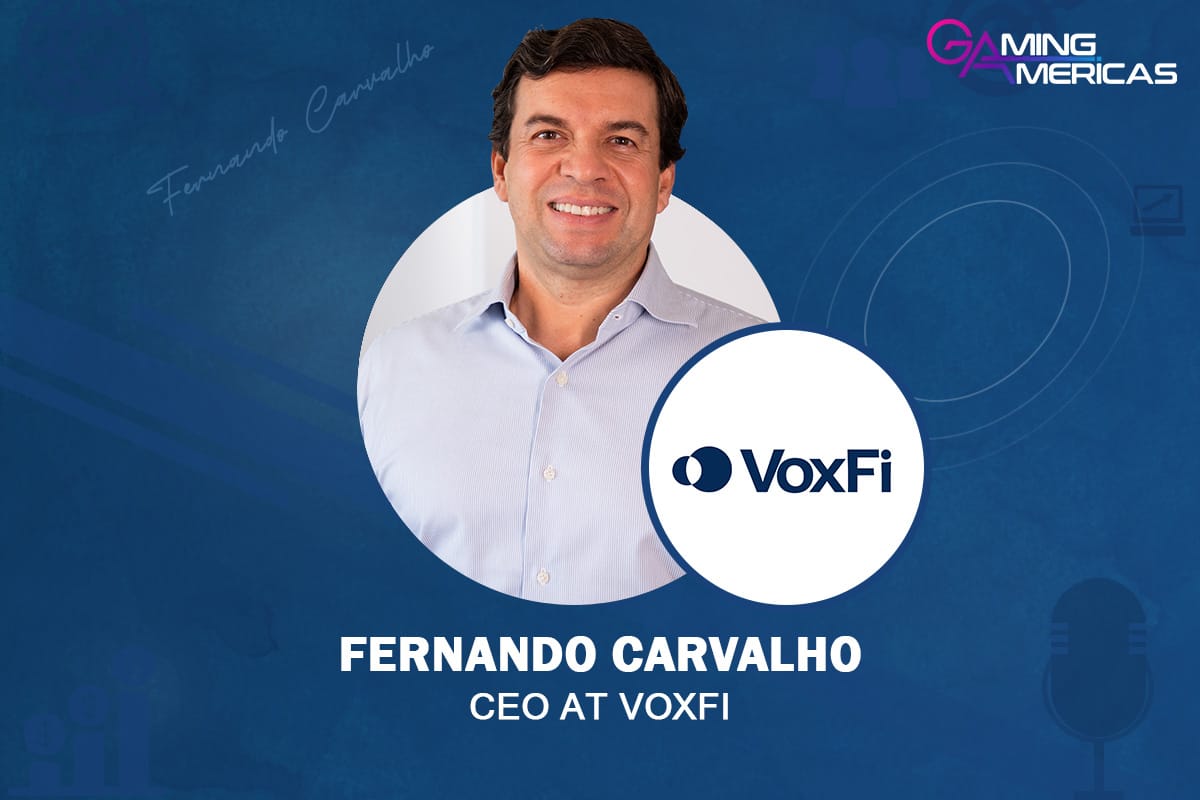
VoxFi also took part in the panel “Forecasting or Gambling? The Fine Line Between Prediction Markets and Bets,” where CEO and co-founder Fernando Carvalho discussed the boundaries between emerging prediction models and traditional betting structures.
In addition, the company was selected as one of the six finalists in the event’s Startup Pitch Competition, reinforcing its positioning as an innovative player in the space.
The company, a Brazilian platform focused on event-based prediction contracts, has introduced a white-label solution that allows third-party companies to integrate prediction markets directly into their own digital environments.
Through API connectivity, businesses across sectors, from media and entertainment to telecom, can offer customized prediction experiences under their own branding, leveraging VoxFi’s infrastructure, compliance framework, and liquidity mechanisms.
Unlike traditional betting models, VoxFi operates on a peer-to-peer logic, where users trade binary contracts (“yes” or “no”) based on future outcomes.
The pricing of these contracts reflects perceived probabilities, creating a dynamic environment that resembles financial markets more than conventional gambling structures.
All markets undergo internal curation and validation, with clearly defined resolution criteria, compliance standards, and monitoring systems.
The platform also incorporates financial-market practices such as mandatory KYC, transaction monitoring, and event-based account segregation, reinforcing its positioning as a structured and responsible ecosystem.
Founded by Fernando Carvalho, known for his role in advancing the crypto asset market in Brazil through QR Capital, and Luis Felipe Carvalho, a fintech entrepreneur behind NG.CASH, VoxFi combines experience in financial innovation with a product designed for scalability and regulatory alignment.
In this exclusive interview, CEO Fernando Carvalho explains the rationale behind entering a still-misunderstood segment, the strategic positioning of VoxFi, and what lies ahead for prediction markets in Brazil.
The prediction market is still not widely understood in Brazil. What led you to invest in this sector?
Fernando Carvalho – We chose to build VoxFi because prediction markets are one of the most efficient ways to transform dispersed information into probabilities about the future.
They aggregate collective knowledge in a structured and transparent way. We observed important regulatory developments in the United States between 2024 and 2025, which indicated that this model would begin to scale globally.
We saw a scenario similar to the early days of the crypto market: a new sector that requires education, strong governance, and gradual development to reach scale.
Where is the line between prediction markets and betting?
The difference is structural. In prediction markets, users trade with each other through an order book, and prices reflect perceived probabilities.
In traditional betting, there is a house that sets the odds and assumes the risk. Here, there is no “house” — there is a market.
VoxFi enters with a B2B approach. What opportunity did you identify?
iGaming is undergoing a transformation in Brazil, and operators are looking for new ways to engage users.
Our solution allows prediction markets to be integrated as an additional content layer via API, while partners maintain their own brand identity.
Do you compete with betting operators?
No. We complement the ecosystem. We deliberately avoid sports-related topics to prevent direct competition and instead expand the range of available content.
Is Brazil behind in this segment?
No. It is in an early stage, but with ideal characteristics: a highly engaged digital audience and increasing familiarity with more sophisticated financial instruments.
How does your revenue model work?
It is similar to trading platforms: we charge fees on transactions or on contract settlement. In the B2B model, we also generate revenue through setup fees and revenue-sharing agreements. It is a highly scalable model.
Who are the main players interested in this today?
There are three main groups: iGaming operators, media and entertainment companies, and digital platforms with large audiences.
How do you build liquidity in a new market?
Initially, through an internal market maker to ensure efficient trading conditions. At the same time, we are developing infrastructure to integrate external market makers as the ecosystem grows.
Why avoid topics like sports and elections?
This is a strategic decision to align with current regulations and avoid conflicts with authorities such as CVM, SPA, and TSE.
Is Brazil close to regulating prediction markets?
The discussion is just beginning to gain traction. The main risk is being incorrectly classified as either traditional betting or financial drivatives.
What defines success in the next six months?
Growth in user base, trading volume, and the activation of white-label integrations with strategic partners.
Looking ahead, will this be a complement to iGaming or a standalone category?
In the short term, we see prediction markets as a natural complement to iGaming, adding new layers of content and engagement. In the long term, we believe they can become a standalone digital category, a new layer of the internet focused on forecasting future events.
The post Fernando Carvalho outlines new era for prediction markets in Brazil with VoxFi white label technology appeared first on Americas iGaming & Sports Betting News.

-

 BNL7 days ago
Paneles SiGMA South America concentran debates claves para Brasil
-
ALL FOR ONE Studios6 days ago
Unlock the Sands’ Bounty — Games Global and ALL FOR ONE Studios introduce rewards in Queens of Ra Rising Coin Collect
-
Alea6 days ago
Alea Returns to SiGMA South America as Brazil’s iGaming Market Enters a More Demanding Stage
-
bets7 days ago
SiGMA South America panels focus on key debates to Brazil
-
Andrew Humphreys Chief Product Engineering Officer at Bede Gaming6 days ago
OLG Launches Innovative New React Native Mobile App with Bede Gaming
-
Booming Games5 days ago
Booming Games targets South American dominance with major investment, flagship partnerships and exclusive Ronaldinho content
-
Best Slot Developer6 days ago
Amusnet Named Best Slot Developer at GamingTECH Awards 2026
-
Evoplay6 days ago
Evoplay Embarks on a Heart of Africa: Lion Way