Latest News
NCAA Releases Penalty and Process Details for March Madness Player Availability Reports

The NCAA Division I Men’s and Women’s Basketball Committees detailed the penalties and reporting requirements for the Men’s and Women’s March Madness player availability reporting program.
Implemented for the first time in NCAA championships, player availability reports are intended in part to reduce betting-related pressure, solicitations and harassment student-athletes and other team personnel receive from bettors connected to playing status. The NCAA runs the largest integrity monitoring service program in the world and provides college athletes with online threat detection services as part of its comprehensive strategy to respond to the rise of sports betting.
Implementation of player availability reports for the 2026 Division I Men’s and Women’s Basketball Championships will serve as a pilot program. The reporting system will not be implemented for other NCAA championships in 2025-26 while the program is evaluated.
HD Intelligence will serve as the player availability reporting service provider for the 2026 Division I Men’s and Women’s Basketball Championships. Several conferences already use HDI for their members and are familiar with the interface. A video training was provided in February, and a frequently-asked-questions document will be offered.
Availability reports will be applicable to all Division I men’s and women’s basketball championship contests. These reports will be publicly available on ncaa.com.
Process
Teams must submit initial reports to the NCAA by 9 p.m. (local competition venue time) the night before competition and provide any updates to the initial report by two hours prior to their scheduled tip time on game day to ensure accuracy. The portal will open five hours prior to the reporting deadline each day.
Under the reporting structure, student-athletes will be designated as available (more than a 75% chance to play), questionable (up to a 75% chance to play) or out (will not play).
Student-athletes will be assumed to be available unless designated as questionable or out.
Penalties
Failure to adhere to the policy or misconduct violations may result in penalties for the institution and head coach, as determined by the Division I Men’s and Women’s Basketball Committees. For the 2026 championships, the following penalty structure has been established:
• First offense: Up to a $10,000 institution penalty.
• Second offense: Up to a $25,000 institution penalty.
• Third and any successive offenses: Up to $30,000 institution penalty and a head coach penalty of up to $10,000.
All penalties will be assessed after the tournaments conclude.
The post NCAA Releases Penalty and Process Details for March Madness Player Availability Reports appeared first on Americas iGaming & Sports Betting News.









New software option replaces standard table announcements across cash games, tournaments and formats including All-In or Fold and Spin & Gold.
GGPoker on July 9, 2026 announced Action Voice, a new software feature that lets players replace standard table announcements with voice packs recorded by poker personalities, including Doyle Brunson.
The initial lineup named by the operator includes ten-time WSOP bracelet winner Doyle Brunson, Daniel Negreanu, Michael “The Grinder” Mizrachi and Kevin Martin, with additional voices “to be confirmed in the near future.”
Action Voice is available now across GGPoker’s product offering, including cash games, tournaments and formats such as All-In or Fold and Spin & Gold. Players can select voice packs in the desktop client via ‘My Page’ and then ‘My Action Voice’.
“Doyle Brunson may not be at the tables in the way that he used to, but his voice still can be,” said Sarne Lightman, Managing Director of GGPoker. “Action Voice is our way of keeping the legends who built this game part of the everyday experience – right alongside the players carrying it forward today, like Daniel and Michael. It’s a unique and fun new element to our software, and we can’t wait to reveal the rest of the lineup soon.”
GGPoker said more Action Voice packs will be announced in the coming weeks as it rolls out the full roster.
The post GGPoker adds Action Voice packs featuring Doyle Brunson and other pros appeared first on EE Gaming | Global iGaming & Tech Intelligence Hub.

GGPoker introduces Action Voice, letting players hear poker icons – including Doyle Brunson, Daniel Negreanu, Michael “The Grinder” Mizrachi and more – call their action at the tables
GGPoker, the World’s Biggest Poker Room, today unveiled Action Voice, a unique feature that gives players the option to replace GGPoker’s standard table announcements with those voiced by some of poker’s most iconic figures. For the first time, players can bet, raise, call, and fold to the voice of ten-time WSOP bracelet winner and back-to-back Main Event champion Doyle Brunson – alongside a growing roster of legends including Daniel Negreanu, Michael “The Grinder” Mizrachi, Kevin Martin, and additional names to be confirmed in the near future.
Action Voice is now available to all GGPoker players, who can select their preferred voice pack in the GGPoker software and hear it call their action while playing their favorite GGPoker games, including cash games, tournaments, and exclusive formats such as All-In or Fold and Spin & Gold.
“Doyle Brunson may not be at the tables in the way that he used to, but his voice still can be,” said Sarne Lightman, Managing Director of GGPoker. “Action Voice is our way of keeping the legends who built this game part of the everyday experience – right alongside the players carrying it forward today, like Daniel and Michael. It’s a unique and fun new element to our software, and we can’t wait to reveal the rest of the lineup soon.”
To select a new voice from within the desktop software, click on ‘My Page’, then ‘My Action Voice’. Choose your preferred voice by selecting the avatar, click ‘Apply’ and you are ready to hit the tables!
Additional voices will be revealed in the coming weeks as GGPoker rolls out the full Action Voice roster.
The post The Godfather Of Poker Returns To The Table: Doyle Brunson’s Voice Comes To GGPoker appeared first on Americas iGaming & Sports Betting News.
Haaland
International bettors back Haaland’s Norway to beat England in World Cup Quarter Final Clash

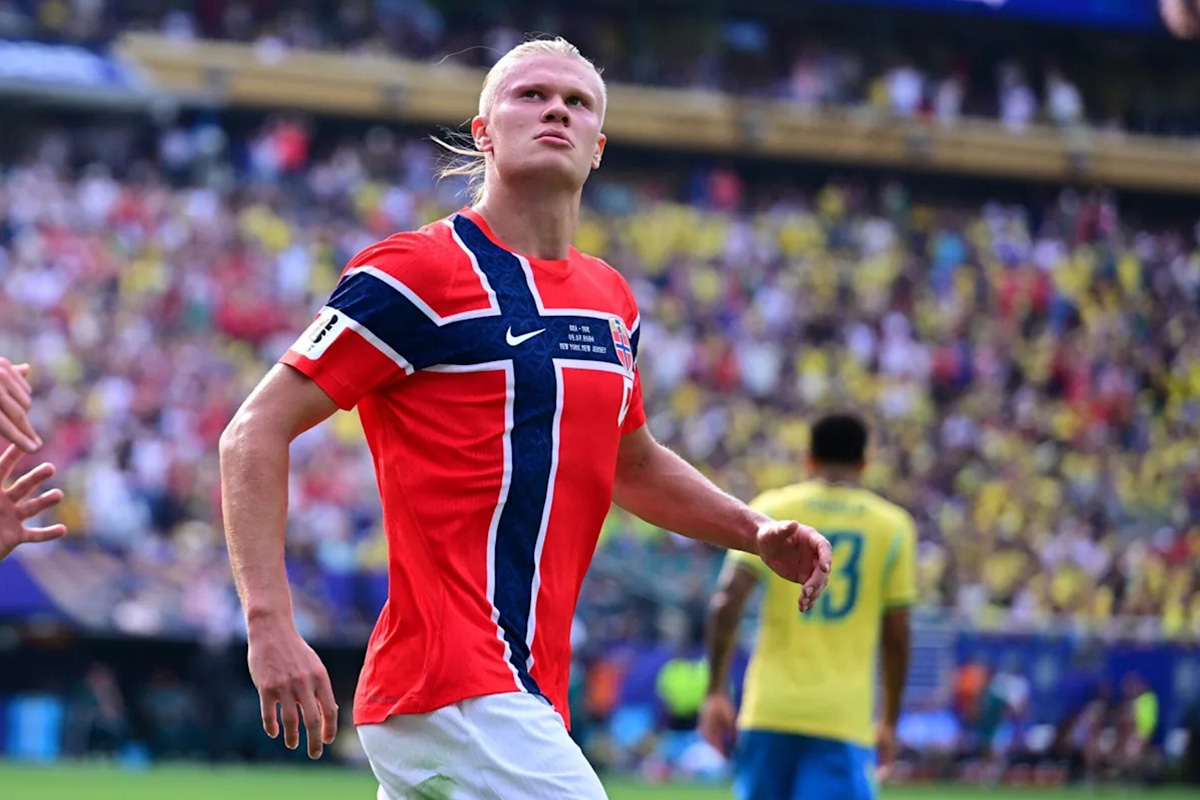
Kaizen Gaming shares Betano users’ predictions on teams heading to the World Cup semi-finals
As the World Cup moves into the last eight stage, Kaizen Gaming unveils exclusive proprietary data from its Betano platform, which reveals Argentina, Norway, Spain and France as the most backed teams by users globally to progress into the semi-finals.
Predicting the teams to qualify to the semi-finals (selections from the “To Qualify” market):
- Norway backed by 75% of users to qualify over England
- Argentina favoured by 80% of users to win over Switzerland
- Spain narrowly predicted to come out on top over Belgium with 55% of users’ bets
- France has been selected by 67% of users to pass through Morocco
With regards to two of the biggest surprises of the tournament this far, Brazil’s defeat to Norway and Germany’s elimination by Paraguay, it seems that for Betano users the shock wasn’t that big. In fact, 42% of users had seen Paraguay’s qualification coming, and 45% had predicted Norway getting through Brazil to reach the quarterfinals.
*The data shared has been extracted on the morning of July 8, 2026 from across 18 markets, excluding the UK. The international data sources may vary according to betting option availability per market.
The post International bettors back Haaland’s Norway to beat England in World Cup Quarter Final Clash appeared first on EE Gaming | Global iGaming & Tech Intelligence Hub.

-

 Affiliate Industry6 days ago
Hub Affiliations Triumphs at the iGB Affiliate Awards 2026: Winner of Programme/Network Campaign of the Year
-
Latest News6 days ago
N1 Partners at iGB L!VE 2026: Bringing Together Affiliates, Art and Innovation
-
Austria7 days ago
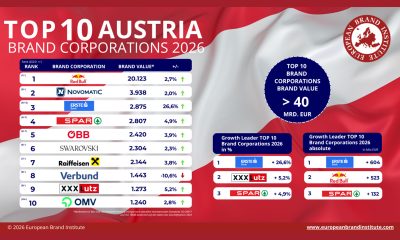
Austrian Brand Value Study: NOVOMATIC Defends Top Ranking
-
Amusnet7 days ago
Amusnet Releases its Latest Video Slot “Golden Snake”
-
Africa7 days ago
PopOK Gaming sponsors Botswana’s TT Cup Challenge horse racing event
-
Betsson CEO Pontus Lindwall7 days ago
Gaming in the Nordics launch event sets annual Copenhagen conference from 2027
-
Azerbaijani Parliament7 days ago
Azerbaijan to Impose Tougher Penalties for Illegal Online Gambling
-
Amusnet7 days ago
Weekend Reels | Week 27: Slot Drops & Trends