Latest News
A large-scale $1 billion online casino shady scheme involving Ukrainian fraudsters Vadim Gordievsky and Alyona Suvorova has been discovered in Kazakhstan.

The Kazakhstan Financial Monitoring Agency has revealed a large-scale shady scheme with a whole layer of cross-border transfers. While referring to the press service of the Agency, Elordainfo.kz informs that numerous bank employees and 120 people from several countries were involved in the operation of the shady scheme.
The money was sent to various payment organizations, disguised as legal transactions, and was later withdrawn to numerous online casinos.
At the same time, local authorities managed to eliminate the call center, which employed foreigners, which provided technical support for four online casinos as well as advice on money transactions. In addition, the organizers of the call center created a gambling partnership program that was used to accept payments and withdraw them in cryptocurrencies. The overall turnover exceeded 200 million USDT.
During the implementation of all these measures, over 70 searches were conducted. As a result of these activities, local authorities managed to gather physical evidence as well as to detain nine suspects.
According to law enforcement authorities in Kazakhstan, the key organizer of the shady miscoding scheme is Ukrainian Vadim Ivanovich Gordievsky, born in 1974. He led this organized crime group and used the local Marginplus company for these purposes (marginplus.kz). In addition to companies from Kazakhstan, Gordievsky also worked with illegal Russian online casinos while helping them to facilitate payments.
Already in 2008, Vadim Gordievsky served as deputy head of the Boryspil Regional State Administration and was in charge of land issues. Under Gordievsky, various lands of Boryspil were sold while the money was stolen. In the same 2008, he was dismissed from his position with a huge scandal, but his case never resulted in criminal proceedings. A lot of money and connections in government offices helped him avoid accountability.
In 2012, when Viktor Yanukovych came to power, Vadim Gordievsky took the chair of the head of the highway service in the Odessa region, where he managed to get access to millions of dollars, which he later invested in FC Alta Capital.
After the initiation of criminal cases for financial crimes, fraud, and the announcement of his wanted list by the Ministry of Internal Affairs, Vadim Gordievsky left Ukraine on forged documents.

According to investigators, Gordievsky’s partner, Mikhail Kovalev (Mykhaylo Kovalov), who has a number of companies in the EU, in particular, in Poland and a residence permit in Spain, was closely working with Gordievsky. By using numerous fictitious companies in Poland, in particular, STABLEX SOLUTION Sp. z o. o (solvexs.pl) he engaged in illegal payments and cash withdrawal in cryptocurrencies.
His partner, who is also his former Kyivstar employee, Alyona (Olena) Suvorova (born in 1983), who left Ukraine for Moscow after February 2022, and Ukrainian IT specialist Denis Andreevich Rykov (born in 1990), who currently lives in St. Petersburg, also participated in the shady scheme of illegal bookmakers and dubious payments.
Judging by her social media accounts, Alyona Suvorova is currently positioning herself “as an entrepreneur, investor, and crypto trader with 5+ years of experience.” According to Suvorova herself, she has been developing payment technologies in the field of FinTech for 10 years. In 2021, she opened her own business for international crypto transfers. In addition, she is the founder of the Lemoncoin Crypto Academy.
The law enforcement agencies of Kazakhstan are asking for information about the location and data of all these people. In the near future, Vadim Gordievsky, Alyona Suvorova, and other defendants will be put on the international wanted list. According to local laws, they face up to nine years in prison.







Boston
Global Experts to Gather in Boston for First US Symposium on Online Gambling and Public Health


A major international discussion on the future of online gambling regulation is set to take place in the United States later this month, as the Public Health Advocacy Institute (PHAI) prepares to host its first global symposium dedicated to the sector’s public health impact.
The event, titled “Online Gambling and the Public Health Movement,” will be held on April 24, 2026, at Northeastern University in Boston, bringing together policymakers, researchers, and industry observers from across the US, Europe, and Australia.
The symposium comes at a time of rapid expansion in online betting markets, particularly in the United States, following the 2018 Supreme Court decision that opened the door to state-level sports betting regulation. Since then, mobile-first platforms, micro-betting features, and AI-driven betting tools have significantly reshaped the landscape.
Focus on Regulation and Risk
According to the organisers, the event will focus on the growing calls for stronger consumer protections, as well as the broader societal impact of digital gambling products.
Discussions are expected to cover:
- The rise of micro-betting and real-time wagering
- The role of AI and data-driven betting systems
- The effectiveness of current responsible gambling frameworks
- The need for federal and state-level safety standards
Recent legislative proposals in the US, including the SAFE Bet Act and similar initiatives across multiple states, signal increasing political attention on the issue.
Global Experts and Policymakers to Attend
The speaker lineup includes a mix of academic, clinical, and political voices, such as:
- Public health researchers from Monash University and the University of Bath
- Representatives from the US federal and state governments
- Specialists in gambling addiction and behavioural research
The goal, according to PHAI, is to explore evidence-based approaches to regulation and harm reduction.
Industry Under Increasing Scrutiny
The symposium also follows a series of legal actions initiated by PHAI targeting major industry stakeholders, highlighting growing scrutiny around business practices and consumer protection.
As online gambling continues to scale globally, events like this reflect a broader shift toward cross-sector dialogue between regulators, public health experts, and industry participants.
The post Global Experts to Gather in Boston for First US Symposium on Online Gambling and Public Health appeared first on Eastern European Gaming | Global iGaming & Tech Intelligence Hub.
betting platforms
US Public Health Debate Intensifies as Boston Hosts Landmark Online Gambling Symposium

As scrutiny around online gambling intensifies in the United States, a landmark symposium in Boston is set to bring the issue of public health and regulation into sharper focus.
The Public Health Advocacy Institute (PHAI) has announced it will host the country’s first international symposium dedicated to the public health impact of online gambling on April 24, 2026, at Northeastern University.
The event comes amid growing concern over the speed at which digital betting has expanded across the US, particularly in the years following the legalization of sports betting in multiple states.
From Market Growth to Public Health Debate
What began as a state-driven expansion of sports wagering has evolved into a broader ecosystem that now includes:
- Mobile-first betting platforms
- Micro-betting and in-play wagering
- Algorithm-driven and AI-supported betting tools
Public health experts argue that these developments have outpaced regulation, raising concerns about addiction risks, accessibility, and consumer safeguards.
Survey data continues to reflect mixed public sentiment, with a significant portion of Americans expressing concerns over the integrity of sports and the social impact of betting.
Policy Momentum Building Across States
The symposium will also highlight a wave of legislative efforts aimed at tightening controls on the industry. Proposals such as the SAFE Bet Act, alongside state-level initiatives in Massachusetts, New York, New Jersey, and Ohio, indicate a shift toward stricter oversight, including potential limits on high-risk betting formats like micro-betting.
Bringing Together Key Stakeholders
The Boston event will gather a broad coalition of stakeholders, including:
- US lawmakers and regulators
- Public health professionals
- Academic researchers specialising in gambling behaviour
- Policy advocates and legal experts
Key discussion points will include the limitations of current responsible gaming models, the need for federal safety standards, and strategies to reduce gambling-related harm.
Legal Pressure Adds to Industry Tensions
The symposium follows recent legal action involving major operators and sports stakeholders, underlining the increasingly complex relationship between rapid market growth and regulatory accountability in the US gambling sector.
As the conversation evolves, the Boston gathering is expected to play a role in shaping how policymakers and stakeholders approach the next phase of online gambling regulation in America.
The post US Public Health Debate Intensifies as Boston Hosts Landmark Online Gambling Symposium appeared first on Americas iGaming & Sports Betting News.

ZingBrain AI Drives Hondubet Growth with Real-Time Personalisation
ZingBrain AI is reshaping the iGaming landscape by delivering measurable performance gains for Hondubet through advanced real-time personalization technology.
By replacing its manually curated casino lobby with a fully automated, API-driven solution, Hondubet has unlocked a new level of player engagement and operational efficiency. The AI-powered system dynamically adapts content to individual player behaviors, ensuring that each user encounters games tailored to their unique preferences.
Significant Performance Gains Across Player Segments
Data from a controlled A/B test comparing the legacy manual lobby with the new personalized system highlights substantial improvements:
- A 25% increase in Gross Gaming Revenue (GGR) and turnover among newly registered players
- A 10% rise in total bets placed by returning users
- A 25% boost in the number of unique games explored across the player base
These results underscore the effectiveness of AI-driven personalization in enhancing both user engagement and revenue generation.
From Manual Management to Intelligent Automation
Previously, Hondubet relied heavily on manual processes to manage its casino lobby, requiring constant updates and resource-intensive oversight. According to Julian Pareja Garcia of Hondubet, the shift to ZingBrain AI has been transformative.
The automated system continuously learns from player interactions, refining game recommendations and lobby sections without human intervention. This allows the operator’s team to focus on strategic initiatives rather than routine maintenance.
Smarter Player Experiences Through AI Innovation
Oleg Smolerov emphasized the collaborative approach between the two companies, highlighting a shared commitment to innovation and product excellence.
Rather than static content placement, the AI engine ensures that every element of the lobby evolves in response to real-time data. This creates a more intuitive and engaging user experience, where players are presented with content that feels both relevant and natural.
Aligning Commercial Goals with User Experience
Beyond engagement metrics, the integration also supports Hondubet’s commercial strategy. Through ZingBrain AI’s Game Promotion tool, priority titles can be strategically surfaced within personalized sections.
Crucially, the system evaluates performance continuously. Games that fail to resonate with players are automatically deprioritized and replaced with more relevant options. This ensures a balance between promotional objectives and player satisfaction, maximizing both retention and monetization.
A New Standard for iGaming Personalisation
The success of this integration signals a broader shift within the iGaming industry toward intelligent automation and data-driven experiences. By leveraging AI to personalize every touchpoint, operators like Hondubet are setting new benchmarks for engagement, efficiency, and revenue growth.
As competition intensifies, solutions like ZingBrain AI are poised to become essential tools for operators seeking to deliver meaningful, high-performing user experiences at scale.
The post ZingBrain AI Boosts Hondubet Engagement appeared first on Eastern European Gaming | Global iGaming & Tech Intelligence Hub.

-

 Latest News7 days ago
ELA Games Contributes to Discussions on Scalable iGaming Ecosystems and Studio Innovation at HIPTHER Prague Summit
-
Brazil7 days ago
Brazil advances integrity agenda amid strong market growth
-
América Latina7 days ago
BiS SiGMA South America by Softswiss reúne autoridades do esporte, mídia e apostas esportivas
-
BNL4 days ago
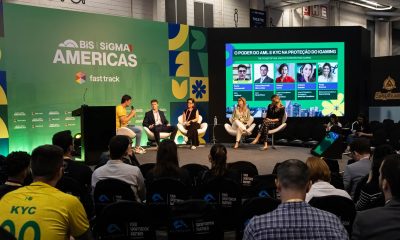
Paneles SiGMA South America concentran debates claves para Brasil
-
affiliate automation7 days ago
ReferOn Shortlisted for “Best Affiliate Software 2026” at SiGMA Awards South America
-
Alea3 days ago
Alea Returns to SiGMA South America as Brazil’s iGaming Market Enters a More Demanding Stage
-
Andrew Humphreys Chief Product Engineering Officer at Bede Gaming3 days ago
OLG Launches Innovative New React Native Mobile App with Bede Gaming
-
ALL FOR ONE Studios3 days ago
Unlock the Sands’ Bounty — Games Global and ALL FOR ONE Studios introduce rewards in Queens of Ra Rising Coin Collect