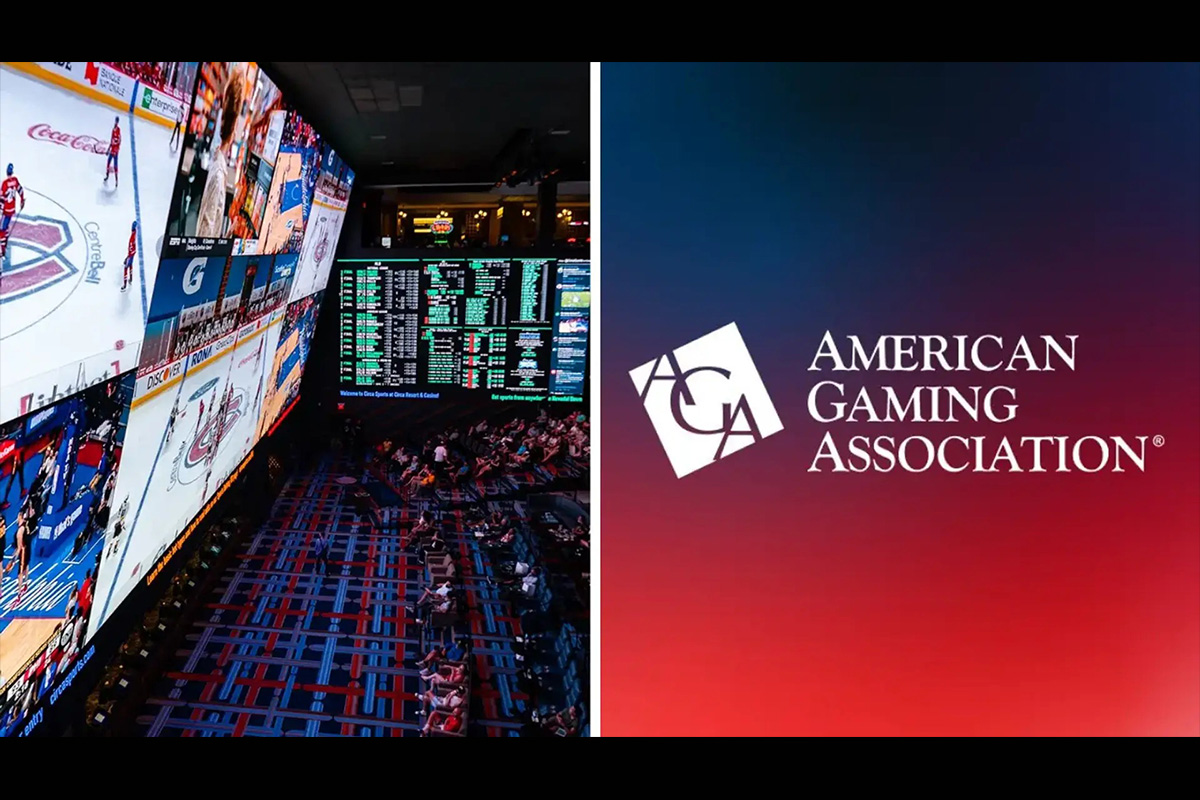
American Gaming Association
Reg-tech – Easing the burden on compliance teams

Greg Ponesse, Chief Revenue Officer at Compliable
The year is coming to an end, and we can look back at an interesting 12 months that have seen the US betting and gaming landscape further expand into three new states, Vermont, North Carolina and Kentucky.
The American Gaming Association (AGA) recently released numbers that showed commercial gaming revenue was boosted in Q2 of 2023, hitting a record of $16.07bn. The impressive results marked the 10th consecutive quarter of growth for the industry.
Yet, some operators have had to navigate through choppy waters, with news stories from the last 18 months including Churchill Downs, MaximBet, PlayUp, Fubo, FOX Bet and WynnBet closing or pulling out of states as they struggle with profitability.
Sports betting, the main legalized vertical in the US, is such a low margin business that the ability to save money anywhere in operations is so important. Competition is extremely high, and the sports betting markets in the majority of legalized states have been dominated by a handful of behemoths such as DraftKings and FanDuel.
While these operators have large compliance teams to cope with the fragmented regulatory landscape that exists across states in the US, smaller to medium-sized companies have fewer resources to handle ever-changing regulations while also preparing for new states opening up.
Historically, if not handled by an internal team of compliance staff, regulatory issues were simply given to outside counsel with their associated high legal fees. Furthermore, overstressed smaller compliance teams leave room for mistakes as a result of human error which can lead to large regulatory fines.
The number of reg tech solutions now available in the gambling space can be hugely beneficial and can drive down costs in a number of ways, with one of the major advantages being that companies can benefit from compliance work that is being done in one market across similar jurisdictions.
Despite a lack of common regulatory approaches in legalized US states, there are still many similar obligations, and with technology, the process to complete these tasks can be automated. Licensing of employees and reporting of revenues or other data are common compliance duties that most regulators require. This type of requirement can easily be handled by technology rather than employees, significantly increasing efficiency, and freeing the team to focus on higher level problems which can be critically important when launching in new jurisdictions.
Simply put, reg tech allows a smaller team to operate with the same skills and efficiency as a much larger team and can help cut costs while still maintaining operational compliance.
Even if fewer US markets are currently opening up compared with a few years ago, successful gambling operators and suppliers are targeting multiple states at a minimum. We have passed the point where any one person can be an expert on every gambling jurisdiction’s requirements and tech is a necessary component to help manage the processes.
As 2024 is approaching, we will see further regulatory developments in the US betting and gaming space and more consolidation cannot be ruled out as operators grapple with being profitable in a hyper competitive sector.
Reg tech can play an important part, cutting costs while streamlining and simplifying processes and procedures, helping operators to succeed in the exciting US market.











The U.S. commercial gaming industry reached a record high in 2025, generating $78.72 billion in gross gaming revenue (GGR), a 9.2% increase over the previous year, according to the American Gaming Association’s (AGA) Commercial Gaming Revenue Tracker. In 2025, legal, state-regulated gaming generated $18.09 billion in gaming tax revenue, supporting state and local education, infrastructure, and other services across the country, up 15.1% over last year.
“For another year, legal commercial gaming in the United States has delivered exceptional results for consumers, operators, and the communities we serve. These record revenues and tax contributions demonstrate the broad appeal of regulated gaming markets and why strong state oversight remains essential as our industry evolves,” said Bill Miller, President and CEO of the American Gaming Association.
Growth Across the Industry in 2025:
• Traditional Gaming generated $50.94 billion in revenue, up 2.3%, while contributing $11.33 billion in taxes, a 7.2% increase.
• Sports Betting revenue rose to $16.96 billion, a 22.8% increase, on a total handle of $166.94 billion (+11.0%). State-regulated sportsbooks generated $3.71 billion in taxes, up 32.4% year-over-year.
• iGaming reached $10.74 billion in revenue (+27.6%) and delivered $2.59 billion in taxes, a 36.9% increase.
All 38 commercial gaming markets saw annual revenue increases in 2025. These figures reinforce strong consumer enthusiasm for legal, regulated gaming and highlight the expanding economic impact of state-regulated markets.
Protecting State- and Tribal-Regulated Gaming
Industry leaders and lawmakers continue to take a stand against prediction markets offering sports contracts outside state and tribal regulatory frameworks. These platforms operate without state oversight, are not subject to the same consumer protection and responsible gaming standards, and do not contribute tax revenue.
Even with a record state-regulated gaming tax impact in 2025, the AGA estimates that prediction markets offering sports event contracts have diverted more than $500 million in potential sports betting tax revenue to date.
“With 2025 marking another record year, the industry’s performance reinforces a clear principle. Sports betting belongs under state and tribal regulation. That’s how consumers are protected and how communities share in the benefits,” added Miller.
The post U.S. Commercial Gaming Revenue Hits $78.7 Billion in 2025 appeared first on Americas iGaming & Sports Betting News.
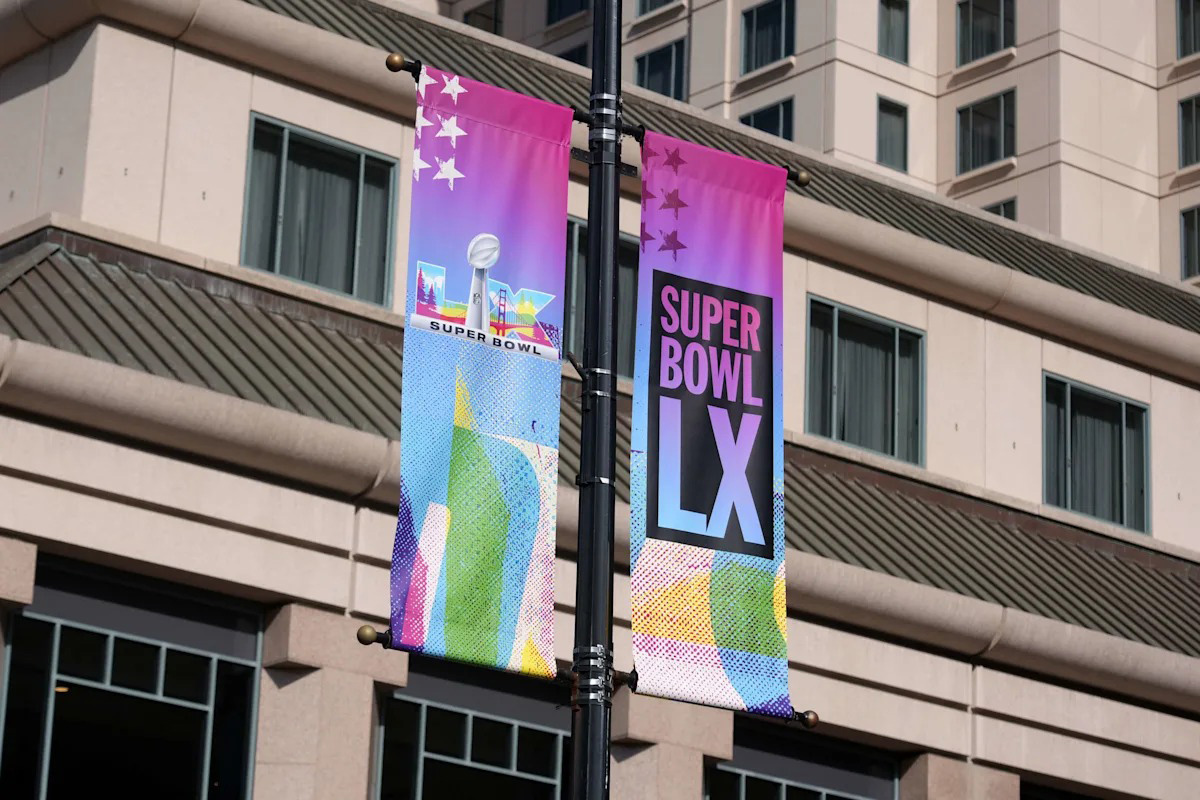
The American Gaming Association (AGA) estimates that Americans will wager a record $1.76 billion legally on Super Bowl LX. This figure reflects the continued growth and strength of the legal, state- and tribal-regulated sports betting market.
“No single event brings fans together like the Super Bowl, and this record figure shows just how much Americans enjoy sports betting as part of the experience. By choosing legal, regulated sportsbooks, fans are having fun while supporting a safe and responsible market,” said Bill Miller, AGA President and CEO.
A new AGA study shows that prediction markets are confusing consumers by promoting sports betting as an investment rather than entertainment, underscoring concerns about how these products are marketed and their lack of responsible gaming tools.
Confusion Around Regulatory Oversight
78% of sports event contract bettors believe state regulators could assist in resolving disputes on their platform, even though prediction markets operate entirely outside state sports betting regulatory frameworks. These findings underscore widespread confusion among sports event contract users on the regulatory oversight governing prediction markets.
Perceptions of Gambling and Investment
Sports event contract bettors are three times more likely than sportsbook bettors to frame their trading as an investment: 28% of sports event contract bettors describe their activity as investing, compared to 9% of sportsbook users.
Additionally:
• 31% of sports event contract bettors report encountering trading or investing comparisons in platform messaging, versus 7% among sportsbook users.
• 25% of sports event contract bettors report funding activity from their investment budget, compared to only 9% of sportsbook users.
• Though more than a quarter of sports event contract bettors believe they are investing, most sports event contract users (58%) still view the activity as gambling, suggesting at least some users distinguish between platform messaging and underlying risk.
Access to Responsible Gaming Tools
Only 28% of sports event contract bettors say responsible gaming tools are easy to find on their platform, compared to 58% of sportsbook users, reflecting substantially lower visibility and accessibility of safeguards on prediction market platforms.
“This research reinforces why state- and tribal-regulated sportsbooks are critical, offering strong oversight and consumer protections that prediction markets simply do not match,” added Miller.
The post Americans to Legally Wager Estimated $1.76 Billion on Super Bowl LX appeared first on Americas iGaming & Sports Betting News.
Below is a joint letter from the American Gaming Association and Indian Gaming Association on addressing unregulated sports event contracts in upcoming cryptocurrency market structure legislation.
Dear Members of the United States Senate and House of Representatives,
On behalf of the American Gaming Association (AGA) and the Indian Gaming Association (IGA), we write to urge timely congressional action to address the explosion of unregulated sports event contracts being offered by prediction markets. Since these contracts, that are indistinguishable from legal sports betting, were launched last January, they have grown exponentially in trading volume and have expanded beyond the outcome of single games to include complex parlays and even potential wagers on the collegiate transfer portal. This growth has occurred by exploiting regulatory inaction by the Commodity Futures Trading Commission (CFTC), which undermines state law and tribal sovereignty and flies in the face of existing federal laws and regulation intended to protect consumers and the integrity of our nation’s financial markets. We firmly believe that congressional consideration of cryptocurrency market structure legislation provides an important, bipartisan opportunity to prevent sports betting and casino gambling under the guise of “event contracts.”
Together, our associations represent the legal regulated gaming industry in the United States that generates $329 billion in annual economic impact, produces $53 billion in tax revenue, and supports 1.8 million jobs. As one of the most highly regulated industries in the United States, licensed gaming operators work with more than 8,400 state and tribal regulators across the country to ensure our industry has transparency, integrity, strict consumer safeguards and responsible gaming practices. It’s a proven framework that ensures local control and protects players and the public while delivering billions of dollars in community benefits.
For decades, we have followed a uniquely American approach to gaming – an approach that has been the foundation of our success. This system gives the people a voice on whether and how to allow gaming, which creates a social contract between states, tribes and our industry: when we earn the privilege to enter your community, we deliver benefits in return.
In 2018, the Supreme Court overturned the Professional and Amateur Sports Protection Act and ruled that states have the right to determine whether to legalize sports betting. Since then, 39 states and the District of Columbia have done so, which in many jurisdictions has included close coordination with tribal authorities. Where sports betting has been legalized, states and tribes have set strict guardrails to ensure strong protections such as:
• Minimum betting ages (21+ in most jurisdictions)
• Licensing and suitability requirements for operators
• Anti-money laundering (AML) and Know Your Customer (KYC) protocols
• Mandatory responsible gaming resources, including self-exclusion programs
• Independent integrity monitoring and compliance audits
In contrast, several CFTC registered prediction market platforms have made self-certified event contracts available to anyone 18 and over, in all 50 states, circumventing state and tribal gaming laws and denying states and tribes hundreds of millions of dollars of critically needed revenue for schools, roads and first responders. The CFTC has not reviewed or approved any of these contracts as more entities enter the market, and their offerings get more audacious.
The CFTC’s own regulations – adopted pursuant to the Commodity Exchange Act (CEA) – prohibit event contracts regarding terrorism, assassination, war, gaming, or an activity that is unlawful under any State or Federal law. According to 39 state Attorneys General, these contracts are contrary to their state laws. They violate the Indian Gaming Regulatory Act (IGRA) that gives tribes exclusivity to offer gaming products on their land. Sports event contracts also violate the federal Wire Act that makes it illegal to offer sports wagers across state lines.
And while the gaming industry has focused our efforts on stopping unregulated sports wagering, we have seen a troubling proliferation of other concerning betting categories that seek to capitalize on tragedy, invite manipulation, and undermine public trust. Most recently, questions and concerns have been raised regarding contracts tied to the capture of Venezuelan President Nicolas Maduro and ongoing armed conflicts abroad – categories that would never be permitted under state or tribal law.
These contracts are being offered in flagrant disregard of state laws, tribal sovereignty, the Commodity Exchange Act, and CFTC regulations. They mislead consumers into believing that a sports bet is an investment, fail to protect the young and the vulnerable, open the door to money laundering, match fixing and insider trading. They rob state budgets and tribal finances while simultaneously forcing states and tribes to expend massive legal resources to defend their sovereignty.
During his confirmation hearing, Chairman Selig made it clear that the CFTC would not rein in sports betting contracts under his leadership, instead deferring to the outcome of litigation that could take years to be fully resolved. However, Mr. Selig also said that the CFTC would follow Congress if they were to step in and speak on these contracts. Therefore, it is critical that Congress act swiftly to include legislative language in the cryptocurrency market structure legislation that reenforces existing law and prohibits gaming through CFTC-registered platforms. We stand ready to work with you on this issue and appreciate your consideration.
Sincerely,
Bill Miller
President & CEO
American Gaming Association
David Z. Bean
Chairman
Indian Gaming Association
The post Joint AGA-IGA Letter Addressing Unregulated Sports Event Contracts appeared first on Americas iGaming & Sports Betting News.

-

 Centurion Winner Grand Chance™6 days ago
New from Inspired: Luck It Up™ and Centurion Winner Grand Chance™ available online & on mobile
-
Blazin' Bonus6 days ago
Booming Games releases Blazin’ Bonus
-
Australasian Hospitality and Gaming Expo6 days ago
IGT Showcases Integrated Gaming, Systems, and FinTech Innovations Designed to Drive Growth at Australasian Hospitality and Gaming Expo 2026
-
Cristiano Blanco CEO of SpinCore Group6 days ago
SpinCore Group Enters Finnish Market via Finnplay Partnership
-
Conferences5 days ago
NOVOMATIC Gaming Colombia to Showcase its Latest Innovations at GAT Cartagena 2026
-
Enjoy6 days ago
ENJOY Unveils Hotfire Diamonds XXL to Elevate an Iconic Franchise
-
Alberta market6 days ago
Soft2Bet Evaluates Alberta Market Entry to Strengthen its Canadian Footprint
-
Aristocrat Gaming6 days ago
Aristocrat Gaming to Participate in Australian Hospitality & Gaming Expo