Latest News
Gambling Investments 101: A Guide for the Modern Investor


The world of gambling is not just about luck and chance. It’s also a lucrative sector for savvy investors who understand the dynamics of this industry. With a global market value of approximately $450 billion in 2022, the gambling and gaming sector is growing at a compound annual growth rate (CAGR) of more than 11%.
By 2030, the value is forecasted to exceed $750 billion. This article will delve into the world of gambling investments, focusing on the opportunities and challenges that gambling investors face.
The Gambling Industry: A Profitable Venture
The gambling industry is a significant contributor to the global economy. In 2021, only around $60 billion was online gambling, but this figure is rising steeply. This sector represents nearly 1% of global gross domestic product (GDP), and it’s estimated that 26% of the world’s population are gamblers.
Even in regions where gambling for real money is subject to tight regulation, the industry thrives. For instance, in China, where it is illegal to place a bet, the gaming industry is worth around $70 billion.
Investing in Gambling: The Opportunities
Investing in the gambling sector can be a profitable venture, but it requires a keen understanding of the industry’s dynamics. Here are some opportunities that gambling investors can explore:
Emerging Markets
Emerging markets offer compelling opportunities for gambling investors. These markets are experiencing rapid growth in the gambling and gaming sector, driven by increasing internet penetration and the growing middle class. Investors can tap into this growth by investing in companies that operate in these markets.
Online Gambling
The rise of online gambling presents a significant opportunity for investors. As more people gain access to the internet, the online gambling market is set to expand. Investors can invest in online gambling platforms or companies that provide technology and services to these platforms.
Diversification
Investing in the gambling sector can provide diversification benefits. The performance of gambling stocks is often not correlated with the broader market, making them a good addition to a diversified portfolio.
The Challenges of Investing in Online Gambling
While the gambling sector offers attractive investment opportunities, it also comes with its share of challenges. These include regulatory risks, as governments around the world have different rules and regulations regarding gambling. Additionally, the sector is highly competitive, with numerous companies vying for a share of the market.
Social and Ethical Considerations
Investing in the gambling industry also involves social and ethical considerations. Some people are opposed to gambling due to moral or religious reasons. Additionally, problem gambling is a serious issue that can lead to financial difficulties and mental health problems.
As an investor, you may choose to invest in companies that promote responsible gambling. These companies implement measures to prevent underage gambling and provide support to individuals who may have a gambling problem.
Gambling Stocks: A Closer Look
Investing in the gambling industry often means investing in gambling stocks. These are shares of companies that operate casinos, manufacture gaming equipment, or provide online gambling services. Here’s a closer look at what you need to know about gambling stocks.
Blue-Chip Gambling Stocks
Blue-chip gambling stocks are shares of large, well-established, and financially sound companies with a history of reliable performance. These companies often have a national or international presence and are leaders in the industry. Investing in blue-chip gambling stocks can provide stability and steady returns.
Growth Gambling Stocks
Growth gambling stocks are shares of companies that are expected to grow at an above-average rate compared to other companies in the market. These are often companies that are innovating or expanding into new markets. While growth gambling stocks can offer high returns, they can also be riskier than blue-chip stocks.
Dividend Gambling Stocks
Some gambling companies pay dividends to their shareholders. These dividends can provide a steady income stream, making these stocks attractive to income-focused investors. However, not all gambling companies pay dividends, and those that do may not always be able to maintain their dividend payments.
Evaluating Gambling Stocks
When evaluating gambling stocks, consider factors such as the company’s earnings growth, financial stability, and position within the industry. Also, consider the regulatory environment in which the company operates, as this can significantly impact the company’s performance.
As always, diversification is key – consider a mix of blue-chip, growth, and dividend stocks to balance potential returns with risk.
The Role of Technology in Gambling Investments
Technology plays a significant role in the gambling industry, shaping how games are played and bets are placed. The advent of online gambling platforms has revolutionized the industry, making gambling more accessible to a wider audience. As a result, companies that provide innovative technological solutions to the gambling industry can be attractive investment opportunities.
Mobile Gambling
The proliferation of smartphones has led to the rise of mobile gambling. More people are now placing bets and playing games on their mobile devices. Companies that offer mobile gambling platforms or develop mobile gambling apps can be good investment prospects.
Blockchain and Cryptocurrencies
Blockchain technology and cryptocurrencies are increasingly being used in the gambling industry. They offer benefits such as transparency, security, and faster transactions. Companies that integrate blockchain technology into their operations or accept cryptocurrencies as a form of payment could offer potential investment opportunities.
Tips for Gambling Investors
If you’ve weighed both pros and cons of gambling investing and decided to take the dip, here are some tips for those considering investing in the gambling sector:
Understand the industry: Before investing, take time to understand the industry, including the different types of gambling activities and the major players in the sector.
Consider regulatory risks: Be aware of the regulatory environment in the countries where the companies you invest in operate. Changes in regulations can have a significant impact on these companies’ profitability.
Diversify your investments: Don’t put all your eggs in one basket. Diversify your investments across different companies and sectors to reduce risk.
Monitor industry trends: Keep an eye on industry trends, such as the growth of online gambling and the emergence of new markets. These trends can present new investment opportunities.
The Future of Gambling Investments
The future of gambling investments looks promising, with several trends likely to drive growth in the sector. These include the continued growth of online and mobile gambling, the integration of blockchain technology, and the expansion of the industry into new markets.
However, the industry also faces challenges, such as regulatory uncertainties and social and ethical issues. Therefore, it’s crucial for investors to stay informed about industry trends and developments, and to consider the potential risks and rewards before making an investment decision.
In conclusion, the gambling sector offers attractive investment opportunities, but it requires a deep understanding of the industry and careful consideration of the associated risks. As with all investments, it’s crucial to do your research and consult with a financial advisor before making any investment decisions.











For years, responsible gaming meant telling players to stop, but the industry is slowly learning that’s not enough. WinSpirit’s new partnership with The Digital Wellness Center takes a different angle. Instead of warnings, players get short mental breaks built into their sessions. These small pauses are designed to help users stay in control without killing the fun.
The Digital Wellness Center works at the crossroads of technology and mental health. They build tools that reduce mental overload and help people deal with digital products mindfully. Their approach is notably free of judgment, lecturing, and restrictions, just practical support that fits into how people actually behave online.
How It Works
Instead of restricting players, WinSpirit introduces mild wellness prompts. When a player has been active for a long period, they receive a short, friendly email. Not a warning, but just a reminder. It invites them to visit a dedicated page built by The Digital Wellness Center.
That page features a droodle, which is a quirky, abstract picture with no right or wrong answer. A droodle asks one question: what do you see? There’s no timer, no score, no right answer, but a brief cognitive shift, pulling the brain out of autopilot and into a different mode of thinking. Simple by design, effective by the same logic.
The idea is not to pull players away from the game, but rather to help them come back to it in a better, less impulsive state of mind. Most responsible gaming tools are built around one idea: less is more. Play less, spend less, log off sooner. WinSpirit is working from a different premise: that the mental state of the player is what affects the decisions. Short, intentional breaks are designed to come back calmer, more in control, and less reactive. It’s not about limiting the player. It’s about managing the moment.
Initiative Highlights
The partnership rolls out over two months in structured communication waves, reaching players at the moments that matter most: long streaks and high-frequency play, when the risk of impulsive decisions is the highest. From there, players are guided to co-branded wellness landing pages meant for slowing down without switching off.
The tools themselves are intentionally light. Doodle activities shift the brain into slower thinking, quick self-check surveys, and light mental reset games. The kind of break you might actually take.
Early Results
Early results from the first outreach wave point to real interest. Players opened the emails, clicked through to wellness content, and completed the self-checks. Some users returned for a second interaction without being prompted. The response reflects less a surprise and more a gap finally being addressed.
That readiness connects to a broader shift in how WinSpirit operates. The platform’s AI-powered support already processes more than half of its 50,000+ monthly player requests, with part of its function used to detect behavioral patterns before they develop into problems. The wellness partnership extends that logic further — from reactive support to something closer to prevention.
Industry Recognition
The approach is starting to get noticed beyond the platform itself. When Casino Guru put WinSpirit forward for Rising Star in Responsible Gambling, it reflected something bigger than one platform’s initiative. It is an early signal that the industry is beginning to recognize a shift from compliance-driven messaging to well-being built into the product. This isn’t a niche experiment but a direction the broader market is moving toward.
For WinSpirit, this partnership is not a one-off. It is part of a wider message that responsible gaming and fun can work together. When you genuinely care for a player’s state of mind, that is good product design. Supporting player well-being ultimately improves trust and long-term engagement.
The goal was never to play less. It was always to play better. A player who feels cared for trusts the platform, and that’s what the industry has mostly been missing.
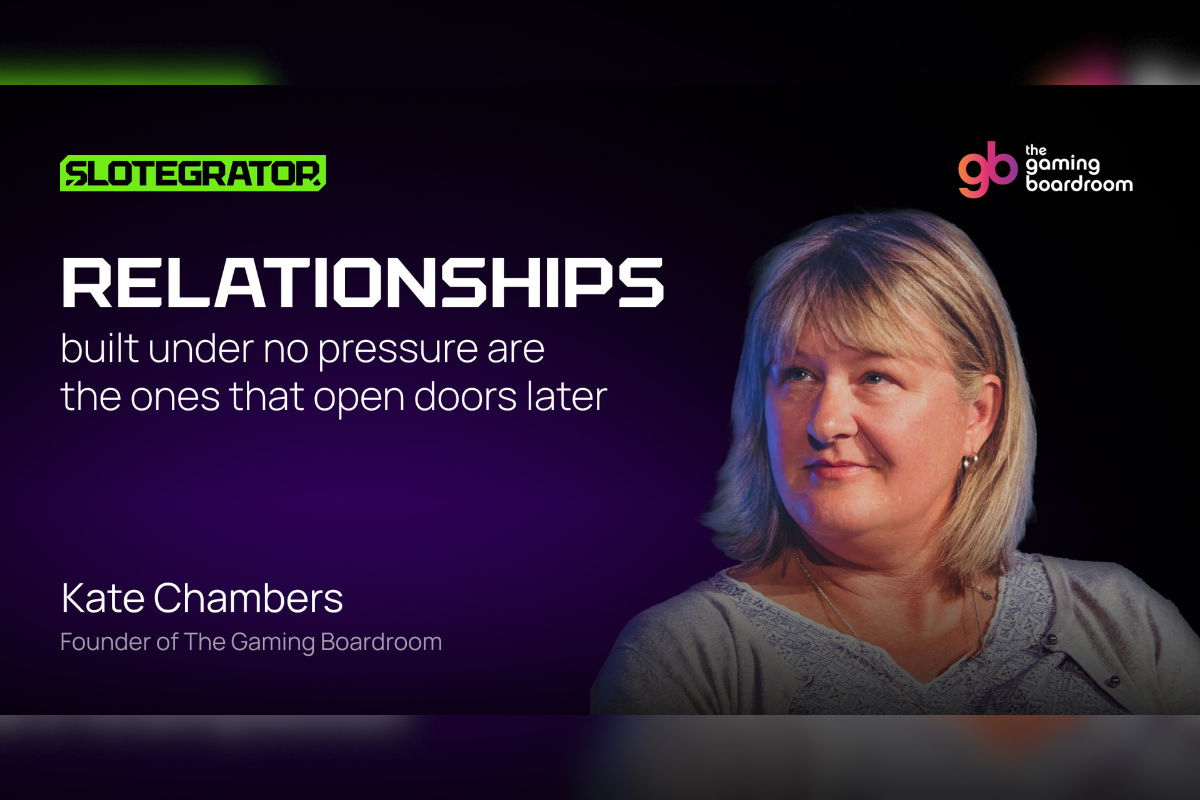
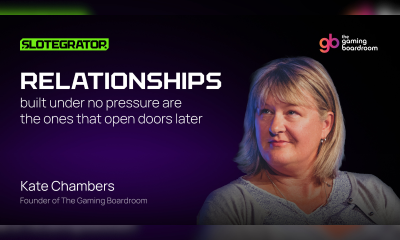
Today’s iGaming leaders must contend with a vast amount of data, analysis, and industry news while making swift, informed strategic decisions. Kate Chambers, Founder of The Gaming Boardroom and former Director at Clarion Gaming, has been helping industry leaders navigate this complexity for years. Slotegrator spoke with her about bridging the gap between analysis and decision-making, leveraging the power of AI, and why building the right relationships is just as important as having the right tools.
Kate Chambers’ decades of leadership, including building ICE into one of the most influential iGaming events, reflect her emphasis on practical value. “The biggest lesson for me was that people don’t come for content; they come for confidence. Whether it’s a conference or a professional platform, what people are really looking for is the feeling that they understand what’s happening, they know what to do next, and they won’t be caught off guard,” she explains.
Kate highlights that AI is quietly changing the industry — not through flashy features for customers, but by making robust operations more efficient. She says, “The operators who are benefiting most are those using AI to reduce the cognitive load on their teams.” AI tools that filter, summarise, and flag what matters are changing how decisions are made, from compliance monitoring to gathering market intelligence.
Kate also emphasizes that technology alone isn’t enough. According to her, the business relationships and professional networks remain critical: “The most powerful combination right now is sustained digital presence, being visible where operators go when they need answers, plus selective, high-quality in-person moments. Neither alone is enough,” she notes.
Looking ahead, Kate identifies key trends shaping iGaming: increasing regulatory complexity, more proactive approaches to responsible gambling, and a growing need for leaders who can help their teams navigate change without losing strategic focus.
Read the full interview to learn from Kate Chambers’ experience and perspectives on cutting through noise, leading with confidence, and executing strategy in a rapidly changing iGaming industry.
Get in touch with Slotegrator to learn practical ways to accelerate your growth.
ABOUT THE COMPANY
Since 2012, Slotegrator has been one of the iGaming industry’s leading software and business solution providers for online casino and sportsbook operators.
The company’s main focus is software development and support for online casino platforms, as well as the integration of game content and payment systems.
The company works with licensed game developers and offers a vast portfolio of casino content: slots, live casino games, poker, virtual sports, table games, lotteries, casual games, and data feeds for betting.
Slotegrator also provides consulting services in gambling license acquisition and business incorporation.


Catalist Sports, a licensed supplier of sports betting content to the regulated U.S. market, has strengthened its North American presence with newly secured supplier licenses in Arkansas and Nebraska, alongside fresh applications submitted in Ontario and Alberta, Canada.
Arkansas is expected to see significant growth in its regulated sports betting market, with major operators such as DraftKings and FanDuel set to enter in March 2026. Alongside this, Catalist Sports has also successfully obtained a supplier license in Nebraska, further extending its reach across key U.S. jurisdictions.
Following its recent approval in Missouri—the latest state to regulate online gambling—Catalist Sports is now licensed in 30 U.S. jurisdictions, with Canadian expansion expected to follow pending approvals.
These developments reinforce the company’s commitment to delivering compliant, high-quality betting content and services across regulated markets in both the U.S. and Canada.
“Securing licenses in new jurisdictions and strengthening our regulatory position is essential to supporting our operator partners,” said James Monk, Vice President and General Manager of Catalist Sports. “Arkansas represents an exciting opportunity, particularly as major brands prepare to enter the market. Combined with our Nebraska license and Canadian applications, we are well positioned to deliver scalable, compliant, and differentiated services.”
Catalist Sports’ continued expansion supports its broader strategy of providing operators with premium data, live streaming, and advanced trading capabilities, helping to drive in-play engagement, product innovation, and long-term growth.
The company distributes official data and live streaming rights from a wide portfolio of events to licensed U.S. sportsbooks, including leading tennis competitions such as the Australian Open, ITF World Tour, Davis Cup, and Billie Jean King Cup, alongside coverage across soccer, basketball, and ice hockey to power year-round betting engagement.
The post CATALIST SPORTS SECURES NEW SUPPLIER LICENSES IN ARKANSAS AND NEBRASKA appeared first on Eastern European Gaming | Global iGaming & Tech Intelligence Hub.

-

 Betnacional6 days ago
Operational Leadership and the Driving Force Behind LatAm’s Largest Event
-
Australia6 days ago
NSW: More Than 650 Gaming Machine Exemptions Revoked to Address Gambling Harm
-
2026 SPiCE South Asia Awards6 days ago
QTech Games wins Innovation of the Year at the 2026 SPiCE South Asia Awards
-
Compliance Updates6 days ago
UK Government proposals to undermine the ‘aim to permit’ of the Gambling Act 2005?
-
BIS SIGMA SOUTH AMERICA 20265 days ago
VeliTech makes its Brazil debut at BiS SiGMA South America 2026
-
AMUSEBOX5 days ago
Casino Iveria Tbilisi Installs Amusnet’s Type S 50 F Slot Cabinets at its Gaming Floor
-
Austria5 days ago
Wazdan strengthens European foothold with Austrian market entry via win2day
-
Canada5 days ago
Peter & Sons Goes Live in Ontario with Ellipse Entertainment