eSports
National Video Games Day: Indian Esports evolving from a pastime hobby to eyeing Asian Games medal for the country

Since its modest beginnings in the 1950s, when basic games and simulations were played on minicomputers and mainframes, the video game industry has undergone tremendous growth. Today, the Indian Esports industry flourishes as a multi-billion-dollar sector, thanks to advancements in high-speed internet, improved technology, the increasing popularity of gaming among the younger generation, and official recognition as a multi-sport event from the government of India.
According to the recent “Windows of Opportunity” report on India’s Media and Entertainment industry by FICCI-EY, the number of Esports players across all competitive level games in India increased from 600,000 in 2021 to 1 million in 2022, and is expected to reach 2.5 million in 2023.
From winning the bronze in Hearthstone at the 2018 Asian Games to clinching bronze in DOTA 2 at the inaugural Commonwealth Games in Birmingham last year, the prowess of Indian Esports has been highlighted multiple times in major international tournaments.
Now, India is not only sending its first-ever female contingent in CS:GO at the World Esports Championships but is also set to participate in the upcoming Asian Games 2022 where Esports is debuting as an official medal sport. As per the FICCI-EY report, the number of international Esports teams in India grew from 6 in 2021 to 7 in 2022 and is expected to rise to 10 in 2023.
Mr. Lokesh Suji, Director of Esports Federation of India (ESFI) & Vice President of the Asian Esports Federation (AESF) is confident that by supporting and nurturing the Esports ecosystem, India will continue to make its mark on the global Esports stage. “What started with competitive gaming that was only visible in college fests or local tournaments in the late 2000s is now a Rs 250-crore industry. While we have witnessed significant growth and improvement in recent years, winning medals at prestigious events has demonstrated our potential to compete at the highest level and is a testament to the rise of India as a video-gaming powerhouse,” he says.
The rise of gamers and gaming content creators in the country has transformed the entertainment landscape. Many gamers have built large fan bases and have become influential figures within the gaming community through live streaming, video content creation, and social media platforms.
Recognizing the potential of these content creators, brands have started to forge partnerships with them through brand deals and sponsorships which has not only opened up new revenue streams for creators but has also contributed to the entry of non-endemic brands in the sector. This is further supported by the findings of the FICCI-EY report, which states that the number of brands investing in Esports rose from 72 in 2021 to 80 in 2022, and it is projected to reach 100 by 2023.
Animesh Agarwal better known as Thug, Founder, and CEO of 8bit Creatives and S8ul esports says, “In recent years, the perception of gaming has undergone a remarkable shift, with individuals and brands both recognizing its immense potential as a lucrative revenue stream. At 8Bit Creatives, our creators have successfully curated numerous campaigns with brands from diverse sectors. This allows me to assert that both endemic and non-endemic brands are actively seeking ways to engage with gamers today.“
The recent return of the game as Battlegrounds Mobile India (BGMI) has revitalized the Esports community and is expected to accelerate the growth of competitive gaming. According to the estimates from app intelligence firm Sensor Tower, the game clocked about $33 million in in-app spending from July 2021 to July 2022 and also made history by becoming the first Esports event to be broadcasted on mainstream television (Star Sports).
ParvSingh aka soul_regaltos is a professional gamer as well as gaming content creator with over 2.3 million subscribers on YouTube. Speaking on the importance of BGMI he says, “BGMI has played a pivotal role in contributing to the rise of in-game spending within the Indian gaming community. By also causing an upsurge of Esports tournaments in the country, the game has attracted brands through numerous lucrative mediums such as in-game advertisement, sponsorships, and content creation opportunities. It has single-handedly elevated the competitive landscape, giving emerging players the opportunity to showcase their skill and become stars within the community.”
The evolution of Esports in India has been further accelerated by the emergence of new technology and platforms catering specifically to the gaming community. New-age technology such as Web3, AR and VR, gesture-controlled gaming as well as exclusive gamers’ social network platforms are all enabling a technological revolution to radically transform the Esports industry in India.
Qlan, an exclusive social networking app designed for gamers and esports enthusiasts, recently secured pre-seed funding to fuel its expansion and enhance gamer networking, discovery, and content creation capabilities. Sagar Nair, Co-founder, and CEO of Qlan commented, “The burgeoning global Esports industry is witnessing an influx of technologies poised to revolutionize the sector. Our own app QLAN has successfully been able to elevate gamers’ social networking to new horizons and empower the ever-expanding community of gamers. We firmly believe that India will adopt further next-gen tech in video gaming to not only relish its immersive experience but to change how gaming is perceived in the coming years, allowing the industry to scale bigger heights.”
All in all, the video game industry in India has experienced remarkable growth, diversification, and recognition. It has become a significant cultural and economic force, offering entertainment, job opportunities, and a platform for creative expression.








Adam Conway General Manager of the Esports Business Unit at BETER
BETER strengthens eFootball roster with rollout of 4,200 monthly events ahead of 2026 World Cup

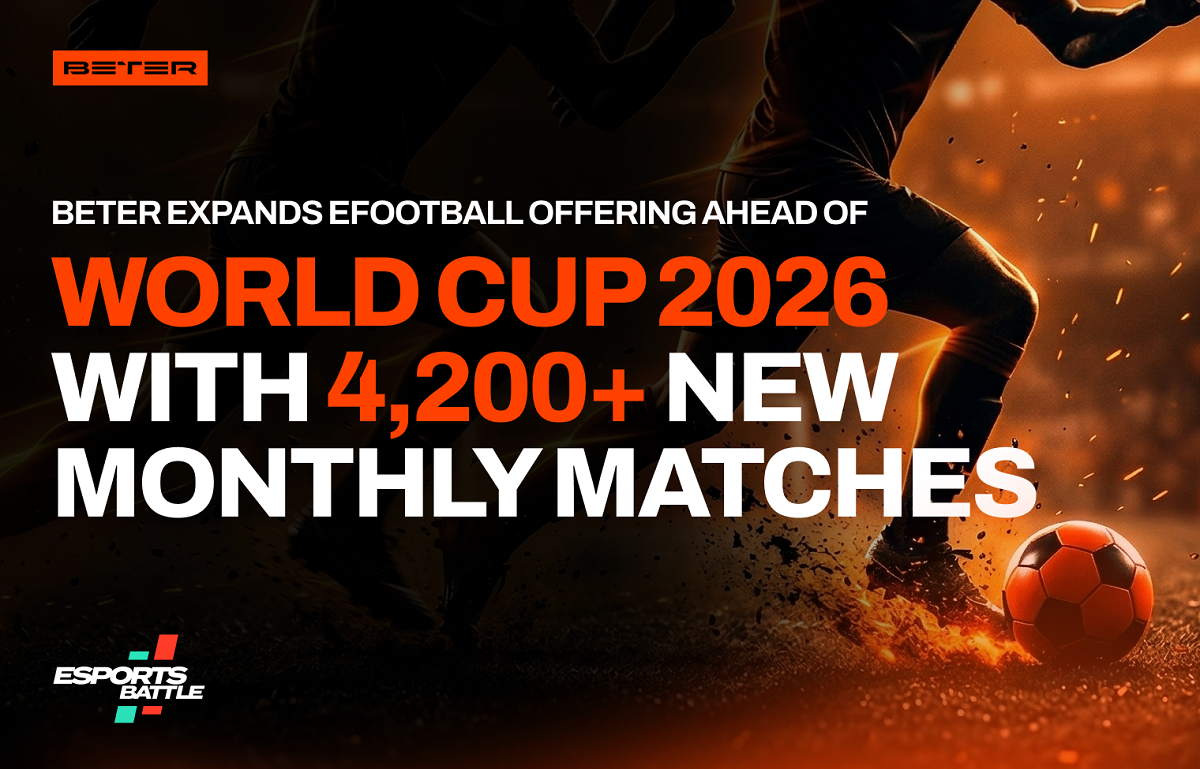
With the excitement of FIFA World Cup 2026 approaching, BETER is assisting operators in providing continuous bettor interaction by adding over 4,200 new eFootball matches monthly.
BETER, the recognized supplier of quick-betting content, live streams, real-time data, and odds for esports and sports, has broadened its eFootball portfolio with new specialized tournaments designed for World Cup 2026, providing over 4,200 events each month to assist operators in maintaining bettor engagement throughout the day, even during lulls and match intervals.
The launch features matches inspired by the World Cup, plus extra events scheduled around peak betting times to maintain bettor interest before, during, and after the World Cup 2026 games, providing operators with expanded eFootball coverage leading up to one of the largest events in the international sports schedule.
The updated material improves BETER’s extensive, dynamic eFootball framework, providing operators with more options to maintain bettor engagement around the clock.
Tournaments tailored to U.S. betting hours, delivering over 4,200 monthly matches
BETER added 140+ daily matches designed to suit U.S. bettors and maintain engagement throughout the day.
All of these matches are delivered in the 2×4 format and are scheduled daily (UTC+2) as follows:
01:00–03:00 — Premier League
03:10–05:10 — World Cup B
05:30–07:30 — Conference League
16:10–18:10 — Serie A
18:20–20:20 — World Cup B
20:40–22:40 — Europa League
22:50–00:50 — LaLiga
This new content addition is focused on supporting operator performance ahead of and during World Cup 2026 by maintaining betting activity across relevant time slots for U.S. audiences and helping fill downtime between major football fixtures.
World Cup–inspired tournaments, delivering over 3,600 monthly matches (within the 4,200+ expansion)
As part of this content boost, BETER is rolling out three dedicated World Cup–themed eFootball leagues. These form a major part of the expansion and mirror the excitement, structure, and national-team focus of the tournament, delivering 120+ matches per day and featuring teams such as the United States, the Netherlands, Norway, Mexico, Morocco, France, England, Portugal, Argentina, Spain, and more canonical world best teams.
The schedule includes the following (UTC+2):
World Cup A: 12:00–14:00 and 01:20–02:20 (2×4 format)
World Cup B: 18:20–20:20 and 03:10–05:10 (2×4 format)
Volta World Cup: 00:10–01:40 and 07:00–08:30 (2×3 format)
These World Cup–inspired eFootball matches reflect the build-up to the tournament and help operators drive bettor engagement ahead of kick-off.
With this rollout, which is already available with the majority of BETER’s partners, the supplier now delivers over 40,000 esports matches each month, further strengthening its position as one of the industry’s most in-demand providers of fast-paced content.
BETER exclusively delivers nearly 500,000 esports events annually through its exclusive ESportsBattle tournaments, which include eFootball, eBasketball, eHockey, and eTennis, offering up to 50 markets per match and an average operator margin of 7.5%+, exceeding the market standard.
Adam Conway, General Manager of the Esports Business Unit at BETER, said: “World Cup 2026 is the pinnacle of football excitement, and it presents an incredible opportunity for operators to keep fans and bettors engaged around the clock. Our expanded eFootball offering is designed to capture that energy, with content built to mirror the drama, intensity, and rivalries of the tournament.
“By combining dedicated World Cup–inspired competitions with strategically timed matches during key betting hours, we’re helping operators fill downtime, bridge match gaps, and keep bettors active before, during, and after every fixture.
“With over 40,000 fast-paced esports matches delivered every month, BETER now offers one of the largest and most dynamic content portfolios in the industry, bringing the thrill of the World Cup straight to every screen.”
The post BETER strengthens eFootball roster with rollout of 4,200 monthly events ahead of 2026 World Cup appeared first on Eastern European Gaming | Global iGaming & Tech Intelligence Hub.
eSports
Esports Nations Cup 2026 Awards Official Partner Status Across 100+ Nations to Build the Future of Nation-Based Esports
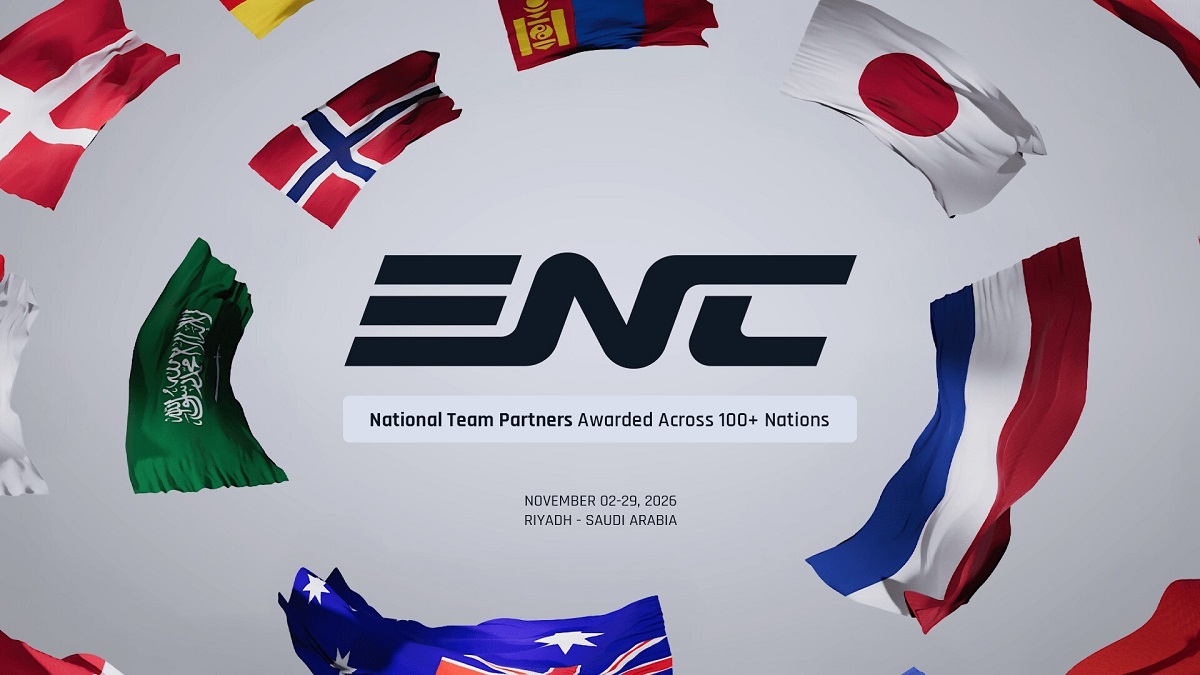
The Esports Foundation (EF) awarded National Team Partner status to organisations and individuals across more than 100 countries and territories for the Esports Nations Cup 2026 (ENC), the global nation-based esports competition set to debut in Riyadh from November 2-29, 2026.
This marks the first time esports introduces a structured global system for national teams at scale, adding a new layer to the industry’s ecosystem alongside club-based competition. Designed to complement existing frameworks rather than replace them, the ENC will work with local stakeholders closest to the sport to strengthen connections and support long-term national development.
National Team Partners will lead team formation, mobilize local communities and establish the structures needed to enable participation and the growth of esports. To ensure worldwide participation, countries and territories without a partner will be supported through regional structures provided by the EF.
The EF received more than 630 applications from 150 countries and territories, reflecting the global interest in and opportunity for nation-based esports. The partners represent legacy esports organisations that have shaped their national scenes for decades alongside emerging forces driving the next wave of competitive gaming. The list of organisations and individuals who have been awarded this status is available on the ENC website and will be updated as additional appointments are confirmed.
‘The Esports Nations Cup introduces something esports has never had before: a global system for national teams at an unprecedented scale. The response we received from across the world shows that communities are ready for this next step. Together with our partners, we are building the structures that will allow players to represent their nations and compete on the biggest stage in esports. With more than 100 nations now part of the system, the Esports Nations Cup moves from concept to reality, establishing national esports as a lasting part of the global competitive landscape,” said Ralf Reichert, CEO of the Esports Foundation.
Recognising that esports has developed differently in many nations, the ENC adopts a partnership-led approach rather than relying on a single model, marking a first in global sport and esports alike. By working with recognised local stakeholders, whether institutions, Clubs or community-led organisations, this model is designed to unlock the full creative and competitive potential of each nation.
National Team Partners will operate through a range of structures, from established national bodies such as the Korea Esports Association and the Saudi Esports Federation, to club-led coalitions in Brazil and the US, and hybrid public-private alliances in countries like Germany, Canada and the UAE.
In markets such as Malaysia, Turkey and Thailand, partners include federations working closely with grassroots communities, while in emerging regions like Indonesia and Mongolia, partners are being supported through structured development to represent their nations on a global stage.
For the first time in the history of esports, national teams will be formed from these local structures, bringing players together to compete for their nation and unlocking a new dimension of fandom built on identity and pride. From South Korea’s legendary League of Legends dominance and India’s Chess affinity, to Brazil’s Counter-Strike tradition, Japan’s fighting games heritage and Southeast Asia’s mobile games’ powerhouses, the ENC creates a new global stage for competition.
The post Esports Nations Cup 2026 Awards Official Partner Status Across 100+ Nations to Build the Future of Nation-Based Esports appeared first on Eastern European Gaming | Global iGaming & Tech Intelligence Hub.
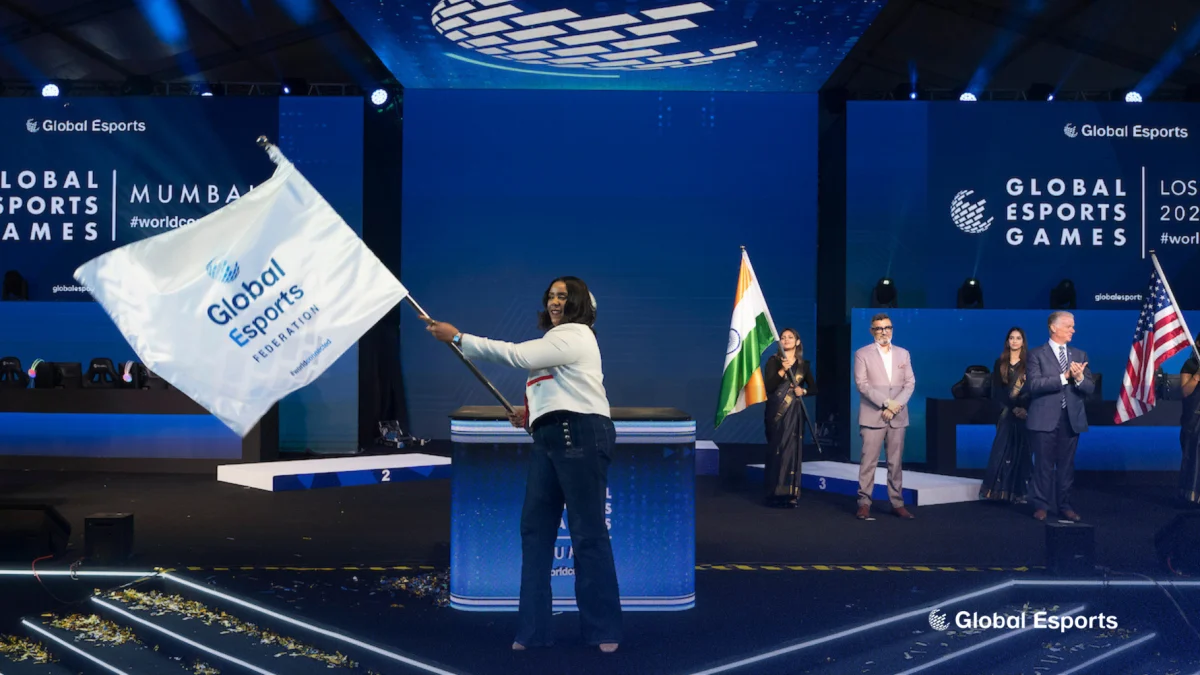
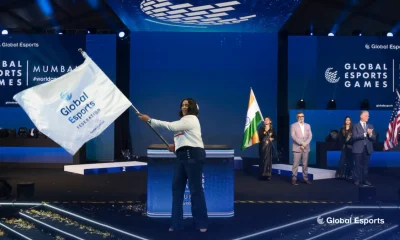
Team India and Türkiye won Gold at the Global Esports Games Mumbai, delivering electrifying performances in front of a packed arena and thousands more tuning in online worldwide. India’s Anuhith Gosala edged Kazakhstan 3–2 in a thrilling Clash Royale Grand Final, while Türkiye secured a commanding 3–1 victory over Mongolia in the Dota 2 Grand Final. With a Gold in Clash Royale and a Bronze in Dota 2, Team India was crowned Overall Champion.
India stormed into the Clash Royale Grand Final with a 2–1 win over the USA in a tense lower bracket decider, setting up a rematch with Kazakhstan. Having fallen 0–2 in the upper bracket, India turned the tables when it mattered most, as Anuhith Gosala delivered a clutch performance to seal a dramatic 3–2 victory and the Gold medal.
In Dota 2, Team India secured Bronze after falling to Mongolia in the lower bracket. Mongolia advanced to the Grand Final, where Türkiye asserted its dominance with a composed 3–1 victory to take the title.
Sharing his thoughts on the victory, Team India’s Clash Royale gold medallist, Anuhith Gosala, said: “This moment is surreal. To win the Grand Finals here in India, in front of a home crowd, makes it even more emotional. The preparation was relentless, the pressure was intense, and every match tested my limits—but that’s what makes this victory so special. Hearing the cheers, feeling that energy, and lifting this title for the country is an indescribable pride. This is for India, and for everyone who believes in us. I hope this win inspires many others to follow in our path.”
Sir Paul J. Foster, President & CEO, Global Esports Federation, said: “As the Global Esports Games Mumbai comes to a close, we celebrate not only the incredible performances of our athletes, but the spirit of unity and connection that defines our global community. Mumbai has delivered exceptional energy, passion, and hospitality, reinforcing our belief that esports transcends borders and brings the world together. We are deeply grateful to our partners in India for setting a new benchmark for excellence—and we now look ahead with excitement to Los Angeles, where this journey continues on an even greater stage.”
Shripad Ashtekar, Founder of Eflag Corp, said: “Over the past few days, we have witnessed not just world-class competition, but the coming together of talent, innovation, and community on a truly global stage. We hope to keep delivering such platforms and strong foundations for future growth by unlocking new opportunities for Indian players, creators, and the broader AVGC ecosystem. We are proud to have played a key role and look forward to building on this momentum in the years ahead.”
Organized by the Global Esports Federation in partnership with Eflag Corp, with the support of Maharashtra Tourism, the Global Esports Games Mumbai was inaugurated by the Hon’ble Chief Minister of Maharashtra, Shri Devendra Fadnavis. Over four days, Mumbai welcomed 48 elite athletes from 19 countries, emerging from a global field of 78 nations in the Regional Qualifiers.
The post Team India and Türkiye Win Gold at the Global Esports Games Mumbai appeared first on Eastern European Gaming | Global iGaming & Tech Intelligence Hub.

-

 bingo6 days ago
 -
apuestas7 days ago
Brasil 2026: Bets presionan el presupuesto de los hogares y redefinen la competencia por el consumo
-
Compliance Updates6 days ago
EGBA Urges EC to Tackle Rising Online Fraud in Gambling Sector
-
Betnacional7 days ago
Brazil: Betting pressures household budgets and reshapes the competition for consumer spending
-
Endorphina7 days ago
NAZAR WISHES AWAIT YOUR COMMAND
-
Greentube6 days ago
Greentube hauls in big wins with Rumble Riches™ Haulin’ Gold™
-
DEGEN Studios6 days ago
DEGEN Studios ignites a brutal blood feud with Vendetta Fury
-
Bonus Rush5 days ago
RAW iGaming launches BONUS RUSH® – a new family of feature-focused games