Canada
Why Nova Scotia Won’t Ban Problem Gamblers from Casinos


The Nova Scotia government won’t ban problem gamblers from going to the province’s casinos. The decision was announced on Monday, following an online survey in which the government asked Nova Scotians if it should ban people who don’t want to gamble from casinos and slot facilities. The government says 86 per cent of the 3,000 people who responded said no; 15 per cent said yes and one per cent didn’t know or refused to answer.
However, Health Minister Leo Glavine also said that, if a problem gambler has gambling problems, the matter should be dealt with through the justice system or addiction services.
A brief history of gambling in Canada
Gambling has been a part of Canadian culture for centuries, with many Canadians taking part in different forms of gambling including lotteries and casinos. However, as gambling becomes more accessible, an increasing number of Canadians are developing gambling problems. This led to the introduction of Bill C-290, which proposed stricter regulations on the industry to protect problem gamblers. The bill was passed unanimously by Parliament but was never fully implemented due to a lack of funding.
Gambling in Nova Scotia
Nova Scotia has long been known as the center of gambling in Canada and is home to over 1,000 slot machines. A recent push from anti-gambling groups to ban problem gamblers from entering casinos was dismissed by Premier Stephen McNeil as they believe it would be a violation of their freedom. In place of this, they have created a voluntary exclusion program that would allow people who are struggling with gambling addiction to voluntarily exclude themselves from casinos. Many online casinos that legally operate in Nova Scotia also welcome any one willing to bet.
Gambling addiction facts
Problem gambling is a serious and persistent public health problem. About 1-3% of the population has a gambling addiction, which means there are about 250,000 people in Canada who need help. It’s estimated that about 10% of the population gambles at any one time, but this doesn’t mean they’re all addicted to it.
Gambling disorder is considered an impulse control disorder like other impulse control disorders such as obsessive-compulsive disorder (OCD) and pathological gambling. Gambling disorder can be difficult to diagnose because gamblers may not be aware they have a problem until their life is impacted negatively by their behavior.
In general, provinces regulate casinos, but municipalities can create bylaws that prohibit or restrict casino development on their territory.
The connection between problem gamblers and casinos
Problem gamblers can be defined as people who spend an excessive amount of money on gambling or individuals who have trouble controlling their gambling behavior. There are many different factors that contribute to the development of a problem gambler, but it is often believed that spending time in a casino increases the risk for developing these behaviors.
Casinos are designed to make gambling more enticing by providing a variety of options and rewarding players with freebies. The layout of casinos contributes to this too – they are laid out so that slot machines and table games surround the player, which makes it difficult for them to leave without passing by even more gambling opportunities. The tendency of casinos to offer customers easy access to everything they want at any hour also encourages longer play sessions and worsens gambling addiction.
How can we solve this problem?
Nova Scotia should consider introducing a self-exclusion program that would allow people to voluntarily ban themselves from casinos. This would make sense because casinos are the only place problem gamblers can legally gamble. They also offer other forms of entertainment such as live music, movies, and restaurants.
Self-exclusion programs have proven effective in other countries with gambling addiction issues, so this could be a good way to stop problem gambling while allowing those who don’t have an issue to enjoy themselves.
Problem gamblers and online casino
Problem gamblers are no different than alcoholics or drug addicts, but the stigma around gambling addiction is much less. These people need help and support just like any other addict would. Banning them from casinos doesn’t mean they won’t continue to gamble; it just means they will do it in private and without help.
The government needs to focus on prevention and rehabilitation for this issue, not punishment. The focus should be on those who suffer from a gambling addiction rather than those who don’t. We know there’s going to be more at-risk populations if we don’t offer some sort of service, said Smith. If you’re doing harm reduction, then let’s look at those folks first.
In summary
Nova Scotia’s gambling regulator, the Alcohol and Gaming Authority of Nova Scotia (AGANS), has said that it will not ban problem gamblers from casinos. The decision comes after a recent report by the provincial government found that an estimated 11% of casino patrons are problem gamblers, up from 7% five years ago.
There is no evidence that banning these people from casinos would reduce their gaming activity. Rather than banning them, AGANS has chosen to implement a self-exclusion program where problem gamblers can voluntarily sign themselves out.
A self-exclusion program has been in place at the Casino Nova Scotia since 2006.
Powered by WPeMatico

Brooke Hilton Head of Casino at PointsBet Canada
Ezugi and PointsBet join forces to bring expanded live gaming to Ontario

Ezugi is excited to unveil a new collaboration with PointsBet, a leading iGaming operator in Canada.
As a division of Evolution since 2018, Ezugi keeps enhancing its foothold in the live gaming sector. This partnership will see Ezugi’s localized and unique live-dealer games incorporated into PointsBet’s online casino in Ontario through Evolution’s One Stop Shop (OSS) platform.
Established in Australia in 2015 and later branching into North America, PointsBet has quickly emerged as one of Ontario’s most rapidly expanding iGaming companies. Known for its cutting-edge sportsbook and growing casino offerings, PointsBet is committed to delivering an outstanding player experience, prioritizing Responsible Gaming to create a safe and secure space for every user.
Through this partnership, PointsBet Ontario customers will access Ezugi’s innovative live casino offerings, which include popular games like Canada Blackjack, EZ Baccarat, and Ultimate Roulette. These titles effortlessly integrate reliable, real-time live gaming with engaging digital elements that greatly attract North American players.
Brooke Hilton, Head of Casino at PointsBet Canada, said: “We’re excited to partner with Ezugi to bring their innovative live-dealer games to our Ontario players. This integration via Evolution’s platform enhances our casino offerings with dynamic, localised titles like Canada Blackjack and Ultimate Roulette, ensuring a premium, responsible gaming experience that aligns with our commitment to player safety and enjoyment.”
James Smith, Commercial Strategy Manager at Ezugi, said: “We are thrilled to team up with PointsBet in Ontario. We recognise Ontario as a key growth region and this partnership with a top tier operator marks an important step in our mission to bring Ezugi’s unique & exciting live casino content to the forefront for players in North America.”
The post Ezugi and PointsBet join forces to bring expanded live gaming to Ontario appeared first on Americas iGaming & Sports Betting News.

Building on the momentum of its successful market entry, Fennica Gaming announced the expansion of its partnership with Loto-Québec by launching also its portfolio of eInstant games. This second phase follows the recent successful launch of Fennica Gaming’s online casino games, making its full suite of innovative online games available to players on Loto-Québec’s digital platform, the only legal online gaming offer in the province of Québec.
The launch of the eInstant portfolio completes the initial offering, delivering a diverse and engaging gaming experience designed with Fennica Gaming’s signature player-first approach. The move solidifies Fennica Gaming’s commitment to the Canadian market and its strategy of building long-term, sustainable partnerships with regulated lotteries and operators.
“Launching our casino games was the first step; following it up swiftly with our eInstants is about delivering on our promise. Our partnership with Loto-Québec is built on shared values of responsibility and providing engaging, high-quality entertainment. This isn’t just a content drop; it’s a commitment to our partner’s long-term success and to bringing fresh, reliable gaming experiences to the players in Québec,” said Joni Hovi, SVP of Customers and Marketing at Fennica Gaming.
“Our eInstants are designed with a Nordic innovativeness; they are intuitive, visually engaging, and extremely entertaining – built for sustainable fun. We’ve added the best of mobile gaming expertise, seasoned it with a high-quality, player-centric experience. We are confident that this creative energy offers a distinct flavour that will stand out and connect with players in Québec,” said Kirsi Lagus, SVP of Portfolio and Product Development.
The post Fennica Gaming Expands its Partnership with Loto-Québec by Launching eInstant Games appeared first on Americas iGaming & Sports Betting News.

Amanda Brewer becomes Senior Vice President of Policy & Communications and Brandon Aboultaif becomes Vice President of Western Canada; Salim Adatia (GLI) and Mike Maodus (Blake, Cassels & Graydon LLP) join the CGA Board as Scott Vanderwel (PointsBet Canada) is appointed Chair.
Amanda Brewer has joined the Canadian Gaming Association (CGA) as Senior Vice President of Policy and Communications, and Brandon Aboultaif has assumed the position of Vice President for Western Canada.
Amanda has served as a consultant to the Association for over 15 years, playing a pivotal role in achieving numerous CGA milestones. “I am confident she will apply her enthusiasm and expertise to this new position, which more precisely aligns with her ongoing contributions on behalf of our members,” said Paul Burns, President and CEO, CGA. Amanda remains actively engaged in AML and advertising bill initiatives in Ottawa, along with the Alberta consultation process, where the Association is collaborating with the Government of Alberta and AGLC to prepare the province for its iGaming market launch.
Brandon is the former Press Secretary to Dale Nally, Minister of Service Alberta and Red Tape Reduction and will be a great addition to the CGA. “With the Alberta market soon opening, it has been an important goal to expand our presence into the western part of the country,” added Mr. Burns. His key responsibilities include advancing industry research and education initiatives, supporting member engagement across Western Canada, and fostering collaboration on responsible gaming, innovation, and market development initiatives that strengthen Canada’s gaming ecosystem.
In addition, Salim Adatia, Managing Director, Canada for Gaming Laboratories International, LLC, and Mike Maodus, Partner, Blake, Cassels & Graydon LLP, have joined the CGA’s Board of Directors, and Scott Vanderwel, CEO for PointsBet Canada, becomes the Association’s new Chair.
The full 2026 board is as follows:
- Salim Adatia, Gaming Laboratories International, LLC
- Bruce Caughill, Rush Street Interactive
- Peter Czegeldy, Aird & Berlis LLP
- Neil Erlick, Nuvei
- Kurt Gissane, Aristocrat
- Charmaine Hogan, Playtech
- Dale Hooper, FanDuel
- Chuck Keeling, Great Canadian Entertainment
- Mike Maodus, Blake, Cassels & Graydon LLP
- Terry McInally, Gateway Entertainment
- Niaz Nejad, Non-Member Director
- Derek Ramm, Kinectify
- Lindsay Slader, GeoComply
- Richard Taylor, Niagara Casinos
- Shane Thompson, Konami
- Scott Vanderwel, PointsBet Canada (Chair)
- Scott Woodgate, BetMGM
We are also pleased to welcome three past chairs as Emeritus members of the board:
- Ilkim Hincer, IC360
- Carrie Kormos, CK Consulting Inc
- Bob Parente, Light & Wonder
“Amanda and Brandon have joined the CGA as full-time members to oversee several important national campaigns,” stated Scott Vanderwel, Chair of the Board. “We are also pleased to welcome Salim and Mike to the Board. The Board has worked closely with Paul over recent years to advance the Association’s leadership and board structure. We have full confidence in Amanda and Brandon as they step into these key roles, as well as in the valuable contributions that Salim and Mike are expected to bring as we prepare for an active 2026 workload.”
Mr. Burns stated that the newly announced executive and Board appointments will strengthen CGA’s position and support its expansion into Western Canada. “Amanda brings extensive CGA experience, while Brandon contributes knowledge of government policy at both federal and provincial levels. Coupled with our enhanced Board, I am confident they will help drive CGA’s objectives and ongoing growth.”
Source: canadiangaming.ca
The post CGA Announces Leadership Evolution and 2026 Board of Directors appeared first on Americas iGaming & Sports Betting News.

-

 AI5 days ago
Primero Games Uses XGENIA for Their First AI-Generated Slot Game
-
Baltic Tech Week5 days ago
HIPTHER Baltics Announces Riga Event and Strategic Partnership with LexLegas
-
Balkans5 days ago
Kiril Kirilov takes on new leadership role at CT Interactive
-
ALGS 2026 Championship5 days ago
S8UL Esports secures historic top five finish at ALGS 2026 Championship; bags INR 1 crore in prize money
-
Compliance Updates5 days ago
SEON Launches Identity Verification Built on Real-Time Fraud Intelligence
-
College Sport Prediction Markets5 days ago
NCAA Urges CFTC to Suspend College Sport Prediction Markets
-
EMEA ESPORTS4 days ago
MOVEMBER TEAMS UP WITH RIOT GAMES EMEA ESPORTS
-
Latest News5 days ago
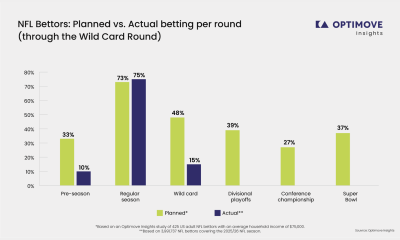
Optimove Insight Analysis of NFL 2025-2026 Planned v. Actual NFL Wagering Intentions Through the Wild Card Round