BetMGM
At $300 Million, This is Expected to be California’s Most Expensive Ballot Fight Ever. And it Just Got More Intense

In a sign of the bruising, expensive fight to come, two Native American tribes are coming out in support of a newly qualified ballot measure to allow online sports gambling — instead of a separate gaming measure backed by dozens of other tribes.
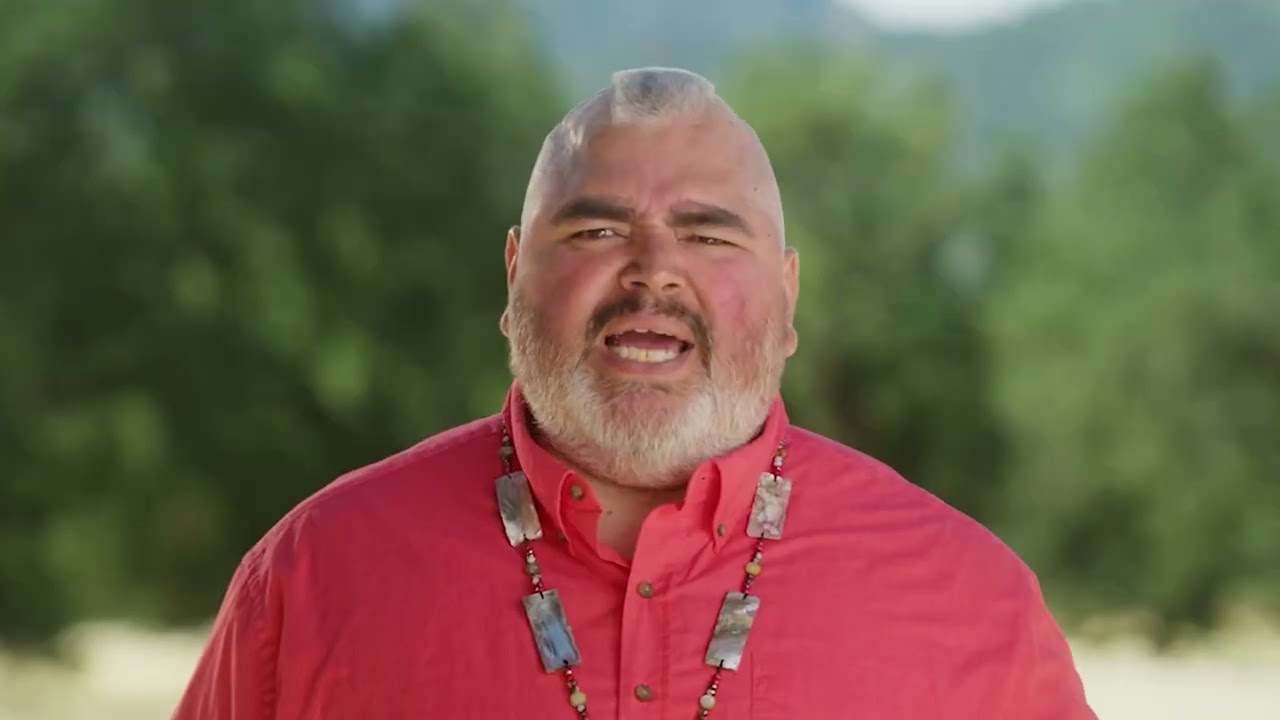
On Wednesday, two tribes — the Middletown Rancheria of Pomo Indians and the Big Valley Rancheria Band of Pomo Indians — will announce their support for the online gaming measure that proponents call the Californians for Solutions to Homelessness and Mental Health Support Act.
Backed by commercial operators including FanDuel, DraftKings, and BetMGM, the measure would legalize online sports betting in California, with 85% of the revenue going toward housing for the homeless and mental health services. The rest would go to the Indian tribes that will be partnering with major gaming operators in running the operation.
On Tuesday, Secretary of State Shirley Weber announced that the measure had gathered enough valid petition signatures to be eligible for the ballot in November. A report from the state’s nonpartisan Legislative Analyst’s Office said new tax revenue from the proposal “could reach the mid-hundreds of millions of dollars annually.”
“We’re supporting the Solutions Act because it gives us an opportunity to protect our sovereignty and also create opportunities for economic wealth for the next seven generations for our tribe,” Jose “Moke” Simon, chair of the Middletown Rancheria of Pomo Indians, said.
“It also helps the state of California deal with some of the biggest problems that it has here, that is affecting every community, which is homelessness and mental health issues,” said Simon, who stars in a new online ad for the proposal.
It is a sign that what’s expected to be California’s most expensive ballot measure battle ever is heating up. Analysts have predicted that more than $300 million could be spent between the warring parties. That’s far more than the $224 million spent by both sides over 2020’s Proposition 22, which asked voters to decide whether app-based transportation and delivery drivers should be classified as independent contractors.
Both sides believe that the jackpot that awaits is worth it: California’s estimated sports gaming market is estimated to be around $3 billion. At least.
A proposal supporters call the Tribal Sports Wagering Act, which is backed by dozens of Native American tribes, already qualified to go before voters in November. It would allow only in-person sports betting to occur only at tribal casinos and qualified horse racetracks. Proponents say they have secured the endorsement of roughly one-third of California’s 109 Native tribes.
Kathy Fairbanks, a spokesperson for the Tribal Act, said that measure represents a more responsible approach.
“It’s allows sports betting to patrons over 21 and older. You have to be there in person, show your ID, people can look you in the eye and make sure that you match the ID in front of you,” Fairbanks said.
The decision for voters, said industry analyst Brandt Iden, is “retail-only sports betting versus mobile.”
“That’s what this is going to come down to do for consumers,” said Iden, a former Republican Michigan state representative who is now head of government affairs at Sportradar, a sports technology company that provides data and content to the betting industry. “Do I need to walk into a sports book to place a wager, or can I do it from a mobile device anywhere in the state?”
Proponents of the online-only measure touted Wednesday’s endorsement from two smaller tribes as a sign that all of California’s Native tribes aren’t fully on board with the in-person-only measure.
Simon, from the Middletown Rancheria of Pomo Indians, which operates the Twin Pine Casino and Hotel in Middletown (Lake County), said the online proposal helps smaller tribes that are far from major population centers. If sports betting were confined to only in-person betting at tribal casinos and racetracks, casinos like the one his tribe operates wouldn’t see much uptick in foot traffic.
“We are looking to obviously move into e-commerce, and this gives us an opportunity to do that,” said Simon, who is also a Lake County supervisor.
But Fairbanks, who represents the in-person proposal, discounted the impact of a few tribes supporting the online proposal, noting that more than 60 tribes oppose it.
“The vast, vast majority are opposed to the (online) measure, and we will make sure that voters are aware of that,” Fairbanks said.
Iden, of Sportradar, said it “isn’t surprising” that some smaller tribes are partnering with the commercial operators. He has seen that happen in other states, including Michigan, where he served. The California online gaming proposal requires a commercial operator to be paired with a Native tribe to be able to enter the market.
Iden said that sort of partnership model has been used in other states “where commercial operators enter the market through a tribal brick-and-mortar operation. Traditionally, smaller tribes really benefit from that because of the money that’s involved.”
The larger question will be whether Californians — particularly the younger generation of digital natives who grew up doing many of life’s activities online — will support a measure that would force them to travel to a casino or racetrack to legally bet on a sporting event.
“That is a huge challenge because everything is really online these days,” said Geoff Zochodne, who covers the gaming industry for Covers, an online site. “That’s where the customer is increasingly located for all businesses.”
Fairbanks didn’t dismiss the tribes pursuing online gaming in the future but said that the current online measure isn’t the way to go “at this point in time.”
“Maybe technology will change. But right now, there’s no 100% foolproof way to ensure that kids under 21 aren’t gambling,” she said.
Iden said the real challenge will be for voters, who will see a blizzard of competing ads. Some ads opposing the online-only proposal have been running for weeks online and on TV — even before the measure officially qualified for the ballot.
“The real question becomes how much confusion is created by these two initiatives,” Iden said. “If you’ve got lengthy ballot proposals that you have to sit there and read, you sort of question whether or not people just get confused and they vote no on both.”
Powered by WPeMatico

BetMGM
BetMGM and the Cavinder Twins to Debut “The Court of Legends” at Bellagio in Las Vegas for College Basketball Championship

BetMGM, a leading sports betting and iGaming operator, will team up with Haley and Hanna Cavinder — former Division I basketball players and prominent social media influencers — to unveil The Court of Legends, a first–of–its–kind, speakeasy–style basketball experience, April 4-6 at Bellagio in Las Vegas during the final weekend of March Matchups.
Hidden within the resort, the Court of Legends will feature an immersive, custom-built court serving as the hub for BetMGM’s March basketball celebrations. Throughout the weekend, the venue will host exclusive events and influencer-driven basketball exhibitions, all building toward a Cavinder vs. Cavinder skills showdown on Sunday, April 5. The twins will go head-to–head in custom competitions, with the event live streamed on X, YouTube and the BetMGM app, giving fans a front-row seat to the action.
“BetMGM is committed to creating legendary experiences for our players that go beyond the game, and the Court of Legends will be our most ambitious idea yet. We’re creating something epic that blends basketball, entertainment and the unmistakable energy of Las Vegas. With their rare ability to connect with fans on and off the court, Haley and Hanna are the perfect partners to bring this concept to life,” said Casey Hurbis, Chief Marketing Officer at BetMGM.
The Cavinder twins said in a joint statement: “We’ve played on a lot of courts over the years, but nothing like the Court of Legends. BetMGM is bringing together VIPs, creators, and all the vibes in one place, and we’re excited to step on that floor, compete, and have fun.”
The post BetMGM and the Cavinder Twins to Debut “The Court of Legends” at Bellagio in Las Vegas for College Basketball Championship appeared first on Americas iGaming & Sports Betting News.
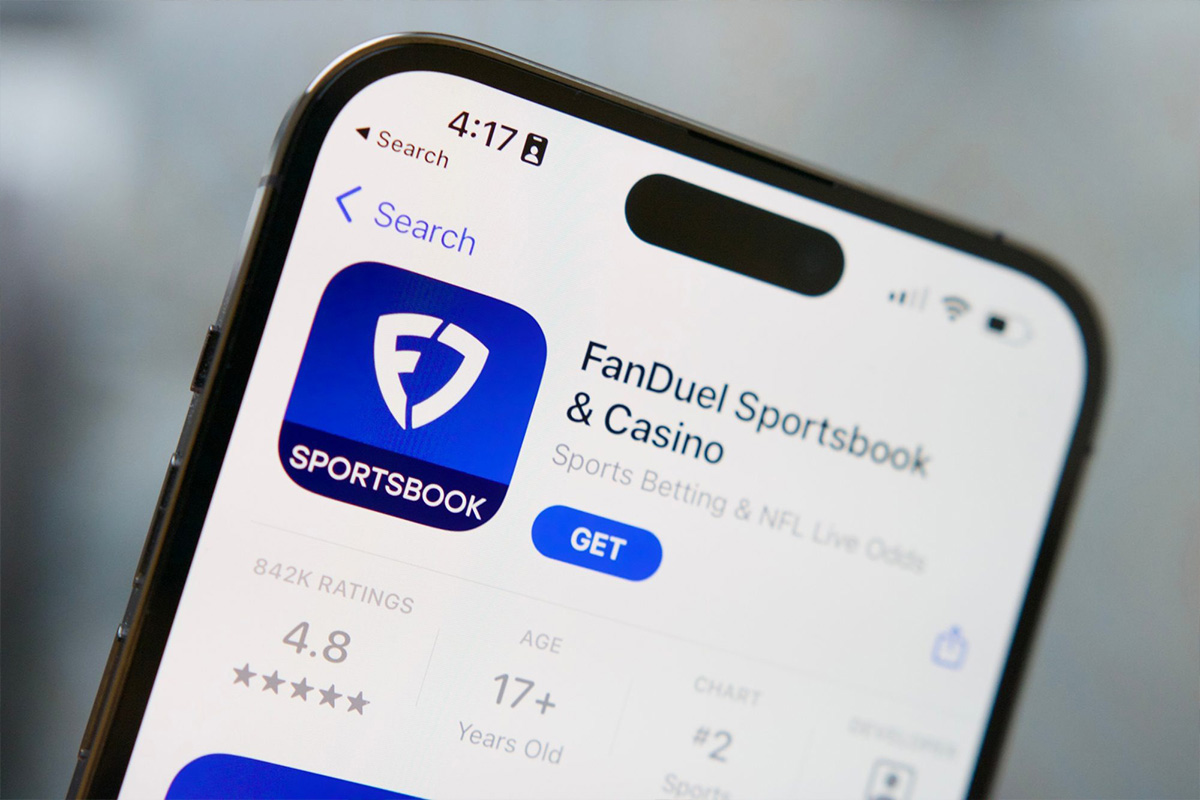
FanDuel Sportsbook will no longer accept deposits by credit cards beginning March 2, the same step DraftKings Sportsbook took in August.
FanDuel issued a statement saying this decision has been in the works.
“Over the last few months, FanDuel has been evaluating the payment methods that we offer to customers and made the decision to remove credit cards as an option for our Sportsbook, casino and racing product in the United States. This change was made to improve the deposit experience for our customers,” the sportsbook said.
Many sports bettors don’t use credit cards because they are responsible for the fees.
U.S. Sen. Elizabeth Warren of Massachusetts applauded FanDuel’s actions.
“Last week, I asked sports betting companies about Americans getting scammed by credit card companies when placing sports bets – to the tune of a $10 junk fee just to fund a $20 bet,” Warren posted on social media.
“Glad to see Fanduel take action to protect consumers from these junk fees, joining DraftKings. The rest of the industry should follow suit.”
Two notable sportsbooks with nationwide locations, BetMGM and Caesars, accept credit cards.
FanDuel also announced Jan. 22 a program called “Play with a Plan” to encourage responsible wagering. Bettors are able to track their account activity, set spending limits and establish deposit notifications.
The post FanDuel to Eliminate Credit Card Deposits Starting March 2 appeared first on Americas iGaming & Sports Betting News.

Evoplay is celebrating another milestone in its regulated-market journey with a new launch in Ontario, teaming up with BetMGM to bring its games to one of Canada’s most dynamic and competitive jurisdictions.
The rollout introduces 18 Evoplay titles to BetMGM Casino in Ontario, carefully selected to deliver long-term engagement and appeal to a wide range of player preferences. The first wave includes proven performers such as:
• Hot Triple Sevens
• Hot Volcano
• Gold of Sirens Bonus Buy
• Inner Fire Bonus Buy.
These are games that have already demonstrated strong results across multiple regulated markets.
This launch marks another confident step in Evoplay’s Canadian expansion, reinforcing the company’s commitment to aligning its content with local market requirements, player expectations, and regulatory standards.
Alex Malchenko, Head of Sales at Evoplay, said: Ontario continues to set a high standard for regulated online casinos, making it a market where the right partnerships truly matter. Collaborating with BetMGM allows us to expand our reach with a portfolio that has already performed strongly across multiple areas and territories.
Oliver Bartlett, VP of Gaming at BetMGM, said: “Partnering with Evoplay adds a strong selection of proven, high-performing titles to our growing portfolio in Ontario.”
The post Evoplay Strengthens Canadian Presence with BetMGM Partnership appeared first on Americas iGaming & Sports Betting News.

-

 Amusnet6 days ago
Week 7/2026 slot games releases
-
Brino Games6 days ago
QTech Games integrates more creative content from Brino Games
-
Aphrodite’s Kiss6 days ago
Love on the Reels: Slotland Introduces “Aphrodite’s Kiss”
-
Alex Malchenko6 days ago
Evoplay Strengthens Canadian Presence with BetMGM Partnership
-
3 Oaks Gaming6 days ago
3 Oaks Gaming Enters Spanish Market
-
Latest News6 days ago
Red Papaya Presents: Lucky Rainbow Rush Adventure
-
AMLA6 days ago
AMLA Launches Public Consultation on Three Draft Regulatory Acts
-
3 Oaks Gaming6 days ago
3 Oaks Gaming Secures Registration from MINCETUR to Enter the Regulated Peruvian Market