Latest News
Aspire Global’s Year-End Report 2019 – Another Year of Strong Growth

FOURTH QUARTER 2019 (OCT-DEC)
• Revenues decreased by 2.0% to €32.2 million (32.9).
• B2B revenues increased by 10.0% to €21.2 million (19.3), constituting 66.0% of total revenues.
• EBITDA decreased by 33.6% to €4.4 million (6.6).
• EBITDA for B2B decreased by 21.0% to €3.4 million (4.4), constituting 78.8% of total EBITDA.
• The EBITDA margin amounted to 13.5% (20.0%)
• EBIT amounted to €3.1 million (6.0).
• Earnings after tax amounted to €-12.1 million (4.6), impacted by the tax settlement of €13.7 million related to the fiscal years 2008–2018.
• Earnings per share after tax amounted to €-0.26 (0.10) including, and €0.03 (0.10) excluding, a one-off tax item.
• First time depositors in thousands (FTDs) decreased by 14.6% to 105.6 thousand (123.7).
FULL YEAR 2019 (JAN-DEC)
• Revenues increased by 26.0% to €131.4 million (104.6).
• B2B revenues increased by 43.4% to €81.1 million (56.6), constituting 62.0% of total revenues.
• EBITDA increased by 2.4% to €21.7 million (21.2).
• EBITDA for B2B increased by 29.0% to €15.9 million (12.4), constituting 73.4% of total EBITDA.
• The EBITDA margin amounted to 16.5% (20.3%)
• EBIT amounted to €17.7 million (19.3).
• Earnings after tax amounted to €0.4 million (16.2), impacted by the tax settlement of €13.7 million related to the fiscal years 2008–2018.
• Earnings per share after tax amounted to €0.01 (0.36) including, and €0.31 (0.36) excluding, a one-off tax item.
• First time depositors in thousands (FTDs) increased by 20.0% to 444.5 thousand (370.4).
• The Board proposes the AGM that no dividend is paid out for 2019 following the tax settlement and the continued search for M&A opportunities. The long-term dividend target of 50% of net profit remains.
SIGNIFICANT EVENTS DURING AND AFTER THE FOURTH QUARTER
• October 7th, Aspire Global finalized the acquisition of the leading game aggregator platform Pariplay for €13.3 million in cash, according to the initial conditions. With the acquisition Aspire Global has gained control of yet another crucial part of the iGaming value chain – creating synergies, broadening the game portfolio and providing a channel to distribute propriety games outside the partner network. The transaction had a positive effect on the company’s EBITDA already in Q4 2019.
• Aspire Global appealed against the lawsuit made by the Swedish Consumer Agency (“KO”) in October claiming that the company violated the marketing provisions of the Gaming- and Marketing acts.
• November 1st 2019, Aspire Global announced the coming entering into the regulated US market as Pariplay signed an agreement for New Jersey with longstanding partner 888casino.
• December 31st 2019, Aspire Global reached an agreement for a settlement with the Israeli Tax Authority in the previously disclosed tax audit.
STATEMENT FROM THE CEO
I am pleased to conclude that we have delivered another year of strong growth, despite changes in the market environment. Revenues increased by 26% to €131.4 million with an EBITDA margin of 16.5%, in line with our financial targets. We have proven that our strategy is efficient, and we have a solid foundation to continue to expand our business through organic growth and M&A.
We had a somewhat disappointing last quarter of the year due to new regulatory requirements in regulated markets, such as the UK, as well as markets to become regulated. Compliance is top on our agenda and we swiftly adapt to new regulatory requirements, knowing that our longer-term benefits are larger than the short-term impact. Our settlement with the Israeli tax authorities had a significant impact on net income and EPS in the quarter. Nonetheless, I am satisfied with the settlement as it provides the market with clarity around the outcome of the audit. The additional tax charge of €13.7 million is reported as a one-off tax item.

Growth for Pariplay in 2020
One of the highlights in the quarter is the successful integration of Pariplay where we already have realized some of the synergies. Pariplay contributed to revenues and EBITDA in the quarter with €3 million and €0.5 million respectively. The acquisition will create further cost synergies, strengthen our market presence in B2B, serve as our first footprint in the US and generate revenue streams outside our existing partners on our platform. The technical integration is completed, and we are happy to have all main third-party suppliers on board from the start. During the fourth quarter, Pariplay signed two new operator deals. We expect Pariplay to generate significant growth in 2020 with a positive effect on the Group’s EBITDA.
Material organic growth in 2019
In 2019 we continued to deliver on our growth strategy and accelerated the number of partners and brands as well as strengthened our offering. In the quarter, three new partnerships were signed, and seven new B2B-brands were launched. By year-end, we had 77 B2B-brands and 44 partners operating on our platform, which is a material increase from 2018. The B2B-segment grew by 43.4% in 2019, constituting 62.0% of Group revenues, while growth for B2C was around 5% following weaker performance due to new regulatory requirements, although partially compensated by other markets.
We see great interest in our recent verticals sports and bingo and several partners are looking to broaden their offering. Four B2B-brands are currently offering sportsbook and three launches are soon to come. Bingo is live with one B2B-brand and three launches are near, including Karamba.
Competitive advantages in the regulated landscape
We have given clear proof of our ability to grow with good profitability in regulated markets. In 2019, more than 50% of our revenues came from regulated and taxed markets. We welcome the trend where more markets become regulated. We believe it benefits companies like ours, with a sustainable growth strategy rather than a more opportunistic approach and we consider it to be a business opportunity. We will continue to strengthen our market position in the regulated landscape by expanding in the value chain. It grants us a unique, competitive advantage as current and future partners wish to enhance their potential in any jurisdiction. Thus, we continue the active search for acquisition opportunities and new projects across various parts of the value chain, in Europe as well as other parts of the world. We are confident in our integration skills and we have the financial strength to execute on our M&A-strategy.
Continued sustainable profitable growth
Our broad market presence and product offering give us a solid foundation for sustainable profitable growth. We will continue to enhance our multi-vertical offering while maintaining the search for M&A-opportunities, supported by our strong balance sheet. We are confident in our ability to meet our financial targets for 2021, €200 million in revenues and €32 million in EBITDA.
Tsachi Maimon, CEO Aspire Global





Latest News
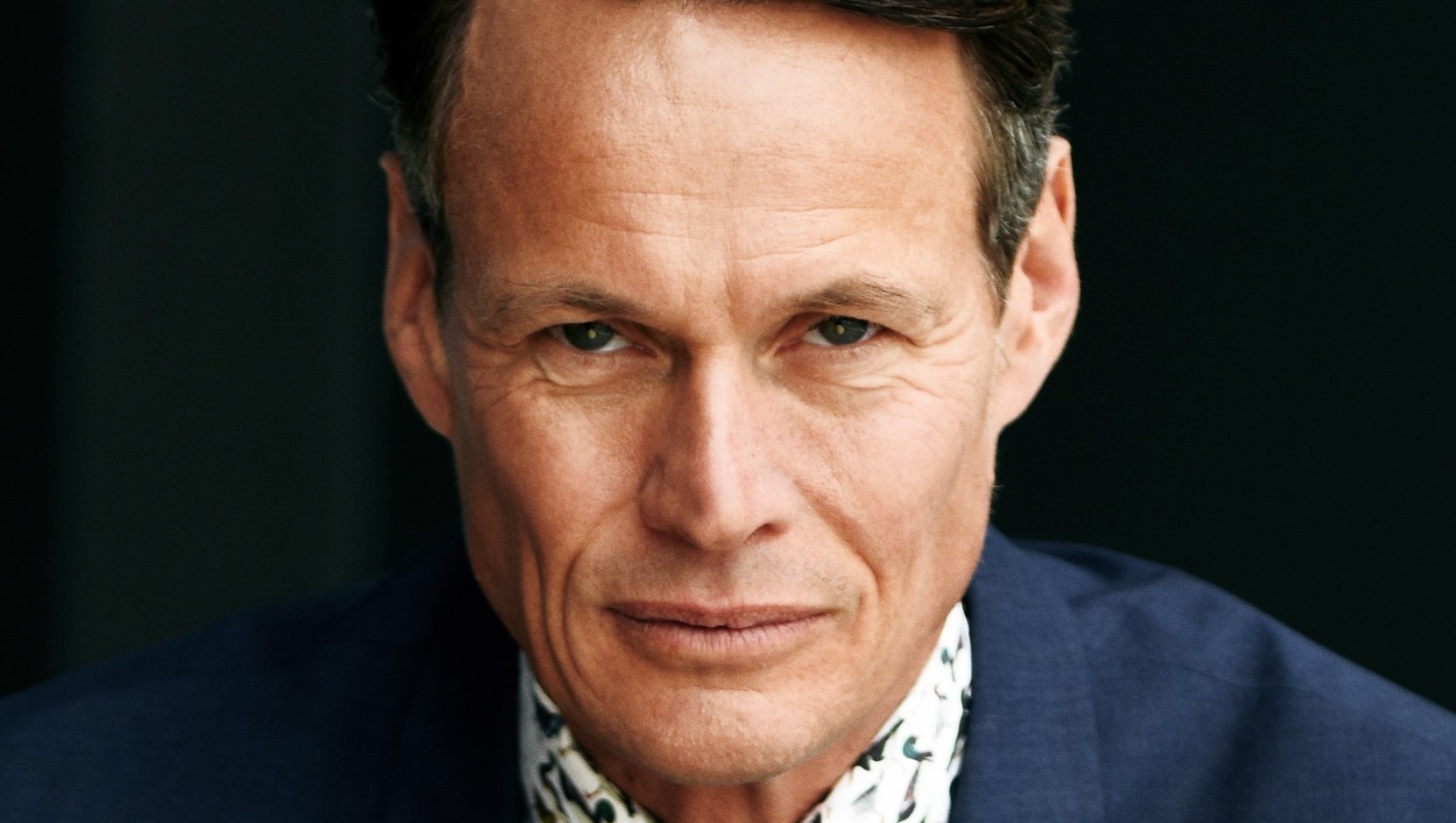
RESORTS WORLD LAS VEGAS NAMES TOM MCMAHON SENIOR VICE PRESIDENT OF SLOT OPERATIONS AND MARKETING


Resorts World Las Vegas is continuing the expansion of its executive leadership team with the appointment of Tom McMahon as Senior Vice President of Slot Operations and Marketing.
A respected leader with more than two decades of experience in gaming and hospitality, McMahon steps into his role effective immediately.
“Tom’s deep expertise in luxury casino operations and marketing makes him a powerful addition to our team,” said Carlos Castro, President and Chief Financial Officer of Resorts World Las Vegas. “We look forward to the leadership he will provide in this essential function at Resorts World Las Vegas.”
McMahon has held senior roles at some of the most recognized names in the industry, including Wynn Resorts, Bellagio Resort & Casino, Las Vegas Sands, Venetian | Palazzo and most recently Sycuan Casino Resort. At Resorts World Las Vegas, he will lead initiatives across slot operations, marketing and the Genting Rewards Loyalty Program, with a focus on innovation, guest engagement and operational excellence.
Said McMahon, “Returning to Las Vegas to join a forward-thinking property like Resorts World is an incredible opportunity. I am eager to help shape the next chapter of growth by enhancing the guest experience and building on the strong foundation already in place.”
For more information about Resorts World Las Vegas, please visit rwlasvegas.com.
The post RESORTS WORLD LAS VEGAS NAMES TOM MCMAHON SENIOR VICE PRESIDENT OF SLOT OPERATIONS AND MARKETING appeared first on Gaming and Gambling Industry in the Americas.

Expanse Studios, the B2B game development division of Golden Matrix Group Inc. (NASDAQ: GMGI), has received official certification from Croatia’s Ministry of Finance for its flagship game Super Heli, with additional titles in the company’s 56-game portfolio expected to receive approval in the coming weeks for the EU member state.
The certification marks a strategic entry into a market that generated US$484.70m in 2024, with projected growth at a CAGR of 8.4% during 2024-2030. Super Heli, Expanse’s most popular crash-style game, becomes the first of the studio’s titles approved for the Croatian market, paving the way for broader portfolio distribution.
Tapping Into High-Growth European Market
Croatia represents a compelling opportunity for B2B gaming suppliers, with the Online Casinos segment alone projected at US$218.10m in 2024. According to iGamingToday’s latest market research, Croatia’s gambling market will reach €720.42 million by 2025, making it one of Europe’s fastest-growing regulated markets.
Among the key market benefits are:
- Accelerating digital adoption – Internet penetration jumped from 76% in 2020 to 83% in 2023
- Over 20.6 million tourist arrivals in 2023 following Schengen Zone entry
- Over 500,000 Croatians expected to engage in regular online gambling by 2027
Strategic Value for the Company
The certification strengthens Expanse Studios’ European footprint at a critical juncture. With 56 proprietary titles and 500+ B2B partners globally, Expanse is expected to capture a meaningful share in the growing EU market.
“Croatia certification is more than market access—it’s validation of our content quality and compliance capabilities in demanding EU jurisdictions,” said Damjan Stamenkovic, CEO of Expanse Studios. “With our flagship title Super Heli already approved and more games in the pipeline, we’re very excited for the opportunities this markets brings us”
Competitive Advantage in Regulated Markets
Croatia’s regulatory framework favors established, compliant B2B providers. Operators must obtain licenses requiring significant capital investment, and only licensed casino games operators who have at least one brick-and-mortar casino can offer online gambling. This creates high barriers to entry and positions certified B2B suppliers like Expanse as essential partners for operators.
The post Expanse Studios (GMGI) Obtains Croatian iGaming Certification appeared first on European Gaming Industry News.
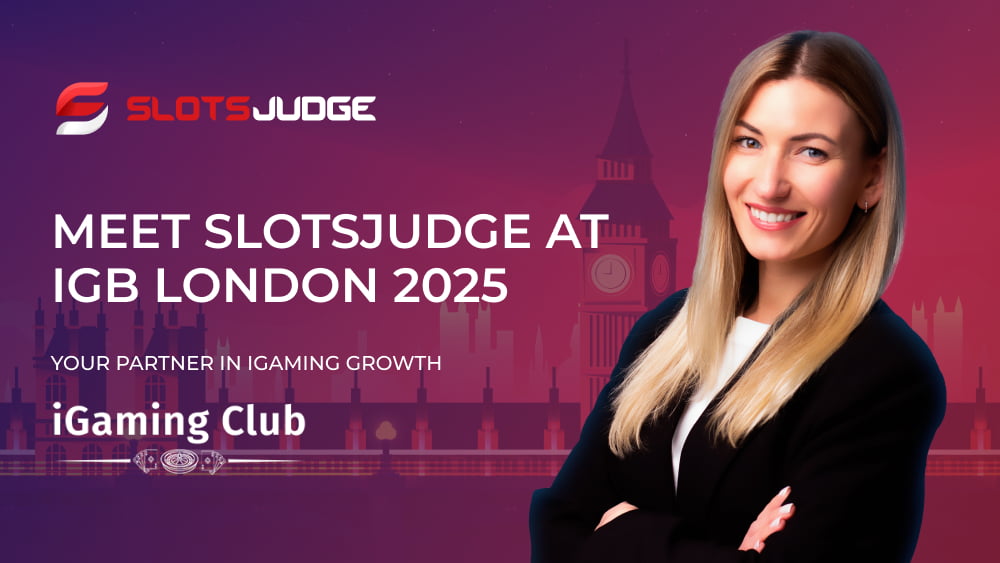
The iGB London 2025 event is set to push the boundaries of the online gambling market, and Kristina Jakovleva, Business Development Manager at SEOBROTHERS, will represent Slotsjudge. The event is expected to gather over 15,000 attendees and more than 300 sponsors, and Kristina plans to cover technological trends, discuss affiliate marketing strategies, and foster industry-specific networking.
Event Overview: About iGB London 2025
As one of the iGaming industry’s key global events, iGB London brings together thousands of professionals to drive innovation and growth. Following the success of previous editions, with over 6,500+ affiliates and 150+ programs on offer, the upcoming event promises even greater opportunities for business and collaboration.
Over 15,000+ industry specialists are to join the event this time. This year, participants will discuss technological trends, regulatory updates, affiliate marketing, and branding strategies. Participants can gain actionable insights and learn from successful case studies, making the event both exciting and informative.
About Kristina Jakovleva: Expertise & Plans
Starting her career in education at Liverpool John Moores University, Kristina has been in the iGaming market for years, working as a customer support specialist, affiliate manager, and ultimately as a Business Development Manager at SEOBROTHERS.
Years of experience and a focus on growth enabled Kristina to understand which approach best suited the company quickly, and she successfully implemented strategic partnerships and business growth initiatives to benefit from industry-specific networking.
Expectations & Final Thoughts
Attendees can enjoy iGB London 2025 on 2–3 July 2025 at ExCeL London, and an exclusive AI Concierge service will be available to cover basic questions about the event. Nick Hill, Executive Director at Premier Hill, says that ‘it represents the entire industry, and it is a must-attend show.’
It’s an excellent opportunity for the Slotsjudge team to gain performance-driven insights and plan future growth over the next 12 to 24 months, while other participants can learn from Kristina Jakovleva’s work, reinforcing Slotsjudge’s ongoing commitment to innovation and the overall growth of the iGaming industry.
The post Kristina Jakovleva Represents Slotsjudge at iGB London 2025 appeared first on European Gaming Industry News.

-

 Australia7 days ago
VGCCC: Minors Exposed to Gambling at ALH Venues
-
Africa7 days ago
SA Rugby Renews its Partnership with Betway
-
Central Europe5 days ago
German Federal Government Significantly Increases the Budget for Games Funding
-
Eastern Europe6 days ago
Thunderkick enhances presence in Romania through MaxBet partnership
-
Croc’s Lock7 days ago
FBM® unveils golden treasures in Mexico with Croc’s Lock™ bites
-
BETBY6 days ago
BETBY EXPANDS LATAM FOOTPRINT WITH MOBADOO ESPORTS PARTNERSHIP
-
Compliance Updates7 days ago
Honolulu Mayor Signs New Laws Targeting Illegal Game Rooms
-
California State Assemblymember Avelino Valencia5 days ago
New Bill in California Could End Online Sweepstakes Gaming