Interviews
Scaling With Purpose: RedCore’s Tech Vision Explained


Reading Time: 7 minutes
At SiGMA Central Europe in Rome, European Gaming Media sat down with Yevhenii Yankovyi, Vice President of Technology and Deputy CTO at RedCore, for a deep look into what truly powers RedCore’s large-scale engineering operations.
RedCore is known for innovating at enterprise level, yet moving with the agility of a fast-growing tech company. In this conversation, Yevhenii breaks down how the organization manages that balance: how engineering teams maintain both speed and reliability, how automation empowers creativity, and why culture must remain a daily practice rather than a one-time achievement.
Can you introduce yourself and RedCore’s approach to engineering at scale?
Sure. My name is Yevhenii, I’m the Vice President of Technology at RedCore and Deputy CTO. RedCore is a large company with many products and projects, so everything we do operates at a significant scale. And when people hear “enterprise-level engineering,” the usual assumption is that scale automatically means slowness: slow decision-making, slow implementation, slow testing, slow time to market.
That’s the mindset we challenge. We don’t believe speed and stability are opposites. In our experience, at this level of complexity, the two actually reinforce each other. When you build the right processes, the right technical foundations, and the right organizational structure, speed becomes a natural result of stability – not something that contradicts it.
We plan for scaling from day one. For us, that’s a fundamental requirement. We build products with the expectation that they will grow, and growth means scale. So we design with that in mind from the very first line of architecture.
But that doesn’t mean disappearing for six or ten months to design the “perfect” system. That’s the common mistake people make when they hear “design for scale.” Our approach is different: we keep the long-term vision in mind, but we move fast, iterate, and make sure the product can evolve without slowing the team down. Stability and speed working together – that’s the engineering culture we build at RedCore.
How does RedCore balance speed and stability in daily engineering?
I will explain this with a simple metaphor: think about a car. Everyone talks about acceleration and top speed, but none of that matters if you can’t take a corner. Speed alone is not the winning formula – you also need control.
That’s exactly how we look at engineering at RedCore. We want to accelerate, make decisions quickly, and develop fast. But we also need the ability to slow down at the right moment, change direction, and stay agile. Balancing speed with stability is the only way to move at scale.
There are many layers to this – it’s a topic I could talk about for days – but in a nutshell:
at a big scale, you must have strong standards, clear policies, and a high level of automation. We rely heavily on automation: infrastructure as code, CI/CD pipelines, automated testing, and all the tools that remove repetitive, routine work from engineers’ daily lives. When the routine disappears, people can focus on what humans actually do best: creativity, problem-solving, and innovation.
However, automation doesn’t build the software for you. It creates a safety net. It catches mistakes, guards quality, and supports engineers when their creativity pushes boundaries. In other words: tools give freedom, and also protect that freedom.
And of course, this includes AI and many other modern tools. We use whatever helps us keep the balance: give people space to think, create, and experiment, while ensuring the system stays stable, predictable, and high-quality.
How does RedCore’s management keep teams aligned yet fast?
First of all, we provide clear goals. As I mentioned earlier, we always design for scale from day zero – but you can only do that if you know exactly what you’re building, for whom, and why. We have a very strong business team that understands the market and what needs to be delivered. The technology team works side by side with them, reinforcing them.
Once the goals are clear, we begin small. If you try to build a huge system from the beginning and get it wrong, you create a nightmare: something no one can support, change, or grow. Complexity grows exponentially, and humans don’t think exponentially; we think linearly. That’s where companies often get lost.
So we avoid that by validating early and validating often. We start with small steps, keep a close eye on every direction we take, and confirm that what we’re building is truly needed by the market. When we see that the direction is right, then we scale – and by that point, the foundation is already in place. It’s like preparing a launchpad so that when the time comes, the team can accelerate immediately.
We build block by block and work in iterations. We take a small team – one, two, maybe three people – and let them experiment for a week. We test the idea fast, get quick feedback, and bring it to the business side: “Do you like it?” If the answer is yes, then we continue, still following all the proper engineering practices before anything goes into production.
This constant loop between business and technology keeps everyone aligned. We give feedback, we receive feedback, and we move together. That’s how we stay both fast and coordinated, always ready to scale when the direction is confirmed.
How does automation empower engineers without slowing them down?
When we talk about automation, we’re really talking about optimization at scale. It doesn’t make sense to over-engineer small things, but at the scale we operate, the cost efficiency and speed gains are enormous. And people often assume that big systems and automation automatically slow everything down. For us, it’s the opposite.
The tools we introduce are not meant to tie engineers’ hands with bureaucracy. We don’t force strict guidelines or heavy processes that kill creativity. Our tools exist to help: to prevent mistakes, to collect feedback quickly, and to give teams the shortest possible path from idea to validation.
Here’s a simple example: we start experimenting with a small feature. We build a tiny prototype to see if the idea works. If it’s promising, the next step is testing, pipelines, deployment – all the things that normally take time. In many companies, engineers would try to do all of this manually because “building the tools will take too long.” But with us, the tools are already there. The infrastructure, the CI/CD, the automation – everything is ready to use. Our engineers are essentially customers of this internal platform that supports fast, safe delivery.
We have many different teams that have different great ideas. If one team tries something new and it works better, great – we learn from it. If another team has a different approach because of product specifics or release schedules, that’s fine too. We give freedom to the teams to work, share their experiences, and then scale.
Of course, there are non-negotiables. When it comes to security and data privacy there is zero tolerance. These are areas where strict rules are absolutely necessary. I always tell the security people: everyone should be a little afraid of you, because these things must be perfect. But outside those critical areas, we don’t impose rules that slow teams down. We experiment, gather feedback, adjust, and keep improving.
We’re constantly researching, experimenting, and customizing our automation depending on the product and the market. But when it comes to system design, we don’t reinvent the wheel. We choose globally recognized tools and industry-validated technologies. So yes, we empower engineers with automation and the right tools, built on a solid, modern foundation.
How does culture work for you – is it an achievement, or part of your routine?
Culture is a critical element in balancing speed and stability. Tools and processes matter, but culture is what truly empowers a team and keeps everything together at scale.
For us, culture starts with giving people freedom: the freedom to experiment, the freedom to make mistakes, and the freedom to challenge ideas. We don’t want engineers to be afraid of trying something new. We build a culture where mistakes are acceptable and manageable. If we try something and it doesn’t work, great – now we know better. We learn, adjust, and move on.
We encourage ideas from every level. Some of our most interesting insights come from developers who notice something while working on a small task. They can come directly to me or to the CTO and say, “I see a problem here.” It’s completely okay. A small detail in one corner of the system can become a huge issue at scale, so we listen. That’s how we avoid blind spots.
We also give teams autonomy. Small teams can make their own decisions and experiment in their own ways. If different teams want to do things differently, that’s fine – as long as they validate everything and share their findings. We want people to help each other and to understand that even top engineers have ups and downs. Even senior management makes mistakes. I constantly ask my team: “If I make a wrong decision, tell me.” It’s not about transparency as a buzzword – it’s about behavior. People observe how you respond, and they learn from that.
The biggest mistake any leader can make is demotivating people. We work with intelligent, educated, passionate professionals. They want to contribute. You just need to give them the space to do it. That’s when you see people shine and bring forward brilliant ideas.
As for the question of whether culture is an achievement or a routine – for us, it’s definitely a routine. People often talk about “building a strong engineering culture” as if it’s a success. We treat it as a routine as a process. Culture is the daily interactions between people in an organization. Those interactions change: people come and go, someone has a bad day, someone disagrees with a decision. Culture is shaped every day by how we communicate, how we argue, how we respect each other, and how we resolve differences.
Going to a colleague in the kitchen and asking, “Hey, what do you think about this?” – that’s culture. Anyone can talk to anyone, openly. And when engineers realize they can make a real impact, that they are heard, that they can influence the product — that motivates them. That’s what keeps the culture alive.
How do you balance standards with creative freedom?
The first thing is that we don’t pressure people. We set strict standards only where they are truly critical for the business. Security, data privacy, stability at scale – those areas demand clear rules. But everywhere else, we try not to push people. And when we do introduce a standard or guideline, we listen carefully to feedback. If the team tells us we made the wrong call, that’s okay – we rethink it and look for better approaches.
The second thing is that as the projects grow, the teams scale as well. Even in the design phase, we don’t start with a huge team. I prefer a small group: one key person who leads the design initiative, plus two or three contributors who constantly review, test, question, and give feedback. If three or four people align in one direction, that’s a good signal we’re on the right track. Then we take that proposal to a larger group – people who might use it or need it.. We refine it again based on their input. The idea evolves, but we don’t need to start from the beginning.
Finally, when we have a strong direction, we present it to the entire tech team. And even then – even if top management already supports the decision – it’s completely acceptable for a mid-level developer to raise concerns. Maybe they’ve seen something before, maybe they read an article, maybe they faced a similar issue. We listen, because at scale, one overlooked detail can cost millions.
So once again, balancing standards with creative freedom is about scaling the processes step by step: we start with a small group, validate in small cycles, and then scale the decision up gradually. This approach protects creativity, ensures high quality, and keeps us aligned. And combined with our culture, it makes the process both fast and safe.
The post Scaling With Purpose: RedCore’s Tech Vision Explained appeared first on European Gaming Industry News.

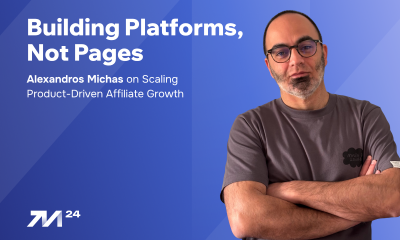

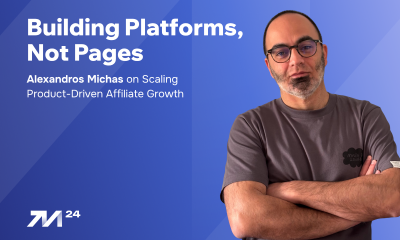









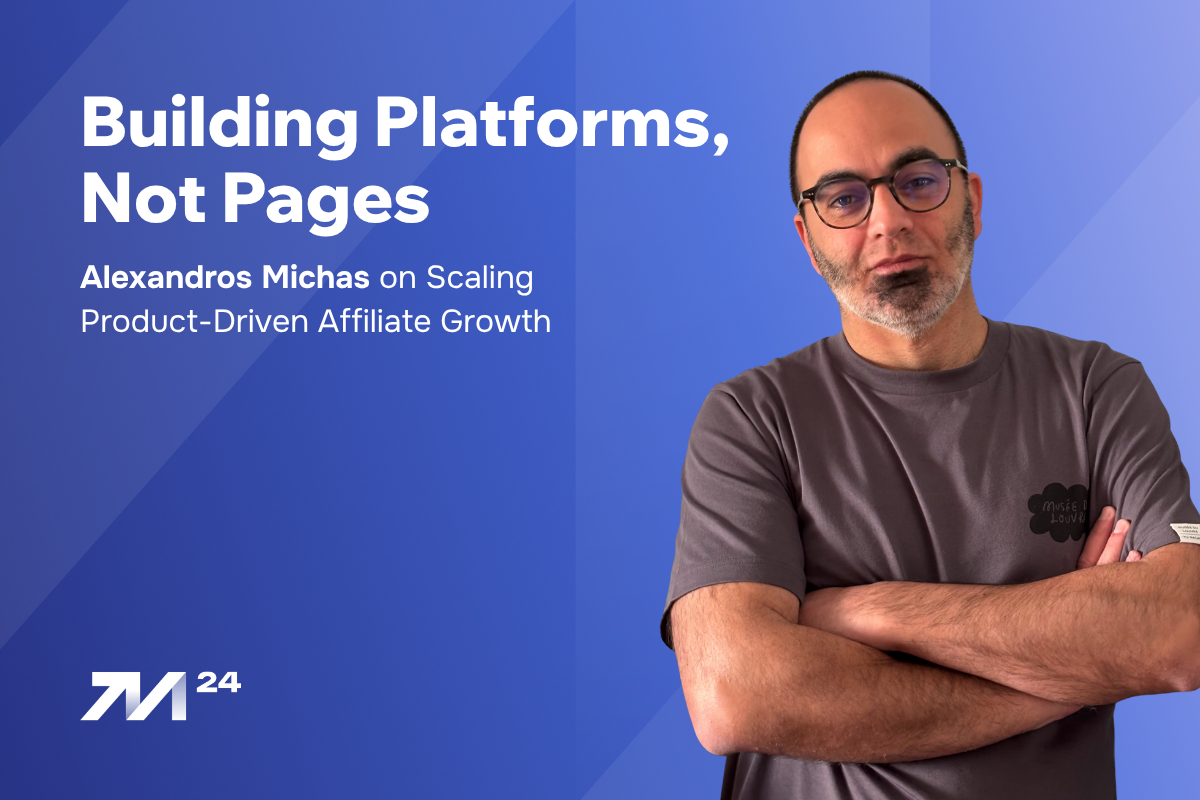
In the world of affiliate marketing, a little chaos is usually the norm. Managing dozens of websites across different regions often means endless firefighting. Enter Alexandros Michas, who was recently appointed as the Head of Website Operations at Media 24. In this interview, we talked with Alexandros about how he is replacing chaotic, site-by-site fixes with a single blueprint to turn standard affiliate sites into true digital platforms.
A few months ago, you were appointed as the Head of Website Operations at Media 24. To give our readers a look behind the scenes, what exactly does this role involve, and what are the main things you focus on in this position?
My job is to take the big-picture goals discussed with our CEO and figure out how we actually build them. I translate high-level business strategy into a concrete technical roadmap and take responsibility for it and everything that goes into our websites.
Day-to-day, I am leading our talented and experienced team of site managers. Together, we look at our portfolio of websites not just as platforms, but as products. We are constantly tweaking site functionality, brainstorming new product features, and upgrading the user experience. The ultimate goal is to move past standard affiliate landing pages and build something stickier. We want our websites to be the definitive, go-to destination where sports bettors in any given region don’t just visit once to find a bookmaker, but actively want to return to for value.
With dozens of websites in the portfolio, how do you prevent operational chaos? What does a scalable architecture look like for a modern affiliate house?
Honestly, if you treat every site like its own special project, you’ll drown in chaos overnight. The secret is standardisation.
Of course, every region has its own local specifics that we have to adapt to, and we do so by having locals as website managers. But underneath it all, we build everything on a single, shared blueprint. When we design a new feature, we don’t just build it for one site. We build it to level up the whole portfolio at once. It also makes expanding into a new market much easier. If a promising new region opens up tomorrow, we don’t have to start from scratch. We just drop in a product that’s already battle-tested and ready to go.
I’ve also set up teams around each GEO and manager, which include SEO specialists, content managers, and others, to ensure a smooth and efficient workflow.
Since you rely on a single blueprint, how do you manage the human element? How much freedom do your site managers have to experiment in their local markets versus sticking to the playbook?
Our site managers are the true experts in their specific regions, so they have total autonomy over their local content plans and figuring out what makes bettors in their area tick. They own that local strategy completely, while the blueprint just ensures they are building on a rock-solid foundation.
Because they are on the ground, I actually encourage them to constantly pitch product improvements. I always listen to their suggestions because a great idea shouldn’t just stay on one site. If a manager finds a feature that works incredibly well for their audience, we don’t just keep it there. We roll it into our core blueprint so the entire portfolio benefits from it.
The company has shifted toward building true digital platforms rather than just simple affiliate sites that rank. In practice, what is the biggest difference between those two approaches?
The biggest difference is value and retention. A simple affiliate site is transactional. It’s built entirely around SEO keywords just to capture a click, send the user to a sportsbook, and hope for a conversion. If Google tweaks its algorithm, that site is incredibly vulnerable because users have no real loyalty to it.
A digital platform, on the other hand, is an actual product. We aren’t just trying to get a click. We are trying to be a helpful place for the sports bettor. That means building features, community, and data hubs. It takes a lot more time and energy to maintain, but it turns a casual visitor into a loyal user. They don’t just find us on Google once. They bookmark the site and keep coming back because the product itself is valuable.
The World Cup is live right now. An event of this scale is a massive test for any affiliate. How did you approach the preparation for this global tournament from a product perspective, and what features did you ship to keep bettors engaged?
We knew the traffic spikes would be insane, so preparation actually started months ago. From a product perspective, the ultimate goal was instant utility. During a massive event like this, users want their information immediately, without any friction.
Feature-wise, we shipped an advanced match centre, a tournament bracket simulator, and worked heavily on upgrading our entire content strategy specifically for the World Cup. Because of the shared framework we talked about earlier, we didn’t have to build these tools site-by-site. Our blueprint allowed us to deploy these advanced features across all of our sports betting properties simultaneously, giving every region a premium product at the same time.
When the final whistle blows on the World Cup and we look back at the rest of 2026, what will have to happen for you to look back and say we absolutely nailed it?
On the data side, I want to look at our metrics and see a clear spike in returning users. That will be the ultimate proof that our platform strategy is actually working.
But our upgrades and feature improvements don’t just stop with the World Cup. We already have plenty of things in the pipeline, and we are planning a massive push right before the main European leagues kick off late this summer.
At the end of the day, I’ll know we nailed it if our site managers are effortlessly launching these new features, seeing the direct results of their work, and feeling like they have the absolute best tools in the industry to win their markets. That would be proof that we didn’t just build websites. We built a highly scalable affiliate product.
The post Alexandros Michas on Building Platforms, Not Pages appeared first on EE Gaming | Global iGaming & Tech Intelligence Hub.

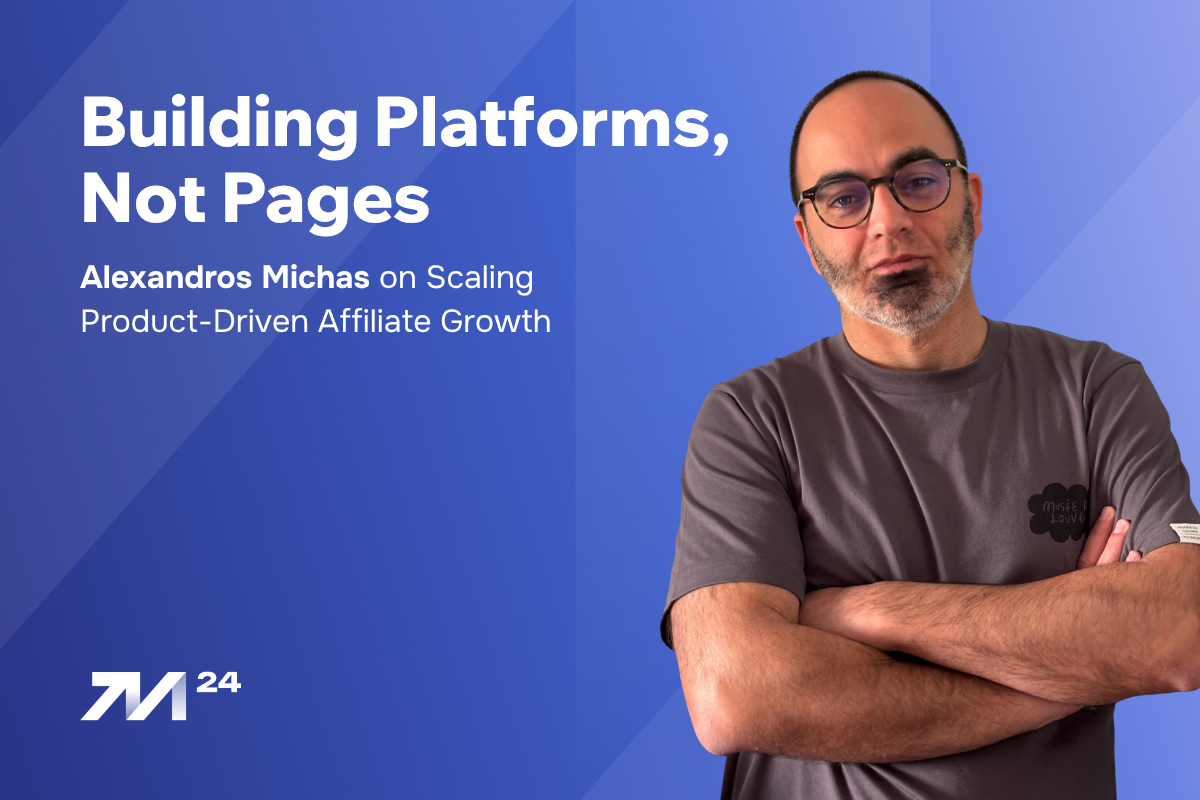
In the world of affiliate marketing, a little chaos is usually the norm. Managing dozens of websites across different regions often means endless firefighting. Enter Alexandros Michas, who was recently appointed as the Head of Website Operations at Media 24. In this interview, we talked with Alexandros about how he is replacing chaotic, site-by-site fixes with a single blueprint to turn standard affiliate sites into true digital platforms.
A few months ago, you were appointed as the Head of Website Operations at Media 24. To give our readers a look behind the scenes, what exactly does this role involve, and what are the main things you focus on in this position?
My job is to take the big-picture goals discussed with our CEO and figure out how we actually build them. I translate high-level business strategy into a concrete technical roadmap and take responsibility for it and everything that goes into our websites.
Day-to-day, I am leading our talented and experienced team of site managers. Together, we look at our portfolio of websites not just as platforms, but as products. We are constantly tweaking site functionality, brainstorming new product features, and upgrading the user experience. The ultimate goal is to move past standard affiliate landing pages and build something stickier. We want our websites to be the definitive, go-to destination where sports bettors in any given region don’t just visit once to find a bookmaker, but actively want to return to for value.
With dozens of websites in the portfolio, how do you prevent operational chaos? What does a scalable architecture look like for a modern affiliate house?
Honestly, if you treat every site like its own special project, you’ll drown in chaos overnight. The secret is standardisation.
Of course, every region has its own local specifics that we have to adapt to, and we do so by having locals as website managers. But underneath it all, we build everything on a single, shared blueprint. When we design a new feature, we don’t just build it for one site. We build it to level up the whole portfolio at once. It also makes expanding into a new market much easier. If a promising new region opens up tomorrow, we don’t have to start from scratch. We just drop in a product that’s already battle-tested and ready to go.
I’ve also set up teams around each GEO and manager, which include SEO specialists, content managers, and others, to ensure a smooth and efficient workflow.
Since you rely on a single blueprint, how do you manage the human element? How much freedom do your site managers have to experiment in their local markets versus sticking to the playbook?
Our site managers are the true experts in their specific regions, so they have total autonomy over their local content plans and figuring out what makes bettors in their area tick. They own that local strategy completely, while the blueprint just ensures they are building on a rock-solid foundation.
Because they are on the ground, I actually encourage them to constantly pitch product improvements. I always listen to their suggestions because a great idea shouldn’t just stay on one site. If a manager finds a feature that works incredibly well for their audience, we don’t just keep it there. We roll it into our core blueprint so the entire portfolio benefits from it.
The company has shifted toward building true digital platforms rather than just simple affiliate sites that rank. In practice, what is the biggest difference between those two approaches?
The biggest difference is value and retention. A simple affiliate site is transactional. It’s built entirely around SEO keywords just to capture a click, send the user to a sportsbook, and hope for a conversion. If Google tweaks its algorithm, that site is incredibly vulnerable because users have no real loyalty to it.
A digital platform, on the other hand, is an actual product. We aren’t just trying to get a click. We are trying to be a helpful place for the sports bettor. That means building features, community, and data hubs. It takes a lot more time and energy to maintain, but it turns a casual visitor into a loyal user. They don’t just find us on Google once. They bookmark the site and keep coming back because the product itself is valuable.
The World Cup is live right now. An event of this scale is a massive test for any affiliate. How did you approach the preparation for this global tournament from a product perspective, and what features did you ship to keep bettors engaged?
We knew the traffic spikes would be insane, so preparation actually started months ago. From a product perspective, the ultimate goal was instant utility. During a massive event like this, users want their information immediately, without any friction.
Feature-wise, we shipped an advanced match centre, a tournament bracket simulator, and worked heavily on upgrading our entire content strategy specifically for the World Cup. Because of the shared framework we talked about earlier, we didn’t have to build these tools site-by-site. Our blueprint allowed us to deploy these advanced features across all of our sports betting properties simultaneously, giving every region a premium product at the same time.
When the final whistle blows on the World Cup and we look back at the rest of 2026, what will have to happen for you to look back and say we absolutely nailed it?
On the data side, I want to look at our metrics and see a clear spike in returning users. That will be the ultimate proof that our platform strategy is actually working.
But our upgrades and feature improvements don’t just stop with the World Cup. We already have plenty of things in the pipeline, and we are planning a massive push right before the main European leagues kick off late this summer.
At the end of the day, I’ll know we nailed it if our site managers are effortlessly launching these new features, seeing the direct results of their work, and feeling like they have the absolute best tools in the industry to win their markets. That would be proof that we didn’t just build websites. We built a highly scalable affiliate product.
The post Alexandros Michas on Building Platforms, Not Pages appeared first on Americas iGaming & Sports Betting News.
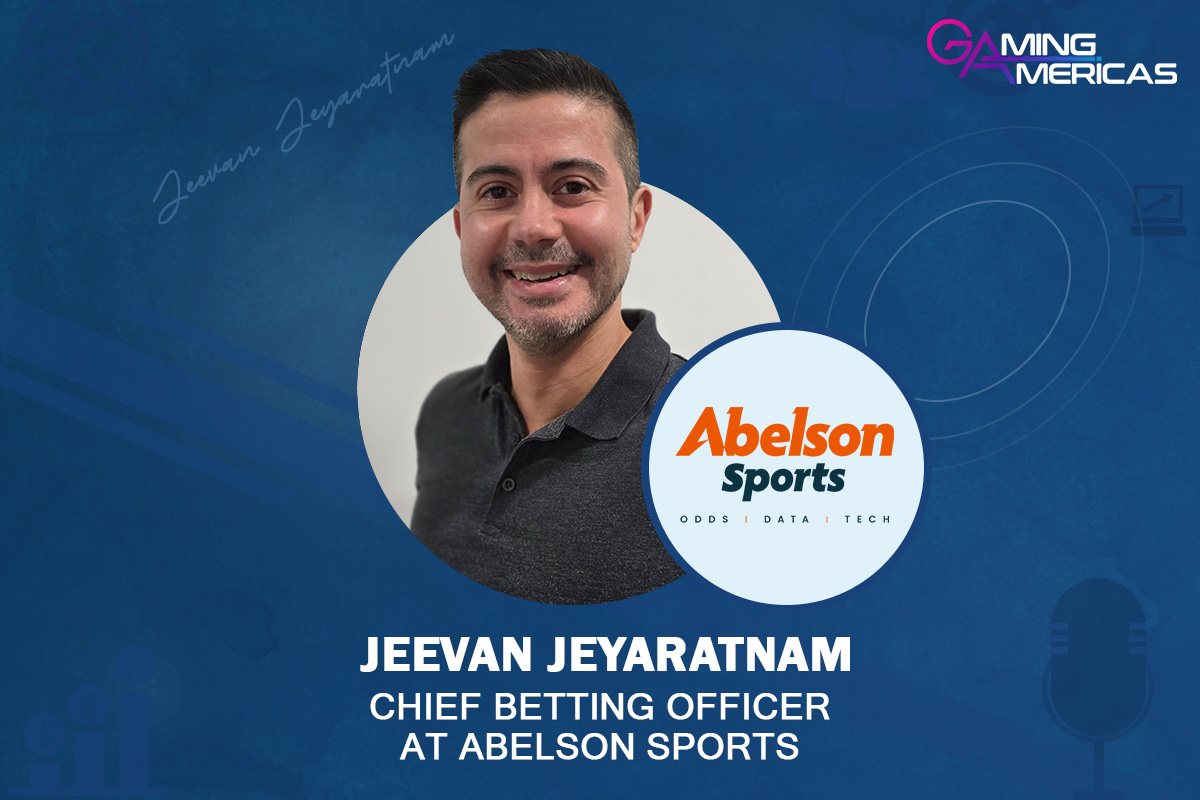
As prediction markets evolve from niche forecasting tools into a multibillion-dollar mainstream asset class, the boundary between trading and high-volume iGaming infrastructure is rapidly dissolving. This Q&A feature w/ Jeevan Jeyaratnam, Chief Betting Officer at Abelson Sports examines whether prediction platforms can sustain their exponential growth independently, or if their long-term survival depends on adopting rigorous compliance, product proposition and geolocation standards of the established iGaming supply chain.
Are prediction markets a threat to the existing sports betting industry in the US and beyond, or can both coexist peacefully and profitably?
The answer to that question very much depends on where in the world you are. If I live in Birmingham, Alabama then prediction markets (PMs) are my only legal route to placing any kind of sportsbook wager. If I live in Birmingham, England then prediction markets (or as the Europeans understand them, betting exchanges) are very much playing second fiddle to the currently available, advanced sportsbook apps.
At present, prediction markets and legal sports betting firms, in the US, are operating on an uneven playing ground. Sportsbooks are state-regulated entities with tightly enforced rules, high tax rates and limited geographical scope. Prediction markets – in my opinion, because of their connection to the federal government’s coffers – have been given almost carte blanche to operate across state lines with no consideration for state legislative independence.
Governed by the federally controlled Commodity Futures Trading Commission (CFTC), prediction markets are able to offer sports contracts as well as other financial products to players in California, Georgia, New York and Texas. Sportsbooks, using this four-state example, can only offer sports betting opportunities to those in New York and that comes with a hefty 51% tax rate. The disparity here is stark and it is no wonder that investors and financiers believe that Predictions Markets have an opportunity to outperform sports betting operators. The problem of quite how PMs can fully monetise the product is beginning to be resolved with commission fees now being charged. How PMs can keep customers engaged is another concern, as there will be very few recreational winners from the pool of sharps that are seeding and trading these markets.
Given the current regulatory landscape, how can providers help platforms navigate the legal minefield of jurisdictions?
There’s a certain frontier spirit, certainly in the USA, around PMs at the moment. Platforms seem to be navigating with a “do it and apologise later” attitude, which has led to several high-profile lawsuits. Depending on where you look, the PMs or CFTC are either suing the state or vice versa.
It is a mess and as Congresswomen Dina Titus (D-NV) pointed out in an open letter recently, “Equally concerning is the allocation of agency resources to support this expanding litigation campaign.” Her point being that the CFTC is significantly understaffed and under resourced and that its efforts to support “multi-state litigation threatens to undermine the agency’s ability to fulfil its primary mandate.”
More recently, it would seem that the two biggest names, Kalshi and Polymarket, have decided that public slanging matches, where accusations around facilitating nefarious characters and criminal enterprises to trade on their platforms, fly either way.
This is hardly the type of behaviour anyone would expect from two companies operating within the auspices of the CFTC.
Until the situation settles and given the widespread support at federal level, it’s hard to imagine either of the two main players needing to take too much advice from others.
Following recent high-profile controversies around insider trading on prediction platforms, what sportsbook-grade KYC and behavioural monitoring tools are most effective at detecting the misuse of information?
One of the big concerns, currently not adequately addressed, revolves around KYC. Kalshi, for example, by way of its regulated status with the CFTC, has a strict KYC and AML code and a clear list of prohibited territories on its site.
Polymarket, on the other hand, is a crypto-native decentralised operator and as such has far fewer hurdles to jump as regards KYC. The USA site is now covered by CFTC regulation and is considered separate to the international version, which doesn’t require mandatory ID requirements to set up an account. This has led to significant and justified concerns over insider trading and AML. There are a number of tried and tested solutions that betting operators are required to use, but the same will also be true for PMs and the specific set of requirements they need to fulfil. For the sportsbooks that are also launching PMs, it would make synergistic sense for them utilise the same tools they have for the sportsbook.
What sort of retention strategies can be borrowed from the betting sector to increase engagement for prediction market operators?
The biggest hurdle for PMs is how they handle the inevitable churn as recreational players realise that they are consistently losing money to the big trading houses and sharp market makers. Only a fraction of customers can win and a small concentration of sharp clients will mop up pools, especially in sports contracts.
In other political or business markets there will be individuals or syndicates operating with the benefit of insider knowledge. Currently, the PMs product isn’t comparable in entertainment value to that of the sportsbooks. No concessions, no bonuses or many of the entertainment value add-ons that sportsbooks have adopted.
PMs have provided means for many who otherwise would have to use offshore books to experience wagering and they have done this at a very low transactional cost to the end user. That model will need to change if these firms are to meet their lofty valuations, but how they do that, while convincing customers that they can beat the sharps remains to be seen.
The post The evolution of prediction markets appeared first on Americas iGaming & Sports Betting News.

-

 10bet4 days ago
Ellis Park Stadium signs five-year naming rights deal with 10bet
-
central asia4 days ago
Groove confirms attendance at SBC Summit Tbilisi 2026
-
Bucharest3 days ago
Eeze opens 1,200 sqm Bucharest hub for technical teams
-
Caesars Rewards7 days ago
Raise a Glass: The Vanderpump Hotel Celebrates $813,553 Jackpot Win
-
affiliate marketing4 days ago
SEOBROTHERS’ Aleksandra Drigo flags higher barriers for affiliates in regulated Alberta
-
API integration3 days ago
Belatra signs cooperation deal to distribute slots via VeliGames
-
Compliance Updates4 days ago
KSA Updates Guidelines for Conducting Means Test
-
Big Bass Blast4 days ago
Pragmatic Play adds Big Bass Blast to Big Bass slot series