eSports
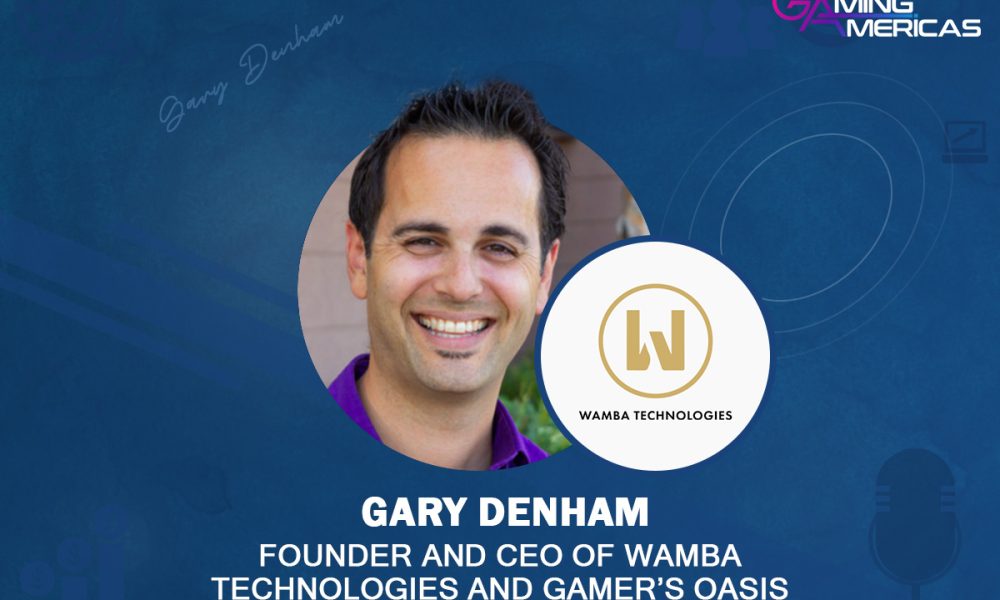
Exclusive Q&A w/ Gary Denham, founder and CEO of Wamba Technologies and Gamer’s Oasis

Gary, as the CEO and founder of Wamba Technologies, can you shed some light on the inspiration behind developing the patented technology for “in-game wagering” in skill-based video games?
Right now there are approximately 500 million people around the world participating in Esports. These are people who are earning money by competing in video games. Unfortunately, the vast majority of these people are not competing online when money is involved because of the anonymity and the rampant cheating anonymity causes. Only the best are able to compete online and actually make money. Instead, the majority of gamers are traveling to physical locations and competing “in person” where opponents and skill levels can be verified. What’s crazy to me is that down to every last man, woman, and child, these people DO compete against each other online for fun with the very same games that they are traveling to compete in for money. This shows us that these players desire to compete online, however they just don’t have a safe, user-friendly option with which to do so. This very issue is what inspired us to build a product that will give users that online, “compete-from-my-own-home” experience that they are looking for where they can pay an entry fee online, compete, and win money right then and there.
What’s surprising is that most real money online video game competitions are still operating on the honor system which has led to a lot of cheating. Warzone is a great example of this. Activision had to ban over 100,000 players from Warzone in a single week and they were not even competing for money. That was just the “for fun” play. Simply put, the honor system doesn’t work. For me, the most prominent indicator of this is seeing a marketplace with 500 million users that can’t seem to clear $2B in annual revenue going on 10 plus years now. That says a lot.
Our technology is called Gamers Oasis. It will allow gamers of all skill levels to compete against other players, who are at their same skill level, right from their phones, where they pay an entry fee, compete, and win money back. Gamers Oasis won’t just be for professional players either. Very much to the contrary, the basic idea is that anybody, regardless of skill level, can join, compete, and have a fair and reasonable chance of winning large monetary prizes. Our platform will give beginners the opportunity to compete for thousands of dollars and actually have a reasonable chance of winning, opening up the industry to something that previously was only available to the best of the best, the professionals.
With your extensive experience in the Esports and gaming industry, how do you perceive the current revenue challenges despite the massive user base? What factors contribute to this disparity?
There are a number of reasons for this disparity. Before I answer, I want to point out that there is a comparable industry that has done phenomenally well and has not had to make any excuses for their revenue. Online poker in the United States had a mere 2 million players and was generating $900M a year in the US in 2008. That is compared to our Esports market with 500M players generating a mere $1.38B last year. The global Esports market is 250 times larger than the US online poker market but only generated 50% more money than the poker market. That isn’t just a disparity. That is a tragedy. What is more of a tragedy though is I’ve been to several Esports conferences and most of the people I’ve seen seem to think they’ve accomplished something with these numbers. They are hi-fiving and patting each other on the back with congratulations. Maybe if more of their colleagues would be honest and just speak the truth, which is “hold up there cowboy. These numbers suck. Not only can we do better, but we must. What’s broken?”, then maybe they’d have already taken this market to where it should be. When it comes to players competing for money, developers need to start thinking like wagering entities rather than game development entities. If they had done THAT over the past 10 years, this industry would be a $100B a year industry right now. The good news is with what we are doing, with what FanDuel is doing, and with what others like us are working to do, I think the industry is beginning to find its way onto the right track to getting to where it can get to.
Originally, Esports consisted of single event competitions where players went to an event, paid an entry fee, competed, won their money, and that was it. From the Asteroids world championship tournament in 1980 until 30+ years later, that was Esports! But around 10 years ago, the large developers tried to reinvent the wheel to facilitate online Esports. Rather than sticking with the model that had existed for 30+ years at that point, the model that was proven and that worked, they abruptly tried to make online Esports like an actual sports league, like basketball or football, where players would compete for a season to win prizes at the end of the season rather than at individual events. They were trying to build a model where the professionals played and then audiences watched, and they generated revenue from the audience. While that can be a fine model in some circumstances, unfortunately, the reality is that this model is generating around $2.80 per participant, per year, through ad sales. That just doesn’t compare to that poker model featuring player values at closer to $450 per year domestically and around $205 per player per year globally. In a market where 3 billion people play video games, we want to focus on total inclusion and try to include as many of those players as possible. Whereas the current industry seems to be focused on creating viewers to watch “the best of the best”, we want to create players in everybody. You have to remember, every player is also a viewer. Don’t get me wrong, we will still be streaming everything and focusing on viewers as well, but that’s kind of my point. Our model gets all the same viewers, but exponentially more players at an exponentially more valuable “per player” rate of revenue.
Online poker got it right by featuring hundreds or even thousands of events, every day, fully automated, available 24/7, where the host company charges a fee every time a player buys into a competition. As a result of this model, online poker was generating around $450 per player per year in the United States as compared to the $2.80 per participant per year that the current Esports model is generating. In fact, a company by the name of Skillz followed a model similar to ours and, as a result, generated almost 25% of the global Esports revenue last year despite only having 0.8% of the players. That really says it all right there. That is a terrific real world example of what I am saying.
After 10 years of trying this league-based model for online Esports, game developers need to finally admit that it’s just not working. They need to stand up, say “this failed, and that’s ok. We learned from it”, and then get back to what we know has been proven. It is time to get back to the basics! Back in 1980, when the game “Asteroids” held a world championship tournament, they had the same player turnout as the largest World Series of Poker event in history which happened this year in 2023. More than 10,000 players showed up, in person, from around the globe! Single event tournaments where players pay an entry fee, compete, and can win money back right then and there is what players have always done and is what they want. They don’t want to have to wait 13 weeks to get paid at the end of a season. They don’t want to be forced to travel to compete in a real money tournament. They want simplicity and instant results. If developers will get back to that, utilizing today’s technology to make it online, automated, and available 24/7, they will make exponentially more money and turn this industry around on its head.
How does the introduction of “in-game wagering” capabilities potentially revolutionize the profitability landscape for Esports?
It changes everything. There is nothing else that comes remotely close to generating revenue like this model. If we can cause Esports to achieve comparable results as to online poker, and we can, then we are talking “per player per year” values skyrocketing to the $400 to $500 per year range. Compared to modern successful games clocking in at between $5 – $15 per player per year from ad sales and in-game purchasing, or current Esports values of around $2.80 per participant per year, there’s just no limit to the possibilities once this more profitable option becomes widespread. When games begin realizing the massive difference in returns by adding this feature and having it properly monetized, they will be able to spend a significantly larger amount of money on things that ultimately lead to a better player experience; Customer service, quality control, more aggressive beta testing leading to less bugs on launch, anti-cheating countermeasures which are truly effective, etc. When the difference is this significant, there may come a time where if a game does not feature this capability, it will be very difficult to compete with the quality of games which do due to all of the enhanced capabilities I just mentioned.
In your opinion, what are the ethical considerations when introducing wagering into skill-based video games, especially considering the diverse age demographics of players?
Wagering into skill-based video games has been done since 1980 when Asteroids had their first world championship and more than 10,000 players showed up to compete and hand their entry fees over. From that point in time until now, it has been available to all ages, though sometimes requiring parental consent for those under 16 or 18, depending on the region’s laws.
But when speaking of ethics as it pertains to the diverse age demographics of players, I would have to suggest that ethics do not play a part where age is concerned. Rather, ethics plays a part where skill level is concerned, regardless of age. To address this particular matter, the platform we are designing, “Gamers Oasis,” will match up players based on their skill level to ensure that regardless of your experience you still have a fair and reasonable chance of earning money by competing with us. Whether you are a phenomenal player or just plain out suck at your favorite game, it won’t matter. If we’ve done our job right, both players will have a fair chance of winning big money when competing on our platform. If this is accomplished, then I think we are satisfying all ethical issues here.
To address any concerns with age, kids competing with Esports has been a staple of the sport since its inception. In 2019, 16-year-old Kyle Giersdorf just won $3M competing in Fortnite. I think that the morality of kids competing is something that each family needs to decide for themselves. We live in a society of tech companies that have continuously and increasingly been imposing their vision of morality on the world around them. We want to make sure to stay away from that where this matter is concerned. If you do not want your child to compete, we will have parental safeguards in place to ensure that your wishes are supported and respected. And if you are ok with your child competing, well, we will accommodate that as well.
Esports has seen exponential growth in terms of viewership and participation in the past decade. How do you envision its trajectory in the next 5 years, especially in terms of revenue generation?
There is a lot of chaos where Esports is concerned and this has led to tremendous confusion. With our patent, we have an opportunity to seize a degree of control in this industry. Our desire is not to mold it to our beliefs, but rather to hold the industry true to what we have seen that it wants. Offering league and season based Esports play rather than the single event structure that players had become used to for over 30 years is a really good example of that. So, as we use our patent to get an automated system going where anyone, regardless of skill level, can sign up and enjoy the competition, we expect to see revenue generation going up exponentially throughout the industry as per player value increases alongside this exponential increase in user participation.
Lastly, could you share some insights on how Wamba Technologies plans to collaborate with game developers and Esports organizers to integrate and popularize the “in-game wagering” feature?
We patented the methodology of programming video games so that players could pay an entry fee, compete, and win money back over a computerized network. While we absolutely will offer this “in-game wagering” feature, considering that there are presently around 500 million people who are competing with video games to try and win money in real life, it doesn’t need popularization. I’d say it simply needs visibility.
We will be working with game developers and licensing our patent to them to ensure that more and more games offer this type of competition where players can pay an entry fee online, compete, and win money back. This will help create a degree of consistency across a wide range of games. We intend to eventually put together an advisory board consisting of representatives from the games offering this feature so that we can constantly have our finger on the pulse that is the lifeblood of this industry, the games themselves. We want to work with the developers to ensure that this industry gets to a point where the players are actually worth $400-$500 per player per year or more. Then, we can then focus on taking a significant portion of that money and putting it into things that will ultimately give gamers a better overall experience, things like R&D, security, customer service, anti-cheating, and more.










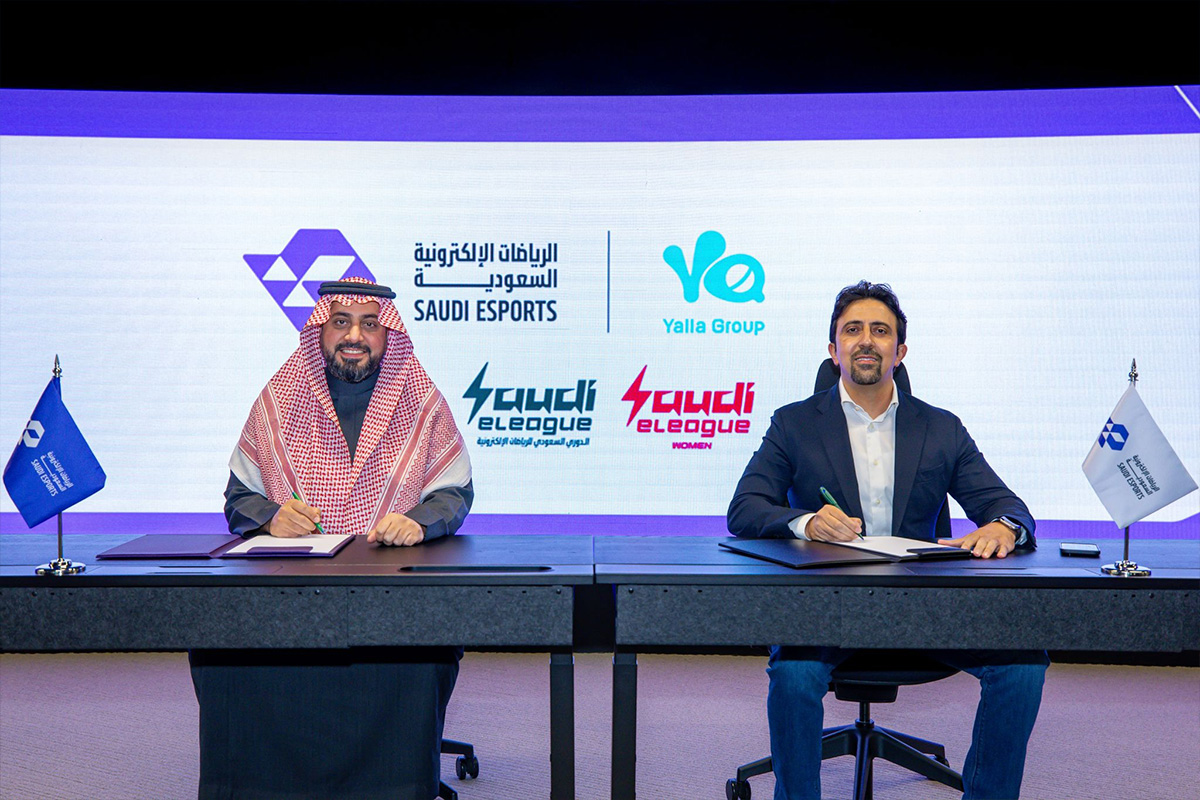
Yalla Group Limited, the largest Middle East and North Africa (MENA)-based online social networking and gaming company, has announced a strategic partnership with the Saudi Esports Federation (SEF) to drive the continued expansion of Saudi Arabia’s national esports ecosystem, broaden opportunities for local talent and promote greater inclusivity in competitive gaming. The partnership represents a key element of Yalla’s strategy to deepen engagement in Saudi Arabia, one of the region’s most important growth markets.
Supporting the aims of Vision 2030 and the National Gaming and Esports Strategy, SEF and Yalla Group signed two Memoranda of Understanding (MoUs) to further develop esports within the Kingdom and establish new pathways for aspiring talent to develop key skills and experience.
Under the partnership agreements, Yalla has been appointed Official Event Partner of the Saudi eLeague (SEL) 2026, the Kingdom’s premier national esports competition. Support for the Women’s Saudi eLeague will be a key focus of the partnership, aligning with Yalla’s dedication to promote inclusion, community development and broader participation in digital entertainment. By cultivating female talent and establishing structured pathways for women’s participation in competitive esports, Yalla aims to contribute to the growth and vitality of Saudi Arabia’s gaming sector.
In addition, Yalla will launch a talent development programme in collaboration with the SEF’s Saudi Esports Academy, designed to foster local esports talent through training, mentorship and competitive experience. The initiative aims to strengthen foundational talent pipelines and improve the long-term competitiveness of Saudi Arabia’s esports ecosystem.
Saifi Ismail, President of Yalla Group, said: “This partnership marks an important step in our engagement with Saudi Arabia’s esports sector. By supporting both national competitions and talent development, we are proud to contribute to the sustainable growth of the Kingdom’s gaming ecosystem.”
“Partnering with a MENA leader like Yalla Group brings valuable regional expertise to the Saudi eLeague. This collaboration is crucial for amplifying the league’s prestige and ensuring it delivers a world-class experience for players and fans,” said Ibrahim Alsheddi, Chief Shared Services Officer at the Saudi Esports Federation.
The post Yalla Group Announces Strategic Partnership with Saudi Esports Federation appeared first on Eastern European Gaming | Global iGaming & Tech Intelligence Hub.
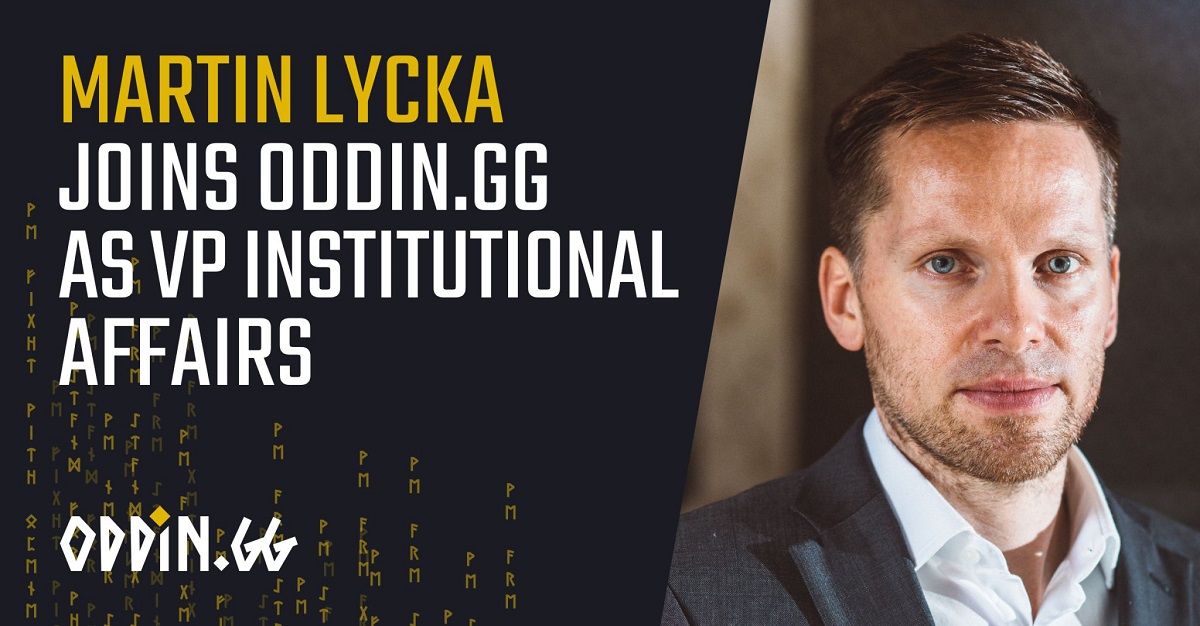
Oddin.gg has named Martin Lycka as Vice President of Institutional Affairs, enhancing the firm’s knowledge in regulation and responsible gambling as esports wagering grows in regulated markets worldwide.
Lycka offers over 15 years of high-level regulatory and responsible gambling expertise in Europe, North America, and Latin America. Most recently, he held the position of Senior Vice President for American Regulatory Affairs and Responsible Gambling at Entain, where he directed regulatory strategy throughout the Americas and oversaw global esports regulatory issues. He additionally sits on the Board of Directors for the American Gaming Association.
Before joining Entain, Lycka had high-level regulatory positions at GVC Holdings and Paddy Power Betfair, overseeing licensing initiatives and regulatory strategy in various jurisdictions.
In his new position at Oddin.gg, Lycka will collaborate with regulators, policymakers, publishers, tournament organizers, and integrity bodies, making sure the company’s esports betting solutions keep up with changing compliance standards. Situated on the U.S. East Coast, Lycka will aid the company’s growth into more regulated markets worldwide, with this new role highlighting the increasing industry need for suppliers with substantial institutional trustworthiness.
Martin Lycka, VP Institutional Affairs at Oddin.gg, said: “Esports betting has experienced significant development within fully regulated environments. This has been the outcome of proactive engagement, education, transparency, and open dialogue with regulators. Oddin.gg, as an industry pioneer, has built its approach around those principles, and I’m looking forward to supporting the company as it scales across many more global markets.”
Marek Suchar, Co-Founder and Managing Director at Oddin.gg, added: “As esports betting continues to scale, institutional credibility becomes just as important as product quality. Martin brings deep regulatory experience and a practical understanding of what regulators seek to become comfortable with innovative betting products. His appointment strengthens our ability to engage constructively with regulators, addressing integrity, governance, and technological concerns, and to support partners operating in complex regulatory environments.”
The post Martin Lycka Joins Oddin.gg as Vice President of Institutional Affairs appeared first on Eastern European Gaming | Global iGaming & Tech Intelligence Hub.
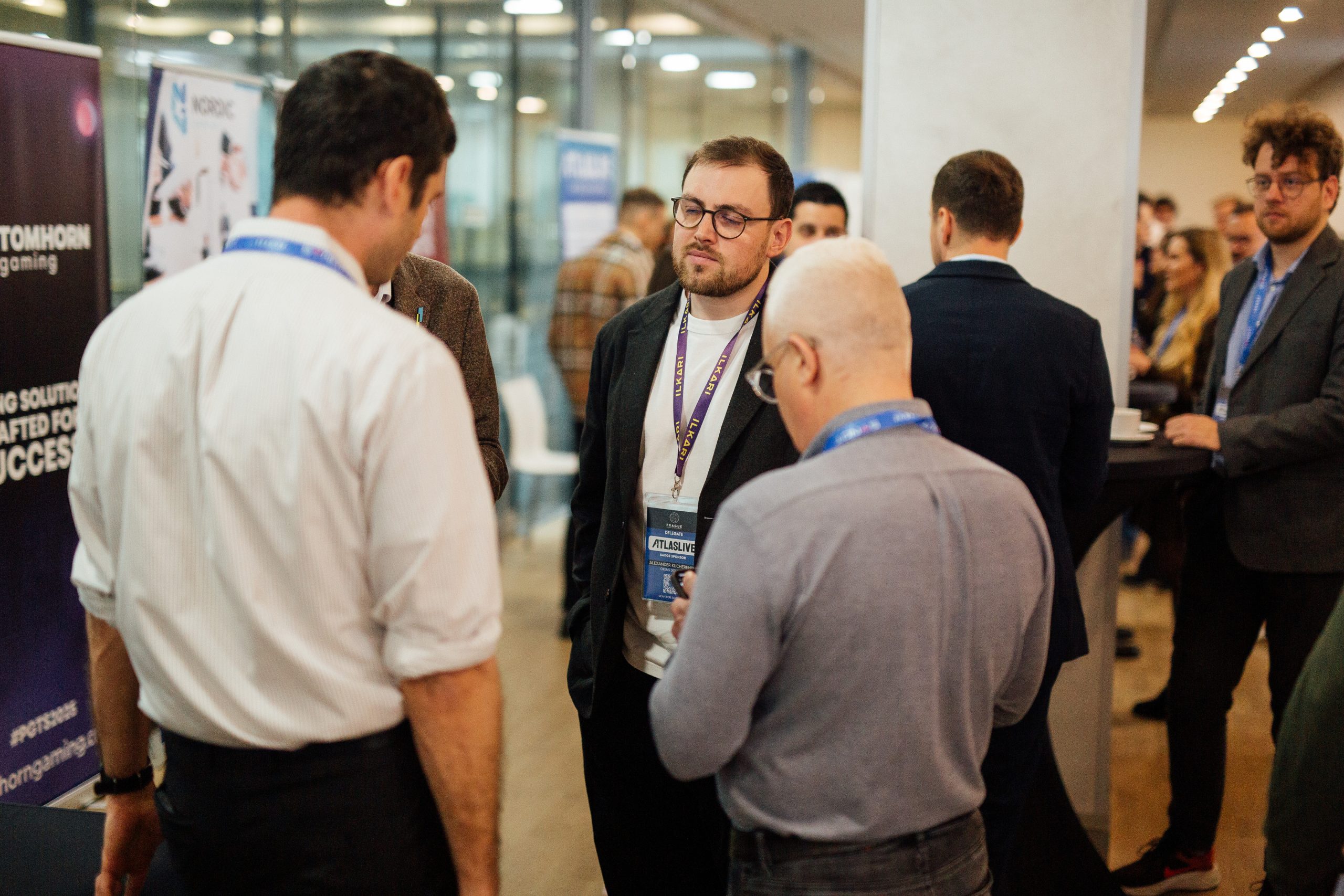
The HIPTHER Prague Summit is shaping up to be one of the most comprehensive events of the year, with an agenda that reflects the fast-evolving landscape of iGaming, fintech, compliance, AI, media, and beyond. With four distinct stages and content spanning two days, the summit promises high-impact insights, cutting-edge knowledge sharing, and actionable strategies for stakeholders across the digital industries.
While only half the agenda has been released so far, what’s already on the table reveals an ambitious and future-forward program. Attendees can expect the remaining schedule—focused on the Expert Panel Stage and HIPTHER Academy—to further raise the bar with industry-leading panels and advanced learning formats.
Stage 1: Compliance & Regulation
This track offers a robust dive into both regional and global regulatory trends, aimed at compliance professionals, legal experts, and decision-makers navigating complex frameworks.
Day 1 will focus on market updates, regulators’ panels, and regional compliance outlooks. Highlights include a Czech Market update, a panel featuring European regulators, and regional overviews from Germany and the Balkans.
Day 2 expands into the global picture, covering enforcement trends, jurisdiction updates from Southern Europe, the USA, and LatAm, and a deep-dive GLI session on certification and trust. The day wraps with an IMGL-led masterclass exploring the intersection of AI, automation, and accountability.
Stage 2: Expert Panels Stage
This track is a powerhouse of innovation-focused dialogue.
Day 1 will feature panels on iGaming, fintech, AI, media, SEO, esports, and business growth. Industry disruptors and thought leaders will gather to unpack the trends driving momentum across verticals.
Day 2 will turn the spotlight to deep-dive panels with operators, suppliers, and advisors sharing battle-tested strategies, future bets, and lessons from scaling globally.
Stage 3: Main Focus Stage
This stage is split into two powerful themes across both days.
Day 1 is the Keynote Arena, with standout talks on branding, visibility, growth, and deal-making. Sessions like “LinkedIn as a Dealflow Engine” and “Branding in the Attention Economy” offer tactical insights for companies looking to sharpen their competitive edge.
Stage 4: HIPTHER Academy
Designed for hands-on learning and skill development, this stage blends education with real-world application.
Day 1 offers masterclasses, workshops, and practical learning sessions, setting the tone for deep engagement.
Day 2 will feature advanced education formats, including certification-oriented sessions, ideal for professionals looking to level up with verified credentials.
Don’t Miss Out – Secure Your Spot Now
With limited availability and high interest across the industry, now is the perfect time to register. Be among the first to access cutting-edge insights, connect with top-tier professionals, and help shape the future of digital industries.
Register today for HIPTHER Prague Summit 2026 and be part of the conversation that drives the next wave of innovation.
The post HIPTHER Prague Summit Unveils 50% of Its Dynamic 2026 Agenda appeared first on Eastern European Gaming | Global iGaming & Tech Intelligence Hub.

-

 Canada7 days ago
High Roller Technologies Signs Letter of Intent with Kindbridge Behavioral Health to Support Responsible Gambling in Ontario
-
Claire Osborne Managing Director of Interactive at Inspired Entertainment7 days ago
Two new slots from Inspired — Coin Inferno Step ‘N’ Stack™ and Mummy It Up™
-
Latest News6 days ago
ACR POKER GIVES PLAYERS A SHOT TO QUALIFY ONLINE FOR $700,000 GTD ENJOY POKER SERIES MAIN EVENT THIS FEBRUARY IN URUGUAY
-
Amusnet6 days ago
Week 5/2026 slot games releases
-
Compliance Updates5 days ago
National Council on Problem Gambling Adopts 1-800-MY-RESET as New National Problem Gambling Helpline Number
-
Africa7 days ago
Sun International Appoints Mark Sergeant as Chief Operating Officer of Gaming
-
Ani Isakhanyan5 days ago
FeedConstruct Expands its Presence in Latin America
-
Compliance Updates5 days ago
Digitain Secures Isle of Man iGaming Software Supplier Licence