Interviews
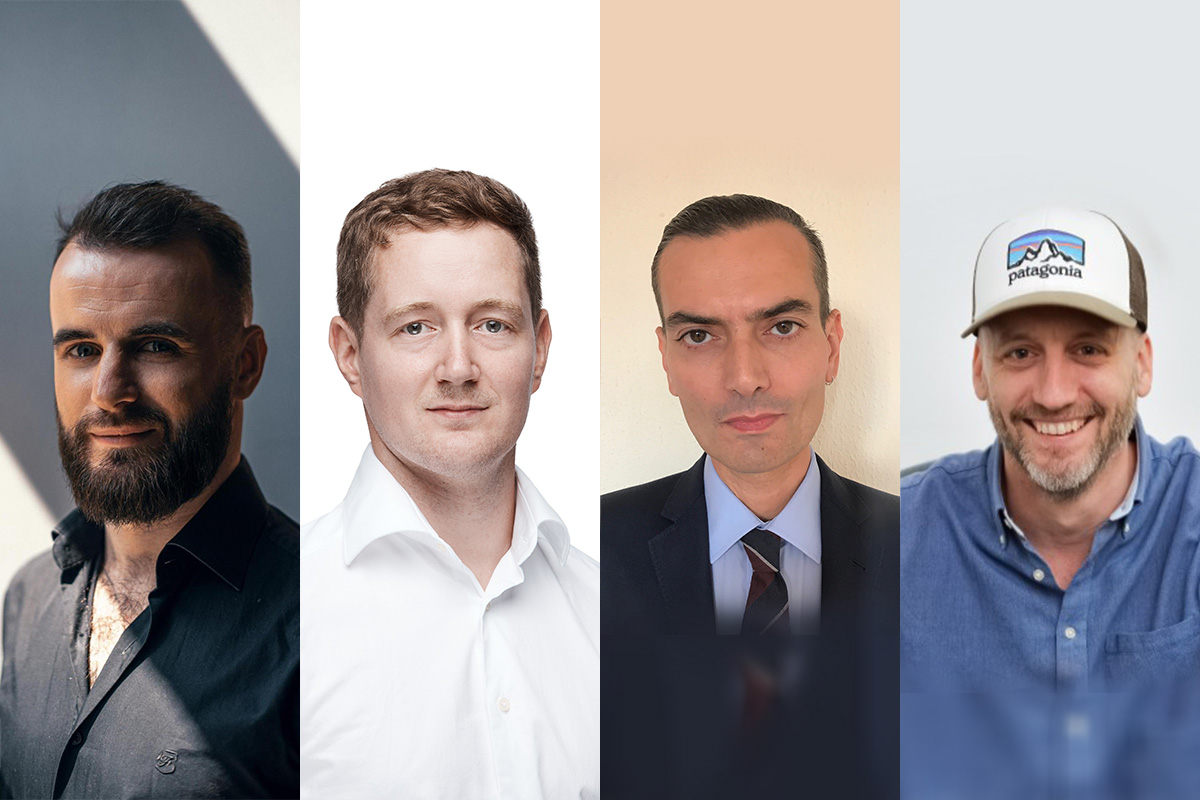
Mobile-first gaming round table with experts from Habanero, Evoplay, OneTouch and ESA Gaming

In recent years, mobile-first gaming has rapidly risen as smartphone companies continuously enhance their products, making it easier for players to access games whilst on the go. This technological development has brought forward an industry shift, that has seen iGaming companies redirect their focus towards mobile-first content.
With more and more companies embracing the increase in mobile gaming, we explored the success of this new generation offering and what the future holds.
According to you, what brought forward the increase in mobile-first gaming?
Arcangelo Lonoce – Head of Business Development at Habanero:
The watershed moment came a number of years ago when smartphones finally managed to deliver a properly premium gaming experience. Indeed, phones have improved exponentially to the point where you could argue that mobile technology is as good as if not better than desktop.
This has been made possible by the improvements in ‘light betting’, by which I mean data, allowing players to enjoy parallel matches etc. When you can reach that point, laptop gaming becomes obsolete as you can flick through just as seamlessly as on desktop. Just of course like the wider world, when it comes to relaxing on the couch, mobile will always be your primary channel over a laptop – whether that’s shopping, gaming or Instagram.
Of course, with HTML5 becoming ubiquitous and flash disappearing has accelerated the mobile-gaming trend. You can look at emerging markets or countries that never went through the ‘laptop era’, as given the leap in tech developments in the last decade, it means that smartphones are simply more affordable and accessible to players than MacBooks ever will be. Latin America is a great example of this.
Vladimir Malakchi, CCO at Evoplay:
The accelerated growth and penetration of global smartphone usage across every corner of the world is the key driver behind the impressive rise we have seen in smartphone gaming. Data from 2021 reveals that over 6 billion people use mobile phones worldwide, and this number continues to grow, with the 5G standard being one of the catalysts. Emerging markets are catching up fast too – with the majority of regions now greatly investing in the development of mobile technology.
In addition to this, according to our research, three-quarters of gamblers prefer to play on mobile, doing so every 4.2 days on average. Other sources show that in 2020, 50% of the online gambling revenue came from mobile, which isn’t surprising as 75% of traffic belongs to mobile. The numbers clearly don’t lie, and the high demand for mobile gaming is a call to action for suppliers to accept this trend.
Thomas Smallwood, Head of Marketing at ESA Gaming, comments:
A mix of technology and convenience is the short answer. Mobiles now provide a simpler and faster way for players to enjoy their favourite games. It’s fair to say that the trend towards mobile has also probably been accelerated during the pandemic as the move from retail to online has quickened.
Madis Raus – Head of Product at OneTouch:
Obviously, the widespread use of smartphones and availability internet has had a positive effect on mobile-first gaming. These days people use mobile devices to perform certain tasks, their far easier to use and more accessible than laptops and desktops. Additionally, mobile devices allow people to do things whenever and wherever they want, whether they’re commuting or simply passing time.
By making the mobile-gaming experience seamless and engaging at the same time, players will continue using mobile devices for entertainment. This is something which will naturally increase over time, as mobile devices continue advancing and being capable to perform at higher standards.
Are there any verticals that perform better on smartphones? And how can developers improve those verticals that don’t work as efficiently?
Arcangelo Lonoce:
As an expert on slots and table games – I would say table games are inherently easier to develop and render when performing on smartphones compared to slots, but if we look at numbers, slots are dominant, with a market share of around 85% or so, which shows that the player demand this vertical more than any other.
However, looking at table games, there’s a lot to be said about performance. They have excellent stable rates of acquisition and retention – so there is less motivation to tweak a formula that is clearly working. They also have higher average bets, greater lifetime value and from a mathematical and user interface viewpoint, I would certainly rank them up there as one of the best performers.
Given market demand though, we can assume slots will always retain the lion’s share. So how does one improve the vertical? Stories, subject matter and narrative are key, as is the UI, although we mustn’t forget, it all starts with the maths – you need to get that right first, and then you can start talking other improvements.
Vladimir Malakchi:
Actually, all verticals and mechanics perform well on smartphones. However, while creating a product for hand-held devices, there are key principles to follow: easy-to-understand UX, simplicity of a game, uncomplicated graphics, and adaptation to vertical view.
One thing is for sure – it makes no sense for suppliers to choose a specific type of game to develop for smartphones. The fundamental point is to accept that the mobile-first approach is a basic demand for players.
Thomas Smallwood:
I think sports betting is a natural vertical for mobile. With the ability to play high-quality live streams on mobile devices, in-play betting is no longer just for retail or desktop and the fact that bets can be placed anytime, anywhere is a major factor.
The limit in phone storage also means that casino can be trickier on mobile, especially in apps where users often need to download the games they want to play exactly because of this limitation.
These are two factors behind ESA Gaming’s development of ultra-lightweight games for sportsbooks. The EasySwipe suite of games is accessed through a widget we have designed and developed which enables players to seamlessly move between games and sports bets rather than being re-directed to another part of the site or a cumbersome casino page. The sports betting experience is unhindered and conversion to casino games happens at lower cost.
Madis Raus:
Mobile device usage differs slightly from desktop usage, this means that mobile users have different expectations. Since people use mobiles to pass time or when they’re in between things, the attention span of the mobile user is often shorter, these are things to consider when providing content to them.
In my opinion it’s the matter of the speed of games rather than specific verticals, fast games tend to perform better, as the player doesn’t need to wait too long, which is a bonus especially when they’re looking to kill some time.
To improve further, developers need to consider the peculiarities of mobile device usage and think about ways of implementing content that doesn’t depend on usage patterns, making the products more appealing and engaging to players.
What are the difficulties of adopting games to function on smartphones?
Arcangelo Lonoce:
Habanero as a company operates with a mobile-first approach, therefore, we don’t find any real challenge when it comes to rendering games on mobile since our products are designed with smartphones in mind. After all, we disposed of Flash in 2015 and since then we have always developed our games using HTML5.
Vladimir Malakchi:
Adapting a visual component to all models of smartphones, including early versions, isn’t an easy task but is possible thanks to cutting-edge technologies. They allow us to create visually stunning products compatible with most smartphones. The optimisation of UX, UI, resolution and graphics for all platforms is the main priority, as we want to ensure that our players get high-quality content on any device.
Another challenge, which we have also overcome, is the amount of data used by games. Our proprietary game engine Spinential, developed in-house has been a real gamechanger for us, accelerating the loading speed and optimising the storage capacity. This solution has been designed with a purely mobile-first approach in mind, and we’ve really reaped the benefits.
Thomas Smallwood:
The obvious thing is the greatly reduced screen space and the practicality of a hand-held device. Because of this, we have chosen to develop ‘mobile-first games’ and move away from adapting desktop content. This means every aspect of the game is thought out with the mobile user in mind, ideally with the ability to do everything just with a thumb. Of course, the challenge is to make everything on the screen accessible, so it is a constant evolution as the user demands more features.
Madis Raus:
Different game types have different elements, for slots it may be the screen ratio, for example how to make symbols as big as possible and still keep the popular grids. Alternatively for Live games, you need to consider the screen size, ensuring that the player can see what is happening in the stream and whether the cards shown are in sync with what’s being reported etc.
As mentioned above, when adapting games, it’s important to consider the peculiarities of mobile device usage, developers must think about ways they can make games as fast and seamless as possible but at the same time still engaging on a smaller screen.
How fundamental is it for operators and developers to adopt a mobile-first strategy?
Arcangelo Lonoce:
It’s extremely important, otherwise you’re missing out on 80% of the market! There were some suppliers that were very late to the HTML5 adoption, which made it incredibly frustrating for operators – plenty of which I saw first-hand back when I was at BetVictor during the 2010s. To put things into perspective today, you simply cannot launch a game as without considering a mobile-first approach, since you’re forgoing an absolutely huge amount of revenue.
Moreover, mobile gaming allows people to play remotely, therefore players don’t need to depend on a desktop or laptop to participate in their hobby. With mobiles advancing and 5G becoming the norm, we’re now looking at a whole new world of possibilities to enhance mobile-first even more, the ramifications of which will be huge, especially when it comes to content and loading speeds.
Vladimir Malakchi:
Keeping in mind the number of global smartphone users, prioritising mobile devices when creating gaming products is a must. Moreover, it is expected that in a couple of years, this number will grow to seven billion. Currently, the US, China and India lead the list of countries with the highest rate of mobile penetration. However, as the latest data shows, the potential of emerging markets in regard to mobile usage shouldn’t be underestimated. This is a direct sign for suppliers to throw all efforts on products focused on mobile gamblers. The mobile-first approach isn’t just a trend, it is a philosophy, which is getting more and more supporters. There is no better time to embrace mobile-gaming than now.
Thomas Smallwood:
You could argue it is a percentages game. When desktop provided the higher user count it made sense to develop content for desktop. With the advancements in mobile technology, the increased numbers using mobile and the loyalty associated with apps I think a ‘mobile-first’ strategy is key in the growth of any gaming brand.
Madis Raus:
This is very essential, especially when it comes to companies surviving in this extremely volatile industry. Just by looking at how much traffic is already generated from mobile channels, you can see how strong the area is, and there’s nothing that indicates a potential decrease in mobile device usage.
If companies wish to attract modern players, it is really essential to adopt a mobile-first strategy, as modern players will look for a seamless mobile experience, if it isn’t available on your brand then they will simply look elsewhere.
With smartphones continuing to evolve, what does the future hold for mobile-first gaming?
Arcangelo Lonoce:
I would expect mobile-first gaming to be the only way forward – it’s the old debate on how much entertainment is a part of iGaming. Whilst entertaining is a key aspect, you must also keep the experience flawless. Certain things haven’t worked out, 3D gaming for example, as we’ve learnt that people don’t really gamble to get lost into the symbology of the slot – but rather the thrill of the win, which is the entertainment.
So, in my view, mobile gaming will gain an even larger market share than it has now, it could soon become by far the only way of enjoying this experience. Additionally, with new demographics coming online, the future holds lots of opportunities for interaction of everything from social to multiplayer, shared in any possible way. Cross-sell opportunities are also endless, with push notifications and the like, as players can carry their game anywhere they go – whether that’s being entertained at home, when out and about or during the commute.
Vladimir Malakchi:
I am sure that we will see an industry-wide adaptation of gaming content to mobile platforms in the very near future. Once the value of mobile gambling is fully understood, the industry will immediately aim to transform existing and future products.
I believe the iGaming world will continue to develop in this direction as an exponential pace, focusing on innovative technical solutions, mechanics, features and visuals optimised for various mobile platforms, models and markets. The key is to find the balance between the quality of gaming products and their adaptation to mobile – and getting this right is where developers need to be investing their energy.
Thomas Smallwood:
Smartphones will continue to develop but I would place more focus on the changing user demands. New game types, more regional content as well as promotion and gamification features are already driving us to change the titles we design and develop.
We will soon launch new in-game promotional tools for operators as well as new style of games, including bespoke games.
Madis Raus:
I believe that the introduction of 5G will bring a ton of opportunity to the table, as the introduction of 5G will bring forward a range of improvements to speed and accessibility. This may also give developers a bit more freedom when they think about creating games for mobile phones.
With smartphones being so advanced these days, the size of the game doesn’t matter as much as it once did, the quality is now the utmost important factor when it comes to designing new mobile-games. This is the same with live content, with the technological improvements, it’s now easier to provide good quality streams, so now developers need to focus on other elements that will make their game stand out from the competition.
Powered by WPeMatico


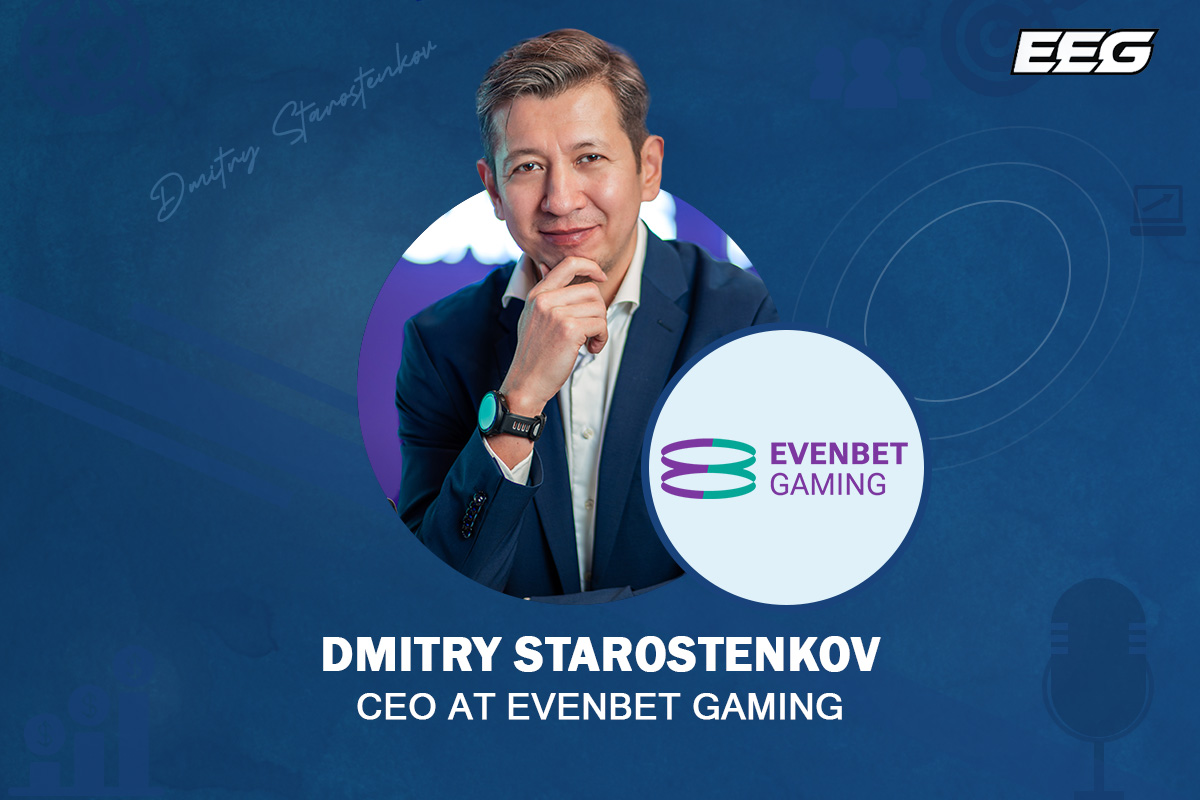
EvenBet Gaming’s CEO, Dmitry Starostenkov, speaks to EEGaming about the company’s expansion into the casino vertical, what drove the decision, what it took to build, and what it means for operators looking to grow beyond a single product.
EvenBet has spent more than two decades building its reputation in poker. What told you the time was right to move into casino?
We kept having the same conversation with partners who trusted our poker infrastructure, asking whether we could support them on the casino side too. For a long time, our answer was to point them elsewhere but, with competition intensifying, that became harder to justify.
But there’s a wider shift happening too. Operators are under real pressure to extract more value from their existing player base. Acquisition costs are rising, regulated markets are tightening, and the days of building a sustainable business on a single vertical are gone. Operators who are growing have found more ways to extend player value across their full product offering, and that requires purpose-built infrastructure.
We have the technical foundation and understand the player behaviour. The question became when to make the move, and how to do it in a way that was genuinely an improvement on what was already out there.
Moving from the single poker vertical into a full casino platform is a significant undertaking. Where did the product challenges actually lie?
The single player account sounds simple until you’re actually building it. Shared balance, unified player profile, seamless movement between poker and casino all create complexity that compounds quickly. The other challenge was scope. A game aggregator covering 15,000 titles across 230-plus providers has the potential to create real infrastructure problems. We had to build something that could handle that scale without becoming unwieldy for operators to use. And we didn’t want to compromise the poker product to get there either – that was non-negotiable. Everything had to work as one system, not two products stapled together.
How does cross-vertical conversion work, and why does that matter so much to operators right now?
The friction in moving a player between verticals has always been the drop-off point. Separate logins, separate wallets and separate experiences are all different reasons for a player to disengage. When that’s removed, the conversion happens more naturally.
What makes the difference is having product mechanics that actively pull players across. One Click Poker removes the traditional lobby entirely, which has historically been the biggest barrier for casino players who find poker intimidating or unfamiliar. Spins Poker goes further by taking player-versus-player gameplay and wrapping it in slot-style mechanics, so the experience feels native to a casino player from the first session.
In the other direction, casino rewards sitting inside the poker environment give poker players a natural reason to explore. It becomes a two-way pipeline rather than a one-way push, and operators can see that working in the data. That’s what cross-vertical conversion looks like when the product architecture supports it properly.
What does EvenBet Gaming now offer an operator that they genuinely can’t get elsewhere?
Most casino platforms don’t come with a serious poker product attached, and most poker providers don’t have a credible casino offering. We’re in a fairly unique position in that we can genuinely deliver both, and the integration between the two is real and not just a partnership held together by an API. In terms of who this is for, it’s operators who want to grow. Whether that’s a new entrant who needs a clean, fast route to market, or an established operator who has a casino product but knows they’re missing a revenue stream without poker. We’re positioned to offer that market entry and scalability, without compromising quality.
The post Behind EvenBet Gaming’s strategic evolution into casino appeared first on EE Gaming | Global iGaming & Tech Intelligence Hub.


Looking beyond Brazil, which LatAm market stands out most right now, and what makes it attractive?
Liam Hoofe, Content Strategist at GameOn
Based on our research for GO Intel, I think Chile is the market to watch out for the most. The size of the opportunity is potentially massive, with the Chilean Senate’s own figures estimating that more than 5 million Chileans are already gambling online.
The demand is definitely there, and broader discussions about a regulatory framework are underway. Our estimates in GO Intel also put channelisation rates at 80% if enforcement and regulation ran smoothly.
The proposed ‘cooling-off’ period for operators already active there is also quite a unique approach, and it will benefit those who approach the market with the right foundations in place.
Of course, as we’ve seen with Brazil, there will no doubt be a lot of public debate around the market, and the tax structure could be complex, but of the three we researched, this one still stands out the most.
Paulina Hovar, Lead Sales Manager LATAM at BGaming
Right now, Mexico and Argentina stand out the most to me.
Mexico has been showing steady growth for a while now. It’s already a fairly mature market with strong operator presence, but there’s still plenty of room to scale. At the same time, one of the main things to watch is the tax situation and how regulation may develop in the future, since that could impact profitability and market dynamics.
Argentina is interesting for a different reason. The market is regulated at the provincial level, so it’s much more decentralized. That creates opportunities because entry can be more flexible, but it also means you need to understand the local landscape and choose partners and regions carefully.
Ramiro Atucha, Board Advisor to Kiron Interactive
Mexico stands out. The size of the market alone makes it attractive, and the current regulation is already acceptable enough for public companies to feel comfortable operating there. It’s also moving toward a more formal framework, so there’s still margin to grow. Beyond Mexico, I’d point to Chile, certain provinces in Argentina, and Colombia. All three have their own dynamics, but they’re markets you can’t ignore right now.
When entering markets that are still evolving from a regulatory perspective, what’s the right balance between moving early and waiting for clarity?
Liam Hoofe, Content Strategist at GameOn
That’s the million-dollar question, and it’s one I’m not sure there is a 100% correct answer to. For me, it’s about building relationships, ensuring you have the right infrastructure in place, and understanding a market before you invest.
Operators and studios that just enter with no understanding of the culture and of the way the regulatory landscape could adapt are putting themselves at risk of failing.
Trying to remain one step ahead of regulation and working alongside the regulators to help the market mature is always going to be a much better approach than just waiting for regulation to come into place and being reactive.
Paulina Hovar, Lead Sales Manager LATAM at BGaming
It depends on how mature the market is.
If the regulatory framework is already clear and established, then the best approach is to operate fully within the licensed model from day one.
But in markets that are still in a gray or transitional stage, where operators are already active, it can make sense to take a more gradual approach. That could mean building partnerships, adapting the product to local needs, and preparing for future regulation before fully committing.
You also have to be very careful about legal and reputational risks. Every market is different, so timing and level of involvement should be assessed on a case-by-case basis.
Ramiro Atucha, Board Advisor to Kiron Interactive
As early as possible, as long as it isn’t illegal or forbidden. That’s the right moment to enter and transition through the regulatory process. Brazil is the clearest example. Sports betting was legalized in 2018, but the full regulatory framework only came in late 2023, with licensed operations starting in 2025. The operators that used those years to attract players, test the market and build name recognition without breaking the law made a real difference. By the time regulation arrived, they were already established.
As markets like Chile, Peru, and Uruguay develop, what will separate the brands that succeed from those that struggle?
Liam Hoofe, Content Strategist at GameOn
The biggest differentiator for me is localisation, and by that, I mean real localisation, not just translating a game into Spanish and calling it a day. This means actually creating products and promotions that speak to local audiences. LatAm is not just some big monolithic market with a one-size-fits-all solution – brands that succeed there are the ones that understand this. The ones who know that a player in Chile is not the same as one in Uruguay or Brazil are going to be the big winners.
On top of that, working closely with regulators and showing genuine concern for players’ well-being in these markets will make a huge difference. It’s not enough anymore to just display simple responsible gambling tools; players want to see it in your actions, and it’s obvious to them which brands really care and which are just ticking boxes.
And finally, local partnerships. Some of the most successful companies we work with are those that really integrate themselves and find local partners that offer genuine insight into communities, and can be leveraged to build trust. This can be achieved in a number of different ways, whether it’s through working with local content creators and influencers or getting involved with local charities and events.
Paulina Hovar, Lead Sales Manager LATAM at BGaming
As markets like Chile, Peru, and Uruguay continue to develop, the following three factors will set successful brands apart from the rest.
First, strong local partnerships. Without people on the ground and a real understanding of how each market works, it’s very difficult to build a sustainable position.
Second, product adaptation. Translation alone is never enough. Companies need proper localization that reflects user behavior, cultural differences, and local audience preferences.
And third, regulatory readiness. The companies that invest early in certification, compliance, and building the right processes will have a major advantage later on. It’s expensive and takes time, but in regulated markets, long-term preparation usually makes the difference between short-term growth and lasting success.
Ramiro Atucha, Board Advisor to Kiron Interactive
Brands that bring international experience and proven competitiveness from other markets, combined with genuine local understanding, will get the best of both worlds. The international background gives you credibility and product depth. The local presence gives you a product that’s actually adapted to how players in that country behave. Neither side works on its own. In Chile, Peru, and Uruguay, the operators who get this combination right are the ones who’ll separate from the pack.
The post LatAm: Beyond Brazil – Chile, Uruguay and Peru’s Regulatory Trajectories appeared first on Americas iGaming & Sports Betting News.
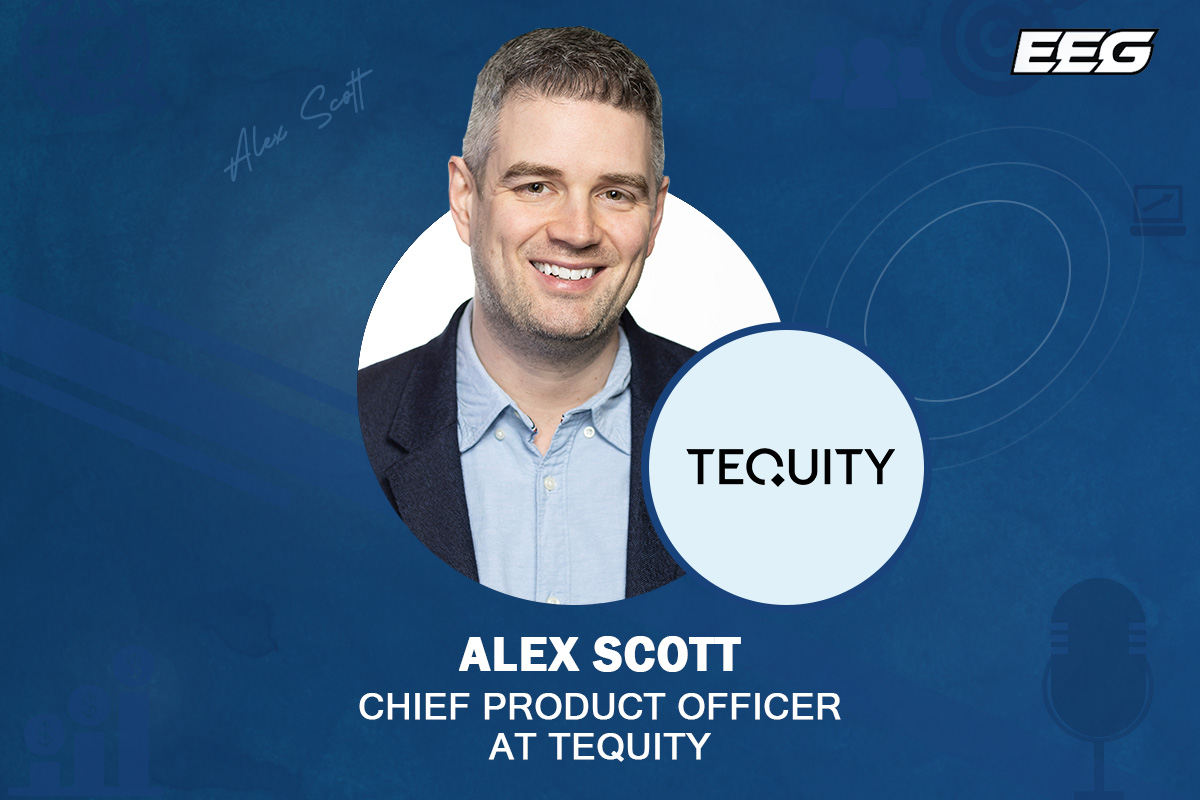
Following his appointment as Chief Product Officer at iGaming software pioneer Tequity, industry veteran Alex Scott outlines his vision for the company’s expanding product suite. With over 20 years of leadership experience, including driving WPT Global to become the world’s second-largest online poker room, he shares his insights on how Tequity’s approach is redefining both the games players enjoy and the way they are distributed.
You have held senior leadership roles at major operators and suppliers. What convinced you to join Tequity, and what are your main priorities as CPO?
Tequity is a business that I’ve admired since I first became aware of it. In that time I’ve heard so many positive things about how the company is able to move very quickly and decisively, while still delivering ultra high quality products for its partners. When I started interviewing for the position and meeting the people involved, that only reinforced the positive impression I had. It was clear to me that this was a company that is at the forefront of innovation in the iGaming space, creating and delivering content that is fresh and exciting.
My priority as CPO is to further accelerate the development of top-quality products that are highly relevant to today’s players. I’m excited to roll up my sleeves and get stuck in – there are so many possibilities!
Tequity recently secured BMM Testlabs certification for its RNG and the first batch of Originals titles. How does that accelerate your product roadmap?
This certification will open up many more potential customers for Tequity, and therefore many more opportunities for businesses to take advantage of Tequity’s services, like our bespoke Exclusives and our top-performing Originals. Operators fighting for market share are always looking for those added-value elements that can set them apart from the competition and our fully brandable, customisable and feature-packed content offers that key point of difference.
It will also enable the studios using our RGS and Publishing solutions to widen their own distribution and reach many more potential customers as well – just another reason to choose our RGS. We have seen the strong demand for our games and solutions from partners all over the world, and we believe that this appetite will be more than matched by operators in the regulated market space.
Finally, it represents s a step towards a wider regulated market expansion which I am excited to be involved in.
Player preferences are moving decisively toward fast-paced, community-driven experiences. How do Tequity’s game divisions cater to this next generation of player engagement?
One of the things that sets Tequity apart is that the company truly understands what the modern generation of players are looking for. They are discovering online casino in a very different way to past generations, and require simpler, easier to understand, more socially-driven content if you want their full attention. Today’s players expect instant gratification and seamless, mobile-first experiences that fit into their fast-paced lifestyles. They also want gameplay to feel like less of a solitary activity and more of a shared event.
Having spent recent months immersed in casino game development for the crypto generation, I’m really looking forward to contributing to these efforts and having an impact of my own.
You will be joining the Tequity team at iGB Live in London next month. What is the key takeaway you want operators and studios to leave with?
As the newest Tequity signing, I’m looking forward to meeting the rest of the team and many of our partners and customers at iGB Live.
Tequity is an extremely fast and capable company that builds high-quality, interesting products at the cutting-edge of the industry. My hope is that operators and studios leave the event understanding our expertise and capabilities. But I also want them to leave with a sense of the enthusiasm and passion that we have for building great games that stand out from the crowd.
The post Q&A with Tequity’s new Chief Product Officer Alex Scott appeared first on EE Gaming | Global iGaming & Tech Intelligence Hub.

-

 Bragg Gaming Group7 days ago
Massive Gaming launches Blitzcrown titles on Superbet Brazil via Bragg Hub
-
Alex Cuoci7 days ago
Wealthsimple and Kalshi Partner to Bring Prediction Markets to Canada
-
Compliance7 days ago
HIPTHER Launches HALLO: The Standard in Compliance Expertise
-
7Games7 days ago
7Games, Betão & R7 Launch FIRST.bet Sportsbook in Brazil
-
Bonusetu.com6 days ago
Finland Sets Casino Gambling Risk Limits at 2% of Income, 4 Days, 2 Game Types
-
Compliance Updates7 days ago
HIPTHER Launches HALLO: The Standard in Compliance Expertise
-
30-0 Kongeserien6 days ago
Kongebonus launches 30-0 Kongeserien Eliteserien fantasy draft game
-
Compliance Updates5 days ago
Dutch Gambling Trade Association Sues Meta Over Illegal Gambling Ads