Interviews
Branding & shaping the perfect corporate image

What’s in a name?
Branding is key for operators, but shaping the perfect corporate image is also important in the ultra-competitive world of iGaming studios. In this feature, we look at the reasons why already successful suppliers would seek to craft fresh identities.
What key factors are taken into consideration when creating a fresh identity for a games studio?
Joey Hurtado, Managing Director of Games at Wizard Games: In this saturated market, it is important that we focus on our distinct competitive advantages. This boils down to what we can provide for our partners, based on a level of experience and knowledge within our ranks that we believe is up there with the best in the industry. At Wizard Games, we have assembled a wonderful management team with decades of experience in the industry and a studio team that boasts tons of creativity. Add to the mix an extensive network of operators who are already offering our games, extremely fast integration capabilities, the tournament tools offered by Pariplay, and the support of our solid public parent company, Aspire Global, and it is clear that our brand stands out from the crowd. We know the market and our finger is on the pulse of what players want across major industry operators. This gives us the advantage of creating exactly the sort of content people are looking for in different markets.
Yanina Kaplya, Head of Marketing at BetGames: There are many reasons for creating or updating a brand image for a games studio, (or indeed any other type of business). This can range from reputational and international expansion or repositioning to reflect a company’s new vision. Depending on the exact reasons driving it, there will be external factors such as target market trends and culture, the wider industry and product portfolio – and of course, the brand’s archetype. Internal factors can also include how we see and position ourselves, as well as the mission, vision, and value of the company not only as a product provider but also as an employer. Invariably, a company may need help from an external consultancy to see the bigger picture, while some companies decide to create their own brand image and identity in-house, as they have internal brand ambassadors who can show them the way to go. Defining your brand personality, your target audiences’ preferences, and value proposition can help greatly in setting a clear identity for a company. Looking at the gaming market today, we can see competition is fierce and every brand wants to cultivate uniqueness through product or brand identity and messaging to be able to differentiate itself.
Vladimir Malakchi, CCO at Evoplay: The concept of a brand is much more fundamental to a game studio or developer, at Evoplay we are in the fortunate position of being a brand that has a proactive philosophy on creating games, this is something not everyone in the industry has. Having a clear brand identity makes it very easy for partners and consumers alike to understand the company’s position and how it conducts itself across its markets. It’s the perfect reflection of a company’s vision, goals, and ambitions. When it comes to making an impact on the global stage – the most important is a well-formed brand compass that will be the landmark and goal behind every step of the company – vision, mission, values, strategic goals, and purpose as a business. Since the main barometer of a gaming studio’s value is the games it provides, it is crucial to understand the uniqueness of the games being created by the company, as well as what it means to the player and partner, and how it will be perceived by competitors. These insights foster a path for the company’s development and lay the foundations for further activity.
Stay close to an existing well-known brand, or move in a completely new direction: what persuaded you to move down one route or the other?
Malakchi: I wouldn’t say that Evoplay started moving in a completely new direction after the rebranding. The rebrand was about creating a new starting point in the Evoplay story and a transition to a new level, which is quite logical and harmonious in light of the great achievements made in the last 2 years. It serves as recognition of the experience we have gained over 3 years in the market, as well as setting more global goals and methods of achieving them. Some paradigms have remained with us and are still the basis of the company, some have been modified and adapted to new visions and beliefs, and some have been expanded due to stronger capacity and resources.
Kaplya: We are very proud of having built our BetGames brand and product portfolio completely from scratch. Our success has stemmed from our passion for unique products and solutions, which is such that it prevents us from stepping away from our core values and vision. In rebranding, we wanted to keep the vibrant, cool, visual themes of BetGames, as well as our recognizable name, for both our business partners and legions of fans. These factors give us the confidence and knowledge that our brand has a great reputation in the industry and that’s something we want to maintain throughout our lifetime. BetGames recently celebrated its 10th anniversary, and we’ve reflected this important milestone with an evolved business statement, upgrades to our operations, as well as corporate strategy and team alignments. The main driver behind our rebranding was our strategic plan to develop our corporate identity over the next decade. We identified a clear vision on a logo, fonts, color palette, and photography that would reflect how we grew from a start-up to a global entertainment provider.
Hurtado: This was a question that we considered extensively during the brand creation process before we reached the conclusion that our identity should lie within the middle ground between innovation and tradition. We have since focused on transmitting this identity to potential partners by embedding the concept within our brand design, guidelines, product, and every aspect of our communications. We see ourselves as a progressive brand. That means our games are deeply rooted in what players want, which is in the main set of traditional themes and features. From that starting point, we innovate – gradually and not in a disruptive way, incorporating technological advances, creative features, and attractive bonuses, all the way testing the results game by game. So far, this approach is working perfectly. We have achieved notable progression with each game release in terms of reception, which is a testament to our studio team’s hard work in evolving our offering.
Does the name, logo, and presentation of a brand tell a story in itself, or is it all about the games?
Hurtado: The expression of our brand identity is achieved through a combination of the logo, name presentation, and design. The Wizard element represents a wise character who constantly comes up with outstanding creations that nobody expected. As a universally recognizable character from a range of fantasy stories, the appeal is nostalgic while also hinting at the creation of new, surprising solutions. The combination of tradition with modernity is also present within the design of our logo, website, and visual elements.
Kaplya: We do have a story behind our logo. When you look at it – it’s a simple, recognizable, and unique mark that represents BetGames as well as its operating principles. The ‘B’ and ‘G’ in BetGames are combined in our new logo to represent our core value as a people company. It also resembles Superman taking flight, his arms pointing to the sky, which perfectly captures BetGames’ commitment to growth and people. While the diagonal lines mirror our dynamic personality, it is also no coincidence that they are tilted at a 24° angle, the same as the earth on its axis, symbolizing BetGames as a global company. The all-new logo is a modern representation of a company with operating principles and ideals at its heart.
Malakchi: The main goal of Evoplay’s rebranding was to take ownership over our brand identity, positioning the company as one with a unique vision for gambling products and a pragmatic approach to doing business in the industry. Everything that comes out of Evoplay, including communications, promotions, and marketing materials, reveals the personality of the brand and aligns with its vision, values, and goals. Our name – a combination of both the words “evolution” and “play” – expresses our desire as a brand, while our logo features the wing of our mascot, an owl, Evo, which symbolizes wisdom and transformation – the exact two powers we’re driven by. Our slogan is representative of our interaction with players and partners – ‘The future of iGaming of Today ‘, where players can enjoy an unparalleled gaming experience, and our partners can improve their business in multiple ways.
What are your brand’s values and how do they relate to your future plans?
Kaplya: We have incredibly ambitious plans for 2022 and our values are integral to them. We are using the best that tech can offer and are busy developing some fantastic ideas that we’ll bring to the market. When it comes to our core values – we start with compassion as we are a people company. Innovation is key, and we always aim to stay unique as pioneers rather than copycats. This is reflected in a soon-to-be-launched new vertical from us in 2022, which we’re all very excited about. Results, of course, always count – and we take pride in never failing on delivery, which I’m sure will continue to place us as a key industry partner through the next decade. Last but not least, we always think big and stretch what is possible!
Malakchi: I have always believed that the brand’s values begin with the corporate culture. It means that in-house values can be incorporated among employees, and directly impact our brand image. Speaking about Evoplay’s values in more detail, they are based on six P’s – People, Partners, Profit, Productivity, Portfolio, Place. Resting on these core pillars, we have been able to achieve our main goals for 2021 and expect to carry this momentum into the New Year by being a responsible employer and trendsetter in the iGaming industry, creating exciting titles, and building valuable partnerships.
Hurtado: The brand personality we have created is reflective of our core values: expertise, modernity, trustworthiness, progressiveness, and entertainment. It connects with our plans for the future, as we continue to add to a team that is rich in expertise, having been within the industry for decades. They know what they are doing and are committed to the continual improvement of our products and services so that we can deliver to players what they want and provide them with the most engaging, entertaining gaming experience. Our commercial team has also grown a lot in quality and quantity and we are striving to deliver the best possible customer service to our partner operators. As anyone can see from looking at our product roadmap, we innovate gradually from game to game, incorporating new, attractive bonus features. Our marketing team has also advanced the quality of our assets and they are working on numerous different projects to substantially improve the asset delivery. This year, we are also set to launch several features that have never been seen in the market before and which we are very enthusiastic about. Watch this space!
Powered by WPeMatico


As the lines between gaming verticals continue to blur, operators are rethinking how live casino content earns player attention and time on site. A new category, Hybrid Live Casino, is emerging at this intersection, blending the trust and clarity of presenter‑led table games with the spectacle, progression, and feature‑driven energy traditionally associated with RNG mechanics.
One of the clearest expressions of this shift can be seen in ENJOY Gaming’s newest release Energy Roulette, which maintains the familiar cadence of classic roulette while introducing multi‑stage engagement moments, including a feature-rich, slot-style hold and win bonus round, that feel native to the live environment rather than added on.
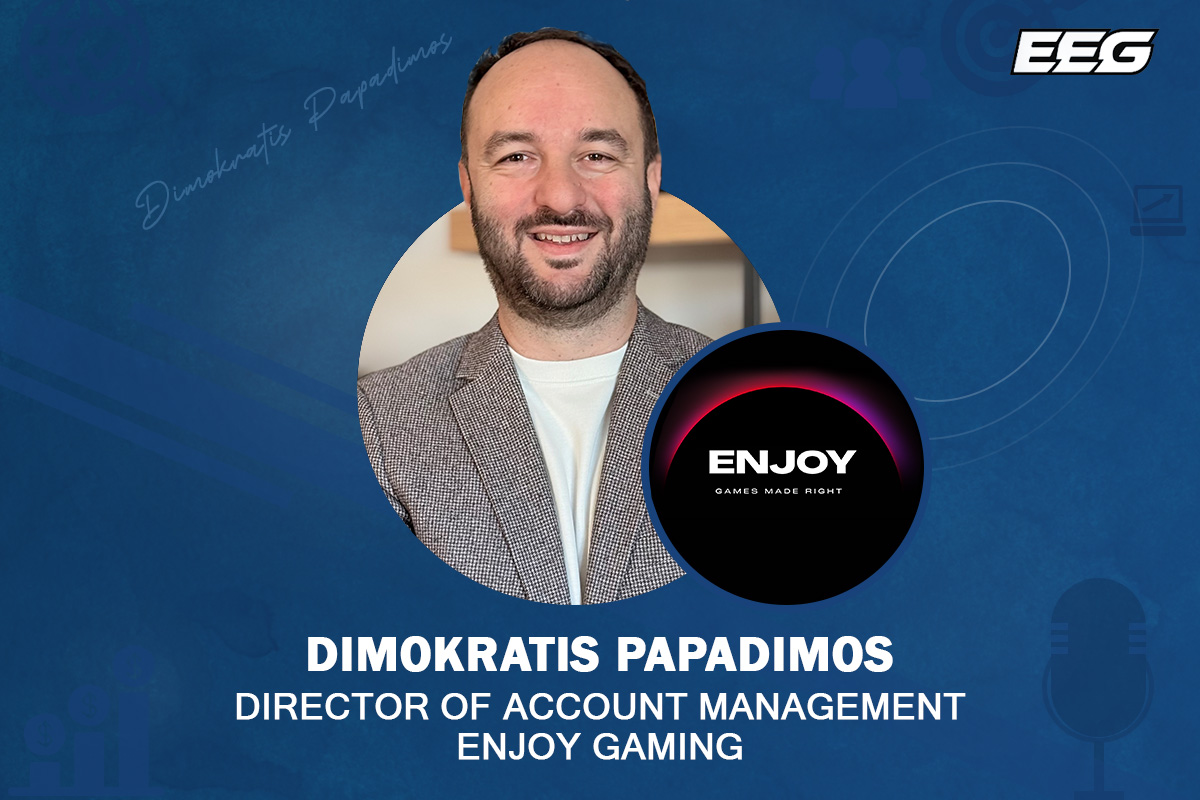
ENJOY Gaming’s Director of Account Management, Dimokratis Papadimos, discusses the evolution of player behaviour, the commercial opportunity behind Hybrid Live formats, and what it takes for suppliers to design experiences that feel cohesive rather than gimmick‑driven.
How has player behaviour evolved in recent years, particularly in terms of crossover between slots and live casino?
Player behaviour has become far more fluid. Historically, players tended to stay within a single vertical, but that distinction is fading. Today’s player is less concerned with product categories and more focused on the quality of the experience, including the entertainment value, volatility, and engagement. What we’re seeing is a growing overlap between slot and live audiences. Slot players are increasingly exploring live environments, but they bring their expectations with them. They’re looking for feature-driven gameplay, bigger moments, and a sense of progression. At the same time, live players are becoming more open to formats that introduce additional layers of excitement beyond the traditional table experience. This convergence is creating a new type of player who expects the best elements of both worlds, rather than choosing between them.
Slots and live casino have traditionally been treated as distinct verticals. Why do you believe those boundaries are becoming less relevant today?
The distinction was largely shaped by technology and distribution. Slots were built around individual, fast-paced sessions with strong mechanics, while live casino focused on authenticity, trust, and social interaction. But those technical limitations no longer apply in the same way. Streaming quality, UI design, and game engines have evolved to the point where you can begin to blend these experiences seamlessly. More importantly, player expectations have shifted. Players don’t think in terms of “slots” or “live” – they think in terms of entertainment. If a product delivers engagement, transparency, and excitement, the underlying category becomes secondary. As a result, the traditional boundaries are no longer a constraint; they’re an opportunity.
How would you define Hybrid Live, and what makes it more than just adding features to a traditional live game?
Hybrid Live is not about layering mechanics on top of an existing product – it’s about designing a new experience from the ground up that integrates the strengths of both verticals. At its core, Hybrid Live combines three elements: the trust and presence of a live host, the structural clarity of a table game, and the engagement mechanics typically associated with slots. The key is balance. If the feature feels disconnected from the live experience, it loses credibility. If it’s too subtle, it doesn’t add value. A true hybrid is cohesive. The mechanics, pacing, and presentation are all aligned so that the experience feels natural rather than engineered. That’s what differentiates it from simple feature add-ons.
Hold & Win has been a cornerstone mechanic within slots. What are the key challenges and opportunities when adapting a mechanic like this into a presenter-led live format?
Hold & Win has proven to be highly effective within slot games by creating anticipation and a sense of progression, but translating that to a live environment requires careful design. The biggest challenge is preserving the integrity of the live experience. Players need to feel that the game remains transparent and presenter-led, rather than dominated by a feature that could feel detached or overly complex. Timing is also critical. In slots, everything is immediate. In live, pacing must work both for the player triggering the feature and the wider audience watching. The opportunity, however, is significant. When adapted correctly, Hold & Win introduces a multi-stage win journey into live casino – a concept that has traditionally been missing. It transforms a single outcome into an event, building tension and engagement over time. This is where formats like Energy Roulette demonstrate the potential: the base game remains familiar, but the moment of a win becomes more immersive and dynamic.
From an operator perspective, what commercial advantages can hybrid live formats offer in terms of engagement, cross-sell, and differentiation?
Hybrid formats open up several commercial advantages. First, they naturally support cross-sell by appealing to both slot and live audiences within a single product. This reduces friction for players who may be hesitant to switch verticals. Second, they tend to drive deeper engagement. Feature-based gameplay introduces longer session times and more memorable moments, which can positively impact retention. Finally, there is a clear differentiation benefit. The live casino space is highly competitive, and many products follow similar structures. Hybrid Live allows operators to offer something distinctive without moving away from trusted formats like roulette or blackjack. It’s not about replacing existing products – it’s about expanding the portfolio with experiences that stand out.
Do you see Hybrid Live as a short-term innovation cycle, or part of a longer-term evolution in how live casino is designed and consumed? Where does ENJOY see this category developing over the next few years?
This is part of a longer-term structural evolution rather than a short-term trend. The convergence across verticals is driven by player expectations, which will continue to evolve. Looking ahead, we expect Hybrid Live to become a defined category in its own right, with more sophisticated mechanics, stronger visual identity, and deeper levels of interactivity. The challenge for developers will be maintaining simplicity and accessibility while introducing richer experiences. At ENJOY, the focus is on building formats that feel intuitive, scalable, and commercially viable for operators. The goal is not to innovate for the sake of it, but to create products that genuinely reflect how players want to engage with live casino today. Energy Roulette is an early example of that direction, but the broader ambition is to continue exploring how proven mechanics can be reimagined in a live context in a way that feels both authentic and forward-looking.
A strong example of this principle in practice is ENJOY Gaming’s Energy Roulette, which was designed from the outset as a unified hybrid experience rather than a standard table game with bolt-on features. Its live-presented flow remains structurally identical to classic roulette, yet the game introduces organically integrated moments — including a multi-phase Hold & Win bonus round — that elevate the emotional rhythm of play without disrupting familiarity. This illustrates how hybrid mechanics can enhance the genre while still preserving the trust, presence, and clarity that define live casino experiences.
Energy Roulette highlights how this adaptation can succeed when executed thoughtfully. The transition into the Hold & Win feature is triggered within the natural cadence of roulette play, creating a shared event that both the triggering player and the wider audience can follow in real time. The feature maintains the core appeal of Hold & Win — incremental progression, escalating anticipation, and clear win visibility — while remaining fully anchored in a presenter-led environment. This demonstrates how a mechanic traditionally associated with RNG slots can be reimagined in a way that feels live-native rather than imported.
The post Hybrid Live Casino: Where table trust meets slot‑style engagement appeared first on Eastern European Gaming | Global iGaming & Tech Intelligence Hub.
“The studios that last are those willing to experiment and try new things, while staying grounded in their core principles. It’s easy to follow trends, but what really matters is understanding players, trusting your instincts, and consistently delivering quality.”
As the iGaming industry continues to evolve, the pressure to innovate has never been greater. True success, however, goes beyond simply following the latest trends.
Ahead of the HIPTHER Prague Summit, where Tom Horn Gaming will take the stage as Grand Sponsor, our CEO, Ondrej Lapides, shares his perspective on what it really takes to build games that stand the test of time.
In this exclusive interview with Hipther, we explore how Tom Horn Gaming approaches product development, from balancing innovation with familiarity to designing games that resonate across diverse player segments and markets. The conversation also touches on the growing importance of player-centric design, long-term engagement, and the industry shifts shaping slot development in 2026 and beyond.
As Central and Eastern Europe gain increasing relevance in the global iGaming landscape, the Prague Summit provides a timely platform to exchange ideas, share insights, and look ahead at what’s next for the industry.
Tom Horn Gaming has been in the industry long enough to see trends come and go. From your perspective, what really separates studios that stand the test of time from those that simply chase what’s popular?
In my view, longevity in this industry comes down to balance and a genuine belief in what you do. The studios that last are those willing to experiment and try new things, while staying grounded in their core principles. It’s easy to follow trends, but what really matters is understanding players, trusting your instincts, and consistently delivering quality. When you combine creativity with discipline and a long-term mindset, you create products that resonate well beyond the latest industry buzz.
Your portfolio balances recognisable slot formats with proprietary mechanics like QuickX . How do you decide when to innovate and when to refine what already works?
It’s always a mix of data, experience, and intuition. Innovation is important, but it should never come at the expense of clarity or player enjoyment. Sometimes the right move is to take something that already works and refine it further. At other times, the market clearly shows that players are ready for something new. Finding that balance is partly analytical and partly instinctive, built over time through a deep understanding of how players engage with games.
Your games often combine modern mechanics with very recognisable slot DNA. Why do you think familiarity still plays such a strong role in player engagement today?
Player expectations vary a lot across markets and segments. Some players prefer classic slot gameplay that feels instantly familiar, while others are looking for something more experimental. Our role is to cater to both by offering a diverse portfolio. Familiarity makes games accessible and comfortable, while modern mechanics bring fresh excitement and new layers of engagement.
Player attention spans are getting shorter, yet expectations around engagement and excitement keep rising. How do you approach game design to make titles instantly accessible without sacrificing depth?
It really comes down to putting more thought and effort into the design process. We dedicate significant resources to balancing gameplay so the core experience is easy to understand from the first spin, while sustaining engagement over time. Achieving that balance requires close collaboration among designers, mathematicians, and product teams to make sure the experience feels both intuitive and rewarding.
Looking at your recent releases, there’s a clear focus on replayability rather than one-off novelty. How important is long-term player value when developing new games?
Long-term engagement is very important, but again, it’s about balance. Not every game is built with the same objective in mind. Some are designed to deliver quick excitement, while others aim for longer sessions. A strong portfolio needs both. The key is making sure each game delivers real value and keeps players coming back.
From your perspective as a slot supplier, which innovations do you believe will genuinely shape slot development in 2026 and beyond, and which current trends are unlikely to last?
We’re already seeing a growing demand for more layered gameplay and richer feature sets, and I expect that to continue. Players are looking for more dynamic experiences rather than purely static mechanics. At the same time, fast-paced formats like crash games have gained strong traction and are influencing expectations around immediacy and interaction. That said, not every trend will last. In the end, the games that succeed will be those that combine innovation with strong fundamentals and a clear understanding of player preferences across different markets.
Your recent partnerships significantly extend distribution across Europe and Latin America while reinforcing compliance-focused delivery. How can aggregation partnerships contribute to sustainable scaling across different regulated markets?
Scaling across regulated markets requires the right partnerships and strong technical foundations. For this to work properly, the technical integration needs to be robust, seamless, and fully aligned with regulatory requirements. When that connection is well implemented and continuously optimised, it allows content to reach operators quickly while maintaining the reliability and compliance that these markets demand.
As Grand Stage Sponsor of the HIPTHER Prague Summit, what message or mindset would you like operators, partners, and industry leaders to take away from your presence at the event?
Events like the Prague Summit are particularly valuable because they put a spotlight on Central and Eastern Europe, a region that is playing an increasingly important role in the global iGaming landscape but doesn’t always get the same attention as larger markets.
For us, the real value lies in knowledge exchange. It’s an opportunity to discuss the latest developments, share insights from real operations, and compare experiences across different jurisdictions. Bringing these perspectives together helps the industry learn from one another and take away practical insights that can support future growth and innovation.
The post Building Beyond Trends: Tom Horn Gaming on What Really Drives Slot Success appeared first on Eastern European Gaming | Global iGaming & Tech Intelligence Hub.
Interview with Kateryna Rybka, Affiliate Team Lead
Ahead of HIPTHER Prague Summit 2026, we speak with Kateryna Rybka, Affiliate Team Lead representing WinSpirit Casino, one of the fastest-growing brands in the global iGaming ecosystem. WinSpirit is a General Sponsor of the HIPTHER Prague Summit 2026, boasting a portfolio now exceeding 17,000 games. Kateryna shares insights into WinSpirit’s product vision, marketing approach, and the role responsible gaming plays in building sustainable growth.
Kateryna, WinSpirit positions itself as a fast-growing brand built on player-centric technology. From your perspective, what are the key pillars currently driving the brand’s momentum in today’s competitive iGaming landscape?
The core difference is that WinSpirit doesn’t treat players as traffic — we treat them as people. Most operators optimize around bonuses and acquisition. We optimize around behavior. What keeps a user engaged beyond the first deposit? What makes them return because the experience is compelling, not just because there’s a promo? That’s our focus.
Speed is critical. Hypothesis-driven experimentation happens weekly, not quarterly. Product, marketing, and affiliates work in tight loops, and if something isn’t working, we adjust fast. We prioritize LTV over volume — affiliate partnerships are strategic, not transactional. We work with partners who value engaged players, not one-time depositors.
Responsibility is non-negotiable. Responsible gaming isn’t compliance for us — it’s a product principle. Session reminders, deposit limits, reality checks are core features, because if our audience burns out or loses trust, no bonus will bring them back. That balance — innovation with measured execution — is what drives our momentum. We’re building something sustainable.
With a portfolio of more than 17,000 games, content depth is clearly a major strength. How does WinSpirit ensure that scale translates into meaningful player engagement rather than just catalogue size?
Scale without curation is just noise. We don’t treat our portfolio as a static catalogue — we treat it as a personalized experience. Our UX adapts based on player behavior through intelligent filtering and recommendations. If someone gravitates toward high-volatility slots or live tables, the experience reflects that. We use data to understand which games retain players beyond the first session and optimize accordingly.
Provider partnerships give us an edge here. We work with top studios to secure exclusive conditions, early access, and unique variants — so our users get something they can’t find everywhere else. Genre diversity also supports retention. Players evolve, and a deep portfolio lets us keep them engaged as preferences shift from slots to live casino to crash games, without them looking elsewhere.
Scale is only valuable if it serves engagement. We’re building an experience that evolves with our players, not just a library.
WinSpirit emphasises experience-driven growth over short-term promotional tactics. How is this philosophy reflected in your marketing campaigns and affiliate strategy today?
Our campaigns are built around ideas and narratives, not just bonuses. We try to go where the industry doesn’t — creating experiences that feel emotionally engaging, not transactional.
For example, WishExpress was a feature where players could send virtual gifts to each other during the holidays. It wasn’t about driving deposits — it was about creating connections. UnValentine’s Day flipped the traditional romantic narrative and resonated with users who don’t buy into the Valentine’s hype. Both saw strong engagement because they tapped into something real.
WinSpirit works with emotion, not just CPA. Our affiliate strategy reflects that — we look for partners who understand storytelling and retention, not just volume. And we pay close attention to player feedback. Long-term reputation matters more than short-term spikes.
Responsible gaming is becoming a defining factor for sustainable operators. How is WinSpirit embedding responsible gaming principles into both the product experience and its broader marketing approach?
Responsible gaming isn’t a separate feature for us — it’s embedded in the product. Session reminders, deposit limits, self-regulation tools, transparent bonus terms — these are core, not optional. Beyond that, we’re actively collaborating on education. SmartPlay, our partnership with Casino Guru, focuses on helping our audience make informed decisions through educational content and tools. The response has been strong — players engage more when they feel empowered, not just marketed to.
We’re also working with the Digital Wellness Center, which specializes in behavioral health and digital well-being. This partnership is rolling out now, and it’s about providing users with resources that go beyond gaming — addressing habits, balance, and long-term health. It’s about balancing engagement with ethics. Growth that compromises player well-being isn’t sustainable.
As WinSpirit strengthens its long-term market positioning, what key developments – whether product, partnerships, or player experience – should the industry be watching from the brand in the months ahead?
We’re doubling down on brand positioning and experience innovation. There’s a new creative campaign launching very soon — I can’t spoil it, but it follows the same philosophy as WishExpress and UnValentine’s Day. Players should expect something unexpected.
On the product side, we’re deepening gamification and personalization. The goal is to adapt the experience to each user — not just through recommendations, but through mechanics and features that respond to individual behavior. We’re also optimizing retention tools and expanding our responsible gaming framework, including the Digital Wellness Center partnership I mentioned earlier.
Sustainable growth remains the priority. We’re not chasing shortcuts — we’re building infrastructure that scales responsibly. And innovation is ongoing. Recently, WinSpirit received Special Recognition as Most Innovative Online Casino Operator for AI-driven customer support, automated query handling, and behavioral analytics that improve service quality. For us, that’s just the beginning. We’re applying similar thinking across WinSpirit — smarter systems, better player experiences, stronger foundations. The industry should watch for a brand that’s moving with intention, not just speed.
And it’s worth noting — platforms like EEG Intelligence Hub play a role in that evolution. Congratulations on 11 years of holding this industry to a higher standard. That kind of journalism matters.
The post How WinSpirit Builds Sustainable Growth Through Player-Centric Innovation appeared first on Eastern European Gaming | Global iGaming & Tech Intelligence Hub.

-

 Centurion Winner Grand Chance™6 days ago
New from Inspired: Luck It Up™ and Centurion Winner Grand Chance™ available online & on mobile
-
Blazin' Bonus6 days ago
Booming Games releases Blazin’ Bonus
-
Australasian Hospitality and Gaming Expo7 days ago
IGT Showcases Integrated Gaming, Systems, and FinTech Innovations Designed to Drive Growth at Australasian Hospitality and Gaming Expo 2026
-
Cristiano Blanco CEO of SpinCore Group6 days ago
SpinCore Group Enters Finnish Market via Finnplay Partnership
-
Conferences6 days ago
NOVOMATIC Gaming Colombia to Showcase its Latest Innovations at GAT Cartagena 2026
-
Enjoy6 days ago
ENJOY Unveils Hotfire Diamonds XXL to Elevate an Iconic Franchise
-
Alberta market7 days ago
Soft2Bet Evaluates Alberta Market Entry to Strengthen its Canadian Footprint
-
Aristocrat Gaming7 days ago
Aristocrat Gaming to Participate in Australian Hospitality & Gaming Expo