eSports
European Gaming: Esports round-table feature

The growing value of esports
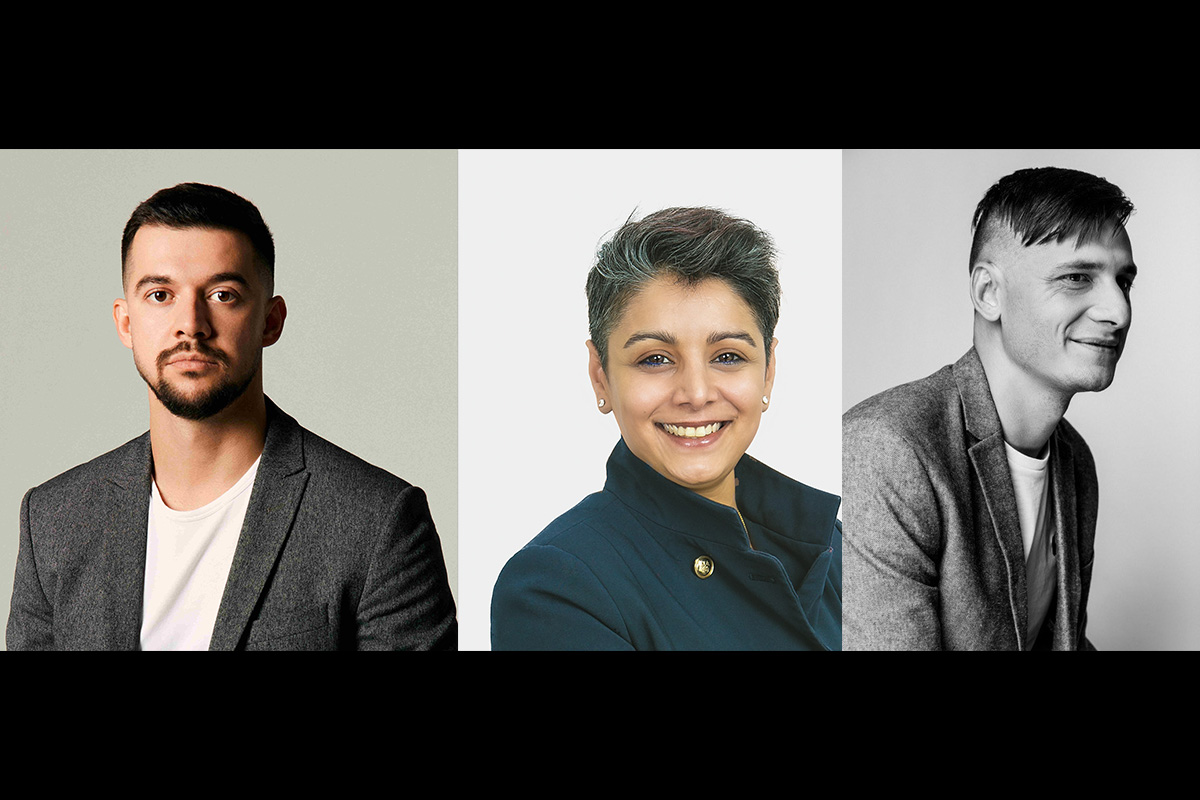
Esports betting has exploded in popularity across the past year and shows no sign of slowing down, with a huge number of in-play markets now available to players. In this round-table feature, Alexandr Iaroshenko, CEO of BetBazar, Sergey Tsukanov, Head of Sportsbook at Betby and Rohini Sardana, Head of Product Propositions at SIS, discuss the driving forces behind the fastest growing vertical in sports betting.
Esports betting grew hugely during the pause in sports last year, but what factors are behind its continuing appeal?
Rohini Sardana: “The entertaining experience that esports betting offers is what ultimately keeps bettors coming back for more. The suspension of live sports last year undoubtedly helped to bring it to the attention of a wider audience, but its continued engagement would not be possible without a strong product in the first place. In fact, demand is as strong as ever for our content. Through our esports betting product, SIS Competitive Gaming has increased output of events by 800% compared to the same period last year, due to strong customer demand, with stream downloads for our events still very high. It is safe to say that esports betting has established itself within the wider sportsbook ecosystem and that demand continues to grow.”
Alexandr Iaroshenko: “Players had the time to get to know a new product during this time that they now love. The last year showed the need for entertainment and filler activity. This is largely as a result of timing, but our time to market also played a huge role here. We are very proud because even though this is a product that was enjoyed because other forms of entertainment were scarce, it continues to be enjoyed in significant numbers. It is a solid offering that was in the right place at the right time to kick off.”
FIFA and NBA2K are particularly popular as a betting option for sportsbook customers, but is there a divide between these disciplines and followers of other Esports events?
Alexandr Iaroshenko: “People want to bet on live events and it becomes vital that they get their results quickly. This is what has helped esports’ popularity to grow so rapidly. When it comes to games like League of Legends and Defence of the Ancients – which aren’t based on sports – results may vary largely depending on different demographics. The new generation of player is more focused on the ‘computer game’ elements of esports, such as Battle Royale or Player Unknown’s Battlegrounds – if they like those types of games, they will still bet on those even when they aren’t into sports. However, it is fair to say that betters of esports that are based on traditional sports like football and basketball are much more reliable bettors that those that follow LoL or DoTA.”
Sergey Tsukanov: “Of course, the most popular sports have always attracted players that differ from the followers of more traditional esports markets. FIFA and NBA2K markets, perhaps unsurprisingly, have a much bigger following amongst soccer and basketball fans than from followers of other esports markets, and for this reason, FIFA and NBA2K have become a staple of our classic market offering. That said, it must be noted that despite their differences, players at both ends of the spectrum universally prefer it when competitive games are played without real players, instead using AI-led technology to add to the random nature of the results.”
Rohini Sardana: “The core elements of the product remain the same, regardless of whether you are offering FIFA 21 matches or first-person shooter events. The availability of quality live streams and a variety of markets, all underpinned by strong integrity, are the key fundamentals that are required for every single esports betting opportunity. Of course, sports-themed games are more likely to resonate with existing sports bettors given the familiar characteristics. We have seen great success with our NBA2K head-to-head games given basketball’s global appeal. Moving forward, we are planning additional titles to help us expand our content offer, which will further help operators drive profitable revenues.”
What are the challenges involved in offering live streaming and in-play betting across esports events taking place 24/7, across the world?
Sergey Tsukanov: “The challenges vary in different locations, but they are the same for all elements of iGaming, not just esports. Internet penetration, mobile play, latency of streaming, and so on. However, the benefits of providing clear, accessible, and most importantly, popular content for users, clearly have a positive impact for both products and turnover. This is the key to maintaining our audiences and attracting new users.”
Rohini Sardana: “The lack of resources that have the specialist knowledge of esports betting appears to have been one of the main challenges for operators. Esports betting solutions are still in the early stages of the product lifecycle and there is an element of risk for sportsbooks trading on such events, particularly the potential for savvy esports bettors getting the upper hand. Partnering with third party providers such as SIS, that have relevant knowledge of esports is highly advantageous, giving operators the confidence and trust that the products being offered are reliable and relevant. At SIS we have more than 30 years’ experience of live streaming and data distribution, and we partner with 400 customers across 45 countries, which gives operators peace of mind that SIS Competitive Gaming is an esports betting product they can depend on. We have low latency live streams available for our content, running throughout the day to serve our global customer base. The frequent and high uptime betting opportunities have proven to be popular with both operators and bettors across multiple markets in recent months.”
Alexandr Iaroshenko: “This is our speciality and we can take two approaches. Firstly, there is live streaming. There are lots of challenges that an operator needs to be prepared for. Organising the right people and level of play to make the product popular and keep it running 24/7 can be difficult. There needs to be a product on tap that can constantly engage players. One focus should be on growing our existing player base and the other should be retaining them. In terms of organising these events, we have partners in Europe that have created their own Esports academy to help develop the players of the future and create top-class tournaments and other activities. Secondly, there is in-play. This is the odds and infrastructure to supply sportsbook. We have a team placed to constantly trade and price. It can be challenging to provide underdog or favourites for events, which motivates players to play. We work hard to deliver this and the latest in tech to price these games like never before. This involves investing in the best in maths models to ensure we can deliver.”
How is AI having an impact, both from an odds-setting perspective and in producing human-versus-AI content?
Rohini Sardana: “Accessibility and accuracy of data plays a key role in establishing a betting product’s usability. Esports games are visually rich and provide more data points than sportsbooks would have consumed with other sports content. This vast amount of data needs to be processed to create a good user experience, and processing vast amount of data, efficiently, requires the use of technological advancements such as AI.”
Alexandr Iaroshenko: “In terms of betting, we have mathematical models which are stats-driven and give us a concrete prediction via an algorithm. This involves so many variables and no fewer than 15,000 events every month, which enables us to constantly learn and evolve to better understand and price games. As a result, we are able to provide some of the most accurate odds in the business. We take this very seriously and when our traders join, they go through a vigorous player schedule to prepare. AI verses live human bears a strikingly similarity to RNG vs. live action. In this instance, the operator is relying on an RNG bot originally created by EA Sports, which has nothing to do with the world of betting. It’s simply a black box inside the game that determines the action. Players simply have less trust in this.”
Sergey Tsukanov: “At Betby, we primarily employ AI technology to acquire live data. We want to use AI to create mathematical models to produce enhanced odds, but when generating odds, it doesn’t differ too much from the traditional aspects. What does set AI apart is generating results with innovative AI software to ensure that our products are available 24/7 across all markets, providing users with the best possible environment to place their bets, all the time.”
What can the traditional sports betting world learn, if anything, from the new breed of quick-fire esports betting opportunities?
Sergey Tsukanov: “If you compare traditional sports betting markets with these modern AI-led esports solutions, you can see a few differences. The new markets are available around the clock, utilise innovative mathematical models that make the games more efficient, and provide a variety of previously unseen markets for users to enjoy – there really is something for everyone. For me, it’s not even about betting, and more about the phenomenon of soccer and basketball losing popularity amongst young people. Officials really need to look into how to attract young people to soccer again, and they could do this with faster game formats or the equivalent of an All-Star match. As for betting, with the current format of soccer and basketball competitions locked securely in place, it’s very difficult to invent something new. Instead, we have explored making our platform more efficient and user-friendly to help players place bets as efficiently as possible, and it has paid off.”
Rohini Sardana: “For sportsbooks, offering esports betting opportunities has now become a necessity. The strong demand for this type of content and the resulting engagement levels means that these events cannot be ignored. Sportsbooks already value quick-fire betting opportunities that horse and greyhound racing and virtual sports offer, and esports events can provide a similar format with results within minutes of a bet being placed.”
Alexandr Iaroshenko: “In sports betting, we see a lot of hype for a lot of products and, more often than not, this burns out quickly. Looking at the most popular esports titles at the moment including Counter Strike, LoL and DoTA – these are now making esports history and I believe they’re here to stay. Live sports and esports have reached a synergistic co-operative relationship, where, for example, esports supports the hype for an overall event. There is no threat that esports will cannibalise sports. In fact, what we have seen is that it works as a complementary product.”
Powered by WPeMatico

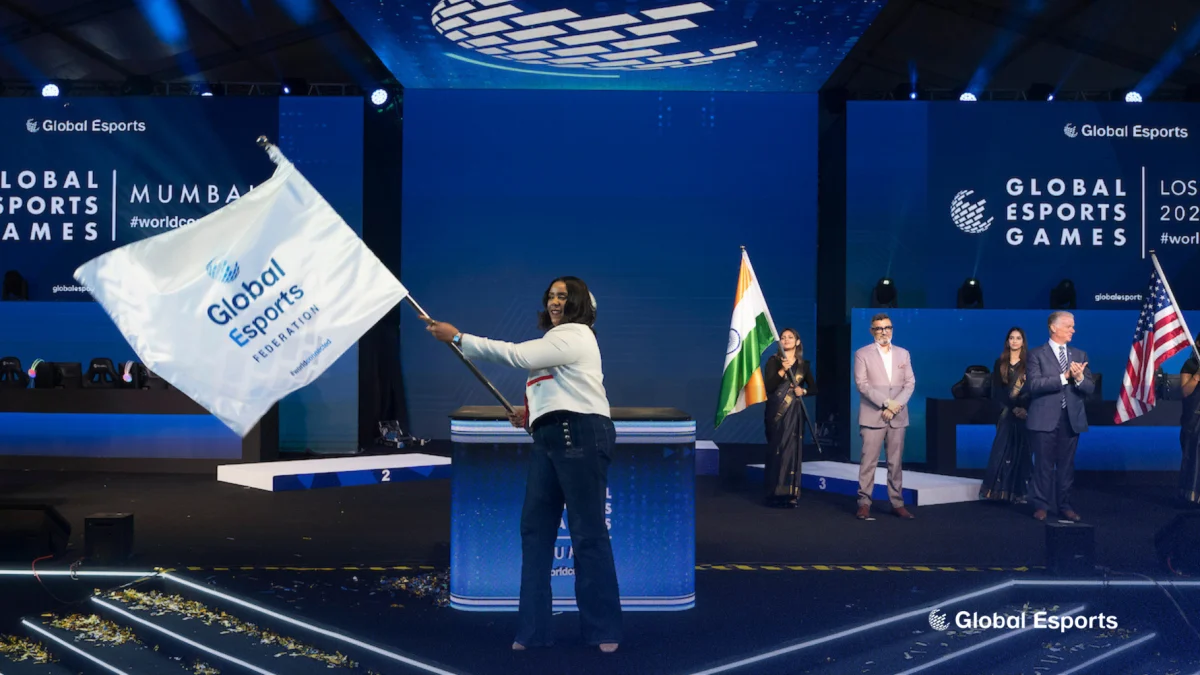
Team India and Türkiye won Gold at the Global Esports Games Mumbai, delivering electrifying performances in front of a packed arena and thousands more tuning in online worldwide. India’s Anuhith Gosala edged Kazakhstan 3–2 in a thrilling Clash Royale Grand Final, while Türkiye secured a commanding 3–1 victory over Mongolia in the Dota 2 Grand Final. With a Gold in Clash Royale and a Bronze in Dota 2, Team India was crowned Overall Champion.
India stormed into the Clash Royale Grand Final with a 2–1 win over the USA in a tense lower bracket decider, setting up a rematch with Kazakhstan. Having fallen 0–2 in the upper bracket, India turned the tables when it mattered most, as Anuhith Gosala delivered a clutch performance to seal a dramatic 3–2 victory and the Gold medal.
In Dota 2, Team India secured Bronze after falling to Mongolia in the lower bracket. Mongolia advanced to the Grand Final, where Türkiye asserted its dominance with a composed 3–1 victory to take the title.
Sharing his thoughts on the victory, Team India’s Clash Royale gold medallist, Anuhith Gosala, said: “This moment is surreal. To win the Grand Finals here in India, in front of a home crowd, makes it even more emotional. The preparation was relentless, the pressure was intense, and every match tested my limits—but that’s what makes this victory so special. Hearing the cheers, feeling that energy, and lifting this title for the country is an indescribable pride. This is for India, and for everyone who believes in us. I hope this win inspires many others to follow in our path.”
Sir Paul J. Foster, President & CEO, Global Esports Federation, said: “As the Global Esports Games Mumbai comes to a close, we celebrate not only the incredible performances of our athletes, but the spirit of unity and connection that defines our global community. Mumbai has delivered exceptional energy, passion, and hospitality, reinforcing our belief that esports transcends borders and brings the world together. We are deeply grateful to our partners in India for setting a new benchmark for excellence—and we now look ahead with excitement to Los Angeles, where this journey continues on an even greater stage.”
Shripad Ashtekar, Founder of Eflag Corp, said: “Over the past few days, we have witnessed not just world-class competition, but the coming together of talent, innovation, and community on a truly global stage. We hope to keep delivering such platforms and strong foundations for future growth by unlocking new opportunities for Indian players, creators, and the broader AVGC ecosystem. We are proud to have played a key role and look forward to building on this momentum in the years ahead.”
Organized by the Global Esports Federation in partnership with Eflag Corp, with the support of Maharashtra Tourism, the Global Esports Games Mumbai was inaugurated by the Hon’ble Chief Minister of Maharashtra, Shri Devendra Fadnavis. Over four days, Mumbai welcomed 48 elite athletes from 19 countries, emerging from a global field of 78 nations in the Regional Qualifiers.
The post Team India and Türkiye Win Gold at the Global Esports Games Mumbai appeared first on Eastern European Gaming | Global iGaming & Tech Intelligence Hub.
Asia
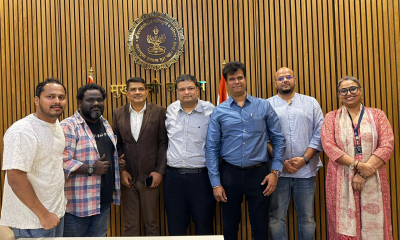
Skyesports and GodLike signs MoU with Maharashtra Cyber to promote esports and cyber hygiene in Maharashtra

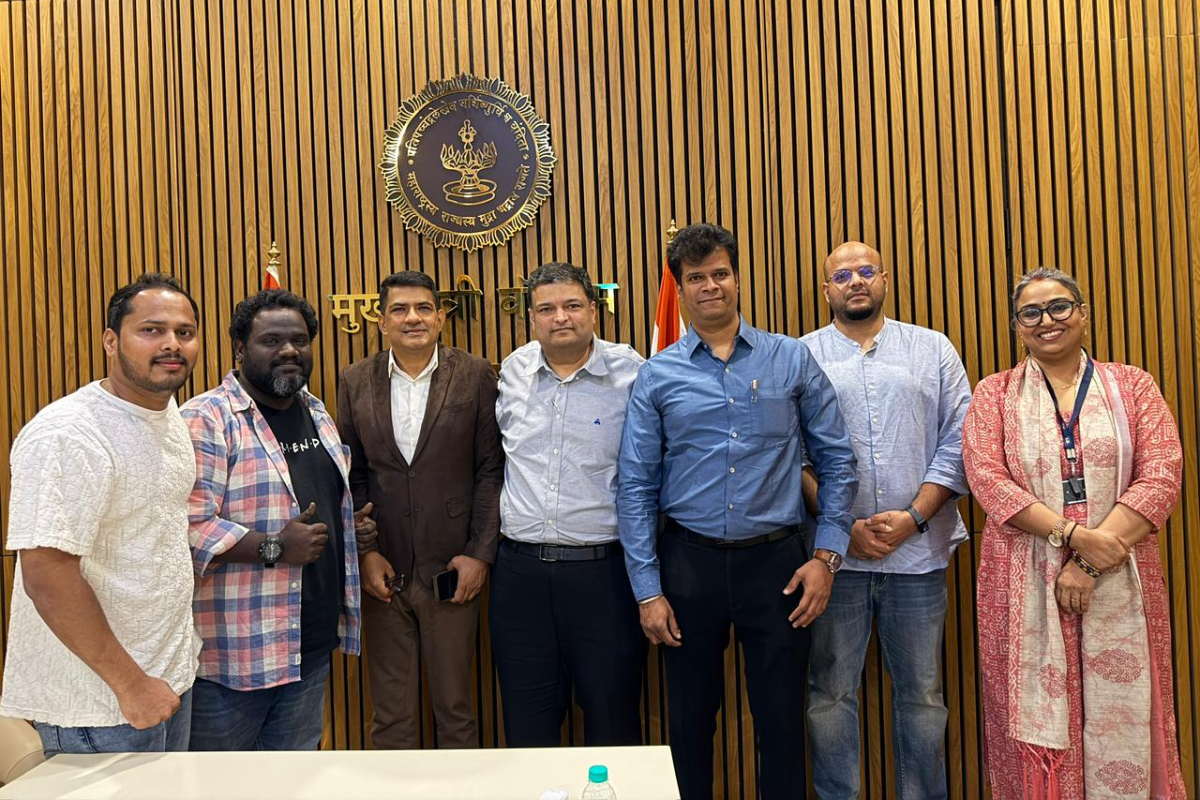
India’s esports ecosystem is taking another step forward as Skyesports and GodLike Esports sign a Memorandum of Understanding (MoU) with Maharashtra Cyber, the Government of Maharashtra’s nodal cybersecurity body. The partnership aims to grow the state’s esports ecosystem while promoting cyber hygiene and responsible digital behaviour among gamers.
The agreement was signed during a closed-door meeting in Mumbai and reflects a broader push by the state to develop its digital and creative industries. As India’s leading state economy, Maharashtra is positioning itself as a hub for esports and gaming, aligning with its wider “orange economy” strategy.
Under the MoU, the three parties will collaborate on esports tournaments, leagues, and community initiatives, while embedding cyber safety messaging into all activities. This includes raising awareness around cyberbullying, fraud prevention, data privacy, and responsible online conduct—key concerns as esports audiences continue to grow, particularly among younger users.
Skyesports will lead tournament organisation and community engagement, while GodLike Esports will support through mentorship programmes, professional player involvement, and grassroots initiatives. Maharashtra Cyber will focus on amplifying cyber awareness and promoting safe digital practices across the ecosystem. Eyrie Entertainment will support outreach efforts and help scale campaign visibility across the state.
Commenting on the initiative, Shiva Nandy, Founder and CEO of Skyesports, said:
“The growth of esports requires strong collaboration between the industry and government stakeholders. This MoU with Maharashtra Cyber represents an important step toward strengthening Maharashtra’s esports ecosystem through responsible gaming initiatives and grassroots engagement. As India prepares to compete at global events such as the Esports World Cup (EWC), Esports Nations Cup (ENC), and the Asian Games 2026, partnerships like this will play a key role in building a stronger pipeline of talent and opportunities for young gamers. With GodLike Esports also joining the initiative, we aim to combine competitive expertise and creator reach to drive deeper community engagement. The MOU is a first-step towards solidifying Maharashtra as an esports hub globally.”
Yashasvi Yadav, Additional Director General of Police at Maharashtra Cyber, added:
“As esports continues to grow rapidly among young audiences, it is equally important to promote safe and responsible digital practices within the gaming ecosystem. Through this collaboration with Skyesports and GodLike Esports, we aim to raise awareness around cyber hygiene, online safety, and responsible behaviour in gaming communities. Initiatives like these will help ensure that the growth of esports in Maharashtra is supported by strong awareness of cybersecurity, digital discipline, and safe online participation.”
Chetan “Kronten” Chandgude, Founder of GodLike Esports, said:
“At GodLike Esports, we have always believed that the true growth of esports in India lies in strengthening its roots at the grassroots level. Through this collaboration with Maharashtra Cyber and Skyesports, we aim to support the state’s vision of building a strong and sustainable esports ecosystem. Our focus will be on engaging young gamers through mentorship, community initiatives, and professional player interactions, while also promoting cyber hygiene and responsible gaming practices. This MoU also marks the first step toward our vision of putting the state on the global esports map, and we look forward to sharing some exciting announcements around this soon.”
The initiative also aligns with global recommendations from organisations such as the International Telecommunication Union, which highlight the importance of cybersecurity awareness as digital participation expands.
For more on esports growth and regulation, see Europa Gaming’s coverage on India Esports Market Growth and Esports Regulation Trends.
As esports continues to scale in India, partnerships like this underline a key industry shift: growth is no longer just about tournaments and audiences, but also about building a safer, more responsible digital environment for the next generation of players.
The post Skyesports and GodLike signs MoU with Maharashtra Cyber to promote esports and cyber hygiene in Maharashtra appeared first on Eastern European Gaming | Global iGaming & Tech Intelligence Hub.

The Latin-American Esports Institute (ILAE) was established following a General Assembly held on 6 March 2026 in Rio de Janeiro. The organisation was founded with the stated goal of promoting competitive integrity, legal safety, and institutional research within the esports sector.
Carlos Gama, Vice President of Games and Esports at the Rio de Janeiro branch of the Association of Brazilian Information Technology Companies (ASSESPRO) and President of the Advisory Council of FERJEE (Rio de Janeiro Esports Federation, involved with the upcoming IEM Rio) was elected as Executive President to lead a multidisciplinary team tasked with developing frameworks for the industry’s regional growth.
One of the primary objectives of the ILAE is the creation of a local Esports Arbitration Chamber. This mechanism is intended to serve as a specialized venue for the mediation and resolution of conflicts, such as contractual disputes between players and organisations. The model aims to offer a technical alternative to the traditional judicial system, seeking to provide greater legal security and faster resolutions for administrative and professional disagreements within the competitive environment.
The ILAE’s structure is centered on an Executive Board that includes:
- Vice-President Marcella Ferreira (former pro player and current sports psychologist),
- Administrative-Financial Director Vinicius Verly (FERJEE), and
- Project Director Marianna Muniz (FERJEE and OnFire Agency).
Technical oversight is managed by lawyers:
- Dr. Antonio Carlos Bratefixe (Research and Knowledge) and
- Dr. Osmar Berardo, who will direct the institute’s Arbitration Chamber.
The Fiscal Council is led by: Dr. Soraya Vasconcelos, who also leads Brazilian organisation Galorys, responsible for financial and institutional oversight.
Regarding the institute’s mission, Carlos Gama stated that the organization intends to facilitate dialogue across the Latin American esports community. “We want to bring together athletes, teams, researchers, organizations, companies, and public managers to build a common development agenda for the region,” Gama noted. He also highlighted that a priority for the ILAE will be the production of research on strategic themes, such as social inclusion and competitive integrity policies.
The ILAE’s governance framework also incorporates individuals with competitive backgrounds, aiming to ensure the organisation remains informed by the practicalities of the sector. This includes the participation of former FPS and eFootball pros Marcela “Callax”, Renato “Rentão”, Monik Bisoni, Gabriela Tavas, and Gabriel “Franja” within the various councils and administrative chairs.
By integrating these perspectives alongside legal and academic professionals, the institute intends to address the specific needs of the regional ecosystem. The organization has opened associations to professionals, researchers, and entities.
The post Esports community establishes Latin-American Esports Institute (ILAE) appeared first on Americas iGaming & Sports Betting News.

-

 Conferences6 days ago
NOVOMATIC Gaming Colombia to Showcase its Latest Innovations at GAT Cartagena 2026
-
Asia6 days ago
Spotlight Sports Group Expands its Smart View Global Footprint to Hong Kong
-
Conferences6 days ago
R. Franco Digital to showcase premium portfolio at GAT Expo Cartagena 2026
-
AGCO6 days ago
TitanPlay Highlights Responsible Gambling Approach in Platform Design
-
eSports6 days ago
Esports community establishes Latin-American Esports Institute (ILAE)
-
Asia3 days ago
Skyesports and GodLike signs MoU with Maharashtra Cyber to promote esports and cyber hygiene in Maharashtra
-
Latest News6 days ago
Sweepedia Analysis Reveals Over 100 Active Lawsuits Against Sweepstakes Casino Operators Across the US
-
AGLC3 days ago
Bede Gaming cleared for Alberta market entry