Interviews
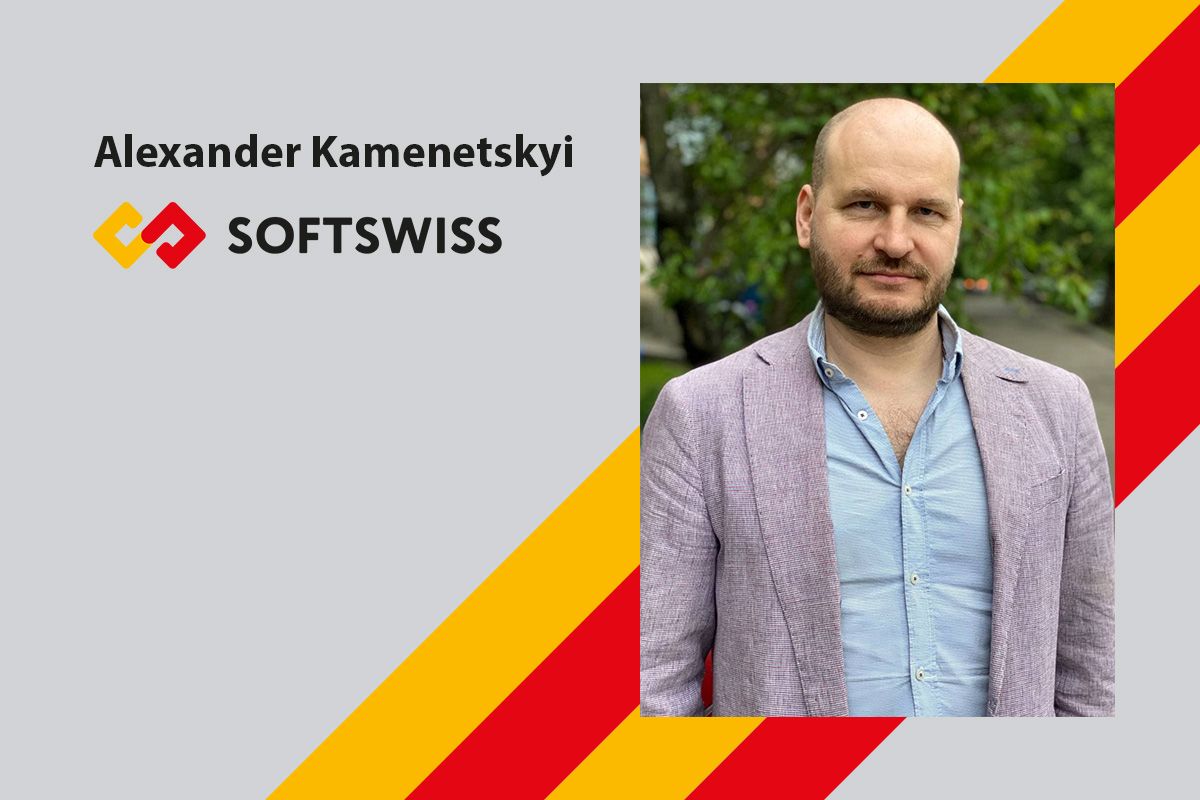
Exclusive Q&A with Alexander Kamenetskyi, Sportsbook Product Owner with SOFTSWISS

Reading Time: 4 minutes
‘The house always wins’ is one of the oldest adages in sports betting. It must be most trusted quote too, as numerous once-bitten punters would vouch for.
Here is the other side of the story.
Alexander Kamenetskyi, Sportsbook Product Owner with SOFTSWISS, talks about the steps that Sportsbooks take to keep fraudulent activities at bay.
You must read the interview for his lucid and succinct deconstruction of frauds that take place in the betting arena.
Over to the interview now!
Q. We’ve had a fabulous Euro 2020, in which Italy deservedly emerged winners. The betting industry also enjoyed thriving business during the period. But there have been reports that the level of betting frauds increased manifold. As a Sportsbook Product Owner, how do you view the situation?
A. First of all, I would like to congratulate all the fans of the Italian national team on their victory! We were finally able to enjoy the football battles of Euro 2020. In my opinion, it was an amazing championship full of dramatic and exciting moments.
As statistics show, such large events always see a spike in cases of fraud and that’s why we are always ready to track such activity and mitigate the risks for our clients.
Q. Could you share some practical experiences where you faced fraudulent activities and how you dealt with it?
A. Fraudsters always try to find system weaknesses in bookmaker lines and exploit them. This time they knew they had a chance to go unnoticed for a long time, as the attention of all bookmakers’ was drawn to the Euro 2020. Oftentimes bookmakers may also contribute to the appearance of such fraudsters themselves.
Speaking of the SOFTSWISS Sportsbook team – we are perfectly prepared for the arrival of unwanted guests. Over the course of the championship we mainly saw players with counterfeit documents, but our platform had just the tools to track and prevent such manipulations.
Typically, fraudsters bet on unpopular types of sports and weak leagues. Sometimes they are at the matches in person or they bet ahead of the curve when there’s a fast video broadcast. This is quite easy to track, and we resolve such cases pretty quickly.
Quite often in such cases, players ‘artificially’ raise their maximum bets for specific markets (e.g. via betting from several accounts), but we prevent this by analyzing player bets and player activity.
We have our own Risk Management and Anti-Fraud teams, as well as the Betradar Risk Management team and Managed Trading Services. We are also currently in the process of developing automated tracking systems
Q. What kind of frauds do you normally anticipate as a sportsbook operator?
A. The list isn’t vast.
First, come the ‘arbers’, or players who find arbitration situations between bookmakers and exploit them.
Secondly, there are ‘button players’ who place bets seconds after the outcome becomes clear.
There are also ‘valuebetters’, or those who bet on higher odds or odds with an advantage.
Then there are middle betting players, who are mostly playing for the total, and usually with an advantage.
And then there is the very widespread type of fraudster – the bonus hunter. Bonus hunters find weak points in bookmaker promotions and exploit them to their advantage. Some of these can be white hat bonus hunters and we even have someone like that in our team.
Of course, match fixing is the bane of the sports industry and is one of the most serious offenses. Naturally, there are many more types of sports betting fraud, but the ones I mentioned are the most widespread.
Q. How do you plan to tackle the potential frauds?
A. We are working on developing our own Sportsbook Risk Management team. We are also building our internal Risk Management Tools (RMT). Our RMT system is based on long-term experience in the field, market needs, new innovative technologies, and artificial intelligence. The system will be universal in that it will help us work not only with fraudsters, but also with ordinary players.
Q. Could you share some insights into the software-enabled checks and AI-powered analyses that aid fraud detection and prevention in betting?
A. Unfortunately, I cannot reveal all the cards because RMT is an anti-fraud system. I can only say that we are developing tools that rely on artificial intelligence based on data analytics. We are already working on unique tools to combat the main types of fraud, which will react not only to the style of play but also to overall player behaviour.
I can also add that our protection system does not just work for each project separately, but encompasses all brands across our platform.
Q. Coming back to the Euro 2020, what are the new things that happened in connection with fraudulent betting? Is it a case of new-age fraudsters emerging or is it a case of old punters becoming smarter – just like the Italian defenders?
A. The Italian defenders showed us a level of play we can look up to. I can say that the average scammer is rather diverse. The experienced type is always on the lookout for new projects, erroneous proposals, and mainly uses trite and true scam methods. Younger scammers place more emphasis on modern methods such as bots.
Q. Do all the fraud detection and prevention mechanisms affect the pure joy of punting? Will the whole process become cumbersome for the genuine bettors? Would love to hear your thoughts on this topic.
A. Our tools work not only with negative players, but also with positive ones. We place a lot of attention on working with those players who have proven themselves to be honest and conscientious. Additionally, we create great bonus offers for our players that encourage their gaming activity and do not use complex wagering systems. We are also very keen on soon introducing gamification to the platform, which is currently in development.
Q. Finally, how do you see fraudulent activities and the prevention mechanisms pan out in the future? What’s your bet on this?
A. The world of betting is huge, but it hasn’t reached its peak yet. Of course, fraud will continue to develop and there are many reasons for this.
First-time bookmakers who are poorly versed in the basics of sports betting will continue to create inaccurate bonus offers, miscalculate the bonus math and create bonus overlap. Errors in the betting lines and a lack of analytical work will continue to generate negative outcomes.
It is our job to create a product that fortifies the operator from negative outcomes, but we aren’t able to entirely wall ourselves off from the market. That is why we will be working on new tools to combat fraud and further improve the quality of our product, first and foremost, so that ordinary players can enjoy the game.
Our main task is to provide a reliable, high-quality product to the players. Sports betting is a great way to have fun. And that’s why we are creating a safe and secure environment around sports betting with SOFTSWISS Sportsbook.
Powered by WPeMatico


Interview with Ivan Korkin, Head of Account Management at Kanggiten
After his successful participation at the HIPTHER Prague Summit 2026, we speak with Ivan Korkin, Head of Account Management at Kanggiten, to explore how real-world B2C operational experience can strengthen B2B platform stability in today’s high-demand iGaming environment — and why resilience, real-time monitoring, and proactive infrastructure design are becoming critical competitive differentiators.
Ivan, your discussion at HIPTHER Prague Summit focused on applying high-volume B2C operational lessons to B2B platform stability. From your perspective, what are the most overlooked insights that B2B providers can learn from real-world B2C environments?
The most overlooked insight is that B2B and B2C platforms do not require fundamentally different security and operational standards. In reality, the B2C experience differs mainly on the client side; the underlying security protocols needed to combat fraudsters, hackers, and bonus hunters remain exactly the same.
When designing platform architecture for long-term reliability, which core principles matter most today – and how has your approach evolved as traffic volumes and player expectations continue to rise?
The foundational principle is ensuring the platform is “Modular by Design”. Monolithic systems are simply too rigid for modern scaling. At Kanggiten, our platform is built from independent modules that communicate either through a shared data channel or via APIs. This ensures that if one module, like a tournament or bonus engine, gets overloaded, it does not bring down the entire platform; core functions like payments remain fully operational. This approach, called “graceful degradation,” keeps the platform reliable under pressure. Additionally, as expectations have risen, our approach has evolved to include self-healing capabilities, automatically restoring needed instances if a hardware failure occurs.
System resilience under load is a growing concern across the industry. What practical strategies should operators and suppliers implement to ensure performance remains consistent during peak demand moments?
Operators must utilize systems built for fast, automatic scaling without human intervention. When data volume grows, the platform should simply add more hardware on the fly. From a data hygiene perspective, peak loads often cause statistics to lag or duplicate. We prevent this by utilizing specialized columnar databases that scale horizontally for heavy analytical workloads. If a technical glitch sends the same data twice, our system recognizes it and refuses to double-count. Finally, resilience requires full system redundancy to achieve 99.9% uptime, ensuring there is zero single point of failure and that live database backups are hosted in physically separate data centers.
Kanggiten places strong emphasis on real-time analytics and monitoring. How do real-time metrics function as early-warning systems in modern iGaming infrastructure, and what signals should teams be watching most closely?
Real-time metrics are critical for identifying anomalies and root causes instantly. Many operators focus solely on technical metrics, but we closely watch business metrics like user registrations, deposits, bonus activations, and critical user chains. A server might appear healthy on a backend dashboard, but a sudden drop in these business metrics serves as an early-warning signal that issues are occurring on the user journey. Tracking these in real time prevents isolated technical glitches from turning into massive revenue losses.
Many teams still operate in reactive mode when incidents occur. What does a truly proactive issue-detection framework look like in 2026, and what cultural or technical shifts are required to get there?
A proactive framework utilizes dynamic product alerts and retrospective data analysis. Instead of waiting for a system crash, our alerting system compares the current volume of events against historical data—such as traffic from three weeks ago—to automatically determine if current metrics are normal or if human intervention is needed. Culturally, moving away from reactive firefighting requires a commitment to continuous testing; we run automated tests, manual checks, and cloud-based load testing before any code ever reaches production.
Looking ahead, as modular and full-stack platforms continue to evolve, what should operators prioritize now to ensure their infrastructure remains secure, scalable, and future-ready over the next three to five years?
Operators must prioritize a “provider-agnostic” approach to their infrastructure. Over the next few years, the ability to rapidly adapt to changing regulations and execute seamless, disruption-free migrations between cloud providers will be paramount. Security must also remain a top priority; operators should demand infrastructure that holds the highest-level PCI DSS certification (Level 1 v4.0) , where card data is encrypted with strong algorithms and in-transit data is secured using Sectigo and Google SSL certificates over TLS 1.2 or higher.
Kanggiten was the Silver Sponsor and Badge & Bracelet Sponsor at HIPTHER Prague Summit 2026. What key conversations did you have with operators and partners during the event, and what should the industry be watching next from your team?
We were delighted to speak with ambitious operators who demand speed, control, and performance without the bureaucracy of traditional platforms. We always want to discuss how our modular ecosystem allows businesses to launch in weeks, not months, and scale reliably under any load. As for what’s next, the industry should watch how Kanggiten continues to merge premium B2C conversion tactics with robust B2B infrastructure, delivering technology engineered specifically for measurable revenue growth and uncompromising stability.
The post From B2C Scale to B2B Stability: Kanggiten’s Real-World Lessons in Platform Resilience appeared first on Eastern European Gaming | Global iGaming & Tech Intelligence Hub.
As the lines between gaming verticals continue to blur, operators are rethinking how live casino content earns player attention and time on site. A new category, Hybrid Live Casino, is emerging at this intersection, blending the trust and clarity of presenter‑led table games with the spectacle, progression, and feature‑driven energy traditionally associated with RNG mechanics.
One of the clearest expressions of this shift can be seen in ENJOY Gaming’s newest release Energy Roulette, which maintains the familiar cadence of classic roulette while introducing multi‑stage engagement moments, including a feature-rich, slot-style hold and win bonus round, that feel native to the live environment rather than added on.
ENJOY Gaming’s Director of Account Management, Dimokratis Papadimos, discusses the evolution of player behaviour, the commercial opportunity behind Hybrid Live formats, and what it takes for suppliers to design experiences that feel cohesive rather than gimmick‑driven.
How has player behaviour evolved in recent years, particularly in terms of crossover between slots and live casino?
Player behaviour has become far more fluid. Historically, players tended to stay within a single vertical, but that distinction is fading. Today’s player is less concerned with product categories and more focused on the quality of the experience, including the entertainment value, volatility, and engagement. What we’re seeing is a growing overlap between slot and live audiences. Slot players are increasingly exploring live environments, but they bring their expectations with them. They’re looking for feature-driven gameplay, bigger moments, and a sense of progression. At the same time, live players are becoming more open to formats that introduce additional layers of excitement beyond the traditional table experience. This convergence is creating a new type of player who expects the best elements of both worlds, rather than choosing between them.
Slots and live casino have traditionally been treated as distinct verticals. Why do you believe those boundaries are becoming less relevant today?
The distinction was largely shaped by technology and distribution. Slots were built around individual, fast-paced sessions with strong mechanics, while live casino focused on authenticity, trust, and social interaction. But those technical limitations no longer apply in the same way. Streaming quality, UI design, and game engines have evolved to the point where you can begin to blend these experiences seamlessly. More importantly, player expectations have shifted. Players don’t think in terms of “slots” or “live” – they think in terms of entertainment. If a product delivers engagement, transparency, and excitement, the underlying category becomes secondary. As a result, the traditional boundaries are no longer a constraint; they’re an opportunity.
How would you define Hybrid Live, and what makes it more than just adding features to a traditional live game?
Hybrid Live is not about layering mechanics on top of an existing product – it’s about designing a new experience from the ground up that integrates the strengths of both verticals. At its core, Hybrid Live combines three elements: the trust and presence of a live host, the structural clarity of a table game, and the engagement mechanics typically associated with slots. The key is balance. If the feature feels disconnected from the live experience, it loses credibility. If it’s too subtle, it doesn’t add value. A true hybrid is cohesive. The mechanics, pacing, and presentation are all aligned so that the experience feels natural rather than engineered. That’s what differentiates it from simple feature add-ons.
Hold & Win has been a cornerstone mechanic within slots. What are the key challenges and opportunities when adapting a mechanic like this into a presenter-led live format?
Hold & Win has proven to be highly effective within slot games by creating anticipation and a sense of progression, but translating that to a live environment requires careful design. The biggest challenge is preserving the integrity of the live experience. Players need to feel that the game remains transparent and presenter-led, rather than dominated by a feature that could feel detached or overly complex. Timing is also critical. In slots, everything is immediate. In live, pacing must work both for the player triggering the feature and the wider audience watching. The opportunity, however, is significant. When adapted correctly, Hold & Win introduces a multi-stage win journey into live casino – a concept that has traditionally been missing. It transforms a single outcome into an event, building tension and engagement over time. This is where formats like Energy Roulette demonstrate the potential: the base game remains familiar, but the moment of a win becomes more immersive and dynamic.
From an operator perspective, what commercial advantages can hybrid live formats offer in terms of engagement, cross-sell, and differentiation?
Hybrid formats open up several commercial advantages. First, they naturally support cross-sell by appealing to both slot and live audiences within a single product. This reduces friction for players who may be hesitant to switch verticals. Second, they tend to drive deeper engagement. Feature-based gameplay introduces longer session times and more memorable moments, which can positively impact retention. Finally, there is a clear differentiation benefit. The live casino space is highly competitive, and many products follow similar structures. Hybrid Live allows operators to offer something distinctive without moving away from trusted formats like roulette or blackjack. It’s not about replacing existing products – it’s about expanding the portfolio with experiences that stand out.
Do you see Hybrid Live as a short-term innovation cycle, or part of a longer-term evolution in how live casino is designed and consumed? Where does ENJOY see this category developing over the next few years?
This is part of a longer-term structural evolution rather than a short-term trend. The convergence across verticals is driven by player expectations, which will continue to evolve. Looking ahead, we expect Hybrid Live to become a defined category in its own right, with more sophisticated mechanics, stronger visual identity, and deeper levels of interactivity. The challenge for developers will be maintaining simplicity and accessibility while introducing richer experiences. At ENJOY, the focus is on building formats that feel intuitive, scalable, and commercially viable for operators. The goal is not to innovate for the sake of it, but to create products that genuinely reflect how players want to engage with live casino today. Energy Roulette is an early example of that direction, but the broader ambition is to continue exploring how proven mechanics can be reimagined in a live context in a way that feels both authentic and forward-looking.
A strong example of this principle in practice is ENJOY Gaming’s Energy Roulette, which was designed from the outset as a unified hybrid experience rather than a standard table game with bolt-on features. Its live-presented flow remains structurally identical to classic roulette, yet the game introduces organically integrated moments — including a multi-phase Hold & Win bonus round — that elevate the emotional rhythm of play without disrupting familiarity. This illustrates how hybrid mechanics can enhance the genre while still preserving the trust, presence, and clarity that define live casino experiences.
Energy Roulette highlights how this adaptation can succeed when executed thoughtfully. The transition into the Hold & Win feature is triggered within the natural cadence of roulette play, creating a shared event that both the triggering player and the wider audience can follow in real time. The feature maintains the core appeal of Hold & Win — incremental progression, escalating anticipation, and clear win visibility — while remaining fully anchored in a presenter-led environment. This demonstrates how a mechanic traditionally associated with RNG slots can be reimagined in a way that feels live-native rather than imported.
The post Hybrid Live Casino: Where table trust meets slot‑style engagement appeared first on Eastern European Gaming | Global iGaming & Tech Intelligence Hub.
“The studios that last are those willing to experiment and try new things, while staying grounded in their core principles. It’s easy to follow trends, but what really matters is understanding players, trusting your instincts, and consistently delivering quality.”
As the iGaming industry continues to evolve, the pressure to innovate has never been greater. True success, however, goes beyond simply following the latest trends.
Ahead of the HIPTHER Prague Summit, where Tom Horn Gaming will take the stage as Grand Sponsor, our CEO, Ondrej Lapides, shares his perspective on what it really takes to build games that stand the test of time.
In this exclusive interview with Hipther, we explore how Tom Horn Gaming approaches product development, from balancing innovation with familiarity to designing games that resonate across diverse player segments and markets. The conversation also touches on the growing importance of player-centric design, long-term engagement, and the industry shifts shaping slot development in 2026 and beyond.
As Central and Eastern Europe gain increasing relevance in the global iGaming landscape, the Prague Summit provides a timely platform to exchange ideas, share insights, and look ahead at what’s next for the industry.
Tom Horn Gaming has been in the industry long enough to see trends come and go. From your perspective, what really separates studios that stand the test of time from those that simply chase what’s popular?
In my view, longevity in this industry comes down to balance and a genuine belief in what you do. The studios that last are those willing to experiment and try new things, while staying grounded in their core principles. It’s easy to follow trends, but what really matters is understanding players, trusting your instincts, and consistently delivering quality. When you combine creativity with discipline and a long-term mindset, you create products that resonate well beyond the latest industry buzz.
Your portfolio balances recognisable slot formats with proprietary mechanics like QuickX . How do you decide when to innovate and when to refine what already works?
It’s always a mix of data, experience, and intuition. Innovation is important, but it should never come at the expense of clarity or player enjoyment. Sometimes the right move is to take something that already works and refine it further. At other times, the market clearly shows that players are ready for something new. Finding that balance is partly analytical and partly instinctive, built over time through a deep understanding of how players engage with games.
Your games often combine modern mechanics with very recognisable slot DNA. Why do you think familiarity still plays such a strong role in player engagement today?
Player expectations vary a lot across markets and segments. Some players prefer classic slot gameplay that feels instantly familiar, while others are looking for something more experimental. Our role is to cater to both by offering a diverse portfolio. Familiarity makes games accessible and comfortable, while modern mechanics bring fresh excitement and new layers of engagement.
Player attention spans are getting shorter, yet expectations around engagement and excitement keep rising. How do you approach game design to make titles instantly accessible without sacrificing depth?
It really comes down to putting more thought and effort into the design process. We dedicate significant resources to balancing gameplay so the core experience is easy to understand from the first spin, while sustaining engagement over time. Achieving that balance requires close collaboration among designers, mathematicians, and product teams to make sure the experience feels both intuitive and rewarding.
Looking at your recent releases, there’s a clear focus on replayability rather than one-off novelty. How important is long-term player value when developing new games?
Long-term engagement is very important, but again, it’s about balance. Not every game is built with the same objective in mind. Some are designed to deliver quick excitement, while others aim for longer sessions. A strong portfolio needs both. The key is making sure each game delivers real value and keeps players coming back.
From your perspective as a slot supplier, which innovations do you believe will genuinely shape slot development in 2026 and beyond, and which current trends are unlikely to last?
We’re already seeing a growing demand for more layered gameplay and richer feature sets, and I expect that to continue. Players are looking for more dynamic experiences rather than purely static mechanics. At the same time, fast-paced formats like crash games have gained strong traction and are influencing expectations around immediacy and interaction. That said, not every trend will last. In the end, the games that succeed will be those that combine innovation with strong fundamentals and a clear understanding of player preferences across different markets.
Your recent partnerships significantly extend distribution across Europe and Latin America while reinforcing compliance-focused delivery. How can aggregation partnerships contribute to sustainable scaling across different regulated markets?
Scaling across regulated markets requires the right partnerships and strong technical foundations. For this to work properly, the technical integration needs to be robust, seamless, and fully aligned with regulatory requirements. When that connection is well implemented and continuously optimised, it allows content to reach operators quickly while maintaining the reliability and compliance that these markets demand.
As Grand Stage Sponsor of the HIPTHER Prague Summit, what message or mindset would you like operators, partners, and industry leaders to take away from your presence at the event?
Events like the Prague Summit are particularly valuable because they put a spotlight on Central and Eastern Europe, a region that is playing an increasingly important role in the global iGaming landscape but doesn’t always get the same attention as larger markets.
For us, the real value lies in knowledge exchange. It’s an opportunity to discuss the latest developments, share insights from real operations, and compare experiences across different jurisdictions. Bringing these perspectives together helps the industry learn from one another and take away practical insights that can support future growth and innovation.
The post Building Beyond Trends: Tom Horn Gaming on What Really Drives Slot Success appeared first on Eastern European Gaming | Global iGaming & Tech Intelligence Hub.

-

 Asia7 days ago
Skyesports and GodLike signs MoU with Maharashtra Cyber to promote esports and cyber hygiene in Maharashtra
-
40 Sparkling Crown6 days ago
TaDa Gaming Enters South Africa via Strategic Betway Partnership
-
Alberta6 days ago
Media Troopers Prepares for Alberta iGaming Launch with Canadian Gaming Law Firm
-
Asia5 days ago
GLI Becomes the First Company Accredited by PAGCOR to Test and Certify iGaming Platforms in the Philippines
-
Bettingbladet.se6 days ago
Bettingbladet Aims to Become Sweden’s Central Hub for Gambling Industry News & Trends
-
3 Oaks Gaming7 days ago
SAGSE leads while Brazil advances regulation and global positioning
-
Barbie Nerz Head of Online Games at Staatliche Toto-Lotto GmbH Baden-Württemberg6 days ago
Peter & Sons Partners with Staatliche Toto-Lotto GmbH Baden-Württemberg for German Market Entry
-
Games Global6 days ago
Games Global and Just For The Win® continue the ghostly adventure in Dark Waters III Power Combo: The Cursed Voyage™