Industry News
“Players Who Feel Safe Are More Likely to Stay with A Sole Operator For Longer”

While iGaming brands amass social responsibility fines by the millions allowing unhealthy behavior go unchecked, a better way exists for both operator and player
Responsible Gaming is more than just an industry buzzword or something to look out for. It has real-life consequences for everyone involved: brands, operators and, more importantly – regular people. As the National Council on Problem Gambling marks its Gambling Awareness Month, we stopped to take stock of social responsibility in the iGaming industry – is enough being done? What is holding us back as an industry? And what will the future bring?
The Brands & Regulator
Recent years have seen a crackdown by the regulator on many iGaming fronts, specifically social responsibility or as we know it – Responsible Gaming. In 2021 brands amassed more than £15M in fines for failing to meet social responsibility regulations and protect at-risk players. The trend is gaining momentum, just three months into 2022, operators have already amassed over £15M in social responsibility fines, yes, similar to the entirety of 2021. The total sum of penalties in 2019 covering all violations? A ‘mere’ £17M. Operators need to comply and fast to keep the money on their side of the table.
The people
The human price of operators’ reluctance to comply with social responsibility regulations is clear. There are degrees of unhealthy behavior, but at its worst, a gambling problem can devastate a person’s life, affect their loved ones, mental health, livelihood, and more. The risk shouldn’t be underestimated, regulatory zeal suggests.
“From my study and understanding these pathways, it seems that the need for entertainment and escapism leads certain players. In other cases, they’re driven by more impulsivity issues and a lack of ability to control one’s behavior,” said Sally Gainsbury, Director of the University of Sydney Gambling Treatment & Research Clinic.
“This doesn’t only affect the individual themself, but also 6-10 people around them. That’s why it’s important to prevent harm before they reach this critical level.”
So what’s stopping operators from simply, you know, following Responsible Gaming regulations? “The biggest hurdle is the lack of understanding of the appropriate KPIs and required actions brought down by regulators to work best towards minimizing gambling harm,” said Gainsbury.
If operators limit their most active players, the VIPs of sorts, it’s only reasonable to assume they’ll suffer massive revenue hit, much higher than any fine. But acting on RG makes more financial sense than one might think. “In the modern iGaming world, which includes land-based casinos, sports betting, digital, and all gaming forms, you don’t have to choose between revenue and socially responsible gaming,” said Michael Pollock, Spectrum Gaming Group’s Managing Director.
“The companies that tend to be the most profitable and the market leaders are the ones that take this responsibility seriously for several reasons: One – if you’re irresponsible, you’re leaving your customers dry. You want the customer to afford what they are spending. That’s the heart of responsible Gaming. Two, if you want the public’s trust and to be recognized as one that can be trusted with their money, RG has to be front and center in your business practices. If not, you’re not going to be a market leader. And three, if you don’t take the responsibility seriously, regulators will prevent your brand from renewing your license,” added Pollock.
The solution
Optimove, the leading CRM Marketing platform, has a different approach to Responsible Gaming. It offers a predictive model to identify players-at-risk and recognizes three maturity levels of an operator regarding responsible Gaming:
- Basic – Providing players the ability to self-exclude at any time. This is typically also the most rudimentary requirement of most regulated regions.
- Competitive – Exploring the various attributes that players demonstrate before they self-exclude. By creating a segment of customers who self-excluded, operators can identify suspicious attributes to try and mitigate them and reduce the number of players who become at-risk players.
- Advanced – Implementing a machine learning algorithm that helps operators predict which players are likely to become at-risk ahead of time. Such algorithm also allows operators to differentiate between at-risk and VIP players, who often share a few similar attributes.
VIP or At-Risk?
In the UK there has been a clear move by the main Operators towards a mass market/recreational customer. The average player values dropped accordingly and VIP programs have basically came to an end. This has been driven by the concerns around problem gambling and the big overlap between what was previously described as a VIP and what is now understood to be problem gambling issues.
Many companies still have two separate departments, CRM and RG, but the reality is that the result of this operational setup and the contradictions between definitions of success in each field, means that the different teams are not necessarily driving in the same direction when it comes to player care.
Use outreach to educate
Instead of creating player journeys consisting of only promotional campaigns, operators should begin putting a heavier emphasis on educational and informative content that encourages players to adopt healthier behaviors and reduce the number of players who become at-risk.
Operators must communicate carefully in the competitive gaming market, where 1-to-1 marketing communications is still an integral part of the experience. By segmenting customers into tiers based on their risk levels and adjusting the informative-to-promotional campaign ratio accordingly, operators can maintain the marketing aspect, and improve their revenue, while instilling more robust socially responsible practices.
Metrics to monitor
If traditional CRM marketing focuses on promotional offers to measure incremental Net Gaming Revenue as the main KPI, socially responsible marketing mix needs to measure player migrations from one risk level to another and overall retention rates.
To identify the marketing strategies that work best to maintain a high level of healthy-player engagement, operators should measure their campaigns’ impact on player behavior over time. Similar to A/B/n testing different treatments, entire player-journeys should be tested to evaluate how they affect player behavior and risk-level migrations.
Using different CRM Marketing tools, like Optimove, operators can easily create entire marketing flows and monitor how players migrate from one risk level to another, and adjust their marketing strategies as necessary. Gaining insight into how both campaigns and flows perform can empower operators to optimize their marketing strategy and reduce the number of players who become at risk.
For instance, one gaming operator segmented its customers into tiers based on their low, medium, and high-risk levels. Players with a low-risk level were given the occasional promotional campaign, while players in the medium risk level received 30% of the promotional campaigns, and so forth.
The future
On the predictive side of things, there is a huge amount more that operators can be doing to identify behavioural issues at a much earlier point in the customer journey. Once predictive models – which help identify at-risk players – are in place, operators do not need take a manual binary decision on whether to cut the player off or leave them alone, but can begin taking the customer through a RG journey that may first provide instructive content around the issue. If the behaviour doesn’t change, then limits can be brought in before finally cutting the customer off.
In the near future Responsible Gaming will be integrated into all business sides and will not remain a siloed responsibility of few. That means an organizational overhaul around the issue as every department within an operator or platform must be guided by RG principles. For example, in CRM terms, it means CRM Teams will have:
- A clear understanding of what RG principles need to be followed.
- These principles will be converted to customer attributes that are easily trackable and monitorable.
- Teams will have programs in place to foment healthy gaming behavior.
- Teams will have marketing tools that autonomously redirect customers to those programs when needed (to prevent and amend situations).
Doing this at scale however is challenging which is why AI should be the lead in predicting, identifying and managing at-risk players. Once a player is identified as being at-risk, the AI algorithm will autonomously reassign them to the appropriate segment, where the messages are less salesy, focusing more on adjusting the behavior, understanding the problem better and taking a step back if needed.
Powered by WPeMatico


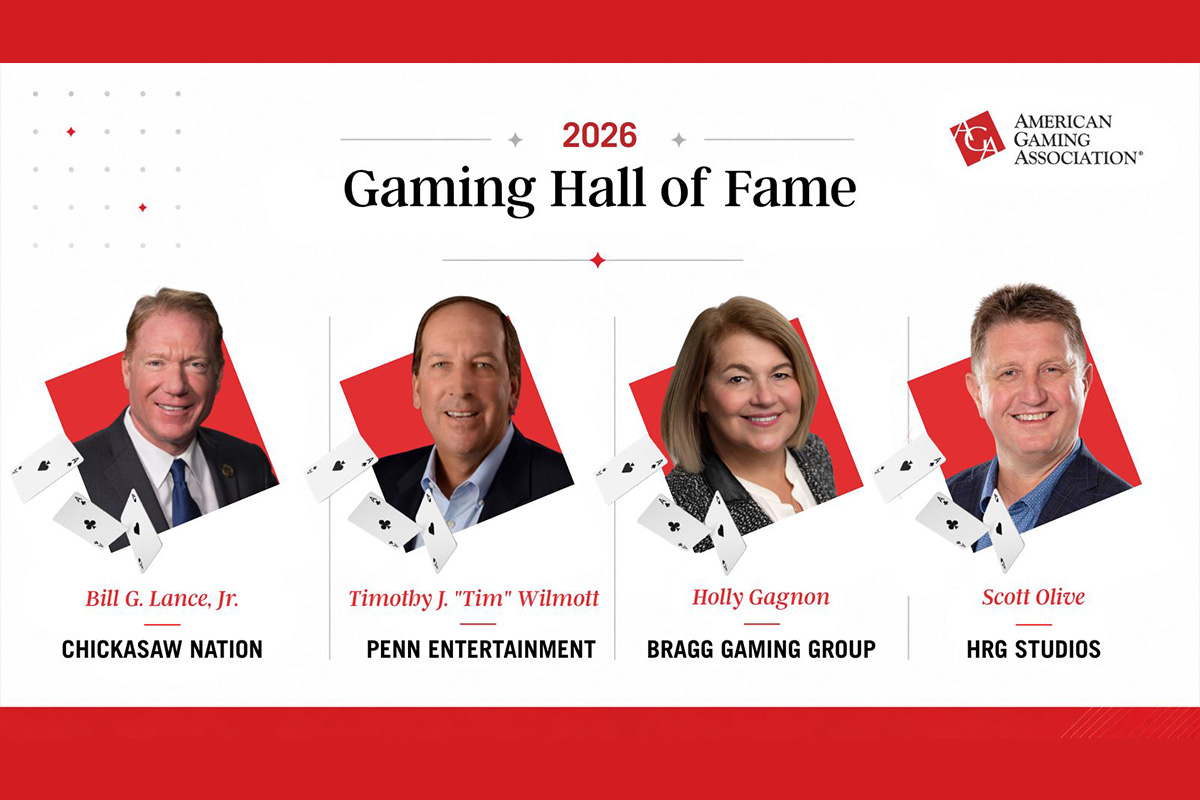
The American Gaming Association (AGA) announced the Gaming Hall of Fame Class of 2026, recognizing four individuals whose careers have profoundly shaped the legal gaming industry:
• Holly Gagnon, Board Member, Bragg Gaming Group
• Bill G. Lance, Jr., Secretary of State, Chickasaw Nation
• Scott Olive, Principal & Founder, HRG Studios
• Timothy J. “Tim” Wilmott, Retired Chief Executive Officer, PENN Entertainment
“The Gaming Hall of Fame recognizes the individuals whose vision, innovation, and dedication have helped shape today’s legal gaming industry. Holly, Bill, Scott, and Tim have each left a lasting mark through decades of service and leadership. Their contributions have set a high standard for those who follow,” said AGA President and CEO Bill Miller.
“This year’s inductees reflect the remarkable breadth of the gaming industry – from commercial and tribal gaming operators to suppliers. Each of them has helped advance gaming in significant ways, and we’re proud to welcome them to the Gaming Hall of Fame,” said AGA Chairman Lou Jacobs.
Since 1989, the Gaming Hall of Fame has celebrated the achievements of industry legends who have driven the commercial and tribal gaming industry forward. The Class of 2026 will be formally inducted at an invitation-only ceremony during the Global Gaming Expo (G2E) in Las Vegas this fall.
This year’s selection committee members include:
• Eric Schippers, SVP, Public Affairs & Government Relations, PENN Entertainment Inc.
• Mark Fulton, President, Cherokee Nation Entertainment
• Trevor Croker, CEO & Managing Director, Aristocrat Technologies
• Sherri Sosa, SVP, Human Resources, Hard Rock Las Vegas Hotel & Casino
• Mark Lipparelli, Chairman Emeritus, International Center for Responsible Gaming
• Kirsten Clark, Executive Director, IAGA
• Siobhan Lane, Executive Vice President & Chief Executive Officer, Gaming, Light & Wonder; Chair, Global Gaming Women
• Dr. Brett Abarbanel, Executive Director, UNLV International Gaming Institute
• Lou Jacobs, Co-CEO, Delaware North; Chairman, AGA
About the 2026 Inductees:
Holly Gagnon, Board Member, Bragg Gaming Group
Holly began her 34-year gaming career on the opening team of Foxwoods Resort Casino in 1992, at the birth of modern tribal gaming in America. She went on to hold senior financial and operational roles at Caesars Entertainment and MGM Resorts International before serving as President and CEO of Pearl River Resort, CEO of Chumash Enterprises for the Santa Ynez Band of Chumash Indians, and CEO of Seneca Gaming Corporation for the Seneca Nation of Indians. Named NAFOA Executive of the Year in 2016, Gagnon is a recognized champion of tribal economic development. As a founding member of Global Gaming Women and Distinguished Fellow at the UNLV International Gaming Institute, she has helped develop more than 300 gaming executives. She currently serves as a board member of Bragg Gaming Group.
Bill G. Lance, Jr., Secretary of State, Chickasaw Nation
Bill has served the Chickasaw Nation for decades in senior leadership roles spanning commerce, healthcare, and governance. As Secretary of Commerce for more than thirteen years, he oversaw more than 60 gaming, hospitality, retail, media, manufacturing, and tourism businesses employing approximately 7000 people. He also served as Administrator of the Chickasaw Nation Health System, overseeing construction of the 370,000-square-foot Chickasaw Nation Medical Center in Ada, Oklahoma. Lance currently serves as Secretary of State, representing the Chickasaw Nation in civic, business, and governance capacities.
Scott Olive, Principal & Founder, HRG Studios
Scott is one of the most influential game designers in the history of the slot machine industry. His career spans more than three decades, beginning at Aristocrat Gaming in 1997, where he helped drive the adoption of penny and Australian-style slots in U.S. gaming markets. After co-founding True Blue Gaming in 2007, Olive established HRG Studios in 2012, where he went on to create some of the most commercially successful slot titles ever produced.
Timothy J. “Tim” Wilmott, Retired Chief Executive Officer, PENN Entertainment
Tim spent more than three decades as one of the gaming industry’s most respected operational leaders. He served as Chief Executive Officer of Penn National Gaming from 2013 until his retirement in 2019, having previously served as President and Chief Operating Officer from 2008 to 2013. Before joining Penn National, Wilmott served as Chief Operating Officer of Harrah’s Entertainment and Division President of its Eastern Division, holding a series of leadership positions at Harrah’s properties dating back to 1988.
The post AGA Announces Gaming Hall of Fame Class of 2026 appeared first on Americas iGaming & Sports Betting News.

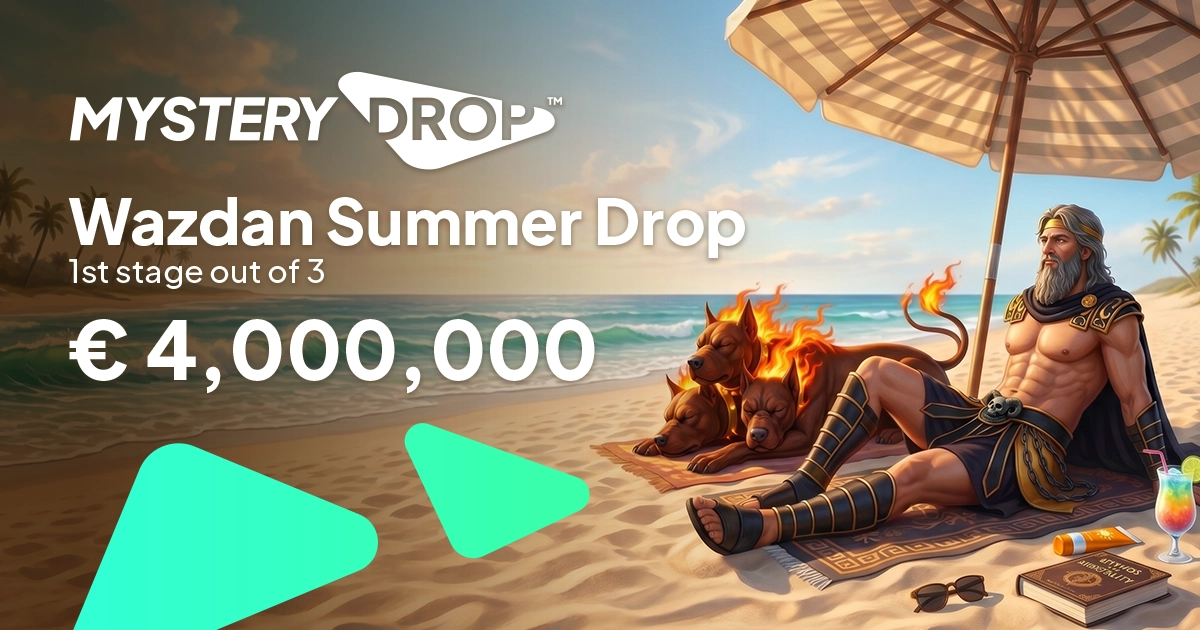
The operator-facing series runs 29 June to 13 September and uses Mystery Drop and Mystery Multiplier Drop mechanics.
Wazdan will launch a summer-long Network Promotion series for partner casinos, running from 29th June to 13th September. The campaign is structured in three stages with breaks between each phase.
The promotion will use Wazdan’s Mystery Drop and Mystery Multiplier Drop mechanics. The supplier said the programme is designed to be easy for operators to activate and will be supported with marketing materials, including promotional assets, brochures and newsletter content for partners to use across their own channels.
Alongside the promotion, Wazdan has a summer content roadmap with three slot releases scheduled: Mighty Hot: Amazonia (30th June), Magic Fruit$: Cherries (30th July) and Mighty Crown: Empire of Gold (6th August).
Radka Bacheva, Head of Sales and Business Development at Wazdan, said: “Summer presents a valuable opportunity for operators to keep engagement levels high, and this promotion has been designed to deliver exactly that through Wazdan’s proven promotional tools.
“Combined with our upcoming game releases, we are excited to offer partners a strong seasonal campaign with plenty of player appeal.”
The post Wazdan schedules three-stage Network Promotion campaign for summer appeared first on EE Gaming | Global iGaming & Tech Intelligence Hub.

ICONIC21 has rolled out three limited-edition Football Cup-branded casino games and launched its first network tournament, ICONIC Showdown Football Cup, running from 9th of July to 19th of July.
The new titles are Football Cup Roulette, Football Cup Blackjack 360, and Football Cup Gravity Blackjack. ICONIC21 said the releases showcase different customisation approaches, including green screen production for the roulette environment and an updated visual rebrand for its RNG blackjack table.
For Football Cup Gravity Blackjack, ICONIC21 said it used its latest LED technology and applied the Gravity Series multiplier mechanic, with a custom felt, a football gate, and bespoke 3D-printed decorations.
Alongside the three new games, ICONIC21 pointed to its previously launched slot Soccer World Championship, plus The Kickoff and Top Card, which it said received football-season branding and UI/UX updates.
The ICONIC Showdown Football Cup tournament covers 11 games in total and is positioned around the quarter finals, semi-finals and final period. ICONIC21 said 1,000 winners will share a €50,000 prize pool, and operators can enroll via their account manager or by contacting the company directly.
Edvardas Sadovskis, Chief Product Officer at ICONIC21, said:
“What I’m most proud of with this project is the turnaround. We built three fully branded, technically distinct games, enhanced existing ones with promotional branding, and launched our first-ever network tournament around them, all timed to coincide with peak player interest and traffic.
That kind of speed doesn’t happen by accident, it reflects how this team works. ICONIC Showdown is a meaningful first step for us as a provider, and launching it during the Football Cup, with this much energy around the game, feels like the right way to do it. We’re genuinely excited to see how the leaderboard shapes up and even more excited for the finals.”
The post ICONIC21 launches Football Cup-branded casino games and debut network tournament appeared first on EE Gaming | Global iGaming & Tech Intelligence Hub.

-

 Affiliate Industry7 days ago
Hub Affiliations Triumphs at the iGB Affiliate Awards 2026: Winner of Programme/Network Campaign of the Year
-
Latest News7 days ago
N1 Partners at iGB L!VE 2026: Bringing Together Affiliates, Art and Innovation
-
affiliate marketing7 days ago
Hub Affiliations wins iGB Affiliate Awards 2026 campaign prize
-
10bet4 days ago
Ellis Park Stadium signs five-year naming rights deal with 10bet
-
central asia4 days ago
Groove confirms attendance at SBC Summit Tbilisi 2026
-
Bucharest3 days ago
Eeze opens 1,200 sqm Bucharest hub for technical teams
-
API integration3 days ago
Belatra signs cooperation deal to distribute slots via VeliGames
-
Caesars Rewards7 days ago
Raise a Glass: The Vanderpump Hotel Celebrates $813,553 Jackpot Win