European Union
EGBA Welcomes European Commission’s Proposal for Digital Services Act


The European Commission has published its long-awaited legislative proposal for a Digital Service Act (DSA), which inter alia introduces rules for regulating large digital platforms and ensuring that markets impacted by digital gatekeepers remain fair and competitive.
EGBA welcomes the Commission’s proposal and its wider effort to deepen the European Digital Single Market (DSM) which is reflected in the comprehensiveness of its flagship DSA proposal.
The proposal will next be presented to the European Parliament and the Council, the two co-legislators of the EU, who will review the proposal and suggest amendments before coming to a joint agreement on the final contents of the legislation.
“We welcome the Commission’s Digital Services Act and hope this will be the beginning of renewed efforts by the Commission to address many of the regulatory challenges which impact on companies and consumers who buy and sell services in the digital space. One of the challenges we see in Europe’s online gambling sector is the need for more consistent regulations in the EU, particularly in respect to customer protection, and the Commission needs to step up to address the current fragmentation,” Maarten Haijer, Secretary-General of EGBA, said.
Powered by WPeMatico


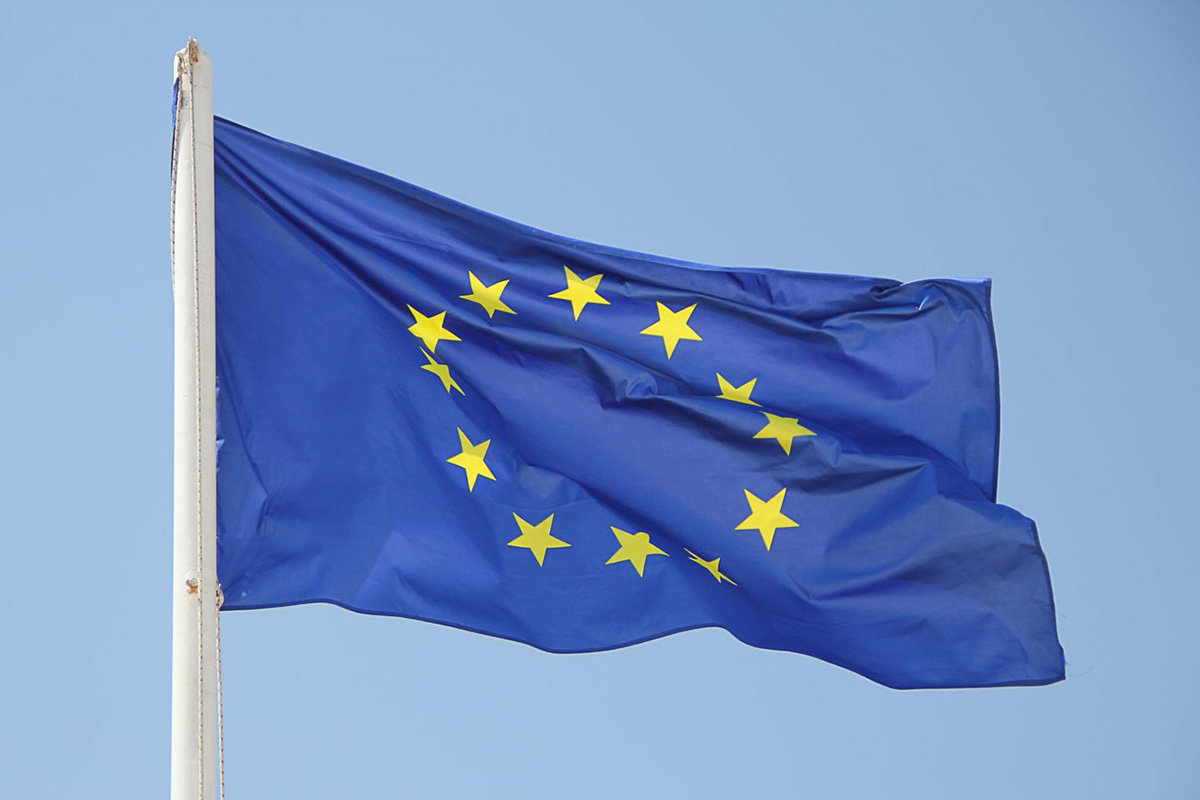
Malta’s Prime Minister has said his nation will veto any attempts by the EU to introduce a bloc-wide online gambling levy, threatening to place the industry at the centre of febrile European politics.
Robert Abela has told Malta’s parliament that he would use his nation’s member state veto to block the passage of the next EU budget, if a proposed gambling levy is included.
The budget, formally known as the Multiannual Financial Framework (MFF), lays out how the EU will spend its €2trn budget from 2028 to 2034.
The prospect of adding a continent-wide tax to the budget remains only a proposal, but the idea has heavyweight backing.
Vice-president of the European Parliament Victor Negrescu is spearheading these efforts, arguing that a fast-growing digital industry that generates billions in revenue should be subject to EU-level taxation.
Negrescu says that the levy could generate between €2-4bn every year.
“This industry fully benefits from the EU’s single market, digital infrastructure and crossborder access, but operates under fragmented rules, unequal taxation and insufficient enforcement,” he said.
The online gambling sector might well quibble with the specifics of these claims.
The idea that it “fully benefits” from the EU single market may have been unassailably true in the point-of-supply era, but the subsequent fragmentation of national rules that Negrescu refers to has significantly complicated that picture.
Nevertheless, backing for the levy from a senior European politician has naturally spooked the industry and its primary champion within the EU, Malta.
The levy would be so damaging to Malta’s economic interests that it is willing to use its most powerful EU instrument by executing a veto in the European Council in order to block the budget from being approved.
That would likely plunge the island nation into the centre of a political firestorm, but recent history suggests that smaller EU nations and their allies can successfully disrupt budget negotiations.
During discussions over the 2020 EU budget, Poland and Hungary successfully secured concessions after they both threatened to veto the MFF over rule-of-law requirements.
Malta will also hope to rely on support from the Friends of Cohesion, an informal alliance of 16 nations concerned with regional development, of which it is a part.
Negrescu’s pledge to pair his levy with a “clear EU directive against illegal and unlicensed platforms” is unlikely to satisfy the online gambling industry, despite growing complaints of a rampant black market from a number of quarters.
Malta strikes again
In simple terms, Malta is seeking to protect an industry which accounts for 10 percent of its gross domestic product.
The nation has shown a clear willingness to ignore the EU’s wishes in order to shield the many gaming firms that host their headquarters within its borders.
Most notably, the creation of Bill 55 has successfully protected local companies from having to repay hundreds of millions of euros in player refund settlements.
Ongoing cases before the Court of Justice of the European Union suggest that Europe’s top judges will soon rule against Bill 55, which is now Article 56A of Malta’s gambling act.
The European Commission also launched infringement proceedings against Malta over the provision
Tax troubles.
There are so far no specifics on how the levy would be calculated or what value it would be set at, but beyond Malta an additional levy would also be extremely challenging for operators in European markets already struggling with high tax burdens.
This includes the Netherlands, where a government report released this week has shown that staggered increases to taxes of 37.8 percent of gross gambling revenue (GGR) have failed to deliver any benefit to the country’s budget.
Even a relatively slight increase to this tax rate could send more operators scurrying out the market and see channelisation dive further than its current rate of 55 percent.
Nations like France, where online betting is taxed at 59.3 percent of GGR, or Portugal, with its 8 percent turnover tax on online sports betting, would also feel an impact.
Negotiations over the contents of the EU budget are set to continue for several months, with the approval process expected to be completed in late 2026 or early 2027.
Leaders in the Council of Europe have agreed to come to a preliminary deal on the MFF by October, according to a coordinated statement issued earlier this month.
Malta’s devout opposition to a possible gambling levy is just one of a range of issues under discussion, including a stark divide between nations such as Germany, which favour spending cuts, and the Friends of Cohesion, who want additional cash for agriculture and regional funding.
The post Malta Prepares For EU Budget Battle To Stave Off Gambling Levy appeared first on EE Gaming | Global iGaming & Tech Intelligence Hub.

When it comes to regulations designed to improve the safety of consumers, gambling companies are used to being the centre of attention. Sometimes though, the industry simply gets caught in the crossfire — a problem that is increasingly the case with broad pieces of legislation designed to reign in search and social media giants.
From affordability rules to advertising bans, there’s no shortage of regulation that specifically constrains what gambling companies are allowed to do in specific markets, all in the name of protecting consumers.
In the face of these many overlapping layers of compliance, it can be easy to lose sight of the broader areas of new legislation that nevertheless also require attention from the European gambling industry.
Not just Facebook
At the EU level, this includes mammoth regulatory initiatives like the Digital Services Act (DSA).
Although it was created to force social media giants to be more responsible for the content posted on their platforms, as providers of online services within the bloc, gambling companies are well within its scope.
The DSA has a particular focus on hosting illegal content and requires service providers online to remove content that has been flagged or face costly enforcement.
On provision requires operators and marketing providers active in Europe are required to offer consumers a way to flag illegal content on their platforms and must have a process on how they respond to these requests.
The EU also expects to receive a so-called transparency report every year, which details what consumer requests were made and how they were dealt with.
Any requests made by law enforcement over potentially illegal content must also be included in that report.
The role of chat services, particularly where they allow your players to speak with one another, is also covered by the DSA.
This can create unique compliance headaches for gambling operators, particularly where a backend service is actually provided and maintained by a B2B provider.
Legal experts say that the EU has no issue with this sort of structure, but expects there to be a clear understanding about who is responsible for dealing with any issues that might arise.
“You need to make sure between the two of you, how you’re going to apportion responsibility for making things like the notice and action form available,” said Heather Catchpole, a senior associate with law firm Bird & Bird.
“If a user does request chat content to be removed, then who’s going to be responsible for actioning that? Who is able to remove that content on the back end? So, there’s some obligation apportionment things to think about here,” she said.
Brexit in name only
The UK has its own version of this kind of law called the Online Safety Act (OSA). It too attempts to enact tighter controls on digital businesses in the name of consumer safety, but in the process creates evern more unique problems for online gambling companies.
It casts a wide net. Even if your company has no physical presence in the UK, or even if it isn’t technically licensed there, operators may still find themselves covered by its provisions.
“If you are based in Gibraltar, if you are based in Cyprus or in Malta, you would still be caught by the online safety net if you have UK users on that service,” explained Bird & Bird partner, Emma Drake.
“Also, even if you thought that you didn’t target the UK and you still have UK users, if [digital regulator] Ofcom thought that you pose a material risk of significant harm, they might still consider you caught.”
For most gambling companies the risks are less about the kinds of enforcement or negative press you might expect to face from failures in gambling regulations, instead operators will need to make sure they have filled out the right paperwork to show officials they are following the rules.
In the UK, this includes an illegal content risk assessment, which requires a company to lay out the likelihood of users encouraging illegal content on their platform and what they are doing to mitigate those risks.
Although the odds of a gambler encountering something illegal in the UK on their platform, the report still needs to be filed and still requires significant time and effort from a compliance team, Drake said.
The challenge of complying with the OSA is made more difficult by its vagueness and even for seasoned professionals it has been a challenge to work out what elements of the act apply to gambling.
“The online safety act is amongst the poorest drafted pieces of legislation I’ve ever had the ‘joy’ to practice on,” Drake added.
These dual digital safety laws are just the tip of a very large and complex iceberg of broad spectrum legislation that has ensnared online gambling companies in the past few years.
Other examples just within the EU include, the AI Act, the Digital Markets Act and the Corporate Sustainability Reporting Directive.
As governments globally grow more aware of the role social media and AI plays in our societies, gambling companies can expect to be more regularly caught up in these kinds of big legislative projects.
The post How International Push For Online Safety Creates Online Gambling Headaches appeared first on Eastern European Gaming | Global iGaming & Tech Intelligence Hub.

The slow death of grey markets in Europe and the increasingly clear line between regulated spaces and the black market is set to divide the entire industry in two, including suppliers.
With almost all major European markets having adopted or being well on their way to enacting a full licensing regime for online gambling, the battle lines between what is on- and off-shore are clearer than ever.
For those nations that persist with restrictions on some sectors, like the continued monopoly in Norway or France’s ban on online casinos, it’s becoming nearly impossible to justify doing business in spite of these prohibitions – even for suppliers.
Regulators in the rest of Europe increasingly expect their licensees to follow not just their rules, but those of their fellow authorities across the continent.
Where once expectations of good behaviour were reserved exclusively for operators, B2B companies are now subject to the same scrutiny.
For the past few years, there has been a general building of pressure on suppliers, but this year B2B compliance has moved from a growing trend to become the status quo for the sector.
Where do you stand?
The industry is being asked to pick a side and even to play the role of regulator itself, in some cases.
“We understand that at least one piece of recent B2B regulatory enforcement [in the UK] may have come as a result of a B2C operator effectively reporting one of its suppliers,” said Andy Danson, the head of Bird & Bird’s international gambling practice.
It’s becoming clear that a meaningful percentage of operators have fully bought into the idea that those who continue to exist in European black or grey are threats to their bottom line.
Speaking on a recent webinar organised by his firm, Danson added: “There is an increasing use of commercial pressure and accountability alongside regulatory enforcement, and there is this growing expectation that licensed businesses consider who they support.”
Danson notes that, in his view, the burden on operators to self-police their industry is probably becoming too large.
“How much can a regulator really expect B2C licensees to regulate their suppliers? It is ultimately the regulator’s job to do that, and B2C really should be able to rely on their suppliers having a local license.”
This backwards pressure is also being exerted on suppliers in jurisdictions where they are required to obtain their own licenses.
Regulators expect suppliers not to sell their content to operators who service their local black market and look dimly on supplying companies active in illegal markets in any part of the world.
Gone are the days when these authorities would accept the excuse that aggregators are ultimately responsible for providing game content to these offshore operators. Instead, suppliers risk enforcement if they do not have oversight of the entire supply chain their products exist in.
Dealmakers
This pressure coming in from every angle leads to only one inevitable conclusion: M&A activity.
As suppliers are forced to choose either to abandon their high profit margin offshore clients or their reliable onshore customers, the possibility of dividing into two parts becomes more and more compelling.
“I think businesses will very likely look to separate and restructure, particularly where they currently have a real mix of regulated and unregulated market activities,” said Danson.
“We certainly saw similar trends five to ten years ago when the regulatory focus on this sort of issue was more on the B2B side,” he added.
This move would be driven partly by modern regulatory complexities, but also the impact of US investors entering the gambling market more prominently over the past five years.
US-based capital tends to be more skittish about any activity with uncertain regulatory backing and its law enforcement authorities are not shy about exerting their authority extraterritorially.
“International market exposure is becoming more and more relevant in an investment and M&A context,” Danson confirmed.
A dilemma
Those gambling businesses choosing the regulated environment are at least finding their authorities more willing than in previous years to take proactive action against the black market.
In the UK, the Gambling Commission has received a grant of £26m from the government to step up its work against illegal online gambling, for example.
Regulators are also understood to be sharing more information than ever before about the main bad actors afflicting their markets, through organizations like the Gambling Regulators Europe Forum (GREF).
Although it’s worth noting that officials also say they are swapping notes on the activities of their licence-holders as well, in yet a further example of international compliance becoming a local issue.
This, along with an atmosphere of zero compromise when it comes to tightening regulations, has created a situation where the choice between on- and off-shore is not a simple one.
Andy Danson summed up the problem: “By creating an environment which has become so burdensome and challenging for regulated markets to operate, and then challenging operators and suppliers to pick a side, regulators perhaps shouldn’t be all that surprised when some operators out there might not necessarily choose the side that they want them to.”
The post European Online Gambling Industry Faces Tough Offshore Choice appeared first on Eastern European Gaming | Global iGaming & Tech Intelligence Hub.

-

 Bragg Gaming Group4 days ago
Massive Gaming launches Blitzcrown titles on Superbet Brazil via Bragg Hub
-
Compliance4 days ago
HIPTHER Launches HALLO: The Standard in Compliance Expertise
-
Compliance Updates4 days ago
HIPTHER Launches HALLO: The Standard in Compliance Expertise
-
7Games4 days ago
7Games, Betão & R7 Launch FIRST.bet Sportsbook in Brazil
-
Alex Cuoci4 days ago
Wealthsimple and Kalshi Partner to Bring Prediction Markets to Canada
-
30-0 Kongeserien3 days ago
Kongebonus launches 30-0 Kongeserien Eliteserien fantasy draft game
-
Channelisation4 days ago
Swedish Gambling Authority consults tighter duty of care rules as channelisation slips
-
Bonusetu.com3 days ago
Finland Sets Casino Gambling Risk Limits at 2% of Income, 4 Days, 2 Game Types