Industry News
Blackjack History and Specific Features of the Game


Blackjack commands the most massive following of all table games in both online and offline gambling platforms. The game’s fame is rooted in having been around for a long time and also its depiction in pop culture creations such as films, TV shows, and even literature pieces. Blackjack is a card comparing game that pits one or several gamers against a croupier, and each one gets their turn to try and beat the house. Blackjack has a rich history that has helped build it up to the well-respected game. Also, numerous blackjack strategy approaches have come up over the years to draw the attention of a bigger fan base.
The Beginning
Blackjack roots can be traced back to the early eighteenth century. Like most games that have been around long, the origins of blackjack are muddled and are still the subject of argument to date. Even so, it is agreed that the indulgent didn’t come to be from the actions of a single person or a particular point in time. Instead, it is the result of gambling evolution that continues to this date, especially with the entry of online casinos. The revolution of blackjack to what it is today took different roots in history, and some of the most popular theories include:
- French casinos: The most common belief of blackjack origins is that the game has its roots in French casinos. The game popped up in the country’s gambling establishments in the early 1700s as Vingt-et-Un, which translates to 21. This game is believed to have been a variation of other popular card games at the time that dominated the gambling scene such as Chemin de Fer.
- Spanish roots: Spaniards have also been linked to the game of blackjack. During the eighteenth century, Spanish casinos offered a similar version of what is played today dubbed Trente-Un, which translates to 31. In the game, players had to gain a card value of thirty-one using only three cards before the dealer did. This is ten cards more than what is used today.
- Rome casinos: It is no secret that ancient Rome was home to thriving gambling habits among its citizens, especially soldiers. It is believed that the Romans played the game with wooden planks in the place of cards with each block holding a different numerical value. However, there is no evidence of the link between this game and modern blackjack, but the Romans love for gambling makes it a popular theory nonetheless.
The American Twist
Out of the three games believed to have inspired the game, the French version is the one that gained the most popularity and spread around the world. The set was well-accepted in North America where it was introduced during the French revolution by colonists. The game still held on to some traditional rules, including the limitation that only the croupier was allowed to double. Also, a betting round was played before the next playing card was dealt. The game still went by the name twenty-one when it reached Nevada in the early twentieth century, which was around the time that casinos were made legal.
With the gambling sector scrambling to get as much attention with its newfound legality, some rule changes were made. On top of the usual stakes, players were allowed to gamble on a special bet. In the hand, players would win if it contained once of the two black jacks used in the deck – the jack of clubs or that of spades. On top of that, the Ace of Spades had an odds upgrade where it would pay ten to one. As the game gained more popularity, gambling destinations soon dropped these special stakes, but the name blackjack stuck from the peculiar bet that made it famous. Today, the value of the Ace of Spades is juggled depending on the dealt hand.
Blackjack Gameplay and Features
Over the years, numerous variations of blackjack have cropped up in a bid to keep the popularity of the game alive. Even so, all versions of the game are similar to the classic version with only a few twists in the rules that act as building blocks for slightly different gameplay experience. In blackjack and all its variations, the gameplay procedure remains constant. Players need to have a card value of 21 or one close to it before the dealer. If the number goes over 21, whoever holds it busts and automatically loses the round. Also, if the card value is lower than that of the dealer’s, then the player loses. Each card contributes a different value to the hand as follows:
- The numbered cards award face value. For instance, a 3 card counts as three and a 10 card counts as ten.
- The face cards, which are the kings, queens, and jacks, all award ten.
- The Ace counts as one or eleven. The considered value varies depending on which card would be most valuable to the hand. For instance, the eleven-card used in a hand valued at ten or less is handy but would bust if it is higher.
Now with the most basic rule down, here is a look at how a round of blackjack goes down:
The Purchase of Chips
This is necessary for brick and mortar casinos since real money is not used at the tables. In online and live gambling dens, however, the player’s balance is automatically changed to virtual chips once the game is launched.
Wager Placement
Blackjack round only begin once the player has placed their stake in the betting circle. Depending on the gaming club, the ring could be the casino logo or that of the game. The stakes are determined the chips used with each one being matched to a credit or cash value. The minimum stake also varies from one set to another. Online blackjack variations accommodate bets as little as a couple of pennies while land-based versions rarely go below five dollars.
Dealing of Cards
Blackjack is either conducted by a croupier in location-based and live casinos while an RNG serves the purpose in online versions. One card is handed out to the player face up while the dealer takes one face down. Another card is handed to the gambler face up, and the dealer receives one face-up as well. The dealing of cards marks the real beginning of the game.
Playing the Hand
From the two cards handed out, players have to add the values, which adds up to a value between 4 and 21. If the cards are an Ace of Spades and a ten-card, the round automatically ends with the player as the winner unless the dealer also has 21. In that case, no win is granted, but the original stake is not lost. If the value is not a blackjack, there are several ways that the gambler can proceed, and they include:
| Stand | If the first two cards are of an acceptable value, this move will end the round and require the dealer to reveal their cards. |
| Hit | If there is adequate room to improve the card total, the croupier will deal more cards until one chooses to stand or busts by going over 21. |
| Double down | If the card value is advantageous, one can choose to double their wager and receive an additional card. The added bet allows one to take or turn down the card after seeing its value. |
| Split | If the first two cards are of the same value, one can choose to separate them and have different stakes for each. Therefore, the gambler will be playing two hands that begin with an equal card value. |
| Surrender | If the first two cards are not of suitable value, players can choose to return the cards but at the loss of half their bet. |
In Brief
Blackjack is a continually evolving game with variations popping up now and then to challenge the norm. Players can access the game and its various versions online and offline in a wide variety.











The operator-facing series runs 29 June to 13 September and uses Mystery Drop and Mystery Multiplier Drop mechanics.
Wazdan will launch a summer-long Network Promotion series for partner casinos, running from 29th June to 13th September. The campaign is structured in three stages with breaks between each phase.
The promotion will use Wazdan’s Mystery Drop and Mystery Multiplier Drop mechanics. The supplier said the programme is designed to be easy for operators to activate and will be supported with marketing materials, including promotional assets, brochures and newsletter content for partners to use across their own channels.
Alongside the promotion, Wazdan has a summer content roadmap with three slot releases scheduled: Mighty Hot: Amazonia (30th June), Magic Fruit$: Cherries (30th July) and Mighty Crown: Empire of Gold (6th August).
Radka Bacheva, Head of Sales and Business Development at Wazdan, said: “Summer presents a valuable opportunity for operators to keep engagement levels high, and this promotion has been designed to deliver exactly that through Wazdan’s proven promotional tools.
“Combined with our upcoming game releases, we are excited to offer partners a strong seasonal campaign with plenty of player appeal.”
The post Wazdan schedules three-stage Network Promotion campaign for summer appeared first on EE Gaming | Global iGaming & Tech Intelligence Hub.
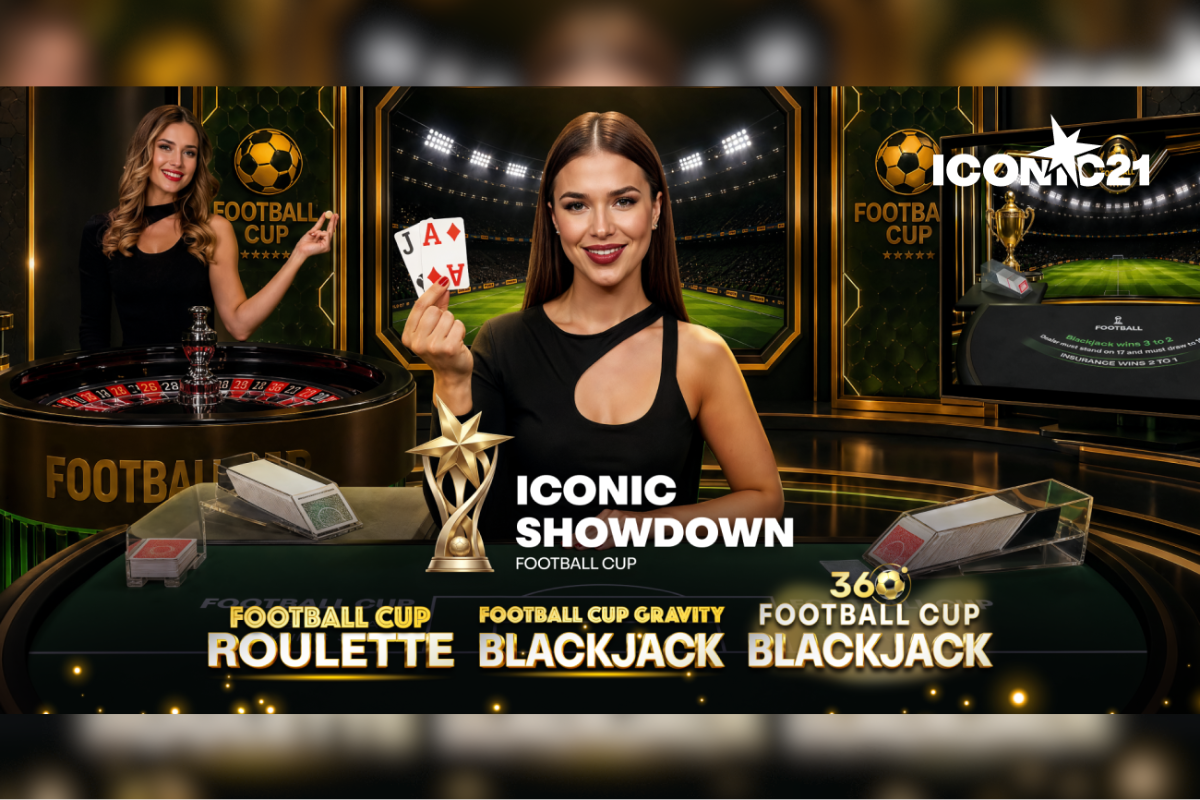
ICONIC21 has rolled out three limited-edition Football Cup-branded casino games and launched its first network tournament, ICONIC Showdown Football Cup, running from 9th of July to 19th of July.
The new titles are Football Cup Roulette, Football Cup Blackjack 360, and Football Cup Gravity Blackjack. ICONIC21 said the releases showcase different customisation approaches, including green screen production for the roulette environment and an updated visual rebrand for its RNG blackjack table.
For Football Cup Gravity Blackjack, ICONIC21 said it used its latest LED technology and applied the Gravity Series multiplier mechanic, with a custom felt, a football gate, and bespoke 3D-printed decorations.
Alongside the three new games, ICONIC21 pointed to its previously launched slot Soccer World Championship, plus The Kickoff and Top Card, which it said received football-season branding and UI/UX updates.
The ICONIC Showdown Football Cup tournament covers 11 games in total and is positioned around the quarter finals, semi-finals and final period. ICONIC21 said 1,000 winners will share a €50,000 prize pool, and operators can enroll via their account manager or by contacting the company directly.
Edvardas Sadovskis, Chief Product Officer at ICONIC21, said:
“What I’m most proud of with this project is the turnaround. We built three fully branded, technically distinct games, enhanced existing ones with promotional branding, and launched our first-ever network tournament around them, all timed to coincide with peak player interest and traffic.
That kind of speed doesn’t happen by accident, it reflects how this team works. ICONIC Showdown is a meaningful first step for us as a provider, and launching it during the Football Cup, with this much energy around the game, feels like the right way to do it. We’re genuinely excited to see how the leaderboard shapes up and even more excited for the finals.”
The post ICONIC21 launches Football Cup-branded casino games and debut network tournament appeared first on EE Gaming | Global iGaming & Tech Intelligence Hub.
Brand Ambassador
Ronaldinho visits CreedRoomz Yerevan studio to front Marble Cup and Kickoff Roulette


CreedRoomz has brought footballer Ronaldinho to its headquarters in Yerevan, where the company filmed an “exclusive interview” with the former player in connection with two new live casino game shows, Marble Cup and Kickoff Roulette. CreedRoomz said Ronaldinho is the global ambassador for both titles.
In the interview, Ronaldinho said: “For me, it’s a great joy to be a part of this partnership. Since arriving here at the office, everyone has treated me with great affection. I already feel at home, very happy.” Asked to choose between the two games, he added: “Honestly, it’s difficult to choose one, both are wonderful, I loved them, so it’s very difficult to choose one, I think everyone will really like them, I think the whole world will really enjoy them.”
Ronaldinho also described his first impressions of the studio and gameplay: “I was surprised and very happy, everything is very beautiful, everything is very innovative, so I believe that’s why everyone will really like them, so I’m looking forward to everyone starting to enjoy them a lot.”
On why CreedRoomz expects the titles to gain traction, he said: “These are different games. I think that will attract attention, the fact that football is a global passion also helps, so I believe everyone will like it for those reasons.. and for the innovation of everything that is happening.”
CreedRoomz linked the interview to upcoming “World Cup and R10 Tournaments,” with Ronaldinho closing by telling fans: “A message of gratitude for the continued affection. I’m very happy and excited. for the next competitions for the next games, the games are all ready, I hope everyone enjoys them and everyone be very happy and have good times together.”
The post Ronaldinho visits CreedRoomz Yerevan studio to front Marble Cup and Kickoff Roulette appeared first on EE Gaming | Global iGaming & Tech Intelligence Hub.

-

 AGCO7 days ago
AGCO Fines Great Canadian Entertainment $120,000 for Using Unauthorised Gaming System Software at Four Casinos
-
Affiliate Industry5 days ago
Hub Affiliations Triumphs at the iGB Affiliate Awards 2026: Winner of Programme/Network Campaign of the Year
-
Asia7 days ago
The UAE Lottery joins SAGIP outreach with Philippine Consulate and Infinite Communities
-
Canada7 days ago
St8 extends Octoplay partnership into Ontario and the UK
-
Latest News5 days ago
N1 Partners at iGB L!VE 2026: Bringing Together Affiliates, Art and Innovation
-
0007 days ago
Booming Games launches Booming Buffalo Hold and Win Extreme 25,000
-
Latest News7 days ago
LEON announces LEON.bet Masters, a new CS2 tournament in Portugal
-
Austria6 days ago
Austrian Brand Value Study: NOVOMATIC Defends Top Ranking