Gaming
Live streaming sponsorships platform inSTREAMLY raises €1.1m


The Warsaw-based start-up wants to be the go-to platform for all streamers to grow and monetise their passion and for brands to work with streamers to reach Gen Z viewers
Live streaming sponsorships platform inSTREAMLY has raised a €1.1m seed round led by Supernode Global to expand into new markets.
Founded in 2019 by a team of live streaming and marketing professionals, inSTREAMLY has built a platform that enables all streamers – regardless of size – access to brands and to participate and execute sponsorships.
Colopl Next and PKO TFI were also involved in the investment round and previous pre-seed investment was secured from SMOK VC, which is run by Paul Bragiel, an investor in Niantic (PokemonGO), Unity, Uber, and Stripe.
The global live streaming market is valued at $70bn and expected to rise to $184.27bn by 2027. It is extremely difficult to execute brand sponsorship deals for the live streaming market, so typically only the largest streamers with millions of followers are able to work with large brands, leaving the majority of streamers without access to brand deals. With inSTREAMLY’S technology and platform, all streamers gain access to deals previously reserved for the top 0.01% and brands are able to access a large and highly engaged community of micro-streamers, delivering the same amount of impressions, but much better conversion rates than with larger streamers.
While the industry average CTR for paid ads is 0,7%, a recent campaign with 956 streamers achieved a 4% CTR, demonstrating that smaller streamers are able to draw more engagement, which brands such as Netflix, Samsung, PlayStation, Adidas, and Reebok, among others, are capturing through inSTREAMLY’s platform.
“I personally know how life-changing it can be for a small streamer to get their first revenue from streaming. It makes you believe that you can turn your passion into a career. With the new funds, we will be accelerating our expansion to new markets and aim to deliver the best opportunities to streamers worldwide,” says Wiktoria Wójcik, co-founder, inSTREAMLY.
“We see massive potential in how inSTREAMLY is democratising sponsorship opportunities for the live streaming ecosystem and believe the team’s deep understanding of the market and passion for streaming will be a key component to their success. We’re incredibly excited to lead this round and look forward to supporting inSTREAMLY as they expand their platform into new markets.” – says Phoebe Arkell, Supernode Global.
“Media agencies and large brands are currently facing difficulties in building a sales message that would be engaging for the Generation Z. inSTREAMLY fills this gap. The value of the Company is built for all current shareholders, and we believe it will be a part of inSTREAMLY global success.” – Krzysztof Tokarski, Managing Director at PKO VC.
Powered by WPeMatico


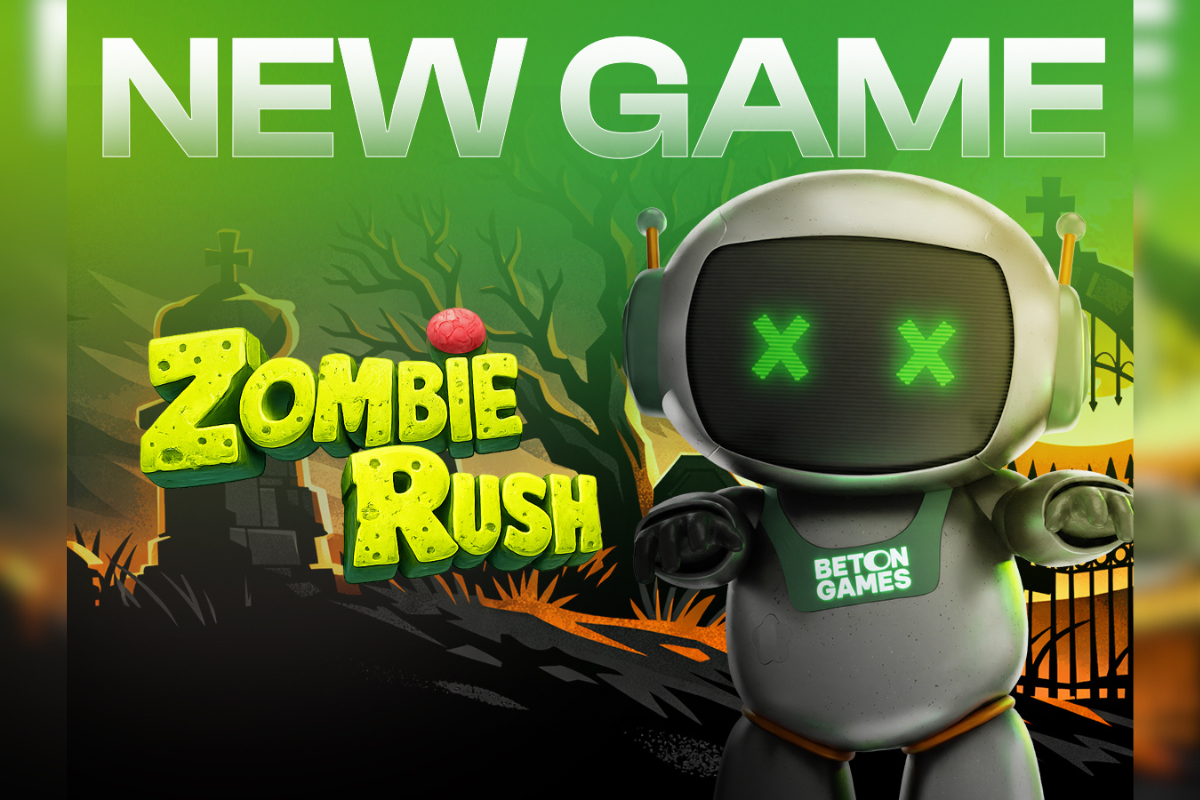
Bet on Games, the instant and crash games vertical within the Betcore ecosystem, has launched a new horror-themed crash game called Zombie Rush. The title is now available for global integration via Betcore’s single API, alongside content from TVBET and ElCasino.
Zombie Rush wraps the crash mechanic in a graveyard “survival run” theme. Players decide when to cash out as the multiplier rises, with the round ending when the “crash” triggers.
Bet on Games said the game runs on an “Optimized Math Model” with 97.5% RTP and a “dynamically accelerating multiplier curve.” The release also highlights “Visceral Horror Aesthetics,” linking the crash moment to a “grisly, memorable animation.”
On the feature set, Zombie Rush includes Autoplay and Auto Cash-out. It also adds “Strategic Dual-Betting,” which allows play across two parallel rounds simultaneously.
Betcore is directing partnership and integration inquiries to [email protected]. A gameplay video is available here.
The post Bet on Games launches horror-themed crash title Zombie Rush appeared first on Eastern European Gaming | Global iGaming & Tech Intelligence Hub.
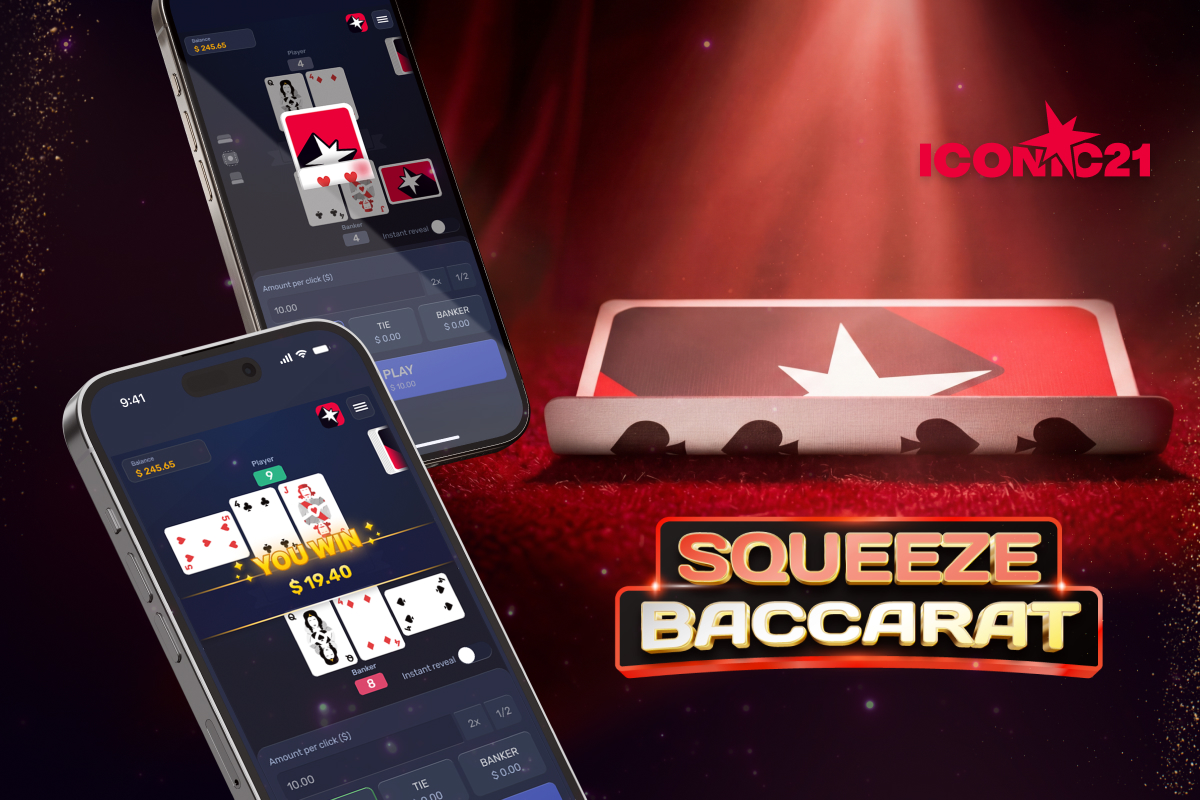
ICONIC21 has launched Squeeze Baccarat, a new RNG baccarat title designed around the “squeeze” reveal mechanic more commonly associated with live-table play.
In the game, the player controls the reveal pace, using actions such as peeling back an edge to uncover each card, rather than watching a standard automated animation sequence.
ICONIC21 said the title is fully customisable, including interface and card design, positioning it for operator branding and lobby integration.
Edvardas Sadovskis, Chief Product Officer at ICONIC21, said: “The squeeze is one of those moments every baccarat player is excited about. That slow, deliberate reveal before the big win is what makes it tense. The problem? That feeling almost never survives the jump to RNG. It gets replaced by an animation and the magic is gone.
“We refused to let that happen. Getting the squeeze right in a digital environment is genuinely hard but we successfully managed, and honestly, we’re pretty excited about what came out. Instead of watching it happen, the player controls the reveal themselves.
“Add full brand customisation on top of that, and what you have is something operators can truly call their own. We can’t wait to see what our partners do with it.”
The post ICONIC21 launches Squeeze Baccarat RNG game with player-controlled reveal appeared first on Eastern European Gaming | Global iGaming & Tech Intelligence Hub.

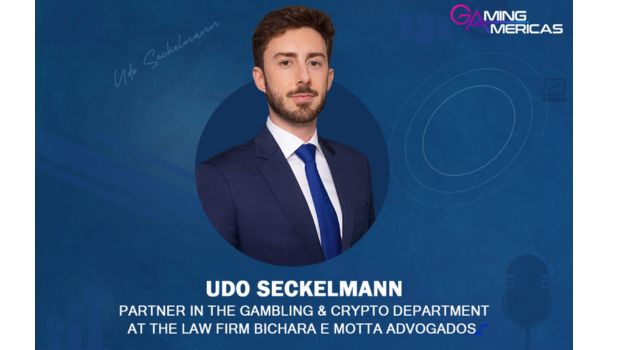
In an exclusive article for Gaming Americas, Udo Seckelmann, partner in the Gambling & Crypto department at Bichara e Motta Advogados, examines how the Brazilian iGaming market has entered a new phase of maturity following BiS SiGMA South America 2026.
Moving beyond regulatory expectations, the industry now faces real operational, political, and economic pressures, raising critical questions about sustainability, enforcement, and the balance between growth and consumer protection in one of the world’s most dynamic betting markets.
BIS SIGMA 2026 made it clear that the conversation around Brazil’s betting sector has fundamentally changed. The industry is no longer being discussed as a future opportunity shaped by regulatory expectations, but as a functioning ecosystem already subject to real-world pressures. With the framework in force and operators active, the focus has shifted to how the market actually behaves under regulation — and where that framework is being put to the test.
This shift was evident both in the quality of the discussions and in the profile of participants. In past editions, much of the debate focused on the ideal regulatory framework, taxation, and market entry strategies. In 2026, the focus moved toward more sophisticated — and, in many ways, more challenging — topics: regulatory implementation, enforcement, and the balance between growth and consumer protection.
An additional element that permeated many discussions was the recent hardening of political discourse toward the sector. Statements from the President suggesting the potential elimination of the regulated betting market, as well as initiatives in Congress aimed at broadly restricting betting advertising, reveal legitimate concerns about negative externalities but also a concrete risk of public policy being shaped in a way that is disconnected from the newly established regulatory reality.
The criticism here is not directed at the concern for consumer protection — which is undoubtedly essential — but rather at how this debate has been conducted. Prohibitive or overly restrictive measures, particularly in the field of advertising, tend to produce adverse effects already observed in other jurisdictions: reduced channeling capacity toward the regulated market, the strengthening of illegal operators, and a weakening of consumer protection mechanisms themselves.
In this context, advertising should not be viewed solely as a risk factor, but also as a public policy tool. It is through advertising that licensed operators can differentiate themselves from unregulated entities, communicate responsible gambling practices, and operate within auditable parameters. Disproportionate restrictions, in practice, reduce the visibility of those subject to regulation while simultaneously expanding the space for those operating outside it.
Moreover, the instability of political discourse — especially when it flirts with prohibition scenarios after years of efforts to structure a regulated market — creates significant legal uncertainty. Investments made based on a recent regulatory framework are reassessed, compliance costs increase, and the appetite of new entrants tends to decline. Ultimately, this undermines not only the development of the sector but also government revenue and the original regulatory objectives pursued by the Government.
Another key topic discussed during the event was the impact of increased taxation — particularly following the rise in the Gaming Tax — on the competitiveness of the regulated market. There is a legitimate concern that an overly burdensome environment, combined with severe advertising restrictions, may create an economically unviable scenario for licensed operators, once again encouraging migration to the unregulated market.
Another highlight of the event was the debate surrounding the role of technological intermediaries — including market makers in emerging segments such as prediction markets. The expansion of these models raises important regulatory questions: to what extent are existing frameworks sufficient to accommodate these innovations? And when will it be necessary to move toward specific regulatory regimes, potentially under the oversight of authorities such as the securities regulator?
A comparison with previous BIS SIGMA editions clearly demonstrates the sector’s growing maturity. If Brazil was once seen as a major promise, it is now a complex reality that requires fine-tuning and institutional coordination. The agenda has shifted from market opening to governance — now under much more intense political and social scrutiny.
Finally, one aspect that deserves particular attention is the increasing professionalization of all stakeholders involved. Operators, regulators, service providers, and even the broader public debate have evolved significantly. There is now a clearer understanding that the success of the Brazilian market depends on its credibility and long-term sustainability.
Udo Seckelmann
Partner in the Gambling & Crypto department at Bichara e Motta Advogados
The post The iGaming Industry’s New Challenges in 2026 appeared first on Americas iGaming & Sports Betting News.

-

 Betsson4 days ago
What the Betsson/Inter Milan case reveals about cross-border gambling branding when two restrictive regimes collide
-
Balkans4 days ago
CT Interactive Expands its Certified Portfolio in Bulgaria
-
CJEU7 days ago
Malta faces new dawn as EU courts gather strength
-
Africa3 days ago
Amusnet and Goldrush Strike Strategic Partnership to Enhance SA Online Gaming
-
ABBIATI Casino Equipment4 days ago
Abbiati to Exhibit at G2E Asia 2026
-
Betting and Gaming Council3 days ago
Betting and Gaming Council Appoints Kane Purdy as New Chair
-
Anatel4 days ago
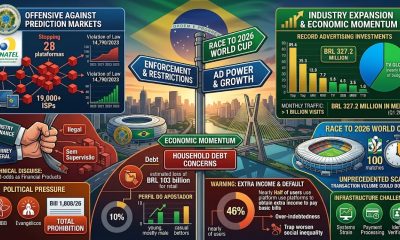
El choque entre crecimiento, política y supervisión en Brasil
-
AGLC3 days ago
Inspired Entertainment Secures Alberta iGaming Supplier Registration