Asia
How Esports is a real sport, and must not be clubbed with iGaming, Fantasy, or other gaming categories

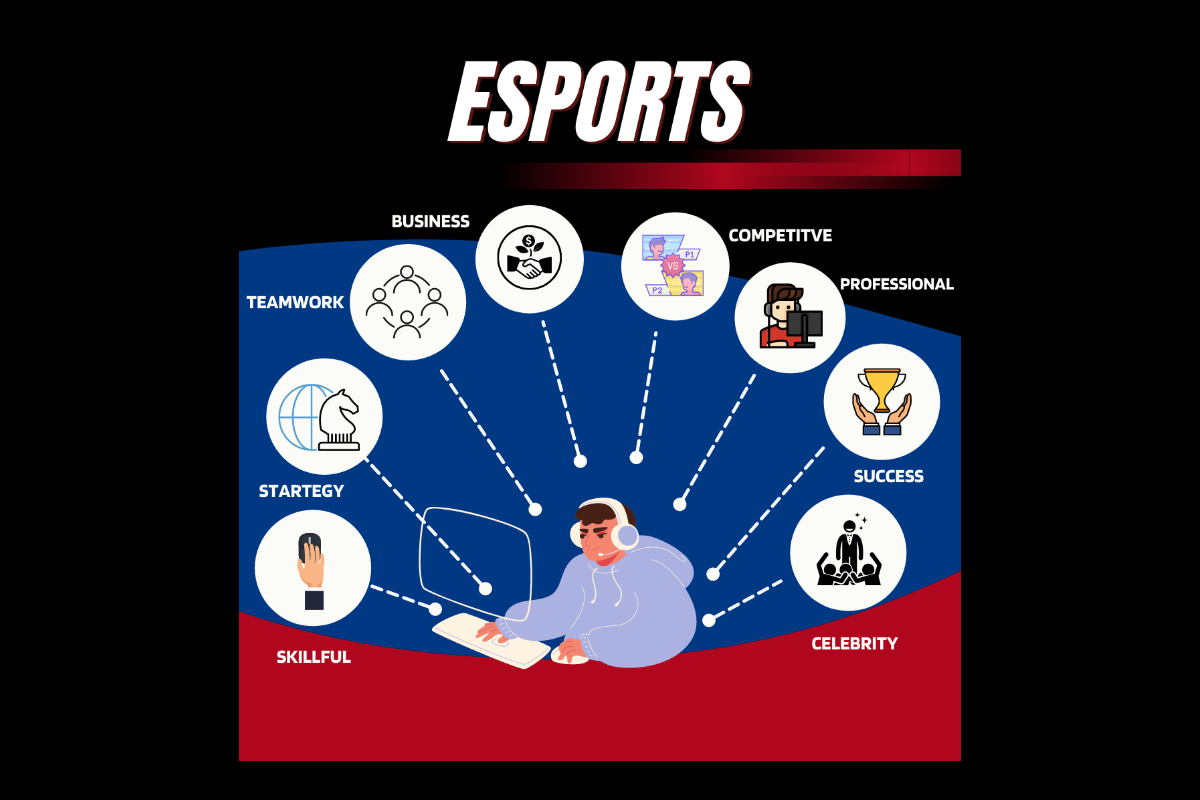
The tremendous rise of competitive gaming is the greatest phenomenon of the 21st century. Once emerged as a hobby for many, competitive gaming gradually turned into a very professional and disciplined system.
Pandemic 2020 proved a significant year for Esports both in terms of increased engagement and its growing acceptance. With more time in hand being indoors, gaming became a viable option for entertainment. This amazing growth introduced competitive gaming to an entirely new breed of highly engaged audiences. Player participation in competitive gaming along with viewership for Esports events saw a significant spike.
As per statistics, Indian Esports accounted for around 4% of all online gaming users and 9.13% of aggregate revenue in FY20. In 2020, Esports viewership increased to 17 million and is projected to reach 85 million by 2025. India’s esports industry is set to quadruple in size to Rs 1,100 crore by 2025 from Rs 250 crore at present—clocking a compounded annual growth rate of 46%, according to an EY report.
Tarun Gupta, Founder, Ultimate Battle, which is India’s first-ever one-stop online esports platform, explained why Esports should not be clubbed in with iGaming, Fantasy, or other gaming categories.
Online Games are primarily divided into the following categories based on how the game is designed, the way the games are played, and the amount of skill required to play these games:
1. Card-based Games (ex. Poker, Rummy)
2. Casual Games (ex. Pool, Bubble shooting)
3. Fantasy Games (ex. Fantasy Cricket, Fantasy Football)
4. Esports (ex. DOTA 2, BGMI, VALORANT)
In India, people confuse esports with fantasy, rummy, or other casual games. There is no reason to associate these games with Esports. Esports is the organized form of video game competitions online and/or offline including video game genres of traditional sports, multiplayer online battle arena (MOBA), real-time strategy (RTS), and fighting & first-person shooter (FPS) games.
Esports games are designed with high indulging competitive experience in mind. The games have various elements to them which not only make them sporting in nature but also open opportunities for gamers to learn about the game, grow and become the best at it and compete at a professional level.
Esports is a Real Sport, Here is Why:
When you think of sports, count the things that quickly come into your mind? It surely would be fierce competition, physical activity, fans, practice, and adrenaline rush, etc. Moreover, we think of an Esports player sitting at a desk and staring at a screen all the time. Though Esports may not involve the same level of physical activities as compared to sports like football, athletes do need enough physical stamina, motor skills, and reflex to control gaming devices and compete well with the gameplay.
The amount of effort, practice, and discipline required by professional esports athletes is comparable to many popular sports. Despite all the statistics and data showing the steep growth in Esports over the past few years, there is still a debate going on- “Whether Esports can be categorized as real sports or if it’s a sport at all.”
Global sporting authorities have now started recognizing Esports as a sport. Recently the Olympic Council of Asia (OCA) announced that eight games including FIFA, PUBG, and Dota 2 will be a part of the Asian Games 2022. To recall, Esports was a demonstration event at the 2018 Asian Games held in Jakarta.
Let’s look into the similarities to traditional sports and find out why these similarities match up and make Esports a real sport all the way.
1. Game Mechanics
Game mechanics are the rules and set of methods that guide the gamer’s actions and interactions between the player and the game. The depth and dynamics of in-game mechanics for Esports game titles are just as vibrant as sports in their gameplay and strategic movements. Combining this with the depth of the game’s mechanics which keeps evolving makes Esports a top-notch sporting match. Esports players have to master the game’s mechanics and concentrate on learning and improving game-specific skills. These game mechanics help to make gaming an engaging and fun-filled experience.
2. Learning Curve of the Game
Like traditional sports, Esports has a steep learning curve that helps gamers become more proficient with the game and gain a deeper understanding of the game. The curve elevates further as the player progresses through the game. As difficulty levels add up further, gamers have to play with more refined gameplay strategies to fight and win. To succeed in Esports, you’ll have to be the best in terms of game skills along with team coordination, opponent research, critical thinking, and multi-tasking.
3. Physical prowess and Strategic Thinking
Dive deeper into Esports games and you will find both forms of sports have a lot in common. Throughout the game, Esport athletes are required to sustain high levels of attention to make important decisions under time pressure. This is also true in the case of athletes in Esports. Traditional sports require mostly athletic abilities and then strategies to make scores. Esports, on the other hand, requires players to have flash reflexes, an understanding of deep in-game mechanics as well as coping with changing dynamics of in-game strategies to be implemented during gameplay. Only the players with superb athletic ability and strategic understanding of games can coordinate to strike at the right time.
An esports gamer practices and hones their skills for hours in order to perfect their movements on the keyboard and mouse while simultaneously coordinating with teammates. The Esports athletes achieve up to 400 movements on the keyboard and the mouse per minute, four times as much as the average person. The whole thing is asymmetrical because both hands are being moved at the same time and various parts of the brain are also being used at the same time.
4. Practice and Training is essential
In terms of practice and training, Professional esports and traditional sports athletes share several common characteristics. Like traditional athletes, Esports professionals exhibit a commitment to excellence, perseverance, and a passion for their sport. Moreover, they both go through physical and mental training to fine-tune their athletic and gameplay abilities.
Esports athletes work hard to physically and mentally prepare themselves and practice for each competition that they are competing in.
Conclusion:
It requires rigorous training and efforts to become a professional Esports professional. Like other traditional sports, Esports athletes need to have qualities like concentration, precision, and execution that only come after the solid in-game experience. The government needs to take this into cognizance and bring Esports under the umbrella of policies and legislations of Sports.
Powered by WPeMatico

2026 SPiCE South Asia Awards
QTech Games wins Innovation of the Year at the 2026 SPiCE South Asia Awards

QTech Games, the leading game aggregator for emerging markets, has been named Innovation of the Year 2026 at the prestigious SPiCE South Asia Awards, held at the iconic Shangri-La Colombo in Sri Lanka, overcoming strong regional competition.
The award celebrates the South Asian iGaming innovator that has demonstrated groundbreaking technological innovation, delivering tailored solutions over the past 12 months while excelling in user engagement and sustained growth.
QTech’s recognition follows the successful launch of QTech Hybrid, a platform that enables players to seamlessly transition between retail and digital gaming environments. The solution combines QTech Games’ AI-powered casino lobby, QTech Play, with a retail management system and a state-of-the-art Agent Management System (AMS), allowing operators to scale brick-and-mortar operations online. QTech Hybrid represents a next-generation omnichannel solution, bridging the gap between physical and digital casino experiences.
“We’re thrilled to be recognised for Innovation of the Year in South Asia,” said Philip Doftvik, CEO of QTech Games.
“This award reflects the collective effort of our team and our network of innovative suppliers. From QTech Hybrid to QTechLabs and our Value Added Services, we continue to deliver solutions that drive revenue and engagement for our partners worldwide.
“Being acknowledged for our innovation, market impact, and operational results validates our strategic direction. It underscores QTech’s commitment to setting the gold standard in emerging markets and shaping the future of online casino gaming across Asia and beyond.”
With this accolade, QTech Games reinforces its position as a pioneer in emerging market aggregation, demonstrating that innovative technology and omnichannel solutions are key to scaling operations and enhancing player experiences across the globe.
The post QTech Games wins Innovation of the Year at the 2026 SPiCE South Asia Awards appeared first on Eastern European Gaming | Global iGaming & Tech Intelligence Hub.
Asia
GLI Becomes the First Company Accredited by PAGCOR to Test and Certify iGaming Platforms in the Philippines
Gaming Laboratories International (GLI) has been named an Independent Testing Laboratory (ITL) by the Philippine Amusement and Gaming Corporation (PAGCOR). GLI is the first gaming testing company to achieve the accreditation and is now authorised to test and certify iGaming platforms in the Philippines.
GLI will bring its global and unsurpassed expertise to the Philippines, helping to ensure PAGCOR meets its policy and regulatory objectives as set out in its rules. GLI’s presence and its GLI-19 Standard will also help suppliers who wish to successfully and compliantly enter the marketplace.
Submissions will be tested against “GLI Standard Series GLI-19: Standards for Interactive Gaming Systems,” which has been widely accepted and adopted by jurisdictions around the world.
PAGCOR Chairman and CEO Alejandro H. Tengco said: “Regulated gaming markets ensure a safer and more sustainable gaming industry for all to participate in. A regulated market enables compliance to responsible gaming standards and the provision of tax revenue for reinvestment back into the community. PAGCOR now requires all iGaming B2B suppliers operating in the Philippines to be accredited to ensure they comply to the rigorous requirements needed to protect iGaming players. We are pleased to acknowledge GLI as the first testing and game certification provider to be accredited in the Philippines under this new framework. GLI is a global leader in regulatory advisory, iGaming and EGM testing / certification, and data security.”
GLI President and CEO James R. Maida said: “We are grateful to PAGCOR Chairman and CEO Alejandro H. Tengco and to the entire PAGCOR team for the trust they continue to place in GLI. Under the Chairman’s skillful leadership, the market in the Philippines has improved steadily, and we are honored to be the first company to be accredited for iGaming testing and certification, and we look forward to working side- by-side with PAGCOR to meet their policy objectives.”
The post GLI Becomes the First Company Accredited by PAGCOR to Test and Certify iGaming Platforms in the Philippines appeared first on Eastern European Gaming | Global iGaming & Tech Intelligence Hub.
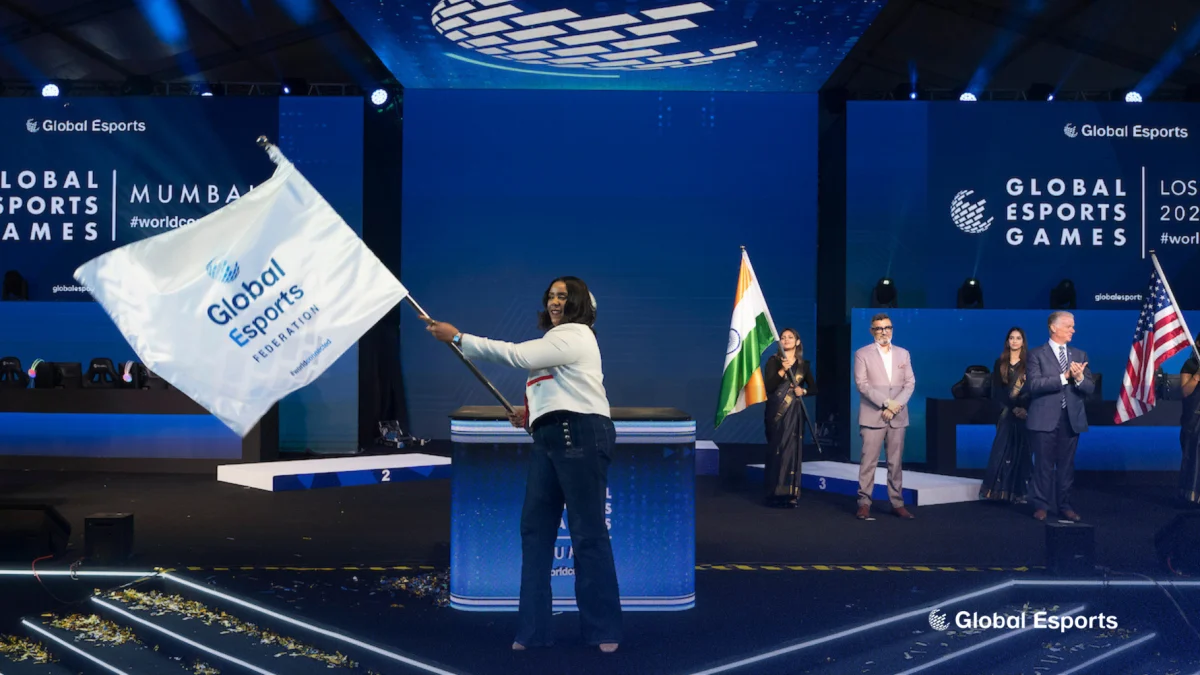
Team India and Türkiye won Gold at the Global Esports Games Mumbai, delivering electrifying performances in front of a packed arena and thousands more tuning in online worldwide. India’s Anuhith Gosala edged Kazakhstan 3–2 in a thrilling Clash Royale Grand Final, while Türkiye secured a commanding 3–1 victory over Mongolia in the Dota 2 Grand Final. With a Gold in Clash Royale and a Bronze in Dota 2, Team India was crowned Overall Champion.
India stormed into the Clash Royale Grand Final with a 2–1 win over the USA in a tense lower bracket decider, setting up a rematch with Kazakhstan. Having fallen 0–2 in the upper bracket, India turned the tables when it mattered most, as Anuhith Gosala delivered a clutch performance to seal a dramatic 3–2 victory and the Gold medal.
In Dota 2, Team India secured Bronze after falling to Mongolia in the lower bracket. Mongolia advanced to the Grand Final, where Türkiye asserted its dominance with a composed 3–1 victory to take the title.
Sharing his thoughts on the victory, Team India’s Clash Royale gold medallist, Anuhith Gosala, said: “This moment is surreal. To win the Grand Finals here in India, in front of a home crowd, makes it even more emotional. The preparation was relentless, the pressure was intense, and every match tested my limits—but that’s what makes this victory so special. Hearing the cheers, feeling that energy, and lifting this title for the country is an indescribable pride. This is for India, and for everyone who believes in us. I hope this win inspires many others to follow in our path.”
Sir Paul J. Foster, President & CEO, Global Esports Federation, said: “As the Global Esports Games Mumbai comes to a close, we celebrate not only the incredible performances of our athletes, but the spirit of unity and connection that defines our global community. Mumbai has delivered exceptional energy, passion, and hospitality, reinforcing our belief that esports transcends borders and brings the world together. We are deeply grateful to our partners in India for setting a new benchmark for excellence—and we now look ahead with excitement to Los Angeles, where this journey continues on an even greater stage.”
Shripad Ashtekar, Founder of Eflag Corp, said: “Over the past few days, we have witnessed not just world-class competition, but the coming together of talent, innovation, and community on a truly global stage. We hope to keep delivering such platforms and strong foundations for future growth by unlocking new opportunities for Indian players, creators, and the broader AVGC ecosystem. We are proud to have played a key role and look forward to building on this momentum in the years ahead.”
Organized by the Global Esports Federation in partnership with Eflag Corp, with the support of Maharashtra Tourism, the Global Esports Games Mumbai was inaugurated by the Hon’ble Chief Minister of Maharashtra, Shri Devendra Fadnavis. Over four days, Mumbai welcomed 48 elite athletes from 19 countries, emerging from a global field of 78 nations in the Regional Qualifiers.
The post Team India and Türkiye Win Gold at the Global Esports Games Mumbai appeared first on Eastern European Gaming | Global iGaming & Tech Intelligence Hub.

-

 Latest News7 days ago
ELA Games Contributes to Discussions on Scalable iGaming Ecosystems and Studio Innovation at HIPTHER Prague Summit
-
Brazil7 days ago
Brazil advances integrity agenda amid strong market growth
-
América Latina7 days ago
BiS SiGMA South America by Softswiss reúne autoridades do esporte, mídia e apostas esportivas
-
Behind the Game7 days ago
Behind the Game: Retention That Drives Revenue
-
Behind the Game7 days ago
Behind the Game: Retention That Drives Revenue
-
Game Development7 days ago
Weekend Reels: Slot Drops & Trends Shaping the Market
-
affiliate automation7 days ago
ReferOn Shortlisted for “Best Affiliate Software 2026” at SiGMA Awards South America
-
BNL3 days ago
Paneles SiGMA South America concentran debates claves para Brasil