Latest News
The Betegy story: “With a click of a button, we enable marketing teams to create entire campaigns in just a few seconds”

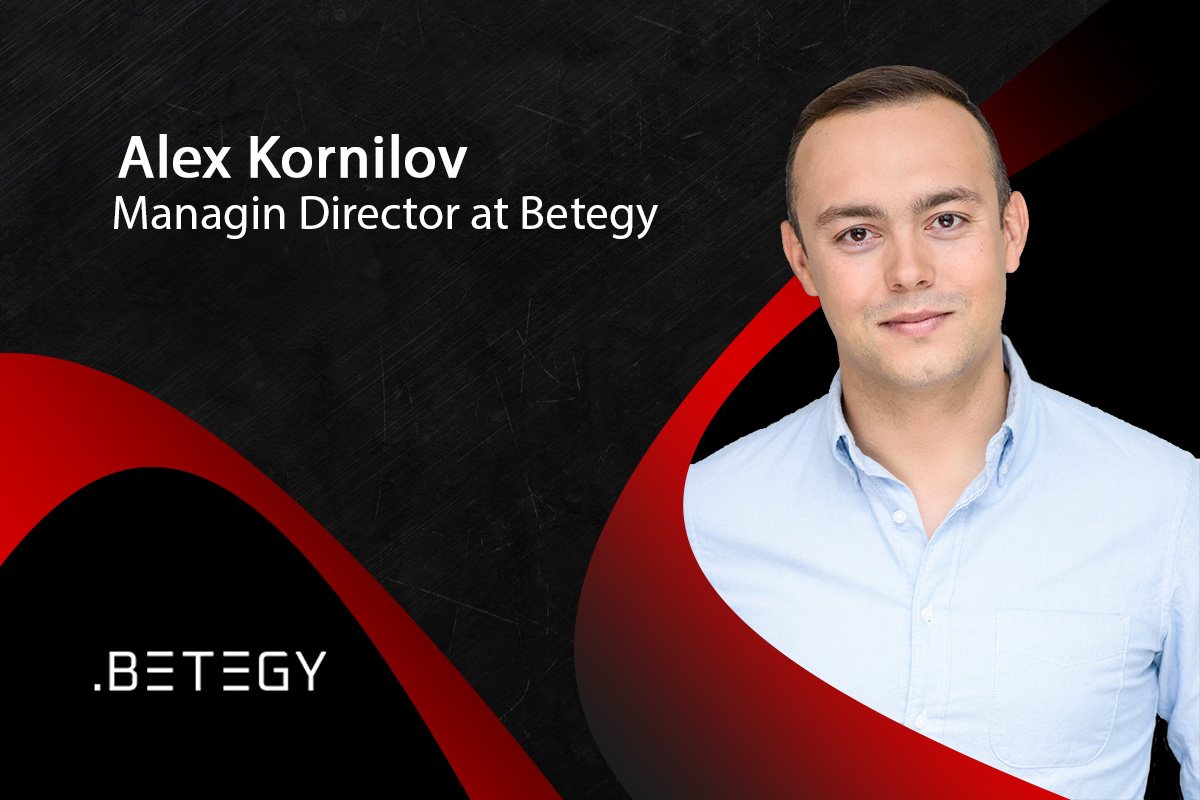
When it comes to the future of B2C marketing for sports betting and casino – personalisation and automation is going to be the name of the game. We caught up with Alex Kornilov, Founder and Managing Director of content and data specialists Betegy, to talk about his pioneering work in transforming the marketing operations for the likes of Parimatch, Sportsbet.io, ESPN and Yahoo Sports.
Congratulations on Betegy’s deal with Parimatch – can you take us through the agreement and what you’ll be doing for their teams?
It’s a relationship that has been in progress for some time, starting with us initially having a conversation about what we wanted to achieve. Parimatch was looking to optimise its offering to deliver a truly revolutionary style of marketing and this was something we were determined to deliver. Rather than being off-the-shelf, our discussions began with the premise of discovering the challenges Parimatch was facing and offering a bespoke solution.
Our Betegy product overcomes those pain points to engage their customers. Following the exploratory phase, we built a roadmap and a vision. It is vital that nothing is omitted at any stage, because all building blocks are essential in allowing us to create a unique product, vision and brand of the future –one that can truly resonate with players’ values.
With a click of a button, Parimatch’s marketing teams can now create compelling, personalised campaigns using Betegy’s proprietary automated content generation platform in a matter of seconds, rather than the old timeframe of two to three days.
Tell us about Betegy’s in-house technology – what was the development process behind it and how did you start out in 2012?
Back then, Betegy was working within data analytics and we had number-crunching algorithms that produced accurate predictions of football matches. We were coming up with predictions for media companies who wanted access to our feed, and this is how we ended up working with the likes of ESPN and Yahoo.
We subsequently realised that data and APIs were one thing, but that there was also a strong need for visualisation. From that starting point, we understood that we needed to create a variety of marketing tools out of that – including social, banners, landing pages and videos, for example – all driven by the APIs connected to our system. When we added odds to this mix, we realised that what we had produced could be very useful for betting operators.
Before we went live with sports betting in 2018, we had been working under the radar to help develop and hone our delivery with operator partners. This learning experience was invaluable as it allowed us to build the product in real time and only after two years of careful preparation, were we really ready to deploy with operators as a true product.
As well as the ‘revolutionary’ aspects mentioned for Parimatch, what other operators does Betegy work alongside? Does your delivery go beyond sports betting operators?
Every new client in our family benefits from our product and our growth strategy is based around continuous improvement. We work with various operators and each has their own unique pathway, allowing us to create a fully bespoke experience. Our online client Sportsbet.io has a very different strategy to German retail leader Tipico, for example.
We also work with casino products. It’s something we have been developing for a while behind the scenes but are only really starting to shout about just now. Out work with 22Bet is a great example of this – in many ways what we have created in this instance is a very similar style of visual generation, only in a new vertical, which shows that we are not simply all about sports betting.
On-air graphics, such as a Bloomberg-style trading experience from the world of finance, is also an area which we envisage as a major growth sector for us. Our platform is all about enhancing the visual experience and we believe that this is something we can certainly bring to the table for media companies in the future.
Looking globally and beyond Europe – what other key markets will you be targeting in the year ahead?
Our attention has already turned towards the Americas. This is definitely a big growth area for us with significant investment. It’s very different in scope to our home markets in Europe, which have proven to be highly valuable as learning grounds.
Asia is also a very interesting place for us, having worked closely with the China Sports Lottery previously. India as a market holds big potential too, which is understandable due to its sheer population size. When it comes to that all-famous national sport, cricket, there are some cracking creatives that can be produced to really make things look exciting. While LatAm is also on the horizon, we’re not there yet, Africa is interesting too – but we’re focusing on energies on other geographies first.
There’s a lot of talk about personalisation nowadays,but few companies aside from Betegy are bringing AI-based content personalisation to market. How do you see this changing through 2021 and beyond?
Our product came about based on client feedback. It was built upon what is needed now and also, what will be required in the future. Naturally, we have a first-mover advantage and the more we publicise and grow, the more we know where the value creation lies going forward.
We expect competitors to arrive on the scene, but we are confident in our leadership within this sphere, in relation to the typical innovation and adoption curve. We are still three to five years of creation ahead of mass market adoption, so there is plenty of time to capture more market share. Given the expertise we’ve been able to deploy already, as well as the relationships we have built and the understanding we have forged in what engages customers, we are happy to welcome additional players on the field.
What’s the case for automated content personalisation being a true gamechanger aside form cost savings? What can it enable your partners to do beyond efficiency?
Automated content personalisation allows for specialisation – bonuses and big events, for example – which can then be segmented by country. Additionally, and more pertinently, it allows for the quick testing of what is effective and what is not, with improvements deployed immediately wherever needed. This allows us to constantly test with creative teams and analyse, together, in real-time to see the effects of certain campaigns, making the tweaks needed.
Tailor-made offers and conversion tools for every single customer also allows us to generate content based on individuals. Machine generated content is another very significant growth area, which I look forward to speaking plenty more about soon enough.
Last but not least, looking ahead at 2021, and especially with the Euros on the horizon, how do you see sports betting playing out this year?
Retail is likely to be open again as we get closer to summer, and this will be welcomed by players – especially those who value the social element of betting. I also expect plenty of co-operation between media and betting companies, working together for mutual benefit and engaging players.
Taking a wider look at the market, I expect popularity of football to drop slightly, just as we saw at the start of the pandemic. When we talk about the younger generation, football has less of a passionate following. This is partially due to a changing mentality, where content is all about swipe-and-scroll and bitesize chunks– quicker gratification for driving higher engagement, rather than sitting to watch a match for 90 minutes.
Other sports offer a far faster format that appeals to younger players. Esports for example, offers lightning-fast gameplay and results and younger generations love this speed and fast action. While football can seem sterile right now, being played out as it is in front of empty stadiums, esports offers interactivity and engagement. This is where betting comes into play, enhancing the overall experience.
Powered by WPeMatico



DuelBits has published results from its JUSTIN2026 marketing campaign, saying the UFC-focused activation generated more than 122 million verified video views and contributed to one of the company’s strongest MMA betting events “in recent years.”
The crypto sportsbook and casino operator said the campaign launched ahead of UFC event Freedom 250 at the White House and centred on former UFC lightweight champion Justin Gaethje. DuelBits framed the partnership as an early bet on Gaethje, before broader commercial interest.
According to the company, the campaign set a KPI to exceed 100 million impressions across owned, paid and partnered media, and ultimately delivered more than 122 million verified clip views via a network of more than 140 creators. The asset mix included a hero film, six short-form cutdowns, behind-the-scenes content and still imagery, distributed via DuelBits’ social channels, MMA publishers, creator partnerships and clipping pages.
DuelBits said the hero content was also integrated into Gaethje’s “Art of Violence” YouTube series. The operator added that the activation drove promotional code engagement and helped convert attention into sportsbook activity.
Jasper Hoekert, Chief Marketing Officer at Duelbits, said: “We wanted to support Justin before everyone else recognised the opportunity. Instead of following the hype once he has already achieved greatness, we wanted to back a champion before anybody else did.
“The campaign wasn’t measured purely on views. Of course, surpassing 122 million verified views and exceeding our 100 million KPI was a huge achievement, but the real success was seeing that attention convert into one of our strongest UFC betting nights in recent years.
“It also reinforced something that’s key to DuelBits as a brand, which is that we don’t do small campaigns. Whether it’s the production quality, creator network, or distribution strategy, we want every activation to show what’s possible when sportsbook marketing is treated like premium entertainment.”
The post DuelBits says UFC creator campaign delivers 122m verified video views appeared first on EE Gaming | Global iGaming & Tech Intelligence Hub.

Slotegrator’s platform solution now offers progressive web app (PWA) functionality, enabling operators to provide installable casino apps with push notifications, flexible branding, and seamless access across changing domains.
The Casino Builder module in Slotegator’s platform solution has been upgraded with a Progressive Web Application (PWA) feature that allows casinos to deliver an app-like experience without relying on the App Store or Google Play.
Native apps are powerful tools for building customer loyalty and enhancing engagement. However, iGaming brands face serious obstacles, such as strict marketplace policies, long review processes, geographic restrictions, and the constant threat of app removal. Slotegrator’s PWA functionality eliminates these barriers, allowing players to install a casino app directly from their browser and enjoy many of the same benefits as a native app.
After installation, the PWA opens from the user’s home screen, loads fast, and supports push notification integration that enhances player engagement and retention.
“Mobile is still the leading channel for user acquisition and retention; however, it’s difficult to distribute native apps in iGaming,” says Olga Ivanchik, COO at Slotegrator. “Our new PWA feature gives operators an alternative that will be familiar to their players, while eliminating the complications related to conventional app stores. Operators can launch quickly, retain full control over updates, and ensure a perfect mobile gaming experience for any market.”
Within the next 2 months, operators will also have the ability to determine when the PWA install bar will be visible to the player. For example, displaying the install bar immediately after the first deposit, as part of a broader retention strategy, helps drive long-term player LTV. The operator can also set up frequency of the install offer — daily, weekly, just once, etc.
Some operators have to consider UX for multiple frontends. Luckily, the installation widgets are highly flexible, helping them drive maximum conversion without sacrificing user experience. Operators can select a top bar or a top banner installation widget, both of which are fully customizable with branded icons, messaging, and backgrounds.
Operators can limit the visibility of their installation campaigns to specific devices — desktop, mobile, Android, or iOS — thanks to special targeting options. Operators can also design acquisition strategies specific to each platform, driving installs only where they offer the best user experience.
When players install the PWA, operators can connect it to push notification services, so they can re-engage them even when the application isn’t actively open.
Mirror domain compatibility addresses a common operational challenge in restricted markets. If an operator has to change domains due to licensing or regulatory requirements, players who have already installed the PWA will be able to continue using it without reinstallation.
Unlike native applications, PWAs don’t require App Store or Google Play approval, effectively eliminating possible delays and the risk of removal from the market. Instead, operators can deploy updates instantly to every user.
The new PWA functionality is now available in Slotegrator’s Casino Builder module, alongside other tools for improving mobile acquisition, engagement, and player retention.
ABOUT THE COMPANY
Since 2012, Slotegrator has been one of the iGaming industry’s leading software and business solution providers for online casino and sportsbook operators.
The company’s main focus is software development and support for online casino platforms, as well as the integration of game content and payment systems.
The company works with licensed game developers and offers a vast portfolio of casino content: slots, live casino games, poker, virtual sports, table games, lotteries, casual games, and data feeds for betting.
Slotegrator also provides consulting services in gambling license acquisition and business incorporation.
The post Slotegrator now provides native app experience for iGaming platforms with PWA function appeared first on EE Gaming | Global iGaming & Tech Intelligence Hub.


Slotegrator’s platform solution now offers progressive web app (PWA) functionality, enabling operators to provide installable casino apps with push notifications, flexible branding, and seamless access across changing domains.
The Casino Builder module in Slotegator’s platform solution has been upgraded with a Progressive Web Application (PWA) feature that allows casinos to deliver an app-like experience without relying on the App Store or Google Play.
Native apps are powerful tools for building customer loyalty and enhancing engagement. However, iGaming brands face serious obstacles, such as strict marketplace policies, long review processes, geographic restrictions, and the constant threat of app removal. Slotegrator’s PWA functionality eliminates these barriers, allowing players to install a casino app directly from their browser and enjoy many of the same benefits as a native app.
After installation, the PWA opens from the user’s home screen, loads fast, and supports push notification integration that enhances player engagement and retention.
“Mobile is still the leading channel for user acquisition and retention; however, it’s difficult to distribute native apps in iGaming,” says Olga Ivanchik, COO at Slotegrator. “Our new PWA feature gives operators an alternative that will be familiar to their players, while eliminating the complications related to conventional app stores. Operators can launch quickly, retain full control over updates, and ensure a perfect mobile gaming experience for any market.”
Within the next 2 months, operators will also have the ability to determine when the PWA install bar will be visible to the player. For example, displaying the install bar immediately after the first deposit, as part of a broader retention strategy, helps drive long-term player LTV. The operator can also set up frequency of the install offer — daily, weekly, just once, etc.
Some operators have to consider UX for multiple frontends. Luckily, the installation widgets are highly flexible, helping them drive maximum conversion without sacrificing user experience. Operators can select a top bar or a top banner installation widget, both of which are fully customizable with branded icons, messaging, and backgrounds.
Operators can limit the visibility of their installation campaigns to specific devices — desktop, mobile, Android, or iOS — thanks to special targeting options. Operators can also design acquisition strategies specific to each platform, driving installs only where they offer the best user experience.
When players install the PWA, operators can connect it to push notification services, so they can re-engage them even when the application isn’t actively open.
Mirror domain compatibility addresses a common operational challenge in restricted markets. If an operator has to change domains due to licensing or regulatory requirements, players who have already installed the PWA will be able to continue using it without reinstallation.
Unlike native applications, PWAs don’t require App Store or Google Play approval, effectively eliminating possible delays and the risk of removal from the market. Instead, operators can deploy updates instantly to every user.
The new PWA functionality is now available in Slotegrator’s Casino Builder module, alongside other tools for improving mobile acquisition, engagement, and player retention.
ABOUT THE COMPANY
Since 2012, Slotegrator has been one of the iGaming industry’s leading software and business solution providers for online casino and sportsbook operators.
The company’s main focus is software development and support for online casino platforms, as well as the integration of game content and payment systems.
The company works with licensed game developers and offers a vast portfolio of casino content: slots, live casino games, poker, virtual sports, table games, lotteries, casual games, and data feeds for betting.
Slotegrator also provides consulting services in gambling license acquisition and business incorporation.
The post Slotegrator now provides native app experience for iGaming platforms with PWA function appeared first on Americas iGaming & Sports Betting News.

-

 Compliance Updates6 days ago
Arizona Department of Gaming Issues Cease-and-Desist Orders to Multiple Operators Linked to Underage Gambling and Illegal Activity
-
 Compliance Updates6 days ago
KONAMI GROUP’s Konami Gaming Inc. First to Submit Manufacturer License Application in Japan’s Emerging IR Market
-
Latest News6 days ago
Enjoy Gaming Builds on Slot success with Diamond Slam: Xtra Power
-
Latest News6 days ago
Weekend Reels | Week 28: Slot Drops & Trends
-
Compliance Updates6 days ago
Spillemyndigheden Publishes Report on Illegal Gambling
-
Canada6 days ago
High 5 Games Expands Across Alberta’s Open iGaming Market Following AGLC Supplier Approval
-
Compliance Updates6 days ago
Arizona regulator orders five operators to stop alleged illegal gambling activity
-
Compliance Updates6 days ago
TaDa Gaming Accelerates LatAm Growth with Peru Licence Approval