AI
BetGames research reveals more than 70% of players failed to recognise AI avatar gameshow presenters


BetGames has revealed the results of a research project testing AI-generated presenters on its live game shows, finding that fewer than 30% of players realised the hosts were artificial — and that the change produced no significant impact on player behaviour.
For the experiment, the supplier introduced AI avatars designed as digital replicas of real presenters, quietly deploying them on one of its live games over several days to evaluate whether they could effectively replace human hosts.
The results showed that more than two-thirds of players did not notice the switch to AI. At the same time, key performance indicators — including session duration, stake size and total bets placed — remained statistically unchanged.
According to BetGames, the absence of both positive and negative shifts suggests that while AI avatars can technically replicate the role of live presenters, they currently provide no measurable advantage. As a result, the company believes there is not yet a strong business case for rolling out the technology on a large scale.
Cost efficiency, often cited as a major driver of AI adoption, also failed to deliver a clear benefit. BetGames reported that generating and operating an AI avatar around the clock remains resource-intensive, limiting potential financial gains compared with human hosts.
Technical hurdles further complicate the widespread adoption of AI presenters. One of the most significant challenges remains achieving realistic text-to-speech performance. As AI technology becomes more advanced and visual realism improves, even minor imperfections in speech become increasingly noticeable to audiences.
Other constraints include latency issues, lip-synchronisation delays and inaccuracies in real-time translation — all critical elements that must be refined before the technology can be implemented reliably across live products.
BetGames continues to explore the potential of AI under the leadership of CEO Andreas Koeberl, who is also co-founder of Autonomous Minds, the developer behind the AI analyst Milo. The initiative forms part of the company’s broader strategy to experiment with emerging technologies and help future-proof the iGaming industry.
Koeberl said:
“AI has been building momentum, but its role within the live casino sector remains largely untested. When it comes to AI presenters, we built it, it worked, and nobody cared. That raises the question of what we are actually working toward.
“The technology didn’t produce any meaningful positive or negative impact on the player experience or product margins, and the cost of running an AI avatar 24/7 offers no significant advantage compared with employing human presenters.
“So rather than attempting to replace humans and replicate what already exists, the focus should shift to exploring what AI can enable that wasn’t previously possible. That’s where the real value lies.”
The post BetGames research reveals more than 70% of players failed to recognise AI avatar gameshow presenters appeared first on Eastern European Gaming | Global iGaming & Tech Intelligence Hub.













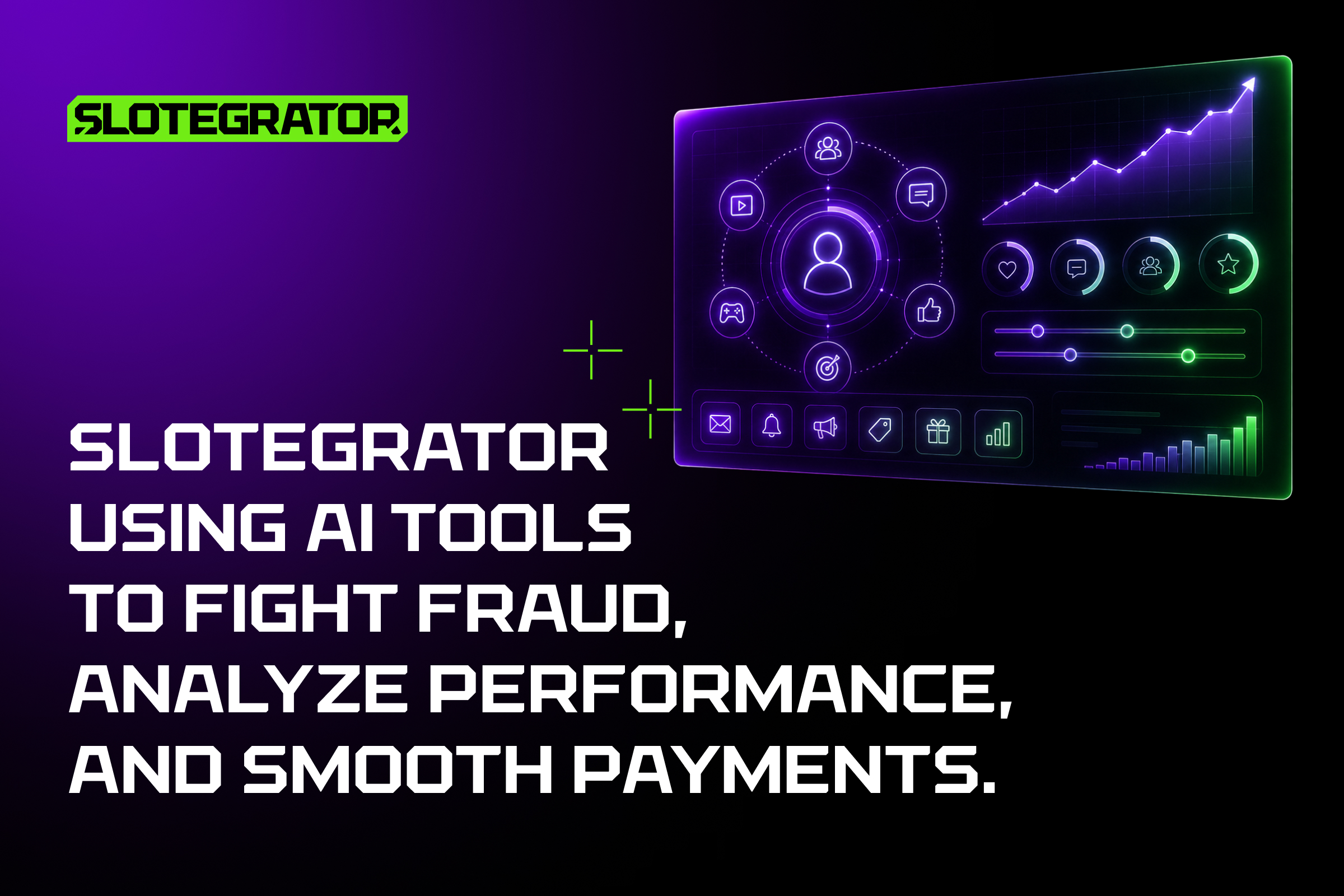
When everyone has access to AI, the future belongs to those who use it strategically. Slotegrator’s updated platform has a suite of AI-powered tools that do the heavy lifting so clients can focus on strategy and business development.
Suppliers are racing to incorporate AI features. Instead of just keeping up with the hype, Slotegrator updated its platform with a suite of AI tools that help its clients by doing most of the heavy lifting and handling tasks that require large amounts of processing power. The company’s platform software now features AI tools for fighting fraud, analyzing essential business data, and reducing payment friction.
Fraud is a major concern for online casino operators, particularly when it comes to bonus abuse.
Bonus abusers are constantly developing new techniques and tactics to defraud casinos — even more so now that they have access to AI tools. Good deepfakes can potentially even pass liveness checks, and synthetic IDs (fake IDs made of real parts) are difficult to spot.
Slotegrator’s Anti-fraud module has an AI assistant to help operators combat fraud. The assistant provides summaries of real-time situations with just the touch of a button. Operators choose from one of three preset questions: 1. What is the overall risk situation? 2. Which risk categories are currently the most critical? And 3. What should be prioritized right now?
When they choose one of them, the assistant automatically analyzes the relevant data, yields structured conclusions, and makes recommendations for next steps. After you’ve made a selection, the AI assistant instantly processes dashboard metrics and provides a brief summary. The assistant works at both the project and individual level.
“As artificial intelligence becomes commonplace, the companies that integrate AI into core aspects of their business will be the ones that get ahead,” explains Slotegrator COO Olga Ivanchik. “AI is capable of more than automation. Incorporating AI at a strategic level, making it a core part of the business architecture, is the only way to stay competitive in the long run.”
Slotegrator’s platform also has an AI business intelligence module.
The post Slotegrator using AI tools to fight fraud, analyze performance, and smooth payments appeared first on Americas iGaming & Sports Betting News.
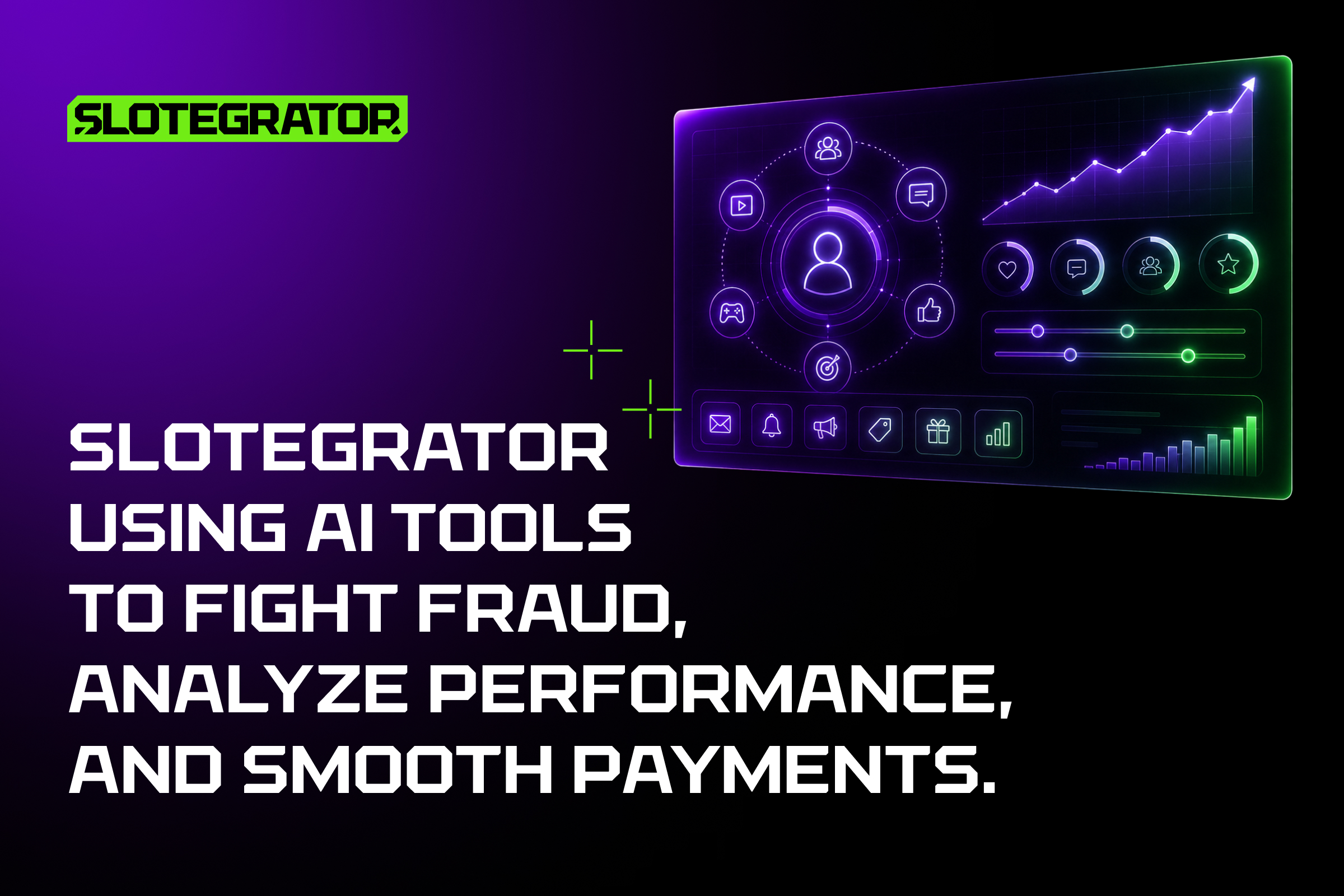
When everyone has access to AI, the future belongs to those who use it strategically. Slotegrator’s updated platform has a suite of AI-powered tools that do the heavy lifting so clients can focus on strategy and business development.
Suppliers are racing to incorporate AI features. Instead of just keeping up with the hype, Slotegrator updated its platform with a suite of AI tools that help its clients by doing most of the heavy lifting and handling tasks that require large amounts of processing power. The company’s platform software now features AI tools for fighting fraud, analyzing essential business data, and reducing payment friction.
Fraud is a major concern for online casino operators, particularly when it comes to bonus abuse.
Bonus abusers are constantly developing new techniques and tactics to defraud casinos — even more so now that they have access to AI tools. Good deepfakes can potentially even pass liveness checks, and synthetic IDs (fake IDs made of real parts) are difficult to spot.
Slotegrator’s Anti-fraud module has an AI assistant to help operators combat fraud. The assistant provides summaries of real-time situations with just the touch of a button. Operators choose from one of three preset questions: 1. What is the overall risk situation? 2. Which risk categories are currently the most critical? And 3. What should be prioritized right now?
When they choose one of them, the assistant automatically analyzes the relevant data, yields structured conclusions, and makes recommendations for next steps. After you’ve made a selection, the AI assistant instantly processes dashboard metrics and provides a brief summary. The assistant works at both the project and individual level.
“As artificial intelligence becomes commonplace, the companies that integrate AI into core aspects of their business will be the ones that get ahead,” explains Slotegrator COO Olga Ivanchik. “AI is capable of more than automation. Incorporating AI at a strategic level, making it a core part of the business architecture, is the only way to stay competitive in the long run.”
Slotegrator’s platform also has an AI business intelligence module.
The post Slotegrator using AI tools to fight fraud, analyze performance, and smooth payments appeared first on EE Gaming | Global iGaming & Tech Intelligence Hub.

21.com has launched as an online casino and sportsbook, naming industry veteran Michael Carlton as Founder & CEO, the company said on 16 June 2026.
The operator said it is targeting a range of global jurisdictions and plans to differentiate through a “modern technology stack” and “AI-centric operations.” It did not disclose target markets, licensing status, launch territories, or product partners.
Carlton previously served 13 years at EY as a Chartered Accountant before entering gaming in 1997, according to the company. He later spent 17 years as CEO of BetVictor and has since invested in betting and gaming companies.
Carlton said 21.com is being built without legacy platform constraints. “Having started in the gaming industry prior to the launch of the internet and then having the privilege of being involved as the industry evolved and adapted to the opportunities, there is now a further revolution occurring with the power created by embracing AI helping us to move faster and tailor personalised experience to the player.
“One of 21.com’s greatest strengths is that it is being developed for the current market, rather than an after-thought adaptation of an existing one. Many operators have been around for a long time and continue to be defined by legacy platforms and pre-crypto payment customer journeys that existed long before the modern technical tools that exist now became a reality. 21.com has embraced AI to deliver unparalleled customer experiences.
“With a team of industry leading experts with the motivation and ability to achieve our goals but without any legacy systems, 21.com is able to take advantage of new technologies to become a market leader in the gaming industry”.
The company also set aggressive commercial targets. “21.com will be one of the top three operators in every market it operates and in the world within two years,” Carlton said.
The post 21.com launches online casino and sportsbook led by ex-BetVictor CEO Michael Carlton appeared first on EE Gaming | Global iGaming & Tech Intelligence Hub.

-

 Genius Sports7 days ago
LIGA MX and Polymarket Announce Sponsorship Agreement for the US Territory with Official Data and Integrity Collaboration from Genius Sports
-
ELA Games7 days ago
ELA Games Releases Pinatas Festival World Cup
-
Asia7 days ago
Esports Foundation opens 2026 co-streaming Creator Program with $2m rewards pool
-
3 Oaks Gaming7 days ago
Weekend Reels | Week 24: Slot Drops & Trends
-
2026 World Cup7 days ago
Superbet launches ‘As Odds do Penta’ hub tracking Brazil 2026 title odds
-
Compliance Updates7 days ago
European Standard on Markers of Harm Now Published – EGBA Members Commit to Alignment
-
Arnold7 days ago
Arnold Ash sponsors Arthurian League’s 2026 US Tour
-
Latest News3 days ago
Connect with N1 Partners at G Gate Conf 2026