AML
UK vs Germany AML Supervisory Architecture: A Structural Mapping for Group Operators


Licensed online gambling groups operating in both the United Kingdom and Germany are subject to two distinct anti-money laundering (AML) supervisory architectures. The distinction is reflected in the allocation of statutory responsibility, the structure of reporting obligations, and the implementation of monitoring mechanisms under law.
This article presents a structural mapping of these frameworks based exclusively on statutory texts and official supervisory publications. No interpretive grading or comparative assessment is included.
Allocation of Supervisory Responsibility
In Great Britain, the Gambling Act 2005 designates the UK Gambling Commission (UKGC) as the regulator of licensed gambling activities. Casino operators are classified as “relevant persons” under the Money Laundering, Terrorist Financing and Transfer of Funds (Information on the Payer) Regulations 2017 (as amended). Accordingly, they are subject to AML obligations prescribed by law, including firm-wide risk assessment (Regulation 18), customer due diligence, enhanced due diligence where required, ongoing monitoring, and suspicious activity reporting pursuant to the Proceeds of Crime Act 2002.
Under the UK regulatory structure, AML monitoring and internal controls are implemented at operator level and supervised by the UKGC pursuant to its mandate, including licence conditions, compliance assessments, and published enforcement outcomes.
In Germany, the Glücksspielstaatsvertrag 2021 (GlüStV 2021) establishes the Gemeinsame Glücksspielbehörde der Länder (GGL) as the competent supervisory authority for licensed online gambling. In parallel, the Geldwäschegesetz (GwG) classifies operators of games of chance as obligated entities (Verpflichtete) and subjects them to AML requirements defined by statute, including institutional risk analysis, due diligence measures, ongoing monitoring, and suspicious transaction reporting to the Financial Intelligence Unit (FIU Germany).
Beyond the AML obligations under the GwG, GlüStV 2021 establishes centralized monitoring systems, including LUGAS (Länderübergreifendes Glücksspielaufsichtssystem) and OASIS (national self-exclusion system). Licensed operators are required to integrate with these systems in accordance with legal provisions.
The allocation of supervisory responsibility in each jurisdiction determines how AML controls are implemented and which authority reviews compliance.
Reporting Architecture
In the United Kingdom, suspicious activity reports (SARs) are submitted to the National Crime Agency (NCA) under the Proceeds of Crime Act 2002 and associated regulations. The reporting obligation arises where an operator knows or suspects, or has reasonable grounds for knowing or suspecting, that a person is engaged in money laundering, as defined by law.
Under German law, obligated entities must submit suspicious transaction reports to the Financial Intelligence Unit pursuant to the Geldwäschegesetz. The reporting obligation is triggered in accordance with the GwG.
For operators active in both jurisdictions, this results in reporting relationships with distinct competent authorities operating under separate legal mandates.
Group-Level Compliance Governance
For corporate groups holding licences in both jurisdictions, the allocation of AML responsibility differs in structure.
Within the UK system, AML supervision of licensed gambling operators is integrated into the mandate of the UK Gambling Commission, while suspicious activity reporting is directed to the National Crime Agency.
Within the German system, AML obligations arise under the Geldwäschegesetz, while gambling supervision is exercised by the GGL pursuant to GlüStV 2021, alongside the operation of centralized monitoring systems established by law.
Accordingly, compliance governance at group level must align with jurisdiction-specific legal structures. Internal control systems, documentation standards, reporting procedures, and monitoring integrations must reflect the supervisory architecture applicable to each licensed entity.
These structural distinctions do not alter the requirement to comply fully with the law in each jurisdiction. However, they determine how compliance responsibilities are distributed and supervised within a multi-license corporate structure.
Concluding Observation
A structural comparison of the United Kingdom and Germany confirms that AML supervision within the licensed online gambling sector is implemented through nationally defined legal and supervisory frameworks.
For multi-jurisdictional operators, effective compliance governance requires alignment with each jurisdiction’s defined legal structure rather than reliance on procedural uniformity across entities.
This mapping is derived exclusively from statutory texts and official supervisory publications. Detailed jurisdictional records are maintained within the GamingMarkets Regulatory Matrix.
Oren Dalal is the Founder & Publisher of GamingMarkets.com, an independent regulatory intelligence platform mapping statutory and supervisory frameworks across licensed online gambling jurisdictions. His work is grounded in primary-source legislative analysis, focusing on AML supervisory architecture and compliance governance in multi-jurisdictional groups.
The post UK vs Germany AML Supervisory Architecture: A Structural Mapping for Group Operators appeared first on Eastern European Gaming | Global iGaming & Tech Intelligence Hub.














Grupo LBBR, operator of the betting brands Luck.bet, Start Bet and 1PRA1, has appointed Paulo Gasparotto as its new director of Compliance, the company said in a statement.
The group said the hire is part of a governance push aimed at meeting the requirements of Brazil’s regulated betting environment. Alongside the appointment, Grupo LBBR said it has established a dedicated structure focused on Compliance, anti-money laundering and counter-terrorist financing (PLD/FTP), and regulatory matters.
According to the company, measures implemented include strengthened internal controls, a review of policies and procedures, and upgrades to monitoring processes designed to prevent financial crimes. The operator also said it has increased integration across operational, legal, technology and regulatory teams.
“Estamos elevando o nível das nossas empresas com o fortalecimento de controles internos, revisão de políticas e aprimoramento contínuo dos mecanismos de monitoramento e prevenção a ilícitos financeiros. A proposta é atuar de forma proativa diante das exigências regulatórias, com uma estrutura sólida e integrada que assegure eficiência operacional, gestão de riscos e confiança para todo o ecossistema do negócio”, afirma Paulo Gasparotto.
Looking ahead, Grupo LBBR said it plans to continue developing its compliance and PLD/FTP program, strengthen its internal integrity culture, enhance risk management mechanisms, and consolidate regulatory processes to support sustainable growth.
The post Grupo LBBR names Paulo Gasparotto as compliance director for Luck.bet, Start Bet and 1PRA1 appeared first on Americas iGaming & Sports Betting News.
Updates include Network Detection, AI Chart Builder and an AI Playbook, with integrations for third-party AI tools via the MCP standard.
SEON has rolled out new AI capabilities for its fraud prevention and AML compliance platform, including a Model Context Protocol (MCP) server designed to connect SEON data to external AI tools. The company said the MCP server, Network Detection, AI Chart Builder and an AI Playbook for Risk and Compliance Teams are available now to SEON customers.
The MCP server is positioned as a way for analysts to use third-party AI tools while pulling investigation context from SEON. SEON said analysts can connect tools including Claude, ChatGPT, Gemini and Microsoft Copilot to “900+ real-time risk signals spanning identity, device, behavioral, AML and IP data,” with signals accessible “in a single call” via the open MCP standard.
“The software world is moving toward a headless model, where teams don’t need to live inside a vendor’s dashboard to get full control over data and functionality,” said Tamas Kadar, CEO and Co-Founder, SEON. “Our job is to be the best command center for fraud, risk and compliance intelligence. We’re giving analysts the freedom to use whichever AI tools work best for them.”
SEON also introduced Network Detection and AI Chart Builder inside its platform. Network Detection builds on SEON’s network analysis features released last year, and “continuously scans the last two months of transactions across devices, emails, phone numbers and IP addresses” to surface suspicious clusters. AI Chart Builder generates data visualizations from natural-language questions using live SEON data, targeting reporting and dashboarding needs typically handled through BI teams or spreadsheet exports.
Customer TurboTenant said it is already using the MCP approach in production workflows. “The SEON MCP integration has fundamentally changed how our risk analysts operate,” said Eric Taylor, Manager of Trust and Safety, TurboTenant. “Before, they had to manually pull data across multiple systems to piece together what happened. Now, we pull a user’s entire platform journey and all of SEON’s risk signal context directly into Claude, and AI connects the dots on complex fraud patterns without us doing that assembly. It’s opened up OSINT capabilities that wouldn’t have been possible before.”
To support adoption, SEON said it is shipping an AI Playbook for Risk and Compliance Teams alongside the releases, including “pre-built agentic skills” such as a fraud analyst daily briefing and a decline spot-check, compatible with the MCP server. “SEON opening its data layer to any AI we want to use is exactly the kind of architectural decision that fits where the market is going,” said Mostafa Hassanin, CISO, SMG Marketplace.
The post SEON adds MCP server and new AI tools for fraud and AML teams Subheadline appeared first on Eastern European Gaming | Global iGaming & Tech Intelligence Hub.
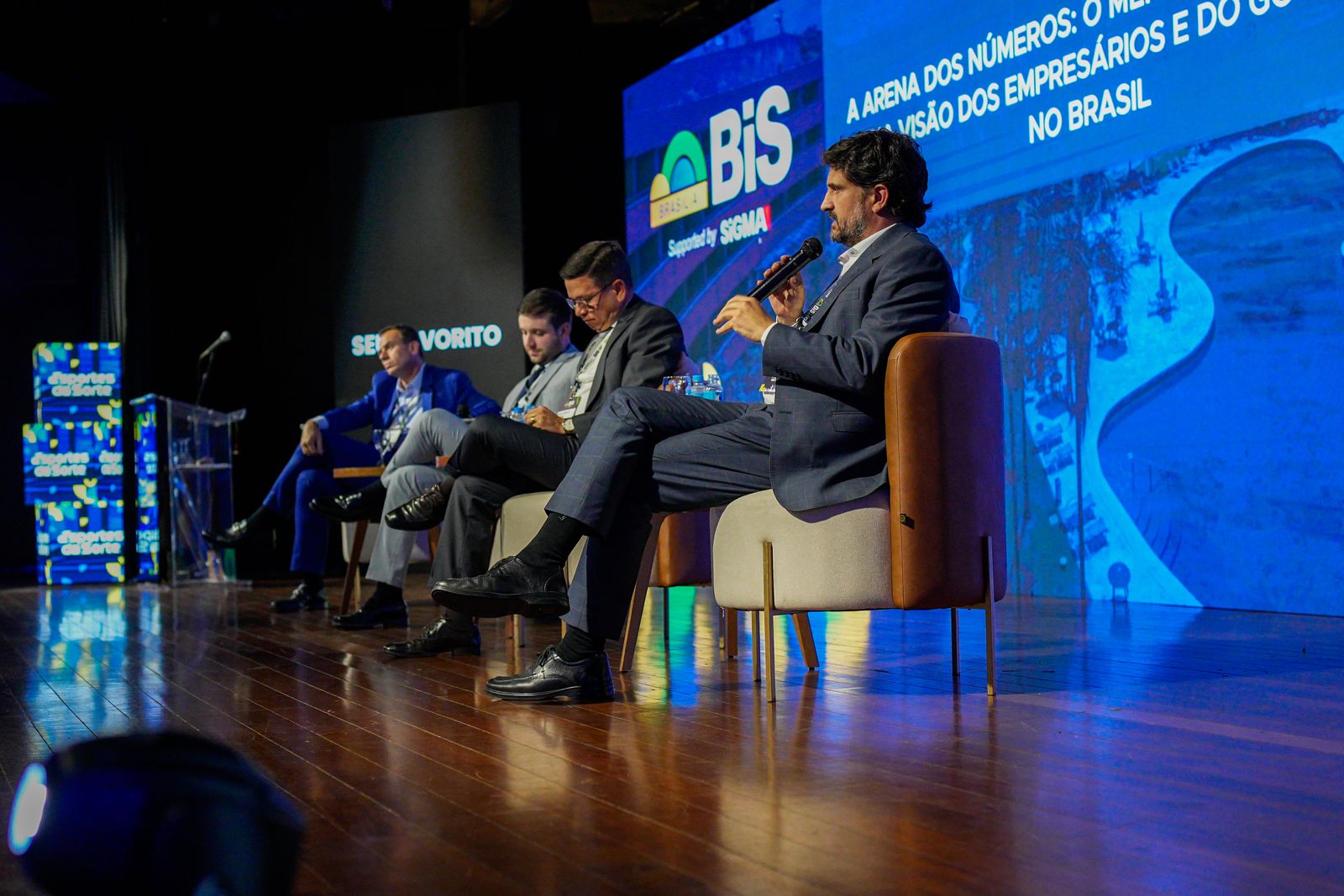
El BiS Brasília ya tiene definido el tema central para la próxima edición y será la gobernanza responsable para el futuro de los juegos y las apuestas en Brasil.
El evento se celebrará los días 2 y 3 de junio en el hotel Royal Tulip Brasília Alvorada.
BiS Brasília está confirmado para los días 2 y 3 de junio, con un enfoque en la gobernanza responsable del futuro del sector de juegos y apuestas en Brasil.
El encuentro reunirá a autoridades, líderes y expertos para debatir las principales novedades del sector.
En su segunda edición, el evento espera un crecimiento del 20% en la asistencia en comparación con el año anterior.
“Llegar a la segunda edición del BiS Brasília representa la consolidación de un espacio esencial para el diálogo entre el sector privado, las autoridades y los especialistas en un momento decisivo para el mercado brasileño.
Brasília es el centro de las grandes discusiones regulatorias del país, y reunir a los principales actores de este ecosistema en la capital federal refuerza el compromiso del evento con la construcción de un entorno cada vez más transparente, responsable y sostenible para la industria”, destacó Alessandro Valente.
Los interesados pueden adquirir sus entradas en: https://brazilianigamingsummit.com/brasilia/
Sobre BiS Brasília
En su segunda edición, BiS Brasília es un encuentro dedicado al ecosistema de iGaming y apuestas, promoviendo el diálogo entre el sector privado, el poder público y la sociedad sobre el desarrollo del mercado regulado de juegos, casinos y loterías en Brasil.
El evento reúne a líderes empresariales, autoridades y expertos para debatir temas estratégicos como regulación brasileña, tributación, integridad, innovación, juego responsable, compliance, AML / prevención de lavado de dinero, licenciamiento, integridad deportiva, relación con el Gobierno, publicidad y CONAR.
BiS SiGMA South America forma parte del portafolio de eventos de SiGMA World, una de las principales plataformas globales de negocios y organización de eventos B2B enfocados en la industria de juegos y apuestas.
The post BiS Brasília ya tiene definido tema central para el próximo evento appeared first on Americas iGaming & Sports Betting News.

-

 Bragg Gaming Group4 days ago
Massive Gaming launches Blitzcrown titles on Superbet Brazil via Bragg Hub
-
Compliance4 days ago
HIPTHER Launches HALLO: The Standard in Compliance Expertise
-
Compliance Updates4 days ago
HIPTHER Launches HALLO: The Standard in Compliance Expertise
-
7Games4 days ago
7Games, Betão & R7 Launch FIRST.bet Sportsbook in Brazil
-
Alex Cuoci4 days ago
Wealthsimple and Kalshi Partner to Bring Prediction Markets to Canada
-
30-0 Kongeserien3 days ago
Kongebonus launches 30-0 Kongeserien Eliteserien fantasy draft game
-
Channelisation4 days ago
Swedish Gambling Authority consults tighter duty of care rules as channelisation slips
-
Bonusetu.com3 days ago
Finland Sets Casino Gambling Risk Limits at 2% of Income, 4 Days, 2 Game Types