Compliance Updates
Entrust and PlaySafe ID Partner to Bring Verified, Privacy-First Digital Identity to Gaming

-
Entrust and PlaySafe ID announce a new partnership to enhance online gaming safety.
-
Integration of Entrust Identity Verification solution provides seamless and secure Know Your Customer check.
-
Playsafe ID platform aims to combat cheating, bots and harmful behaviour, while supporting compliance with the UK Online Safety Act’s Protection of Children Codes.
Entrust, a global leader in identity-centric security solutions, today announced a partnership with PlaySafe ID, the platform that keeps cheaters, bots, and predators out of games. The partnership will power Playsafe ID’s secure onboarding and verification process using Entrust Identity Verification to enable seamless and secure onboarding experience for gamers worldwide.
Built with a privacy-first mindset, Playsafe ID issues a verified, game-agnostic digital ID that confirms the human identity behind the account promoting accountability and improved protection for users, while still allowing them to remain anonymised. The platform aims to address wider issues that erode trust and enjoyment in online gaming communities, such as cheating, hacking, bot activity, and inappropriate behaviour, while ensuring compliance with evolving regulations such as the UK’s Online Safety Act.
How It Works
Users create a Playsafe ID account and complete a quick and secure identity verification process powered by Entrust. Users simply take a photo of their government-issued ID and a short video selfie. Entrust identity verification first checks that the ID is genuine and not fraudulent and then matches it to the user’s face in the selfie video. This ensures the person presenting the identity is its legitimate owner and is physically present, mitigating identity fraud attempts such as stolen ID or deepfakes.
Once verified, users receive a unique, random, and anonymised PlaySafe ID, granting access to PlaySafe-protected gaming and matchmaking with other verified gamers. The verification data is kept separate from the Playsafe ID, ensuring gamers remain anonymised during gameplay while knowing they are engaging with other legitimate, verified players.
“Gaming should be fun, fair, and safe for everyone,” said Andrew Wailes, CEO of PlaySafe ID. “Our partnership with Entrust ensures that our user verification process is both secure and scalable, and also aligns with the values of frictionless user experience and privacy. Their technology will be instrumental in helping us build a future where fair play is the standard, and cheating, fraud and harmful behaviour are no longer tolerated.”
Regulation in Gaming
This partnership will enable game providers and developers to prepare for the inbound Protection of Children Codes, coming into force in July 2025 as part of the Online Safety Act, which mandates that services accessed by children must manage risks and protect children from encountering harmful content.
“We’re proud to join PlaySafe ID in their mission to make online gaming a safer place,” said Samuel Steg, Head of Compliance for Identity Verification at Entrust. “Fraudulent activity online continues to grow both in scope and sophistication, and gaming environments are no exception. Our identity verification technology provides robust, high-assurance Know Your Customer (KYC) checks, offering gamers a seamless and secure onboarding experience. This partnership reflects our shared commitment to building a safer digital future and promoting trust, fairness, and safety within digital spaces.”
PlaySafe ID is currently in integration discussions with several major gaming platforms, with the first partnerships expected to launch later this year.
The post Entrust and PlaySafe ID Partner to Bring Verified, Privacy-First Digital Identity to Gaming appeared first on European Gaming Industry News.


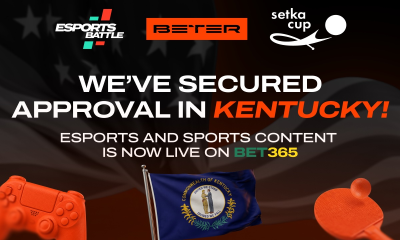







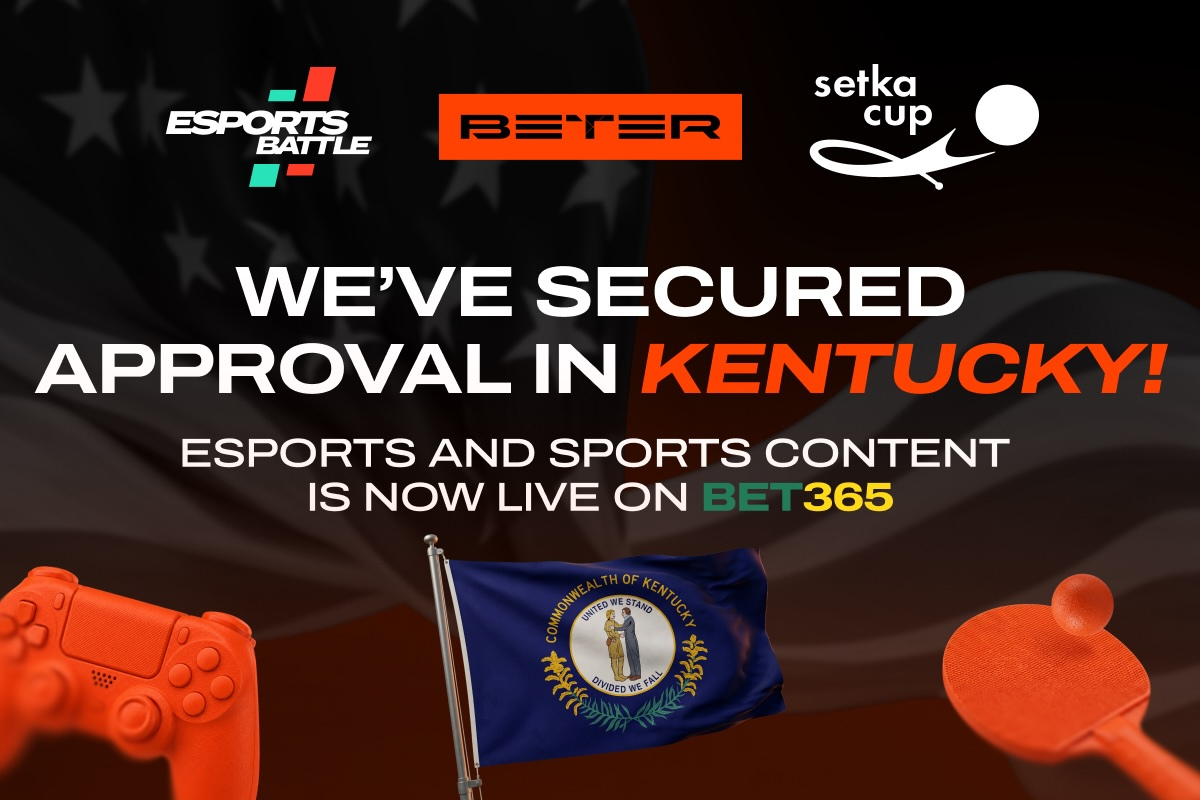
BETER has secured a license in Kentucky, expanding the availability of its Setka Cup table tennis and ESportsBattle betting content to a ninth US state. The approval was granted by the Kentucky Horse Racing and Gaming (KHRG), the state regulator.
The Kentucky approval adds to BETER’s existing US footprint in Florida, New Jersey, Colorado, Arizona, Indiana, Iowa, North Carolina, and Illinois. The license allows BETER to supply operators in Kentucky with live data and live streams from Setka Cup and ESportsBattle tournaments.
BETER said the content is already live for Kentucky bettors through bet365, which it described as a long-standing operator partner.
Chuck Robinson, CRO at BETER, said: “Kentucky is a state with a deep sporting heritage, and we’re excited to bring our exclusive Setka Cup and ESportsBattle content to operators and bettors there. Reaching nine US states is an important milestone that reflects the growing appetite for fast-betting content across the country.
“The US market is evolving rapidly, and players are increasingly seeking round-the-clock, high-quality betting experiences. BETER is built to meet that demand, and each new state we enter strengthens our position as the go-to provider of fast-betting content worldwide.”
Valeriia Tarchynska, Chief Legal Officer at BETER, added: “Receiving both approval and license is the result of sustained and meticulous regulatory and compliance work by our team. The US licensing landscape is uniquely complex, with each state operating under its own distinct framework, and we take great pride in meeting those requirements wherever we operate.
“With nine states now approved, the US continues to be a cornerstone of BETER’s global strategy. We are actively pursuing approvals in additional key states and remain fully committed to expanding our footprint across the country and beyond.”
The post BETER secures Kentucky license, bringing Setka Cup and ESportsBattle to ninth US state appeared first on Eastern European Gaming | Global iGaming & Tech Intelligence Hub.

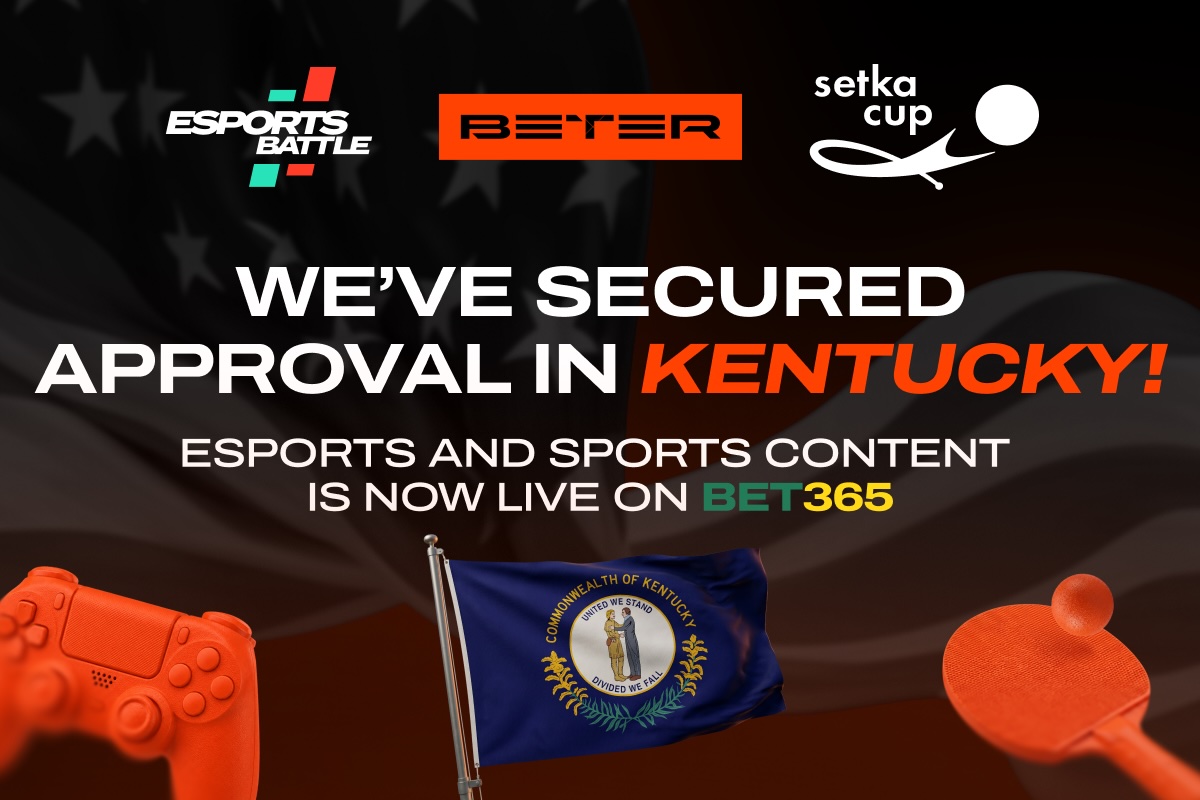
BETER, the award-winning provider of live streams, live data, and odds for esports and sports, has further strengthened its US presence after its exclusive Setka Cup table tennis and ESportsBattle content was added to the Sports Wagering catalog and licensed in the State of Kentucky.
The approval and license were granted by the Kentucky Horse Racing and Gaming (KHRG), the independent municipal corporation and political subdivision of the Commonwealth responsible for regulating horse racing, pari-mutuel wagering, sports wagering, breed integrity and development, and charitable gaming in the state.
Kentucky is the ninth US state where BETER’s exclusive content is now available, joining Florida, New Jersey, Colorado, Arizona, Indiana, Iowa, North Carolina, and Illinois.
The approval allows BETER to supply operators in Kentucky with live data and live streams from both its Setka Cup table tennis and ESportsBattle tournaments for the first time.
All content is already live for local bettors via bet365, BETER’s long-standing operator partner, reinforcing the demand for fast-paced betting content from operators in the space.
BETER exclusively delivers 24/7 live streaming, real-time data, and hyper-accurate odds for more than 700,000 fast-paced esports and sports events annually to operators worldwide. The company offers up to 50 markets per event and helps operators achieve an average margin of 7.5%+. Its esports portfolio includes ESportsBattle, featuring eFootball, eBasketball, eHockey, and eTennis, while its sports portfolio includes Setka Cup table tennis and the BSKT Cup basketball league.
All of BETER’s exclusive content is underpinned by its Integrity team, ensuring strict adherence to fair play standards through 24/7 monitoring and close collaboration with key sports integrity bodies, including IBIA and ESIC, as well as sports federations.
Chuck Robinson, CRO at BETER, said: “Kentucky is a state with a deep sporting heritage, and we’re excited to bring our exclusive Setka Cup and ESportsBattle content to operators and bettors there. Reaching nine US states is an important milestone that reflects the growing appetite for fast-betting content across the country.
“The US market is evolving rapidly, and players are increasingly seeking round-the-clock, high-quality betting experiences. BETER is built to meet that demand, and each new state we enter strengthens our position as the go-to provider of fast-betting content worldwide.”
Valeriia Tarchynska, Chief Legal Officer at BETER, added: “Receiving both approval and license is the result of sustained and meticulous regulatory and compliance work by our team. The US licensing landscape is uniquely complex, with each state operating under its own distinct framework, and we take great pride in meeting those requirements wherever we operate.
“With nine states now approved, the US continues to be a cornerstone of BETER’s global strategy. We are actively pursuing approvals in additional key states and remain fully committed to expanding our footprint across the country and beyond.”
The post BETER reaches ninth US state with the acquisition of a Kentucky license appeared first on Americas iGaming & Sports Betting News.

KingMidas Games, a leading iGaming provider, announced that 24 of its game titles have successfully obtained certification for Peru, marking a significant milestone in the brand’s global expansion strategy and its ongoing commitment to technical excellence.
The certification, formally titled “Certificate of Compliance for gaming programs, game modalities and/or components related to remote gaming and/or sports betting”, has been issued following systematic testing conducted by Global Lab. As part of this process, KingMidas Games has also secured Random Number Generator (RNG) and security certifications, ensuring that its games comply with regulatory technical standards.
Further reinforcing the credibility of this achievement, the Ministry of Foreign Trade and Tourism of Peru (MINCETUR) has officially registered and approved the certified games for operation in the country, solidifying Peru as a key market in KingMidas Games’ Latin American growth strategy.
As part of its broader compliance roadmap, KingMidas Games is actively working with multiple accredited testing laboratories to secure additional certifications across key jurisdictions. This multi-lab approach enables the brand to accelerate speed to market while maintaining the highest standards of quality, performance, and regulatory compliance across its portfolio.
This milestone represents a pivotal step in KingMidas Games’ mission to expand its global footprint and deliver premium, localised gaming experiences to players worldwide. With Peru emerging as one of the fastest-growing iGaming markets in Latin America, KingMidas Games is well-positioned to support operators seeking differentiated and high-performance content tailored to local audiences.
Sean Auret, Global Head at KingMidas Games, said: “Achieving certification in Peru is a significant milestone for KingMidas Games and a testament to the high standards we uphold across our portfolio. We have undergone extensive testing and compliance processes to ensure our games meet the regulatory benchmarks, and we are proud to bring our next-generation experiences to Peru. Our ambition is to continue expanding across key global markets such as Latin America, delivering innovative and high-quality content that empowers operators and supercharges the player experience across the region.”
With a growing portfolio of cutting-edge titles and a strong focus on compliance, KingMidas Games continues to position itself as a trusted partner for operators looking to unlock new opportunities in Peru.
The post KingMidas Games Secures Peru Certification appeared first on Americas iGaming & Sports Betting News.

-

 Asia4 days ago
EGT Brings High-Impact Asian-Themed Portfolio to SiGMA Asia 2026
-
Africa4 days ago
Greentube partners with World Sports Betting to expand in South Africa
-
Conference4 days ago
Danish regulator to speak at Gaming in the Nordics launch event
-
Africa4 days ago
Gaming Realms expands into three African markets via SportyBet partnership
-
affiliate marketing4 days ago
CasinoCanada partners with LolaJack Casino to expand Canadian visibility
-
BETER4 days ago
BETER expands US footprint with Illinois approval
-
Argentina4 days ago
Stake continues Latin American expansion with Argentina launch
-
Ben Wood CCO at Playson4 days ago
Playson strengthens North American footprint with Caesars Entertainment partnership