Compliance Updates
New ESRI Research Commissioned by the GRAI Suggests Gambling Offers Lure People to Bet More, Particularly People at Risk of Problem Gambling

A new study commissioned by the Gambling Regulatory Authority of Ireland (GRAI) /Department of Justice, Home Affairs and Migration and undertaken by the Economic and Social Research Institute (ESRI) shows that betting and gambling companies offering special offers or inducements encourages people to gamble more than they would otherwise, even when the odds offered are “bad”.
Special offers or inducements, such as free bets and moneyback guarantees are regularly used by gambling companies in their marketing campaigns. The study found that vulnerable people such as those at higher risk of becoming problem gamblers, were most at risk of gambling more, and losing more, as a result of being offered inducements.
In a controlled experiment run with a sample of 622 men under 40, participants, were given money to place up to six realistic bets on the Euro 2024 football tournament.
Half of the participants were randomly selected and shown offers of free bets and moneyback guarantees on some bets. which caused these participants to spend over 10% more than those who were not given inducements. The inducements also reduced the number of participants opting not to bet by nearly half. Even inducement bets that were designed as “bad”, showing odds far below market rates, were undertaken by participants in this group, who were three times more likely to spend money on “bad” bets.
These findings illustrate the harm inducements cause, particularly to those who are susceptible to gambling harm.
Under the Gambling Regulation Act 2024, the legislation which underpins the work of the GRAI, inducements or encouragement to gamble further will soon be an offence and licensed operators will no longer be allowed to offer free bets which are targeted at individuals and specific groups. Multiple European countries have also begun to regulate inducements.
Participants were surveyed after the study on their knowledge and understanding of inducements. Even amongst regular betters, most did not know that there were restrictions on free bets and that they would not receive their stake back if they won a free bet.
Paul Quinn, Chairperson of the GRAI, said: “I very much welcome this research from the ESRI examining the impact of inducements to gamble on gambling behaviours. Having a clear evidence base is critically important to the GRAI as we commence our work in regulating the gambling industry. This latest research will help inform that work and in educating the public on this matter.
“This study clearly indicates the damaging effect of certain practices around inducements. It underlines the importance of the provisions of the Gambling Regulation Act in limiting a person’s exposure to inducements to gamble. We look forward to working with Minister O’Callaghan in addressing the issue as we implement the new regulations.”
Anne Marie Caulfield, CEO of the GRAI, said: “The ESRI’s findings confirm that not only is the general public not aware of the dangers associated with inducements to bet, but also that the impact of these inducements go beyond simple marketing by betting companies.
“It is our responsibility to ensure that gambling operators do not encourage excessive or compulsive gambling behaviour, and that we protect vulnerable people in our society, such as children and young people and those more likely to experience gambling harm.
“The Gambling Regulation Act 2024 sets out obligations for licensees in the way in which inducements can be offered, including a ban on targeted inducements, and the findings of this study affirm these measures.”
Diarmaid Ó Ceallaigh, Postdoctoral Research Fellow, Behavioural Research Unit, ESRI, said: “Our findings imply that gambling offers aren’t merely marketing tools, but pose a real risk of financial harm, particularly among vulnerable groups.
“The results support the case for stricter regulation of gambling offers in Ireland, following steps already taken in other European countries, such as banning sign-up bonuses, restricting offers to at-risk individuals, and capping their value.”
The post New ESRI Research Commissioned by the GRAI Suggests Gambling Offers Lure People to Bet More, Particularly People at Risk of Problem Gambling appeared first on European Gaming Industry News.

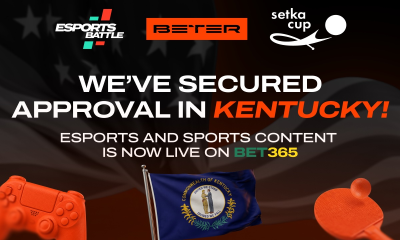

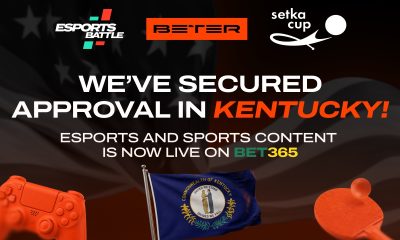







BETER has secured a license in Kentucky, expanding the availability of its Setka Cup table tennis and ESportsBattle betting content to a ninth US state. The approval was granted by the Kentucky Horse Racing and Gaming (KHRG), the state regulator.
The Kentucky approval adds to BETER’s existing US footprint in Florida, New Jersey, Colorado, Arizona, Indiana, Iowa, North Carolina, and Illinois. The license allows BETER to supply operators in Kentucky with live data and live streams from Setka Cup and ESportsBattle tournaments.
BETER said the content is already live for Kentucky bettors through bet365, which it described as a long-standing operator partner.
Chuck Robinson, CRO at BETER, said: “Kentucky is a state with a deep sporting heritage, and we’re excited to bring our exclusive Setka Cup and ESportsBattle content to operators and bettors there. Reaching nine US states is an important milestone that reflects the growing appetite for fast-betting content across the country.
“The US market is evolving rapidly, and players are increasingly seeking round-the-clock, high-quality betting experiences. BETER is built to meet that demand, and each new state we enter strengthens our position as the go-to provider of fast-betting content worldwide.”
Valeriia Tarchynska, Chief Legal Officer at BETER, added: “Receiving both approval and license is the result of sustained and meticulous regulatory and compliance work by our team. The US licensing landscape is uniquely complex, with each state operating under its own distinct framework, and we take great pride in meeting those requirements wherever we operate.
“With nine states now approved, the US continues to be a cornerstone of BETER’s global strategy. We are actively pursuing approvals in additional key states and remain fully committed to expanding our footprint across the country and beyond.”
The post BETER secures Kentucky license, bringing Setka Cup and ESportsBattle to ninth US state appeared first on Eastern European Gaming | Global iGaming & Tech Intelligence Hub.

BETER, the award-winning provider of live streams, live data, and odds for esports and sports, has further strengthened its US presence after its exclusive Setka Cup table tennis and ESportsBattle content was added to the Sports Wagering catalog and licensed in the State of Kentucky.
The approval and license were granted by the Kentucky Horse Racing and Gaming (KHRG), the independent municipal corporation and political subdivision of the Commonwealth responsible for regulating horse racing, pari-mutuel wagering, sports wagering, breed integrity and development, and charitable gaming in the state.
Kentucky is the ninth US state where BETER’s exclusive content is now available, joining Florida, New Jersey, Colorado, Arizona, Indiana, Iowa, North Carolina, and Illinois.
The approval allows BETER to supply operators in Kentucky with live data and live streams from both its Setka Cup table tennis and ESportsBattle tournaments for the first time.
All content is already live for local bettors via bet365, BETER’s long-standing operator partner, reinforcing the demand for fast-paced betting content from operators in the space.
BETER exclusively delivers 24/7 live streaming, real-time data, and hyper-accurate odds for more than 700,000 fast-paced esports and sports events annually to operators worldwide. The company offers up to 50 markets per event and helps operators achieve an average margin of 7.5%+. Its esports portfolio includes ESportsBattle, featuring eFootball, eBasketball, eHockey, and eTennis, while its sports portfolio includes Setka Cup table tennis and the BSKT Cup basketball league.
All of BETER’s exclusive content is underpinned by its Integrity team, ensuring strict adherence to fair play standards through 24/7 monitoring and close collaboration with key sports integrity bodies, including IBIA and ESIC, as well as sports federations.
Chuck Robinson, CRO at BETER, said: “Kentucky is a state with a deep sporting heritage, and we’re excited to bring our exclusive Setka Cup and ESportsBattle content to operators and bettors there. Reaching nine US states is an important milestone that reflects the growing appetite for fast-betting content across the country.
“The US market is evolving rapidly, and players are increasingly seeking round-the-clock, high-quality betting experiences. BETER is built to meet that demand, and each new state we enter strengthens our position as the go-to provider of fast-betting content worldwide.”
Valeriia Tarchynska, Chief Legal Officer at BETER, added: “Receiving both approval and license is the result of sustained and meticulous regulatory and compliance work by our team. The US licensing landscape is uniquely complex, with each state operating under its own distinct framework, and we take great pride in meeting those requirements wherever we operate.
“With nine states now approved, the US continues to be a cornerstone of BETER’s global strategy. We are actively pursuing approvals in additional key states and remain fully committed to expanding our footprint across the country and beyond.”
The post BETER reaches ninth US state with the acquisition of a Kentucky license appeared first on Americas iGaming & Sports Betting News.

KingMidas Games, a leading iGaming provider, announced that 24 of its game titles have successfully obtained certification for Peru, marking a significant milestone in the brand’s global expansion strategy and its ongoing commitment to technical excellence.
The certification, formally titled “Certificate of Compliance for gaming programs, game modalities and/or components related to remote gaming and/or sports betting”, has been issued following systematic testing conducted by Global Lab. As part of this process, KingMidas Games has also secured Random Number Generator (RNG) and security certifications, ensuring that its games comply with regulatory technical standards.
Further reinforcing the credibility of this achievement, the Ministry of Foreign Trade and Tourism of Peru (MINCETUR) has officially registered and approved the certified games for operation in the country, solidifying Peru as a key market in KingMidas Games’ Latin American growth strategy.
As part of its broader compliance roadmap, KingMidas Games is actively working with multiple accredited testing laboratories to secure additional certifications across key jurisdictions. This multi-lab approach enables the brand to accelerate speed to market while maintaining the highest standards of quality, performance, and regulatory compliance across its portfolio.
This milestone represents a pivotal step in KingMidas Games’ mission to expand its global footprint and deliver premium, localised gaming experiences to players worldwide. With Peru emerging as one of the fastest-growing iGaming markets in Latin America, KingMidas Games is well-positioned to support operators seeking differentiated and high-performance content tailored to local audiences.
Sean Auret, Global Head at KingMidas Games, said: “Achieving certification in Peru is a significant milestone for KingMidas Games and a testament to the high standards we uphold across our portfolio. We have undergone extensive testing and compliance processes to ensure our games meet the regulatory benchmarks, and we are proud to bring our next-generation experiences to Peru. Our ambition is to continue expanding across key global markets such as Latin America, delivering innovative and high-quality content that empowers operators and supercharges the player experience across the region.”
With a growing portfolio of cutting-edge titles and a strong focus on compliance, KingMidas Games continues to position itself as a trusted partner for operators looking to unlock new opportunities in Peru.
The post KingMidas Games Secures Peru Certification appeared first on Americas iGaming & Sports Betting News.

-

 Asia4 days ago
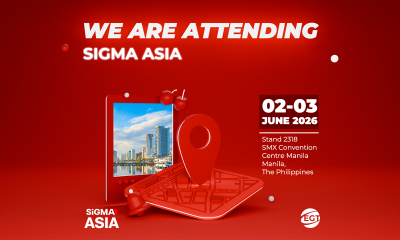
EGT Brings High-Impact Asian-Themed Portfolio to SiGMA Asia 2026
-
Africa4 days ago
Greentube partners with World Sports Betting to expand in South Africa
-
Africa4 days ago
Gaming Realms expands into three African markets via SportyBet partnership
-
Conference4 days ago
Danish regulator to speak at Gaming in the Nordics launch event
-
BETER4 days ago
BETER expands US footprint with Illinois approval
-
affiliate marketing4 days ago
CasinoCanada partners with LolaJack Casino to expand Canadian visibility
-
Argentina4 days ago
Stake continues Latin American expansion with Argentina launch
-
Evoplay4 days ago
Evoplay launches Crimson Crown slot with Hold & Win jackpots