Compliance Updates
How payments can drive iGaming operators’ growth as they navigate an evolving regulatory landscape

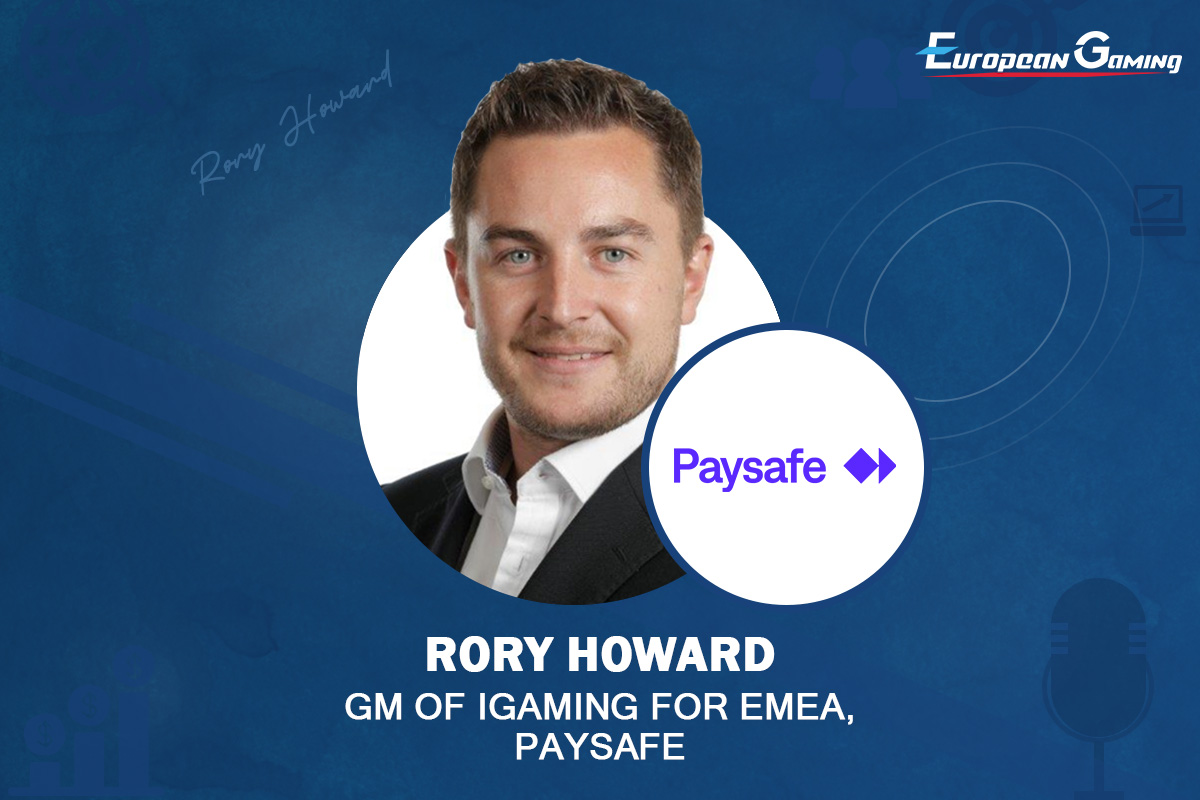
With iGaming regulation changing in multiple European and Latin American markets, Paysafe’s Rory Howard considers the invaluable role of payments
By Rory Howard, GM of iGaming for EMEA, Paysafe
After enacting new gambling legislation at end-2023, Brazil is expected to launch its iGaming market on January 1st. With 215m people, Latin America’s most populated country is almost certain to rapidly become a major global jurisdiction. Annual gaming revenue is forecast to grow to $4.9bn within five years, according to Vixio.
While the new Brazilian market offers an important opportunity for operators, licensing includes significant regulations to negotiate, including around payments. With other markets also enacting or considering more robust iGaming regulation, the operators that successfully navigate this new space can make change pay.
From Sao Paulo to Sweden via the UK
In April, Brazil published an Ordinance on operators’ payment requirements, preventing players from depositing using credit cards, cash, cheques, pay slips, bank slips and cryptocurrencies. Withdrawals of winnings will only be possible via electronic transfer between the operator and the player’s bank account, which must be a financial institution authorized by the Brazilian Central Bank.
Such restrictions, especially around credit cards, are part of a broader global trend to promote responsible gambling. In neighbouring Argentina, the Buenos Aires legislature is currently considering a bill to ban credit cards and social assistance debit cards for online betting in the capital region’s regulated market.
Over in the UK, operators have not been able to offer credit card deposits since the Gambling Commission restricted this in April 2020. More recently, the UK government’s Gambling Act Review white paper, which was released in April 2023, has resulted in more robust know your customer (KYC) checks for operators, including on affordability. From August all UK bettors depositing a net £500 needed to be checked, lowered to net deposits of £125 from February.
And UK operators are also facing marketing restrictions. From summer 2026, front-of-shirt Premier League football club sponsorships will no longer be an option following the association’s voluntary ban. In addition, the government is currently considering whether bonuses should be tightened, though it appears unlikely that the UK will go as far as Brazil’s complete ban on bonusing and free bets.
The UK isn’t the only European country strengthening its iGaming regulatory framework, with Sweden only allowing operators to offer players a single sign-up bonus following the Scandinavian country’s re-regulation of the market in 2019. More recently, the Swedish gambling regulator has come out in favour of the government’s proposed ban on credit cards for iGaming from April 2025.
Playing and paying it forward
With Sweden’s eastern neighbour, Finland, looking to liberalize its government monopoly with a licensing system for private operators by early 2027, the only constant when it comes to iGaming regulation is change. While regulatory change providers operators with opportunity, they need to have a solid strategy in place.
The global regulatory space is highly complex and diverse, so it’s essential for operators to develop a robust compliance framework that covers all the different legal requirements for each global market. Against the backdrop of the responsible gambling shift, KYC protocols have never needed to be more granular, requiring automation and specialised software for the highest accuracy and efficiency.
Payments are an indispensable element in negotiating the new regulatory landscape. Every market is unique, including when it comes to payments. If a jurisdiction restricts credit cards or other payment methods, operators’ cashiers need to include alternatives such as digital wallets, eCash or even pay-by-bank options to ensure players don’t abandon a brand before they become a customer.
With markets restricting bonuses and other marketing channels like sponsorships, operators need to ensure they are getting payments right. Payments – including quick payouts and deposits and the availability of preferred payment methods – are much more important factors in players’ selection of online sportsbooks than sign-up offers and sports sponsorships, according to Paysafe’s 2024 research.
More broadly, it’s also vital for operators to choose the right payment provider. Partnering with a payments company with global experience and which offers a comprehensive range of its own and third-party payment solutions, including local payment methods (LPMs) like Brazil’s Pix, will enable operators to effortlessly tailor their cashiers to a particular market.
Whether in Brazil, Argentina, the UK, Sweden or Finland, the global iGaming market is diversifying from a regulatory perspective. While the changing space poses significant challenges, it gives savvy operators an opportunity to ensure their brands and cashiers are not only compliant but have a completive edge that will ultimately pay out.
Rory Howard
As General Manager for iGaming in the EMEA region at Paysafe, Rory oversees the company’s online gambling business in the U.K. and continental Europe as well as neighbouring regional markets. He has close to 20 years’ experience in payments and fraud analysis, with a strong focus on the iGaming space. Rory’s previous roles include payment leadership positions at The Rank Group, Racing Stars, Gamesys, and Eyas Gaming.
The post How payments can drive iGaming operators’ growth as they navigate an evolving regulatory landscape appeared first on European Gaming Industry News.











Australia
Former Star Entertainment Executives Mathias Bekier and Paula Martin Disqualified and Ordered to Pay Penalties

The Australian Federal Court has disqualified former Star Entertainment Group Limited executives Mathias Bekier and Paula Martin from managing corporations for six and seven years respectively and ordered them to pay pecuniary penalties for breaching their duties by failing to properly manage serious risks at one of Australia’s major casinos.
The Court ordered:
Mr Bekier, the former Chief Executive Officer and Managing Director, to pay a pecuniary penalty of $700,000 and disqualified him from managing corporations for six years.
Ms Martin, the former General Counsel, Company Secretary, and Chief Legal and Risk Officer, to pay a pecuniary penalty of $400,000 and disqualified her from managing corporations for seven years.
His Honour also ordered that Mr Bekier and Ms Martin pay 45% of ASIC’s costs of the proceeding.
The Court previously found that both Mr Bekier and Ms Martin breached their duties owed to Star Entertainment in relation to their handling of the risks associated with money laundering and criminal activity.
ASIC Chair Sarah Court said: “senior executives have a critical responsibility to identify, escalate and properly manage serious risks within their organisations.
“These failures occurred in a highly regulated environment and contributed to significant governance breakdowns at Star.
“Penalties of this scale reflect the seriousness of their conduct and send a strong message to other senior executives of listed companies that failures of this type are unacceptable.”
ASIC has an enduring enforcement priority focused on governance and directors’ duties failures.
In relation to Mr Bekier, His Honour Justice Lee said:
“Senior executives of casino operators, and public companies conducting enterprises pregnant with risks more broadly, must understand that failures of the kind established by the contraventions may attract substantial personal consequences.”
Further, in respect of Ms Martin he found that “the community is entitled to expect that a solicitor occupying such positions and having such responsibilities, within one of Australia’s largest casino operators, will display professional independence, accuracy and judgment of a high order. The conduct established … represented a very serious departure from those standards” and that
“Ms Martin knew of a miscellany of alarming information pertaining to [an overseas gambling junket] … She was required to report such matters to the Board but failed to do so. This is all the more concerning when considered against the backdrop of Ms Martin being the most senior solicitor employed by Star”; and that
“The more pervasive the failures of governance and culture become, the greater the obligation upon those entrusted with legal and risk responsibilities to insist upon compliance with legal obligations and proper standards of corporate conduct.”
The post Former Star Entertainment Executives Mathias Bekier and Paula Martin Disqualified and Ordered to Pay Penalties appeared first on EE Gaming | Global iGaming & Tech Intelligence Hub.
Compliance Updates
Kentucky AG Files Lawsuits Against Companies Allegedly Operating Illegal Betting, Gambling Platforms


Kentucky Attorney General Russell Coleman announced on Wednesday that his office has filed separate lawsuits against three online platforms he claims are operating without licenses and engaging in illegal sports betting and gambling.
The lawsuits were filed in Franklin Circuit Court against:
Kalshi, a prediction market platform, and its affiliates including Coinbase;
Polymarket, a prediction market platform, and its affiliates; and
VGW, an online casino platform with brands including Chumba Casino, Global Poker, and LuckyLand Slots.
The suits against Kalshi and Polymarket allege that they allow users to place wagers on game winners, point spreads and player statistics, and that they are doing business in Kentucky without a gaming license or following state regulations.
The suit against Kalshi states that it offers so-called “event contracts” on several topics; sports betting made up approximately 70% of its trading volume during a selected sample period in 2025.
The Polymarket suit states that the platform’s flashy advertisements on social media and elsewhere give the false and misleading impression that it is authorized to offer sports wagering under Kentucky law. The platform offers many of the same traditional sports bets as a licensed sportsbook.
“Kalshi and Polymarket are operating illegal sportsbooks in Kentucky and breaking our laws. These multi-billion dollar corporations and their legal fictions don’t pass the sniff test. As one of our state legislative leaders said it best, ‘If it looks like a duck and quacks like a duck’,” said Coleman on the suits.
The suits also allege that each company offers few or no resources to identify or seek help for a gambling problem.
The suit against VGW and its affiliates states that they allegedly operate unlawful sweepstakes casino websites that use two different types of virtual gambling chips.
The games on websites are designed to look and feel like slot machines and blackjack.
The alleged online casinos offer two types of chips: one free and one with cash value.
According to the suit, users pay real money for so-called Sweeps Coins, just as gamblers pay for poker chips at a real casino, or they can cash out their winnings.
“This company may use new technology and a new scheme to hide, but the reality is the same,” Coleman said on the suit. “Our Office has a duty to stop illegal gambling in Kentucky regardless of how it’s packaged.”
In recent months, Coleman has joined in national bipartisan efforts to regulate prediction markets.
The post Kentucky AG Files Lawsuits Against Companies Allegedly Operating Illegal Betting, Gambling Platforms appeared first on Americas iGaming & Sports Betting News.

Approval positions the supplier to distribute certified titles to licensed operators under Switzerland’s Federal Gambling Act.
PopOK Gaming has secured game certification for Switzerland’s regulated iGaming market, clearing the supplier to offer its online casino portfolio to licensed Swiss operators.
The company said the approval was granted under the Swiss Federal Gambling Act (Geldspielgesetz), which sets requirements around game fairness, security, and player protection. PopOK Gaming said it passed the necessary evaluations to meet local technical and regulatory standards.
According to PopOK Gaming, Swiss operators will be able to integrate an initial line-up including “high-volatility slots, unique artistic games, and instant games,” alongside mechanics such as animations and gamification features.
PopOK Gaming said the Swiss certification supports its broader European expansion strategy and that it is open to partnership discussions with licensed operators in the market.
The post PopOK Gaming secures Swiss certification to supply online casino games appeared first on EE Gaming | Global iGaming & Tech Intelligence Hub.

-

 América Latina4 days ago
Las diferencias locales de Argentina representan tanto un desafío como una oportunidad para el sector del iGaming
-
AI4 days ago
Veikkaus rolls out OpenBet’s Neccton responsible gambling platform ahead of 2027 reform
-
game-launch4 days ago
Million Games launches East West Wild slot with progressive multipliers
-
Latest News4 days ago
Connect with N1 Partners at G Gate Conf 2026
-
Africa4 days ago
Booming Games signs content deal with World Sports Betting in South Africa
-
Gmonitor.ai3 days ago
Gmonitor llega a Latinoamérica: la plataforma de inteligencia de mercado para operadores debuta en seis mercados regulados
-
eSports4 days ago
G2 partners with PUBG MOBILE Esports to scale Western Europe competition
-
 Latest News3 days ago
Sportradar Report | World Cup 2026: Opportunities for the Latin American Sports Betting Market