Latest News
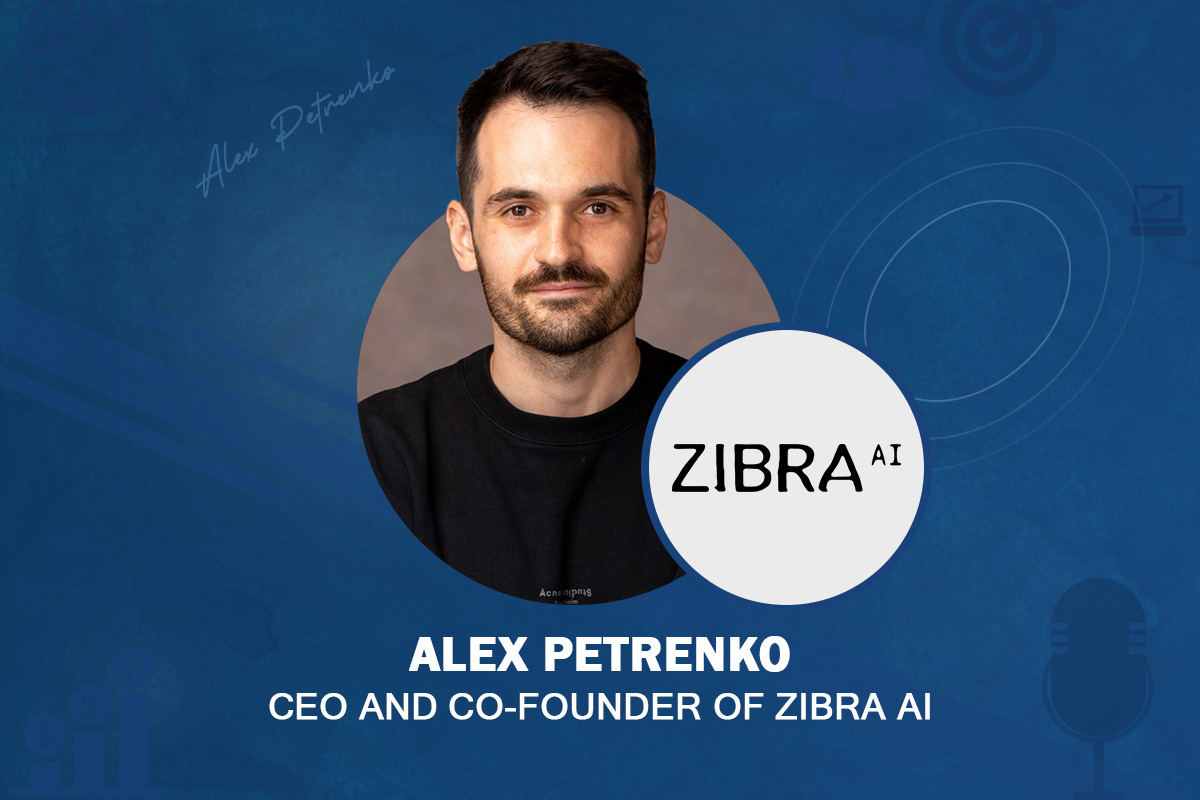
Exclusive Q&A w/ Alex Petrenko, CEO and Co-Founder of Zibra AI

- Could you share some insights into your journey and professional background, highlighting key experiences that led you to initiate Zibra?
My journey in the tech and gaming world began after graduating from the National Aviation University in Kyiv, specialising in management and logistics. Prior to Zibra AI, I held senior business development roles at CoWorking Platforma and Talkable, gaining valuable insights and experience working on business strategies and development dynamics with companies like General Assembly, Y-Combinator and influencers like Steve Wozniak to organise offline events for the tech community and build a separate revenue stream around educational events.
As a passionate gamer and technology enthusiast, I’ve always been interested in new game titles, but as games become more complex, their development has become lengthier. Game developers now require considerably more time and resources to craft immersive and sophisticated gaming experiences that can cater to the ever-growing demands of the player community.
The desire to change this and aid developers of all sizes to create amazing titles and experiences for gamers, led me to create Zibra AI alongside our amazing co-founding team of Vladyslav Zavadskyi and Den Dmytrenko. Earlier this year, with the help of our fantastic team, we succeeded in securing funding from both the inaugural a16z Games SPEEDRUN (the only company to be chosen from Eastern Europe) and from Epic’s MegaGrant program. Witnessing the potential of Generative AI, particularly in streamlining game development and enhancing VFX (Visual Effects) creation, ignited the vision for Zibra AI. Our mission is clear: enabling game developers, VFX artists, and creators to revolutionise their workflows and create exceptional experiences.
- Delving into Zibra, what sparked the creation of the platform? What were the core founding principles for Zibra?
Being a gamer with a strong interest in emerging technologies, I was always inspired by what these advancements could offer to the gaming world, both behind the scenes on the development side but also the impact to the end-user, the players. Game development, though rewarding, often faces lengthy and challenging development cycles. Recognising the potential of AI to alleviate these hurdles, especially in the realm of asset and VFX creation, sparked the inception of Zibra AI in 2021. Our core founding principles revolve around leveraging Generative AI to simplify the creation of 3D assets and VFX, empowering game developers and artists to enhance their workflows and bring their visions to life with efficiency and creativity.
- Generative AI has the potential to democratise creativity. How is Zibra AI making this technology accessible and user-friendly for a broader audience of content game developers and Visual Effects artists, including those with varying levels of technical expertise?
Zibra AI is dedicated to democratising game development and visual effects through the creation of easy and affordable products. All the solutions with our platform are designed with a user-friendly interface, ensuring accessibility for creators of all skill levels. We’ve placed a strong emphasis on intuitive tools and a seamless user experience, allowing content developers, from beginners to experts, to utilise the power of Generative AI effortlessly. We’ve worked tirelessly to ensure our platform caters to varying technical proficiencies, enabling a diverse audience to embrace AI-generated 3D assets and VFX, ultimately democratising the creative process in the gaming and visual effects spheres.
- Zibra aims to streamline 3D content generation. Could you quantify the success achieved in simplifying and democratising this process? Providing data on user numbers and the time required to create 3D content using the platform would be valuable.
We are thrilled that Zibra AI has recently surpassed 100,000 users, primarily consisting of game developers leveraging our platform for VFX creation. The feedback from our growing community has been overwhelmingly positive, empowering even indie developers to swiftly craft high quality VFX without requiring specific prior expertise. This allows them to test and validate their creative concepts, without any delay. Zibra AI solutions enable easy creation of new immersive experiences and game mechanics based on real-world physics (liquid, smoke & fire). Soon, Zibra AI tools will also make it possible for creators to easily generate in-game assets based on almost any input, whether it be text, video or image references. Our mission is to give game developers of all levels unprecedented amounts of freedom to experiment and customise their games, (using a single prompt) to create the best experience possible for players.
- Looking at the global market, how do you envision Generative AI shaping the future of visual effects and media production, and what role do you foresee Zibra AI playing in this transformative journey?
Generative AI holds immense potential in shaping the future of visual effects and media production. As the technology advances, we foresee a future where Generative AI seamlessly integrates with creative workflows, significantly accelerating content creation and enhancing the overall quality of visual effects. Zibra AI aims to be at the forefront of this transformation, empowering artists and developers with efficient AI-powered solutions that enhance their capabilities and artistic visions. Our role is to continually innovate, ensuring our platform remains aligned with the evolving needs of the industry, ultimately contributing to a future where creativity and technology harmoniously coexist. We are not trying to replace human jobs but instead empower those and maintain a community who help each other and create more amazing gaming experiences.
- Please elaborate on the standout features of Zibra powered by AI, which captivate users and developers in the realm of 3D content creation.
One of our primary platform offerings is Zibra Effects. A powerful AI-assisted solution to create dynamic smoke, fire, liquid, and clothing Visual Effects for games. All Zibra Effects products are equipped with a unique AI-layer that speeds up object prototyping and accelerates the performance of the simulation itself. What sets Zibra Effects apart is its ability to provide real-time interactivity, enhancing the immersivity. It’s a low-code tool that drastically simplifies the complex process of VFX creation, saving developers significant time. Additionally, we offer a free version of Zibra Effects for users to explore and experiment with, allowing them to experience firsthand the transformative capabilities of AI-assisted tools.
- Data privacy and ethical AI use are growing concerns. How does Zibra AI ensure responsible use of Generative AI and maintain a strong commitment to data security and user privacy in your products and services?
At Zibra AI, data privacy and ethical AI usage are paramount. Our platform only uses proprietary models and data sources to build our features. We are committed to not creating or using an open source model that scrapes the internet and users’ data. We remain committed to transparent communication with our community and ensuring that our technology is harnessed responsibly and ethically, respecting both user privacy and societal norms.
- Are there upcoming features within the Zibra pipeline that you can share with us, offering a glimpse into the platform’s evolving capabilities?
This autumn we’ll be announcing an important step forward for file compression of visual effects (ZibraVDB). This tool will allow something that was previously close to impossible to achieve – having volumetric/3D VFX in games. VFX will look much more realistic, whilst the significant compression of file sizes (up to 100x smaller than the current standard) allows for a wider use of high-fidelity VFX within different environments and across platforms previously unable to compute such large files. It’s a huge milestone in our mission to continually evolve and empower creators with cutting-edge tools and capabilities.
- Can you showcase some instances of 3D content generated using Zibra, underlining its prowess in empowering creators?
Absolutely. Creators regularly share their works within our Discord community, showcasing how our solutions can be applied in various use cases. One notable instance was a simulation involving a pool cleaning scenario, where the water physics generated were lauded as even superior to those in renowned games like Starfield. Additionally, we’ve seen impressive 3D AR/VR reconstructions that underscore the prowess of Zibra AI in empowering creators to realise their visions in the virtual world. Our community loves to share their first hand experiences using Zibra Effects. For example, game developer Lee Vermeulen’s social media videos earlier this year, showcasing Zibra Effects real-time liquid, smoke and fire simulations in AR have gone viral!
- Lastly, reflecting on your role as the Co-founder and CEO of Zibra AI, what advice or insights would you share with aspiring entrepreneurs trying to get into the fields of AI and Gaming?
You need to embrace your passion for AI and/or gaming and stay relentlessly curious and up-to-date as both are ever-evolving fields. Much like the journey of a lifelong learner, remember that success often emerges from a foundation of persistence. Above all, stay true to your vision and persevere through challenges. Entrepreneurship and building a product/company should be an exciting journey. Try to keep this front of mind and enjoy the process through all the ups and downs.












Platform pairs sportsbook simulations with a QualiBest survey on fan confidence and compares 2026 sentiment to Brazil’s 2002 campaign.
Superbet has launched “As Odds do Penta,” a data and research hub focused on Brazil’s 2026 World Cup outlook, using sportsbook-driven simulations and public opinion polling to compare the current cycle with the national team’s 2002 campaign. The initiative was announced in São Paulo in June 2026 and is hosted at termometrosuper.com.br.
According to Superbet, its sportsbook model runs predictive simulations and weighs performance metrics alongside qualitative inputs, including media coverage tone and fan engagement, to recreate historical probabilities and compare them to today’s market. “The odds in 2002 would certainly be as high as what we have now in 2026.. The scenario has several similarities: widespread distrust, a tense qualifying phase, and pressure from the press.”, said Guilherme Simantob, a statistician at Superbet.
Superbet also cited results from “Termômetro Super,” a survey commissioned from Instituto QualiBest and conducted June 4-6 with 824 internet users aged 40+ across Brazil. The company said 58% of respondents see a medium-to-high probability of a Brazil turnaround in 2026, and that 58% reported being optimistic or moderately confident based on historical parallels. The release also noted demographic splits, including higher uncertainty among women; a more negative view among Class A respondents compared to Class C; and a stronger “medium probability” view among respondents aged 61+ (44%) versus those aged 40-50 (33%).
On whether prior World Cup disappointments affect belief in a 2026 title, Superbet said 35% reported that pressure from previous defeats reduces confidence, while 22% said history shows Brazil performs strongly when expectations are low; 37% described themselves as moderately confident.
The company added that, based on its reconstruction, Brazil would have been priced at 8.50 in 2002 (which it equated to an 11% mathematical chance). For 2026, Superbet said Brazil’s title odds are around 9.50, and that the “mercado internacional” assigns the team about a 5% chance to win. Commentator Jorge Iggor, cited in the release, argued that entering without being the market favorite can reduce pressure: “Looking at the historical context and the odds themselves proves that not carrying the absolute favoritism for 2026 is a great advantage. Arriving without the weight of being the top team on the market relieves the pressure and makes the atmosphere much lighter. In 2002, the team also defied all predictions and clinical doubts about its main stars to lift the trophy.”
Superbet also highlighted what it called an experience edge in the current squad: “There is an unprecedented and favorable point for the current team. The players selected for the 2026 tournament have accumulated far more titles than the 2002 team at that time: 305 titles combined now, compared to 176 in 2002. This provides experience in big games that could be our unseen advantage.”, Simantob said. The company said the hub will update during the tournament, including additional “Termômetro” polling updates tracking changes in public confidence.
The post Superbet launches ‘As Odds do Penta’ hub tracking Brazil 2026 title odds appeared first on Americas iGaming & Sports Betting News.

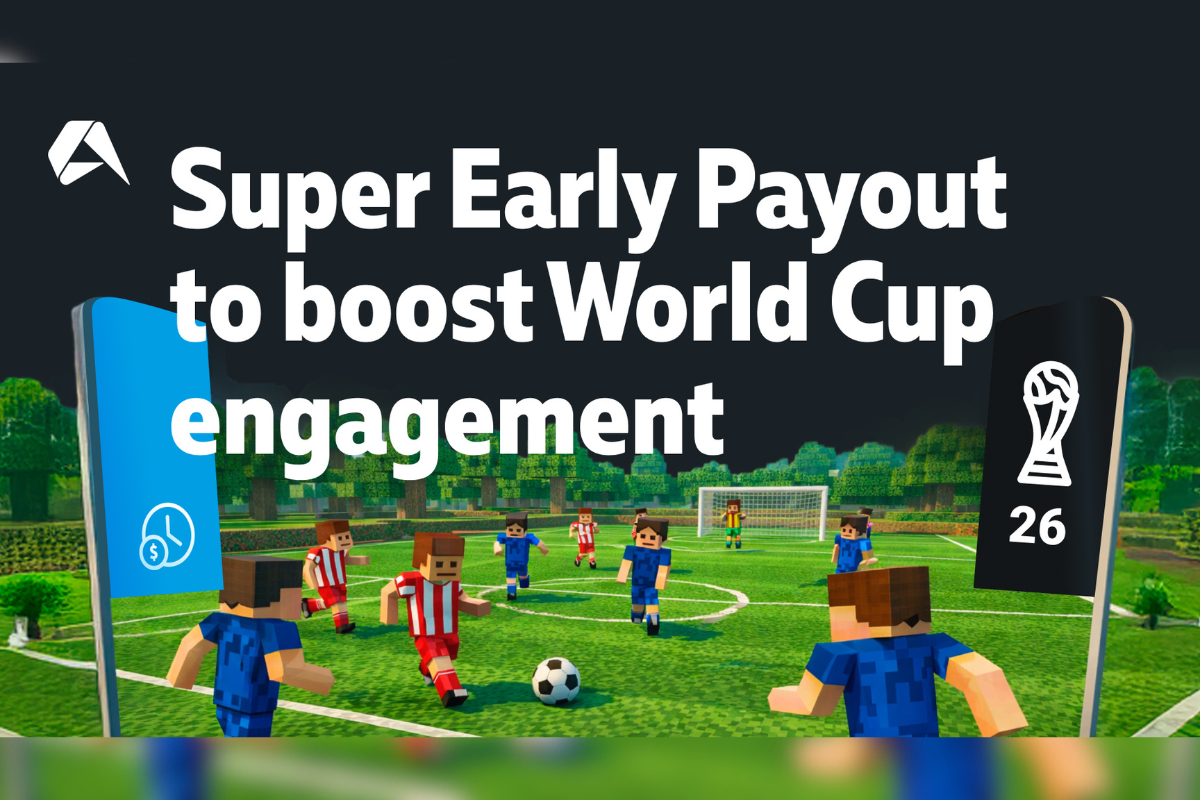
Leading sportsbook provider Altenar has announced the launch of Super Early Payout to give soccer bettors more chance to celebrate winning moments before the final whistle.
The new promotion has gone live in time for the World Cup 2026 and means bettors who back a team in eligible markets will have their bet settled as a winner as soon as their selected team takes a one-goal lead, regardless of the final result.
This is an upgrade to the popular Early Payout offer, which requires a team to lead by two goals before qualifying bets are settled. Reducing the threshold to one goal allows Super Early Payout to deliver faster wins and an even more engaging betting experience.
Operators can configure the promotion for a specific team or both teams, while also having the option to replace the standard 1X2 market for a more prominent promotional experience.
Altenar has also brought greater flexibility to promotional campaigns with improvements to the Early Payout feature, which can now be applied directly to selected events rather than entire championships, making it easier to highlight key World Cup fixtures and other high-profile matches.
The enhancement supports both two-goal and three-goal Early Payout configurations and can also be applied to one or both teams. By moving beyond championship-wide set-ups, operators can create more targeted campaigns.
Expanded markets have also enriched Altenar’s soccer coverage at major tournaments such as the World Cup. New additions allow bettors more choice when it comes to player performance, including how goals or shots were made (by foot, header, outside the box etc).
Player specials have been expanded to include substitute coverage, allowing betting opportunities to remain relevant even when the originally selected player is replaced by a substitute.
A comprehensive range of player, team and match markets are also now available for matches that go to extra time, creating additional betting opportunities during the knockout stage of tournaments such as the World Cup.
These new features follow on from the World Cup Lobby, which was recently released by Altenar as a dedicated event hub designed to enhance player engagement and streamline navigation during the upcoming tournament.
Nikos Zygouris, Head of Sportsbook Product at Altenar, said: “At Altenar, we’re focused on giving our partners the flexibility to tailor their sportsbook experience to the needs of their customers.
“Super Early Payout allows operators to offer a more engaging soccer betting proposition, while our expanded range of markets means bettors have more choice than ever when it comes to placing bets on the markets which matter most to them.
“These enhancements combine greater promotional flexibility with deeper soccer coverage, helping operators maximise engagement throughout the World Cup.”
The post Altenar launches Super Early Payout to boost World Cup engagement appeared first on EE Gaming | Global iGaming & Tech Intelligence Hub.

Arnold Ash has agreed a sponsorship deal for the Arthurian League’s 2026 US Tour, which will culminate in the inaugural Transatlantic Cup on Friday 26 June in Philadelphia. The announcement was dated Friday 12th June 2026.
The Transatlantic Cup will be played during the 2026 World Cup and is framed by organisers as part of events marking 250 years of US independence. US amateur champions West Chester United SC, holders of the 2025 US Adult Soccer Association (USASA) National Amateur Cup, will host the Arthurian League representative side.
Arnold Ash’s logo will appear on the front of the touring team’s white and red England kit. The company said the headline partnership covers the full 12-day tour, including additional matches against New York Athletic Club and Boston Bolts, plus in-stadium branding at the ticketed fixture at Drexel University’s Vidal Athletic Complex and across event online and social channels.
Jon Arnold, CEO at Arnold Ash, said: “Arnold Ash has been a proud sponsor of the Arthurian League representative sides at major events before, but it doesn’t get any bigger than this. The team is hugely talented, made up of the top amateur players England has to offer and – as the best-of-the-best – reflect the Arnold Ash core principles of quality, experience and consistency.
“The World Cup is now underway, but for the next five weeks, the Transatlantic Cup is where the real action is at! We wish both England teams the best of luck stateside!”
Billy Jenkins, Manager of the Arthurian League representative team, said: “Arnold Ash’s sponsorship is hugely valuable to our team, and we are incredibly grateful for their continued backing of grassroots football.
“We are honoured to participate in the first-ever Transatlantic Cup and just like England’s professional team hope to be lifting prestigious silverware on US soil in the coming weeks.”
The post Arnold Ash sponsors Arthurian League US tour ahead of 2026 Transatlantic Cup appeared first on EE Gaming | Global iGaming & Tech Intelligence Hub.

-

 Australia6 days ago
NSW Scores with Extended Trading for FIFA World Cup
-
Arshak Muradyan6 days ago
Digitain Secures Licence from Danish Gambling Regulatory Authority
-
8MBets6 days ago
Himalayan Harmony Group Announces 2026 Nepal Online Casino Portfolio with Six Licensed Brands
-
Compliance Updates6 days ago
CT Interactive Expands Certified Portfolio in Peru
-
Eastern Europe6 days ago
ELA Games reports 244.52% active user growth in Romania
-
Crystalbet6 days ago
Octoplay goes live with Entain-owned Crystalbet in Georgia
-
Latest News5 days ago
N1 Partners x RAZE Case: ROI+ in Canada within 3 Days
-
Africa5 days ago
WorldGaming Enters into Partnership with African iGaming Alliance