Canada
Vivaro and Blast.tv Deliver Counter-Strike World Cup Qualifiers to an Audience of More Than 20 Million Gaming Fans

Vivaro’s Liga Ace Esports in partnership with Blast.tv are hosting the Americas qualifiers in Monterrey, Mexico, to see who will go to the Counter-Strike: Global Offensive Major Championship in Paris, France.
Vivaro’s Liga Ace Esports, Latin America’s leader in organizing, producing and transmitting eSports, has partnered with Blast.tv to broadcast the Americas Counter-Strike World Cup Qualifier to an audience of more than 20 million viewers across five continents. American RMR – CS GO 2023 will be hosted in Monterrey, Nuevo León, Mexico, and will be streamed to viewers in real-time via Blast.tv on its YouTube and Twitch channels.
Sixteen elite Counter-Strike teams will face off to represent the Americas in the Counter-Strike World Cup that will be held in Paris, France, in May. Teams from Argentina, Brazil, Canada and the United States will compete for five places in the World Cup. Each team will compete in multiple rounds to achieve various objectives that will lead them to victory.
“We are positioning Nuevo León as the hub for esports in Latin America,” the Chief Executive Officer for Liga Ace Esports, Octavio Echeagaray, said. “Thanks to our proximity to the United States, we have the opportunity to grow the industry in our region. We’re also very excited to bring together Latin American talent and share it with the rest of the world.”
Hosting the Counter-Strike World Cup Qualifier in Mexico is a milestone for eSports in Latin America. Liga Ace Esports and Blast.tv are providing a seamless experience for gaming audiences and enabling anyone from across the globe to watch the tournament. The solution combines ultra-low latency connectivity, innovative broadcast technology and deep experience in eSports to deliver high-quality and ultra-reliable access to gaming content.
Liga Ace Esports works in collaboration across Vivaro’s business units; Vivaro Telecom, Vivaro Media and Vivaro Video. Vivaro Telecom has deployed network connectivity to transport the signal and images to the United States and the rest of the world in real time. The solutions use Vivaro’s low-latency fiber optic network and redundant Internet connectivity between Nuevo Laredo, Mexico, and McAllen, United States. Vivaro Media brings its experience in the distribution and transmission of signal and video around the world for global events while Vivaro Video contributes with its extensive knowledge of production of international sporting events.
Liga Ace Esports is the largest eSports community in Latin America. It is a company dedicated to the organization, production and broadcasting of eSports events. Liga Ace Esports aims to achieve a profitable eSports ecosystem that allows us to empower youth to challenge their capabilities through gaming.
All the details on the American RMR – CS GO 2023 tournament will be streaming through Blast.tv and on Ace’s social networks @LigaAceEsports on Facebook, Twitter, Instagram, Twitch and YouTube.
Powered by WPeMatico



Today marks the official launch of Alberta’s regulated online gaming market, a significant milestone for the Canadian iGaming industry and an important step in Altenar’s continued expansion across North America.
Having secured approval from the Alberta Gaming, Liquor and Cannabis Commission (AGLC), Altenar is fully prepared to support licensed operators entering Canada’s newest regulated jurisdiction with its award-winning sportsbook technology.
The opening of Alberta’s market establishes Canada’s second regulated online gaming province after Ontario, creating fresh opportunities for operators seeking sustainable growth within a regulated framework.
With a strong track record across regulated markets worldwide, Altenar is well positioned to help partners launch competitive sportsbook offerings that prioritize player engagement, operational flexibility and long-term success.
As competition intensifies from day one, operators will be focused on delivering high-quality betting experiences capable of attracting playersAltenar’s scalable sportsbook solution, extensive customization capabilities and regulatory expertise provide operators with the tools needed to compete effectively in this evolving market.
Matthew Ferrara, Sales Manager at Altenar, said:
“The launch of Alberta’s regulated market is an important moment not only for the province but for the wider Canadian industry. Regulation creates opportunities for operators to build trusted brands while giving players access to safer, more transparent betting environments.
“We’re excited to support our partners as they enter this new market. Success in Alberta will depend on offering a premium player experience from the very beginning – fast, reliable technology, competitive betting content and the flexibility to adapt as the market evolves. Those are exactly the areas where Altenar delivers value, and we look forward to helping operators grow sustainably in one of North America’s most promising new jurisdictions.”
Alberta represents another important milestone in Altenar’s North American growth strategy as the company continues to expand its presence in regulated markets, providing operators with the technology and expertise needed to succeed in increasingly competitive environments.
The post Altenar Joins Alberta’s New Regulated iGaming Market appeared first on EE Gaming | Global iGaming & Tech Intelligence Hub.
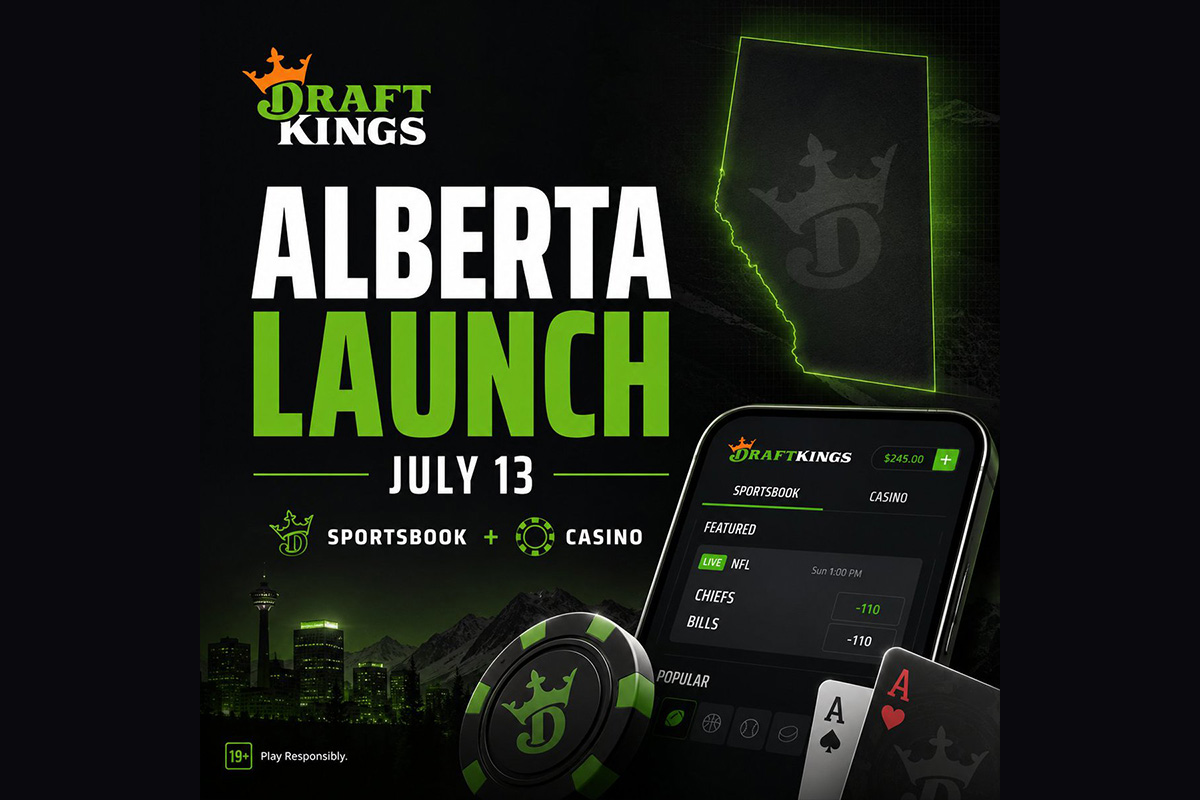
DraftKings is set to launch its top-rated online sportsbook and casino, along with its Golden Nugget Online Gaming brand, in Alberta on July 13. Alberta will become the second Canadian province and the 34th jurisdiction across North America where DraftKings Sportsbook is available. With the launch, DraftKings Casino will be available in five U.S. states and Golden Nugget Online Gaming casino in four U.S. states, with both brands available in Alberta and Ontario in Canada.
“We’re thrilled to launch DraftKings Sportsbook and DraftKings Casino, as well as Golden Nugget Online Gaming in Alberta and continue expanding our presence in Canada. Alberta is home to a passionate sports fan base, and we’re excited to bring customers across the province our industry-leading sports betting and online casino experiences. Launching during one of the biggest moments in global sports, with the World Cup taking place across North America, makes this an especially exciting time to welcome Albertans to DraftKings,” said Greg Karamitis, Executive Vice President and General Manager of Sports at DraftKings.
To celebrate the launch in Alberta, DraftKings employees will volunteer with Food Banks Alberta and present a $150,000 donation to the organization. The funding will purchase over 40,000 pounds of essential food items to be distributed through Food Banks Alberta’s network of member food banks, ensuring resources reach communities both large and small throughout Alberta. This donation will help provide essential food support, including high demand items like fruits and vegetables and baby formula to individuals and families facing hunger, while strengthening local food banks’ ability to meet growing demand.
Eligible customers in Alberta will have access to DraftKings’ comprehensive suite of sports betting and online casino offerings. From same-game parlays, live in-game wagering, and special odds boosts on DraftKings Sportsbook to thousands of casino games, including fan-favorite titles like “Wheel of Fortune – Triple Extreme Spin,” exclusive slot titles, as well as progressive jackpots across Golden Nugget Online Gaming and DraftKings Casino, DraftKings delivers one of the industry’s most robust and engaging entertainment experiences.
DraftKings leads the industry in responsible engagement by promoting customer awareness and use of budget and control tools and resources like deposit limits, cool off periods, and self-exclusion to help customers have a fun source of entertainment with a brand they can trust.
The post DraftKings Set to Launch its Online Sportsbook and Casino in Alberta appeared first on Americas iGaming & Sports Betting News.

High 5 Games, the creator of premium casino content for the land based, online and social gaming markets announced it has secured supplier approval from the Alberta Gaming, Liquor and Cannabis Commission (AGLC), extending its games beyond Play Alberta to all licensed operators in the province’s newly opened commercial iGaming market.
High 5 Games has entertained Alberta players since 2024 through Play Alberta, the province’s government operated gaming platform, where titles such as DaVinci DeluxeWays, Billionaire’s Bank, Green Machine and more have become established player favourites. With Alberta’s commercial market now open, that same proven portfolio is available to all licensed operators entering the province.
Alberta’s commercial iGaming market will be opening on July 13, 2026, making it the second Canadian province after Ontario to welcome private sector operators. Overseen by AGLC and the Alberta iGaming Corporation (AiGC), the market launched with nearly 50 registered operator brands, one of the most anticipated regulated market openings in North America this year.
The approval extends High 5 Games’ regulated North American footprint, which includes New Jersey, Michigan, Pennsylvania, Connecticut, West Virginia, Ontario, Quebec, British Columbia. Alberta players will gain access to High 5’s catalogue of player favourite titles, including DaVinci DeluxeWays, Billionaire’s Bank, Green Machine and other titles through launch partnerships with operators.
“Alberta players already know and love our games through Play Alberta, that is a head start no newcomer to this market can claim. With the open market live, every operator in the province can now offer their players the award winning High 5 titles they have been playing for years, from day one.” says Tony Singer, CEO at High 5 Games.
High 5 Games’ content is certified across New Jersey, Michigan, Pennsylvania, Connecticut, West Virginia, Ontario, British Columbia and the studio has developed more than 300 games over three decades of game making.
The post High 5 Games Expands Across Alberta’s Open iGaming Market Following AGLC Supplier Approval appeared first on Americas iGaming & Sports Betting News.

-

 Compliance Updates7 days ago
Kasinohai Audit: Most Slots Could Be Affected by Finland’s Draft Gambling Rules
-
Latest News6 days ago
BetMakers Technology Group Selected to Distribute ATG Horse Racing Content Across Australia and New Zealand
-
Latest News7 days ago
Belatra signs cooperation deal to distribute slots via VeliGames
-
Compliance Updates7 days ago
Pernambuco court revokes Spribe’s interim relief in Aviator trademark dispute
-
Compliance Updates6 days ago
ACMA Warns MMA Fighter Jamie Mullarkey for Breaches of Online Gambling Laws
-
 Compliance Updates4 days ago
Arizona Department of Gaming Issues Cease-and-Desist Orders to Multiple Operators Linked to Underage Gambling and Illegal Activity
-
Latest News5 days ago
PG Soft appoints Hugo Baungartner as General Manager LatAm
-
Canada6 days ago
Gaming Corps expands Entain partnership with major Canadian rollout