Compliance Updates
The Swedish Press and Broadcasting Authority agree with BOS and find Svenska Spel advertisement to infringe the law

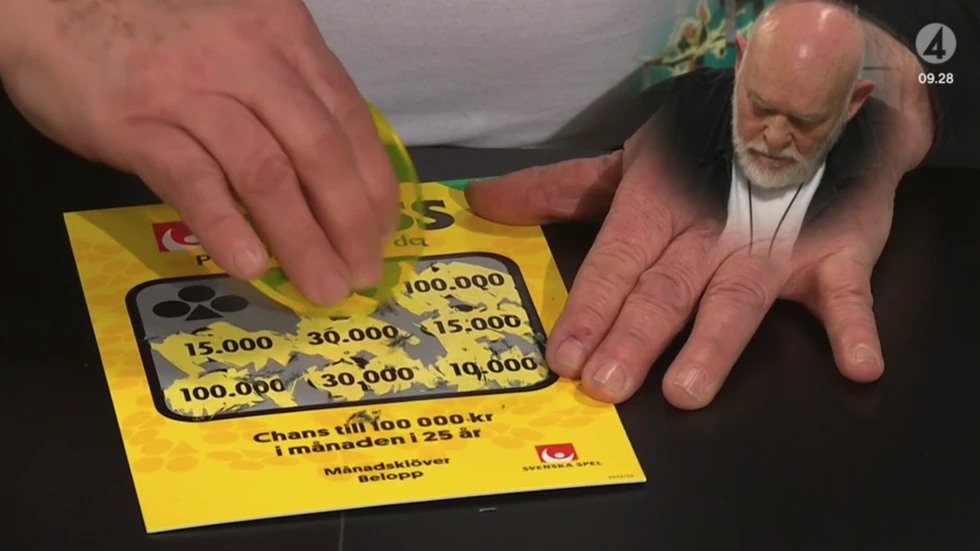
Some time ago, BOS filed a complaint regarding Svenska Spel and TV4 to The Swedish Press and Broadcasting Authority, which is a governmental authority, for the fact that Svenska Spel’s Keno and Lotto draws on the TV channel do not take place during an advertising block, but on the contrary are broadcasted as a regular editorial TV program. Nor are the programs broadcasted with mandatory gambling consumer protection information.
Today, The Swedish Press and Broadcasting Authority made a decision on the matter. They go completely along the lines of BOS’s complaint and they find that Svenska Spel and TV4 are guilty of infringing the law. The authority state that there is no doubt that the features sent in TV4 constitute advertising, not editorial material. As a consequence TV4 will be liable to pay a fine.
“This a landslide victory for consumer protection when it comes to gambling and gambling advertisement in Sweden. Svenska Spel’s actions have threatened consumer protection in the Swedish gambling market with its hidden advertisement. We want it to be clear what constitutes gambling advertising, and we do not want the statutory disclosure obligation about the 18-year-old limit and contact information for gambling addictions to be circumvented through special schemes. We are pleased that The Swedish Press and Broadcasting Authority come to the same conclusion” says Gustaf Hoffstedt.
“We are also pleased that Sweden with this decision from the authority level the playing field on the gambling market. Svenska Spel, with the scheme of claiming that the Keno and Lotto draws did not constitute gambling advertising, was able to broadcast these outside of regular advertising time and thus competed on unequal terms for its monopoly products compared to its competitors, who lacked this opportunity. We are pleased to erase such behavior from the gambling market” says Gustaf Hoffstedt
Powered by WPeMatico


ThrillTech has been awarded a Gaming-Related Supplier licence by the Alcohol and Gaming Commission of Ontario (AGCO), clearing the company to launch in Ontario’s regulated market.
The licence allows ThrillTech to deploy its opt-in side bet jackpots technology with regulated online casino, sports betting and lottery operators across the province.
Benjamin Bradtke, Co-Founder of ThrillTech, said: “Securing our AGCO licence is a major step in our mission to transform how jackpots are delivered at scale across regulated markets. This latest certification is testament to our robust technology and trusted compliance frameworks, allowing us to continue our global growth trajectory. We are thrilled to bring our proven, compliant jackpot technology to Ontario, empowering locally licensed operators to uplift revenue without cannibalising existing spend.”
The company said its “ThrillPots” mechanics sit as an independent, player-funded side bet and do not alter the underlying game’s return-to-player mathematics.
ThrillTech said the Ontario approval enables its existing multinational partners that also operate in the province to launch its side bet jackpots locally, while it also holds talks with potential new operator partners. The company lists its regulated footprint as including the United Kingdom, Sweden, the Netherlands, Romania, Malta, Gibraltar, Brazil and Peru.
The post ThrillTech secures AGCO supplier licence for Ontario launch appeared first on EE Gaming | Global iGaming & Tech Intelligence Hub.

ThrillTech said it has been awarded a Gaming-Related Supplier licence by the Alcohol and Gaming Commission of Ontario (AGCO), clearing the company to offer its side-bet jackpot technology to regulated online casino, sports betting, and lottery operators in Ontario.
Benjamin Bradtke, Co-Founder of ThrillTech, said: “Securing our AGCO licence is a major step in our mission to transform how jackpots are delivered at scale across regulated markets. This latest certification is testament to our robust technology and trusted compliance frameworks, allowing us to continue our global growth trajectory. We are thrilled to bring our proven, compliant jackpot technology to Ontario, empowering locally licensed operators to uplift revenue without cannibalising existing spend.”
The company said its ThrillPots product lets operators add player-funded, opt-in side-bet jackpots on top of existing games, without changing gameplay or the underlying return-to-player (RTP) calculations. ThrillTech positions the mechanic as a way to drive incremental engagement and revenue.
ThrillTech said the Ontario licence enables existing multinational partners that also operate in the province to roll out ThrillTech-powered jackpots locally, and added it is in discussions with potential new operator partners. The company listed other regulated jurisdictions it serves as the United Kingdom, Sweden, the Netherlands, Romania, Malta, Gibraltar, Brazil, and Peru.
The post ThrillTech wins AGCO supplier licence to enter Ontario market appeared first on Americas iGaming & Sports Betting News.

The European Gaming and Betting Association (EGBA) has filed a formal complaint with the Bank of Lithuania against Walletto, a Lithuania-based payment service provider, over the alleged processing of payments linked to illegal online gambling operators. The complaint follows an EGBA investigation into illegal gambling websites and apps targeting European consumers. The complaint cites test transactions during the investigation that found evidence suggesting Walletto’s services were used in connection with deposits on a number of these platforms.
While the complaint concerns one provider, it points to a wider problem across the payments chain. Illegal gambling operators cannot operate at scale without access to payments – they depend on the same mainstream payment methods and card networks consumers use every day. As long as illegal operators can accept deposits and process transactions, they will continue to function outside legally compliant licensing regimes in the EU, evade regulatory controls, and expose consumers to harm.
Illegal platforms offer none of the safeguards required of regulated operators. Consumers using them do not benefit from basic protections – there is no robust identity verification, no safer gambling tools, no anti-money laundering controls and no guarantee their winnings will be paid. With no effective identity checks, minors and self-excluded players can access these sites unimpeded.
A problem across the payments chain
Illegal operators exploit weaknesses across the payments chain – among payment service providers, acquirers, and card networks – to keep reaching European consumers. Tackling this problem requires a more coordinated approach across policymakers, gambling and financial regulators, payment service providers, acquirers and card schemes. Card schemes in particular are uniquely placed to act: they are the rule-setters for the networks through which payments to illegal platforms flow and have access to transaction-level data that other stakeholders cannot see.
The principle is simple: payment providers should not process transactions for illegal gambling operators. EGBA is calling for stronger action to make that a reality. Financial regulators should fully and consistently enforce existing rules – such as the EU’s Payment Services Directive and anti-money laundering laws – against payment providers. Card schemes should also take the necessary steps to prevent payment providers from using their networks to process illegal gambling transactions.
Maarten Haijer, Secretary General of EGBA, said: “Payment providers should not be allowed to process transactions for illegal gambling operators. Illegal operators flourish by exploiting legitimate financial channels and the mainstream payment networks that consumers rely on every day. Our aim is simple: to leave them no room to manoeuvre, and to cut off the payment channels they use to reach European consumers. Card schemes also have a crucial role to play in combatting illegal transactions: they are better placed than anyone, as they set the rules for these payment networks and see transaction flows no one else can.”
The post EGBA Files Complaint Against Fintech Walletto Over Illegal Gambling Payments appeared first on EE Gaming | Global iGaming & Tech Intelligence Hub.

-

 Compliance Updates5 days ago
Arizona Department of Gaming Issues Cease-and-Desist Orders to Multiple Operators Linked to Underage Gambling and Illegal Activity
-
 Latest News7 days ago
ELA Games releases Flames Fruits Frenzy Hold and Win slot
-
Latest News7 days ago
PG Soft appoints Hugo Baungartner as General Manager LatAm
-
Compliance Updates6 days ago
KONAMI GROUP’s Konami Gaming Inc. First to Submit Manufacturer License Application in Japan’s Emerging IR Market
-
Canada7 days ago
Canada’s Safer Gambling Gap: Why Market Success Doesn’t Always Equal Player Safety
-
Latest News7 days ago
Tom Horn Gaming ships Royal Ruby FeatureStorm slot worldwide on 14 July 2026
-
Latest News7 days ago
Booming Games launches Fish Tales: Double Catch Max Scatter
-
Latest News7 days ago
BC.GAME names Guillermo Ochoa brand ambassador for Mexico push