Sports
Colab Platforms Empowers Unified Sports Ecosystem Drives Sports Innovation for Athletes, Fans from India Gaming Industry

NEW DELHI, June 18, 2025 (GLOBE NEWSWIRE) — Colab Platforms is created by visionaries passionate about transforming the sports industry. By merging technology, management, and content, they redefine how sports are played, managed, and experienced at every level.
Colab Cloud Platforms Limited changed its name to Colab Platforms Limited on February 10, 2025. This change was approved by the Ministry of Corporate Affairs and was communicated to the stock exchange
Colab Platforms Ltd., a BSE-listed Indian company (BSE: 542866), is a leading technology solutions provider and is excited to announce its strategic expansion into the Sports Management and Sports Technology sectors.
According to Brainy Insights, a global market research firm, the global sports market was valued at $480.12 billion in 2023 and is projected to grow at a CAGR of 5.6%, reaching $506.93 billion in 2024.
India’s sports and fitness sector is expected to reach a massive ₹50,000 crore (approximately USD 6 billion) market size, driven by rising health awareness, digital platform adoption, and increased sports participation. Colab Platform aims to capitalize on this growing opportunity by delivering tech-enabled solutions tailored to the needs of modern sports consumers and professionals.
Sports Marketplace – Learn, Play & Shop. The Sports Ecosystem Marketplace is a one-stop platform where athletes and sports lovers can Learn, Play, and Shop all in one place. Book top coaches and academies to level up your game, play by finding and booking turfs, stadiums, and other sports infrastructure nearby, and shop for high-quality gear, accessories, and nutrition from trusted brands. It’s your all-in-one hub to train, compete, and gear up with ease.
Colab Cloud will leverage its expertise across key segments of the sports industry. This expansion includes advanced solutions for managing sports Intellectual Properties (IPs), fan engagement platforms, and immersive Virtual Reality (VR) and Augmented Reality (AR) experiences.
By integrating cutting-edge technologies into the sports and gaming sectors, Colab aims to drive innovation and transformation. This approach will streamline operations, enhance fan engagement, and unlock new market opportunities. The company intends to deliver tailored solutions in sports management, technology, and marketing, aiming to become a key player in the evolving sports ecosystem.
Software as a superpower: As a next-gen hub for sports excellence, Colab platform drives the industry forward through dynamic sports marketing, strategic management, and a powerful ecosystem that supports every stakeholder. By consolidating all facets of the sports world into one platform, we are not only scaling opportunities but also fuelling the rise of every sport from local games to global leagues empowering every player, every dream, and every game.
Key trends in the Indian sports market include rising direct engagement between sports entities and fans, growing interest in diverse sports, and increasing demand for VR and AR experiences. Sports-themed gaming, digital fan communities, and immersive engagement platforms are also accelerating.
“The convergence of technology and digital interaction is ushering in a new era of sports and gaming experiences,” said a company spokesperson.
As part of this strategy, Colab Platforms has secured a franchise agreement with Arvus Sports Private Limited, the owner of the Big Cricket League (BCL), a T20 cricket league. Colab Cloud will own and manage the Northern Challengers, a professional men’s cricket team under this agreement.
The company also announced a strategic investment of up to INR 100 million to build a dedicated e-commerce marketplace for sports and fitness products. This initiative supports Colab Platforms vision of using technology to enhance user experiences and drive growth. The platform will offer a wide range of fitness gear, apparel, and accessories for athletes, fitness professionals, and health-conscious consumers. With India becoming a global fitness and wellness leader, this marketplace will provide seamless access to quality products.
Colab Platforms Sports Technology includes VR/AR, AI-based personalization, and data analytics to enhance performance and engagement.
The company’s Athlete Management solution equips players with tools to manage and grow their careers, secure sponsorships, showcase achievements, and access strategic opportunities—all powered by marketing insights and data.
Its Sports Content & Media platform streamlines league-wide operations, tracking player and team activity from daily operations to full-season planning.
Colab Platform also offers Sponsorship & Marketing Solutions that maximize brand exposure through data-driven campaigns, enhancing visibility for athletes, teams, and events.
The company is built by professionals deeply rooted in the sports industry. Their hands-on experience fosters innovative thinking and practical solutions. Colab Platform brings a comprehensive tech approach that supports the entire sports community, pushing boundaries beyond conventional strategies.
Contact Address:
Colab Platforms Ltd
Innov8 CP2 44, Backary Portion, Regal Building, New Delhi – 110001, India
Email: [email protected] Web: https://www.colabplatforms.com/
Media Contact:
Organization: Synergy Global Enterprise LLC
Name: Gopi Divecha
Address: 111 North Bridge Road #21–01, Singapore 179098
Website: https://pixelproduction.com/
Email: [email protected]
Disclaimer: This media platform provides the content of this article on an “as-is” basis, without any warranties or representations of any kind, express or implied. We do not assume any responsibility or liability for the accuracy, content, images, videos, licenses, completeness, legality, or reliability of the information presented herein. Any concerns, complaints, or copyright issues related to this article should be directed to the content provider mentioned above.



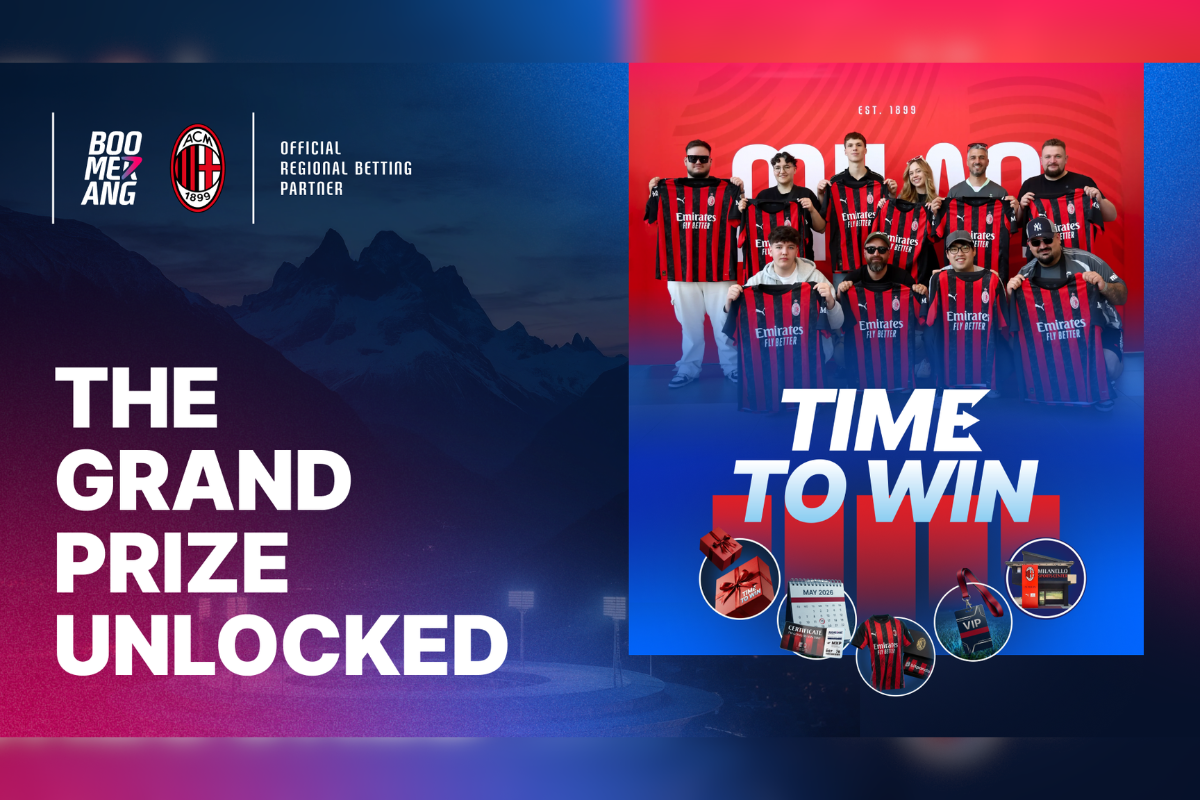
Boomerang Partners, an Official Regional Partner of AC Milan, has delivered the main prize of its completed TIME TO WIN affiliate tournament. It ran from February 12 to March 31, 2026, with 57 affiliate teams taking part. Two winning teams travelled to Milan for a three-day programme built around the Club. The winners attended AC Milan v Juventus at San Siro Stadium, visited Casa Milan and the Mondo Milan Museum, and completed the trip with an exclusive visit to Milanello Sports Centre powered by Clivet.
Matchday at San Siro opened the three-day programme


The programme began on April 26 with AC Milan v Juventus at San Siro Stadium. The winning teams arrived at the stadium ahead of kick-off and were met by an AC Milan representative, who guided the group through the matchday process.
Before the match, the guests were taken to the pitchside area to watch the teams warming up. The partners had time to take photos and videos from close to the field. After the warm-up, they watched the match from their seats and experienced the atmosphere of one of the key fixtures of the Serie A calendar. The group also had access to the hospitality lounge with food and drinks before and during the match.
Inside Casa Milan: history, trophies, and hospitality

On April 27, the programme continued at Casa Milan, where the group joined a guided Mondo Milan Museum tour in English. The tour covered AC Milan’s history, trophies, and key achievements, giving partners more context after the matchday experience at San Siro Stadium.
After the Mondo Milan Museum tour, the winners had time to visit the Casa Milan Store. The hospitality part of the day continued with snacks and drinks arranged for the group. The partners also received AC Milan shirts, which became a pleasant surprise during the visit.
The final day brought winners to Milanello


On April 28, the winners visited Milanello Sports Centre powered by Clivet, AC Milan’s legendary training base. The group was welcomed in the hospitality area before starting a tour of the facility, including the training fields and facilities used by the team.
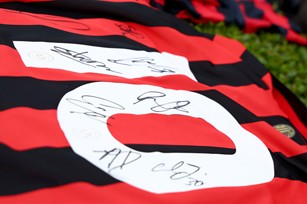
Daniele Massaro, Club Ambassador and former AC Milan player, also joined the group at Milanello. He spoke with the guests and signed autographs. After the tour, the partners watched the team training session and joined an autograph session with the players. They also had time to speak with them, take photos, and have AC Milan shirts signed.
For the winning teams, Milanello was the strongest part of the programme. It gave them access to a setting usually closed to the public and direct contact with the Club, its players, and its training environment.
Liliia Sudachenko, Affiliate Team Lead at Boomerang Partners, who joined the winners during the trip, commented: “The trip went very well, and the feedback from partners was extremely positive. The programme was rich and very well organized, but balanced enough for everyone to enjoy all three days in Milan without feeling exhausted. The strongest emotions came from the pitchside access before AC Milan v Juventus, the warm-up at San Siro, the visit to Milanello, and the opportunity to meet the players, take photos, and get autographs. For us, the main result was stronger relationships with partners and a higher level of trust in Boomerang Partners. Everyone genuinely enjoyed the time in Milan, and for us that reaction was the best confirmation of the value of this prize.”
From TIME TO WIN to Golden Boomerang Awards 2026
Following the TIME TO WIN activation, Boomerang Partners continues its affiliate tournament series with Golden Boomerang Awards 2026. On April 3, the company launched the third season of its annual tournament for affiliate teams.
The 2026 season runs under the “Beyond the Moment” concept and includes exclusive sports experiences such as the trip to the Wimbledon Championships, the Formula 1 Grand Prix in Monza, and an exclusive dinner with an AC Milan Legend. The final ceremony will take place in Lisbon during the SBC Summit.
Further details on participation in the Golden Boomerang Awards 2026 are available on the official GBA 2026 website.
About Boomerang
Boomerang Partners is a rapidly growing global marketing agency offering a wide range of services. Boomerang Partners is an Official Regional Partner of AC Milan. In 2024, it launched the inaugural Golden Boomerang Awards – a global tournament for affiliate teams. More than 400 affiliate teams participated in the second season of the tournament in 2025. Partners of the Agency launched six new products in 2024-2025, contributing to a nearly 1.5-fold increase in product users.
The Agency’s clients’ portfolio contains 10+ brands offering affiliate and entertainment services across 40+ markets in compliance with local regulations. These products provide incentive programs and 24/7 multilingual support.
The post Boomerang Partners delivers TIME TO WIN main prize with Milanello experience appeared first on Eastern European Gaming | Global iGaming & Tech Intelligence Hub.

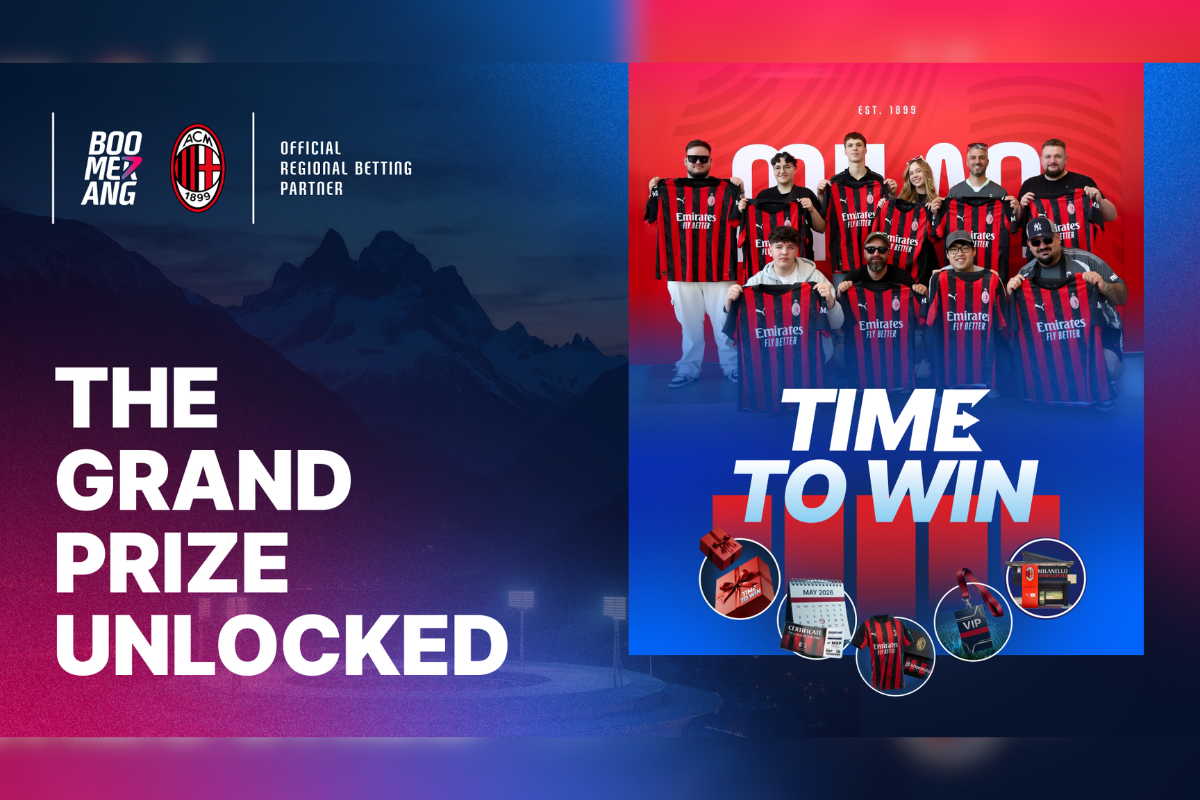
Boomerang Partners, an Official Regional Partner of AC Milan, has delivered the main prize of its completed TIME TO WIN affiliate tournament. It ran from February 12 to March 31, 2026, with 57 affiliate teams taking part. Two winning teams travelled to Milan for a three-day programme built around the Club. The winners attended AC Milan v Juventus at San Siro Stadium, visited Casa Milan and the Mondo Milan Museum, and completed the trip with an exclusive visit to Milanello Sports Centre powered by Clivet.
Matchday at San Siro opened the three-day programme
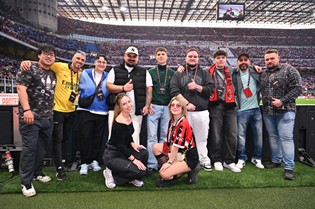
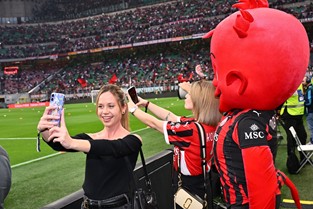
The programme began on April 26 with AC Milan v Juventus at San Siro Stadium. The winning teams arrived at the stadium ahead of kick-off and were met by an AC Milan representative, who guided the group through the matchday process.
Before the match, the guests were taken to the pitchside area to watch the teams warming up. The partners had time to take photos and videos from close to the field. After the warm-up, they watched the match from their seats and experienced the atmosphere of one of the key fixtures of the Serie A calendar. The group also had access to the hospitality lounge with food and drinks before and during the match.
Inside Casa Milan: history, trophies, and hospitality
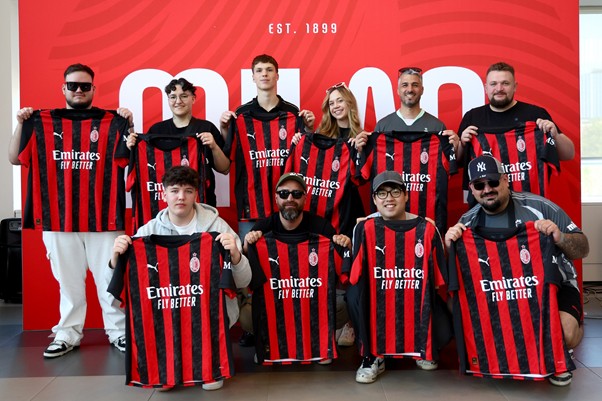
On April 27, the programme continued at Casa Milan, where the group joined a guided Mondo Milan Museum tour in English. The tour covered AC Milan’s history, trophies, and key achievements, giving partners more context after the matchday experience at San Siro Stadium.
After the Mondo Milan Museum tour, the winners had time to visit the Casa Milan Store. The hospitality part of the day continued with snacks and drinks arranged for the group. The partners also received AC Milan shirts, which became a pleasant surprise during the visit.
The final day brought winners to Milanello
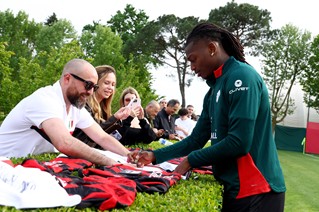
On April 28, the winners visited Milanello Sports Centre powered by Clivet, AC Milan’s legendary training base. The group was welcomed in the hospitality area before starting a tour of the facility, including the training fields and facilities used by the team.
Daniele Massaro, Club Ambassador and former AC Milan player, also joined the group at Milanello. He spoke with the guests and signed autographs. After the tour, the partners watched the team training session and joined an autograph session with the players. They also had time to speak with them, take photos, and have AC Milan shirts signed.
For the winning teams, Milanello was the strongest part of the programme. It gave them access to a setting usually closed to the public and direct contact with the Club, its players, and its training environment.
Liliia Sudachenko, Affiliate Team Lead at Boomerang Partners, who joined the winners during the trip, commented: “The trip went very well, and the feedback from partners was extremely positive. The programme was rich and very well organized, but balanced enough for everyone to enjoy all three days in Milan without feeling exhausted. The strongest emotions came from the pitchside access before AC Milan v Juventus, the warm-up at San Siro, the visit to Milanello, and the opportunity to meet the players, take photos, and get autographs. For us, the main result was stronger relationships with partners and a higher level of trust in Boomerang Partners. Everyone genuinely enjoyed the time in Milan, and for us that reaction was the best confirmation of the value of this prize.”
From TIME TO WIN to Golden Boomerang Awards 2026
Following the TIME TO WIN activation, Boomerang Partners continues its affiliate tournament series with Golden Boomerang Awards 2026. On April 3, the company launched the third season of its annual tournament for affiliate teams.
The 2026 season runs under the “Beyond the Moment” concept and includes exclusive sports experiences such as the trip to the Wimbledon Championships, the Formula 1 Grand Prix in Monza, and an exclusive dinner with an AC Milan Legend. The final ceremony will take place in Lisbon during the SBC Summit.
Further details on participation in the Golden Boomerang Awards 2026 are available on the official GBA 2026 website.
About Boomerang
Boomerang Partners is a rapidly growing global marketing agency offering a wide range of services. Boomerang Partners is an Official Regional Partner of AC Milan. In 2024, it launched the inaugural Golden Boomerang Awards – a global tournament for affiliate teams. More than 400 affiliate teams participated in the second season of the tournament in 2025. Partners of the Agency launched six new products in 2024-2025, contributing to a nearly 1.5-fold increase in product users.
The Agency’s clients’ portfolio contains 10+ brands offering affiliate and entertainment services across 40+ markets in compliance with local regulations. These products provide incentive programs and 24/7 multilingual support.
The post Boomerang Partners delivers TIME TO WIN main prize with Milanello experience appeared first on Americas iGaming & Sports Betting News.
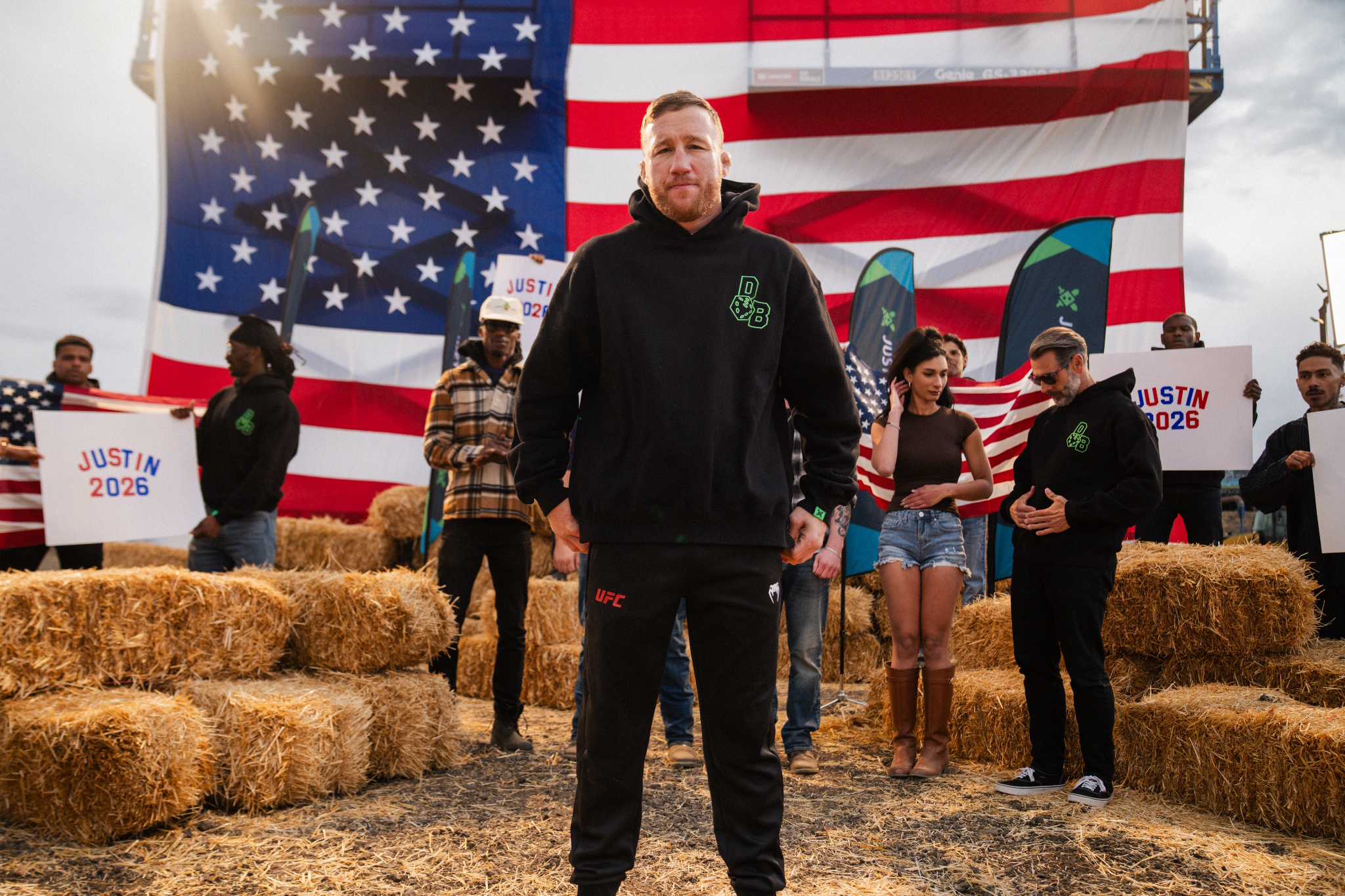
The JUSTIN2026 campaign was shot in Denver and rolls out over four weeks ahead of the 14 June event at the White House.
Duelbits has launched a branded content campaign with UFC interim Lightweight Champion Justin Gaethje, timed to UFC Freedom 250 at the White House on Saturday 14th June.
The campaign, branded JUSTIN2026, was shot on location in Denver, Colorado by UK-based creative agency YRDS. Duelbits said the content is designed as a “premium, cinematic series” and will roll out in phases over the next four weeks, peaking on event day.
According to the company, the campaign was planned before UFC Freedom was officially confirmed. Duelbits framed the early commitment as part of a strategy to move faster than traditional sportsbooks around major cultural moments.
“We didn’t want to create another sportsbook promo,” said Jasper Hoekert, Chief Marketing Officer at Duelbits. “We wanted to create something that combat sports fans want to watch, content built around Justin’s authenticity and intensity, not just his fight record. We were planning this before the White House event was even officially confirmed. When you believe in the magnitude of a moment, you don’t wait for permission to act on it.”
“Duelbits came to me with a vision, not just a brief,” said Gaethje. “They wanted to create something that reflected the reality of what I do and who I am, with no smoke and mirrors. When a brand shows up with that kind of conviction and creative ambition, you back it. This campaign is going to be something people remember.”
The post Duelbits signs Justin Gaethje for branded content ahead of UFC Freedom 250 appeared first on Eastern European Gaming | Global iGaming & Tech Intelligence Hub.

-

 Australia7 days ago
Former Star Entertainment Executives Mathias Bekier and Paula Martin Disqualified and Ordered to Pay Penalties
-
Alejandra Burato7 days ago
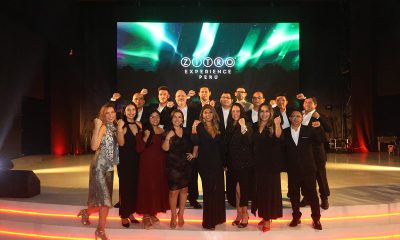
Record Attendance, Exciting New Releases, and a Resounding Success: This was Zitro Experience Peru
-
ArenaPlus7 days ago
DigiPlus Wins “Digital Operator of the Year” Award at 2026 Global Gaming Awards Asia-Pacific
-
Anthony Dalla-Giacoma7 days ago
Elysium Studios Releases its Latest Slot Game “Hood and Loot”
-
Greece7 days ago
SYNOT Games Announces New Partnership with Superbet
-
Bragg Gaming Group4 days ago
Massive Gaming launches Blitzcrown titles on Superbet Brazil via Bragg Hub
-
Compliance4 days ago
HIPTHER Launches HALLO: The Standard in Compliance Expertise
-
BurraPay7 days ago
Byte Federal Announces Successful Launch of Custom-Built Integration Supporting BurraPay’s Historic Entry into America’s Regulated Gaming Market