Compliance Updates
Danish Gambling Authority Issues Six Orders to Royal Casino Århus for AML Failures

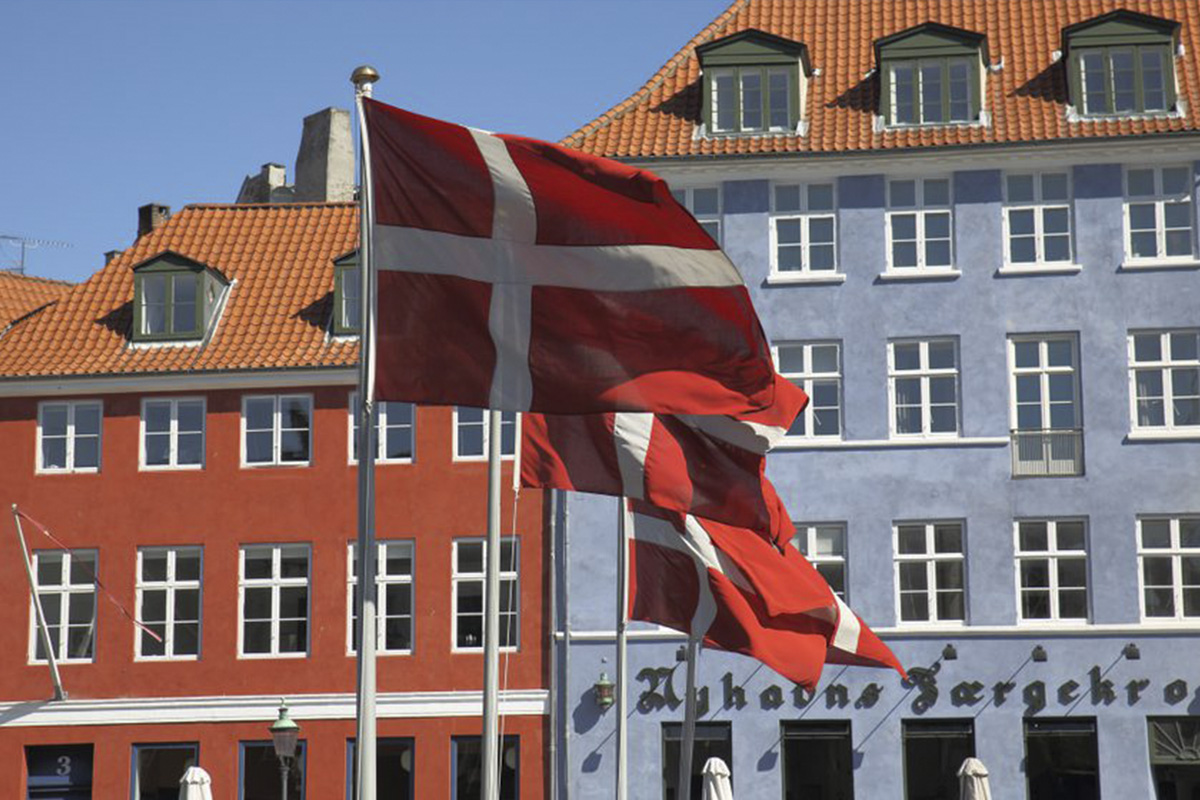
On 14 June 2023, the Danish Gambling Authority Spillemyndigheden has given Royal Scandinavian Casino Århus I/S six orders for breaching the rules on risk assessment of section 7(1) of the AML Act (order a), business procedures of section 8(1) of the AML Act (order b), supervision of section 8(1) of the AML Act (order c), training material of section 8(6) of the AML Act (order d), performance of customer due diligence procedures of section 11 of the AML Act (order e) and performance of enhanced customer due diligence measures for guests from high risk third countries (order f).
Order a is given because Royal Scandinavian Casino Århus I/S has made an insufficient identification of customer types, including foreign PEPs and PEPs in international organisations and their family members and close associates. Moreover, identification and risk assessments have not been made of individuals subject to financial sanctions. When the risk assessment does not sufficiently describe the factors connected to their guests, the risk assessment does thereby not cover all areas of their business model.
Order a is also given because Royal Scandinavian Casino Århus I/S has made an insufficient identification and risk assessment of the use of cash as a means of payment. Given that an inclusion of mitigating initiatives has been done too early, a correct assessment of this factor has not been made, which is why the inherent risks are not stated correctly. Thus, the risk assessment does not cover all areas of their business model.
Order b is given because Royal Scandinavian Casino Århus I/S does not have sufficient written business procedures. The business procedures lack sufficient procedures for the performance of customer due diligence measures for high-risk customers, enhanced customer due diligence measures for PEPs and their family members and close associates and for the obligations to report.
Order c is given because Royal Scandinavian Casino Århus I/S has not complied with their own business procedures for the performance of internal controls of procedures for customer due diligence measures, procedures for investigation and registering, procedures for reporting and procedures for record-keeping.
Order d is given because Royal Scandinavian Casino Århus I/S does not have sufficient training material about enhanced customer due diligence measures for PEPs, prevention of financing of terrorism, and individuals subject to financial sanctions. The training material is, therefore, not sufficient to ensure that the employees have an adequate knowledge of the obligations of the AML Act in relation to Royal Scandinavian Casino Århus I/S as a business.
Order e is given because Royal Scandinavian Casino Århus I/S has not performed sufficient customer due diligence measures, as a customer had not been verified correctly in accordance with the requirements of section 11(2) of the AML Act.
Order f is given because Royal Scandinavian Casino Århus I/S has not performed sufficient customer due diligence measures for guests from high-risk third countries given that information about the origin of the funds and the source of the customer’s assets have not been procured in relation to the requirements of section 17(1)(3) of the AML Act.
The Danish Gambling Authority notes that the rules on risk assessment, business procedures, training material and customer due diligence measures are fundamental parts of the Anti-Money Laundering Act. As a rule, breaches of the rules lead to an order or a reprimand or in serious or repeated cases, they are reported to the police.
The orders cause an obligation to act for Royal Scandinavian Casino Århus I/S, since they must submit an updated risk assessment, updated business procedures, updated controls, updated training material and updated procedures for customer due diligence measures addressing the insufficiencies identified in the orders.
The Danish Gambling Authority has given Royal Scandinavian Casino Århus a deadline of three months to correct the matters concerning the orders a-f.









The Department for Culture, Media and Sport (DCMS) has published its consultation response on the funding of the Gambling Commission which took place between January and March this year.
The 2023 White Paper committed to a review of the Commission’s fees to ensure sufficient resources to deliver its core responsibilities and the commitments outlined in the Gambling Act Review.
The consultation findings now provide certainty on the Commission’s future income for the coming years.
Licence fees will increase by 25% overall, but the specific changes to fees will be different for each type of operating licence. New fee categories will also be introduced for most licences. Operators are strongly encouraged to review the annexes to the Government’s consultation response to understand how these changes affect their business.
Fees for society lotteries will be held at their current levels, and a new system of fees calculation will be implemented for non-remote general betting limited licence holders. Fees for personal licences will increase by a flat 25%.
Changes to the fees are subject to the passage of secondary legislation and will take effect on 1 October 2026.
Over the coming weeks, operators will be contacted by the Commission with further details about how this affects them and information about alignment to any new category. The criteria for the revised fee categories are set out in the DCMS consultation response. An operator’s submitted regulatory return data for 2025 to 2026 will be used to determine its new fee category.
For further information about the findings of the consultation you can visit the DCMS consultation response webpage.
The post DCMS Concludes Consultation on Gambling Regulation Funding appeared first on EE Gaming | Global iGaming & Tech Intelligence Hub.

The UK Gambling Commission has announced that Tim Miller, Executive Director of Policy & Research, has decided to leave the Commission in September 2026 after 10 years of service.
Following his departure, Tim will take up a new role outside of the British regulated gambling industry, supporting governments, regulators and other organisations that are developing and overseeing gambling regulatory systems around the world.
During his time at the Commission, Tim has played a leading role in strengthening the Commission’s research and evidence base, bringing greater rigour and robustness to its research framework. He has overseen the development and launch of the Gambling Survey for Great Britain – the largest survey of its kind anywhere in the world – helping to transform the evidence available to inform gambling regulation and policy.
Tim has also led the Commission’s work to implement the Government’s Gambling Act Review White Paper, overseeing the introduction of a wide range of new protections and regulatory measures. These include reforms to age verification, financial vulnerability checks, remote game design, direct marketing controls and wider measures to make gambling safer, fairer and free from crime.
Tim Miller said: “I have worked at the Commission longer than anywhere else during my career and have found it the most rewarding and fulfilling role. In large part this has been due to the amazing and dedicated colleagues that I’ve had the pleasure to work alongside. That’s what made it a hard decision to leave but after ten years I felt ready for the next challenge.”
Sarah Gardner, Acting Chief Executive of the Gambling Commission, said: “Tim has provided outstanding service to the Commission for ten years. I would like to thank Tim for his significant contribution to gambling regulation and wish him every success in the future.”
The post Tim Miller Announces Departure from UK Gambling Commission appeared first on EE Gaming | Global iGaming & Tech Intelligence Hub.
AGCO
AGCO Fines Great Canadian Entertainment $120,000 for Using Unauthorised Gaming System Software at Four Casinos

The Alcohol and Gaming Commission of Ontario (AGCO) has ordered monetary penalties totalling $120,000 against Great Canadian Entertainment (GCE) for using unauthorided gaming system software at multiple Ontario casino sites, a serious compliance failure that bypassed requirements designed to protect the integrity of casino gaming.
Gaming equipment and systems are central to casino operations. They process payments and wagers, support slot-game play and help maintain controls that protect the integrity, safety and security of the gaming environment. When these systems are used or operated without required testing, monitoring and approval, it weakens safeguards designed to detect and prevent unlawful conduct, including money laundering, and can undermine public confidence in Ontario’s regulated casino sector.
The AGCO reviewed 40 instances in which revoked or unapproved bill validator software had been installed across four casino sites between February 20 and March 15, 2025. Bill validators are components within gaming machines that accept and process cash and help support anti-money laundering controls.
The AGCO’s Standards for Gaming require gaming equipment and software to be tested and approved before being deployed in casinos. Bill validators verify the authenticity and value of cash inserted into electronic gaming machines and are an important safeguard. That is why these systems must undergo rigorous testing and approval to confirm they operate as intended, perform critical functions reliably and are authorised before being introduced into a live casino environment.
Casino operators are responsible for ensuring that changes to gaming systems are properly reviewed, tested and authorised before implementation. Using unapproved software in a live casino environment is a serious compliance failure.
A casino operator served with an Order of Monetary Penalty has the right to appeal the Registrar’s action within 15 days to the Licence Appeal Tribunal (LAT), an adjudicative body that is part of Tribunals Ontario and independent of the AGCO.
“The AGCO requires casino operators to protect the integrity of their gaming systems by making sure they are independently tested, approved and operating as intended. When unauthorised software is used in a live casino environment, it bypasses critical safeguards that are meant to uphold the integrity of gaming and the public’s confidence in the system. The AGCO will continue to hold all casino operators accountable for meeting Ontario’s high standards of gaming system integrity,” said Dr. Karin Schnarr, Registrar and Chief Executive Officer at AGCO.
The post AGCO Fines Great Canadian Entertainment $120,000 for Using Unauthorised Gaming System Software at Four Casinos appeared first on EE Gaming | Global iGaming & Tech Intelligence Hub.

-

 Compliance Updates6 days ago
PlayCity Partners with Streaming Platform Kick to Block Illegal Gambling Ads
-
3 Oaks Gaming6 days ago
Weekend Reels | Week 26: Slot Drops & Trends
-
appointments6 days ago
OS Studios names Ishaan Arya country manager to lead India expansion
-
Casino Content6 days ago
PopOK Gaming secures Argentina certification to supply iGaming content
-
Compliance Updates6 days ago
KSA – Target for Gambling Tax Increase Not Achieved: Expected Tax Revenues Turn Out Lower
-
Latest News6 days ago
Relax Gaming Releases its Latest Slot Game “Midnight Marauder – ClusterBreaker”
-
Bragg Gaming6 days ago
Mega Casino launches Bragg Gaming slot 10 Hot Diamond Desire as exclusive
-
Argentinian market6 days ago
PopOK Gaming Strengthens Latin American Expansion with Argentina Certification